
Antique Blanket Chests
A lidded chest with a hinged top, made to store and carry blankets, linen and valuables long before the chest of drawers took over the job.
Antique Blanket Chests
The heading covers a family of lidded storage chests sold under near-interchangeable names. Across the listings on Sellingantiques, "chest" appears in 544 titles, "blanket box" in 522, "coffer" in 407 and "trunk" in 254. The same piece might be called any of them.
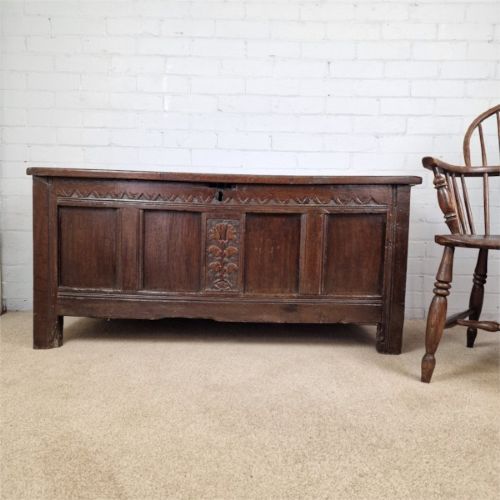
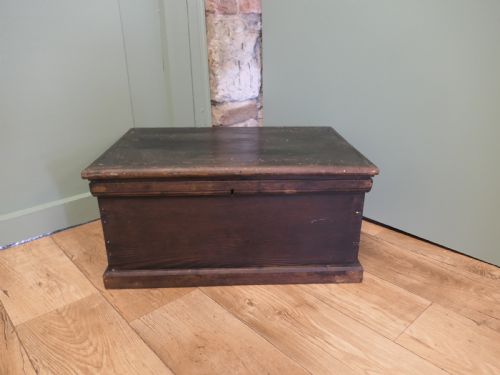
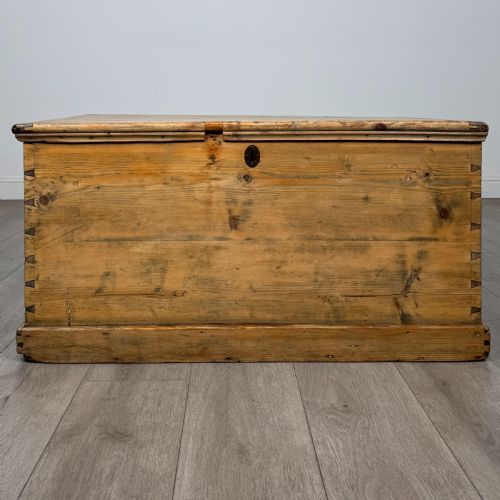
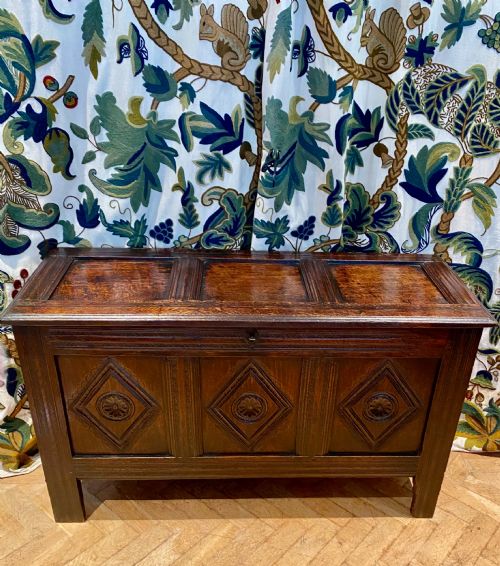
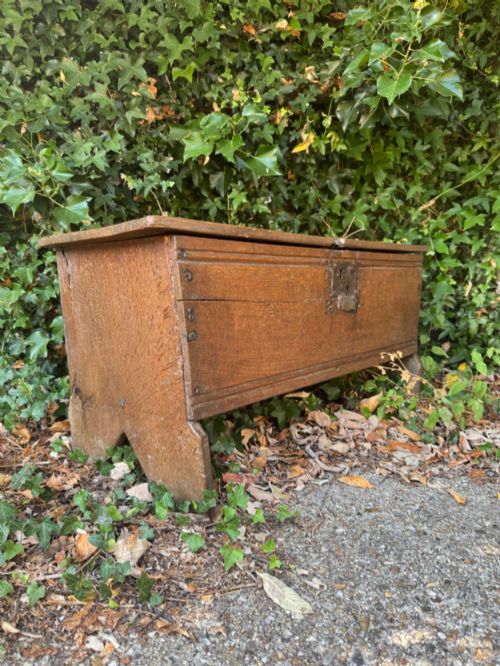
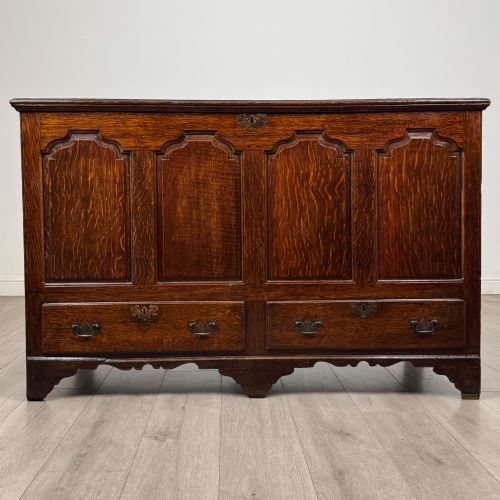
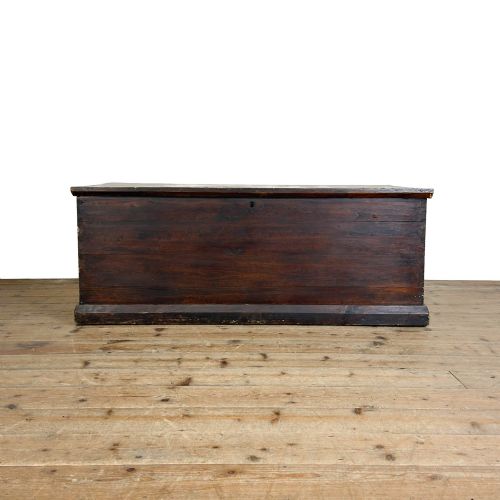
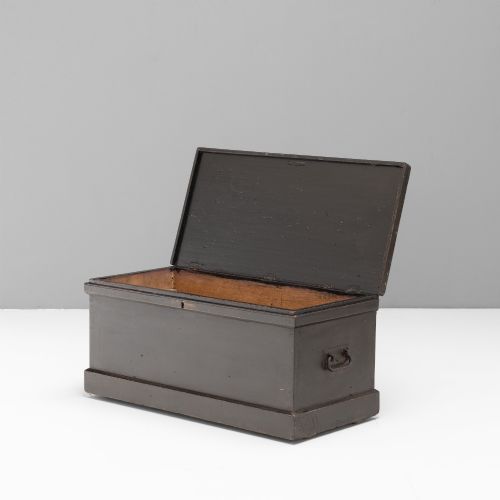
Two forms hold the ground. The panelled or carved oak coffer is the largest identifiable type, with oak in 506 titles and coffer in 407, and it is what the live stock leans towards. The other is the Victorian pine blanket box, often painted, scumbled or grained, which is heavily represented in the sold archive.
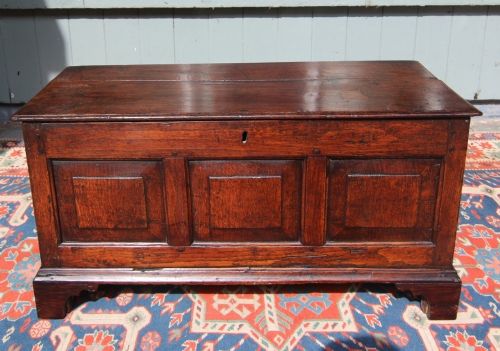
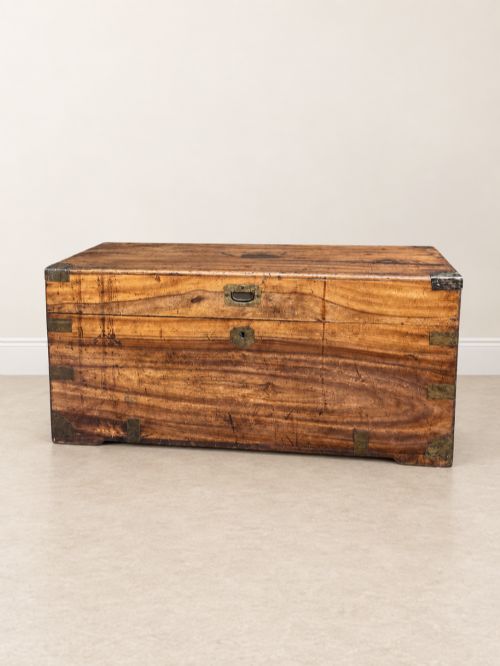
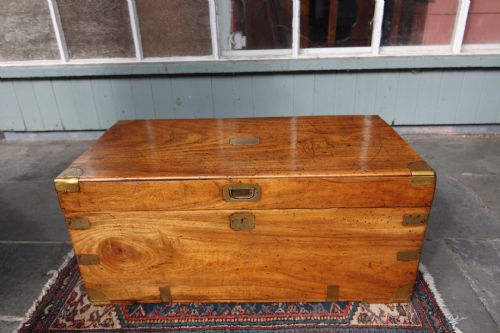
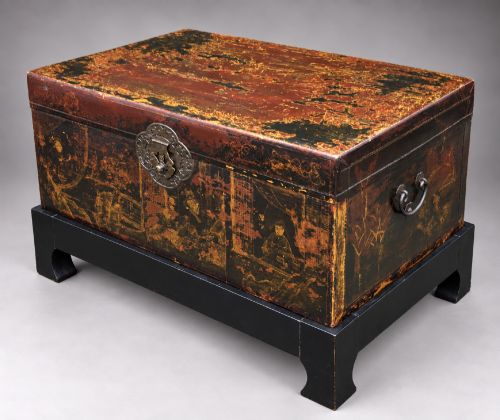
Behind those sit mule chests with drawers below the well, camphor and leather-covered travelling trunks, upholstered ottomans, silver chests and the occasional tool chest, dowry chest or cassone. Oak and pine dominate the timbers, with elm, mahogany, walnut and camphor wood behind them.
Dating is mostly century-level. "19th Century", "Victorian", "18th Century", "17th Century" and "Georgian" together outnumber the exact years, and the dealers' own dated field runs from 1680 to 1940. The 1920s and 1930s are well represented too. Read a century label as the dealer's judgement rather than a documented date.
Top And Bottom
Age as claimed in the title does most of the work. Sixteenth and early seventeenth century attributions cluster at the upper end, including Tudor and Elizabethan Welsh oak and an iron-bound coffer at the very top of everything sampled. Oak and pine boxes dated to the 1900s through 1930s sit at the bottom.
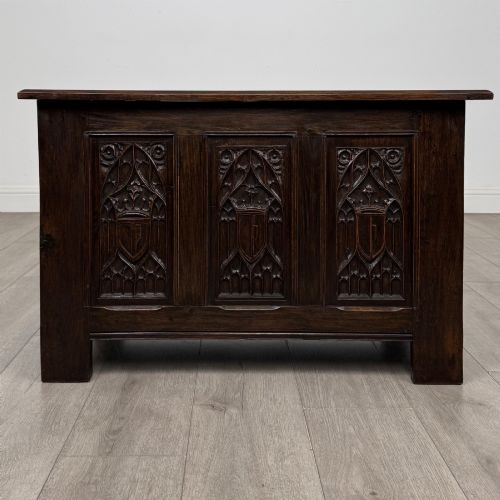
Timber and decoration follow. Oak, walnut and exotic hardwoods carry the upper samples; pine and elm concentrate low, and satinwood, padouk, teak and camphor land in the middle and above. Carving pushes a chest up, whether linenfold, arcading or geometric moulding, along with inlay, marquetry and gilding. A plain oak blanket chest title sits lower.
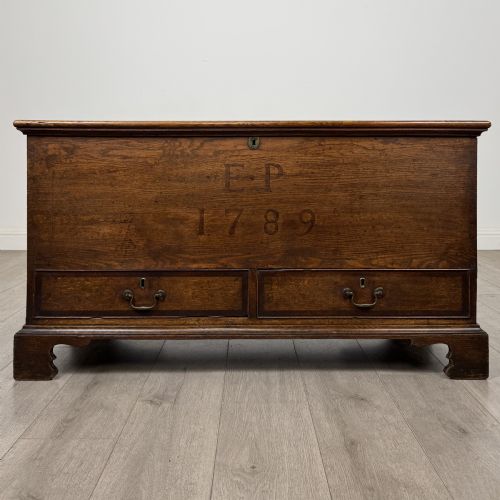
Two other things lift a piece. Drawers and fittings count: mule chests with two, three or four drawers, secret drawers, candle boxes, lift-out slides and zinc-lined interiors. So does a named region or a date cut into the wood. Welsh appears in 36 titles, and Yorkshire, Lakeland, Lancashire, Dorset, Westmorland and North Country attributions all surface, while only a few titles quote a carved year such as 1658, 1687 or 1690.
Antique Blanket Chests Retail Price Guide 2026
Typical UK retail prices for blanket chests, calculated from the Sellingantiques database of over a million retail prices indexed since 2003. This retail price guide relies exclusively on Sellingantiques data; no external sources or auction records are used, so the figures do not describe the wider market.
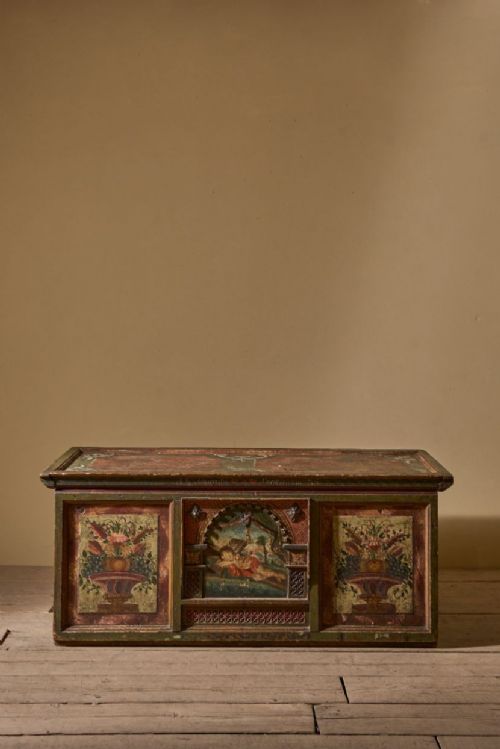
Chests from abroad are a steady minority on Sellingantiques, with Swedish painted chests and Chinese camphor wood the most frequent.
The Antique Blanket Chests Glossary
- Coffer
- An early chest, usually oak, with plank or panelled construction and a hinged lid.
- Mule chest
- A chest with a storage well above and one or more drawers below, sold in two-, three- and four-drawer forms.
- Six-plank chest
- The simplest construction: six boards pegged or nailed together, with no framed panels.
- Scumble or grained
- A painted finish imitating a figured hardwood, common on pine boxes.
- Coffer bach
- Welsh term for a small chest, also written coffor bach in listings.
- Kist
- Scottish and northern word for a chest, used in a handful of titles.
Antique Blanket Chests: Frequently Asked Questions
What's the difference between a coffer and a blanket box?
In practice the words overlap. "Coffer" tends to be used for the earlier oak chests, plank or panelled, and appears in 407 titles. "Blanket box" is the general term for a lidded chest kept in a bedroom or hall, and appears in 522.
The same chest could carry either name depending on the dealer writing the title. Reading the timber and construction in the description tells you more than the noun does.
Which wood are these usually made from?
Oak leads, in 506 titles, followed by pine in 298. Elm, camphor wood, mahogany, walnut and a scattering of satinwood, padouk and teak make up the rest.
Oak carries the panelled and carved coffers. Pine carries the Victorian boxes, often painted, scumbled or stripped.
How old can a blanket chest be?
The dealers' dated field runs from 1680 to 1940 across the listings that carry a clean year. Title attributions reach further, with sixteenth-century Tudor and Elizabethan claims at one end and 1930s oak at the other.
One sampled title claims a late fifteenth-century Gothic coffer in oak and elm. It is the only pre-1500 attribution anywhere in the evidence, so medieval dating isn't a real segment of this market.
Are these only English?
No. Origins outside Britain form a steady minority: Swedish, Danish, Dutch, Flemish, French, Italian, Spanish, Portuguese, Hungarian, Romanian, Alpine, Chinese, Japanese, Indian, Zanzibari, Canadian and American pieces all appear.
Swedish painted chests and Chinese camphor wood turn up most often among them.
Do people use blanket chests as something else?
Often, and dealers say so in the title. Twenty-two titles offer the chest as a coffee table.
Others are listed as a TV stand, hall seat, window seat or fireside bin. The low, flat-lidded forms take to it most easily.
Who made antique blanket chests?
Names are almost absent from this category. A scan of 1,290 listings turned up no maker or workshop attributions at all, which is unusual for a furniture form.
What dealers name instead is a region. Welsh appears in 36 titles, and Yorkshire, Lakeland, Lancashire, Dorset, Westmorland, West Country and North Country coffers all surface in the samples.