Antique Mule Chests
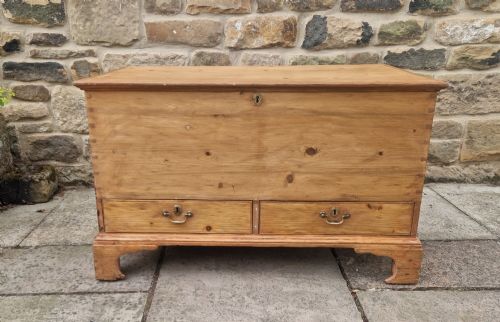
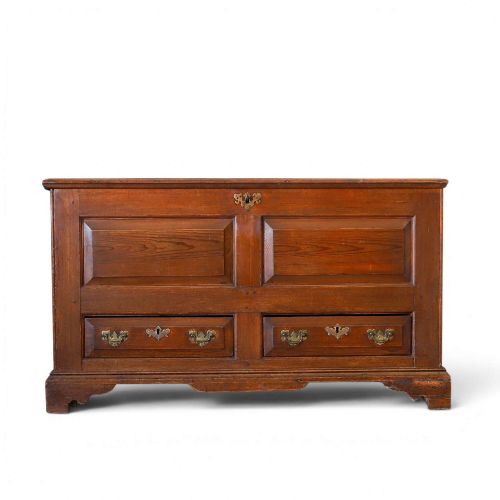
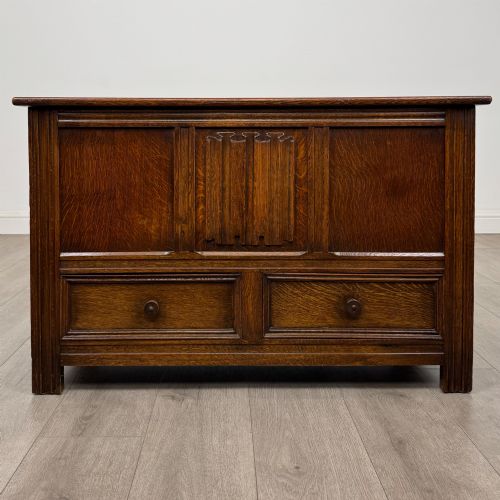
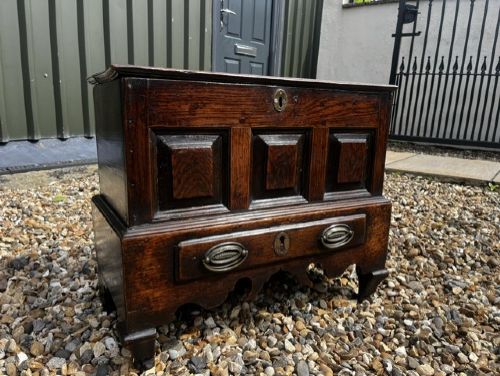
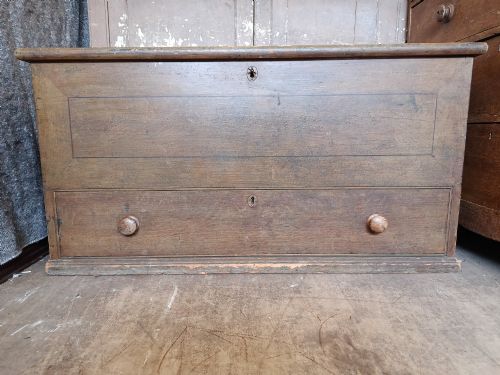
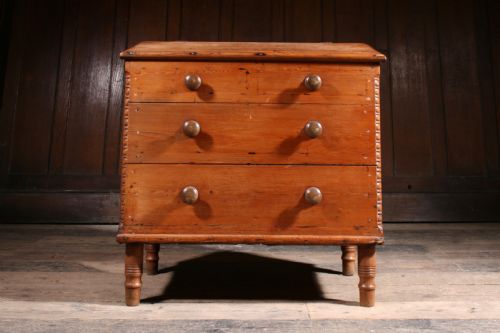
A mule chest is a lidded storage chest with one or two drawers built into the base, made to give a household a deep well for bedding and linen with working drawers underneath.

What Is A Mule Chest?
The form sits between the plain lidded coffer and the chest of drawers. It appeared in Britain in the 17th century, gave a household a deep well for blankets and linen with drawers below, and stayed in country and provincial production well into the 19th century.
The heading is used broadly on Sellingantiques. Roughly a third of listings are described as coffers, and titles often run the two words together, as in "Georgian oak coffer or mule chest". Blanket box, trunk, kist and ark all turn up as alternative names for the same broad object.
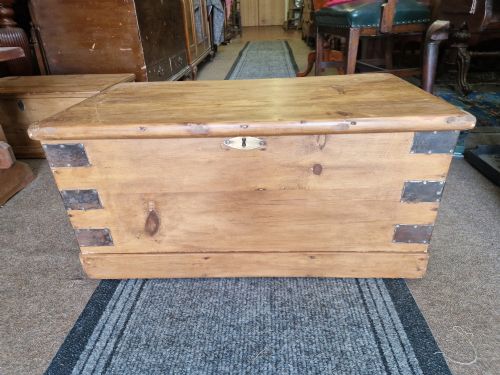
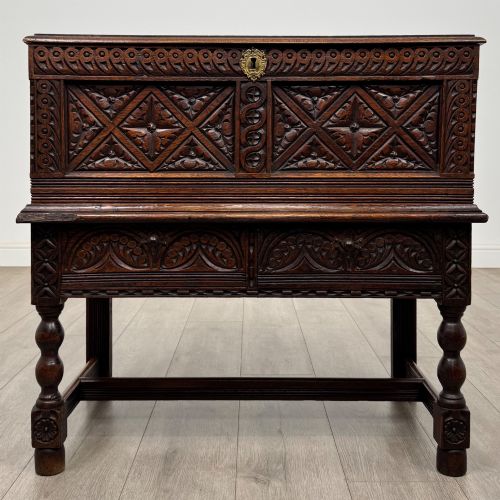
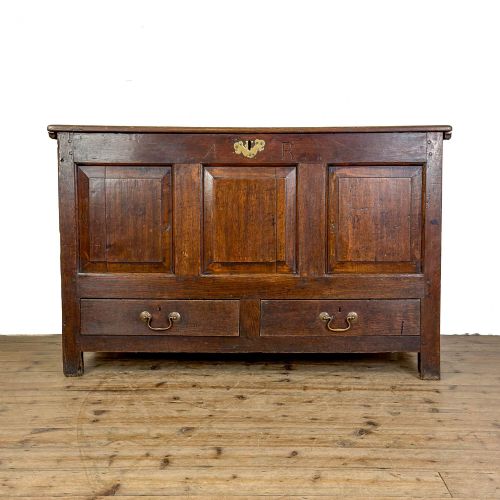
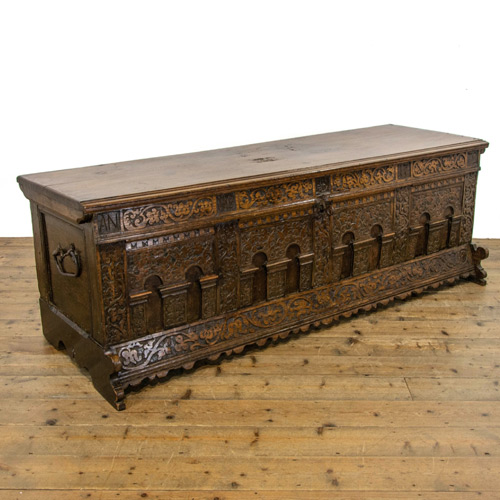
The version you're most likely to meet is joined oak of 18th-century date, panelled or carved to the front, hinged lid, drawers below. Oak dominates the wood list, and the plainest wording, "Georgian Oak Mule Chest" or "18th Century Oak Mule Chest", recurs verbatim dozens of times through the middle of the range. Pine is the clear second group, mahogany, elm and walnut smaller again.
Dating is broad by design. The dealers' own field leans heavily to the 18th century and Georgian, with a smaller 17th-century group and fewer 19th-century pieces; only 71 of 496 listings carry a clean year, and where one is given the span runs 1700 to 1930. A handful of titles cite a date cut into the wood itself, among them 1702, 1734 and 1754.

Where The Range Splits
Timber does most of the sorting. Pine titles, including painted and scumbled examples, cluster at the bottom of the range, while oak fills the middle and mahogany, walnut and burr walnut sit near the top. Silver chests and housekeeper's trunks make up a scarce upper tier.
Decoration lifts a piece from there. Carving appears in a good number of titles, inlay in fewer, and marquetry or split baluster appliques show up only among the highest-priced. A date cut into the front, sometimes with initials, puts a chest above the middle of the range.
Regional naming counts for a lot in a country form like this. Lancashire crossbanded chests are a small distinct group, Welsh work is larger and rising in live stock, and Yorkshire, Lakeland, Dorset, Leeds and North Country all appear as title-level attributions. Size cuts both ways: small pine chests sit at the bottom, while the Welsh coffer bach and miniature oak reach the upper end.
Retail Price Guide 2026
Typical UK retail prices for mule chests, calculated from the Sellingantiques database of over a million retail prices indexed since 2003. This retail price guide relies exclusively on Sellingantiques data; no external sources or auction records are used, so the figures do not describe the wider market.
The top sale of the last year on Sellingantiques was an antique 18th century oak mule chest, sold in September 2025.

The Antique Mule Chests Glossary
- Mule chest
- A lidded storage chest with one or more drawers built into the base, part coffer and part chest of drawers.
- Coffer
- The older plain lidded chest without drawers, used in about a third of titles in this category and often interchangeably with mule chest.
- Blanket box
- A common alternative name for the same object, appearing in 30 titles.
- Joined
- Built with a mortice-and-tenon frame and panels rather than nailed boards.
- Coffer bach
- Welsh for little chest, a small chest sometimes on a stand; the spelling also runs coffor bach and coffr bach.
- Split baluster applique
- A turned baluster sawn in half lengthways and applied to the front as ornament.
Frequently Asked Questions
What's the difference between a mule chest and a coffer?
A coffer is the plain lidded chest with no drawers. A mule chest has one or more drawers built into the base below the well.
In practice the labels overlap on Sellingantiques. Around a third of listings in this category call the piece a coffer, and plenty of titles offer both words at once.
Which wood are they usually made from?
Oak, in the majority of titles. That covers the joined, panelled and carved chests of the 17th and 18th centuries which make up about three-quarters of the category.
Pine is the second group, roughly one in eight, including painted and scumbled finishes. Mahogany, elm, walnut and burr walnut appear in smaller numbers, along with cedar, deal and one Oregon pine.
How old are most of these chests?
The dating field leans heavily 18th century, with Georgian close behind and a smaller 17th-century group. Nineteenth-century and Victorian listings are fewer.
Six listings are filed before 1700 and two titles claim the 16th century. Where a clean year is given, the range runs 1700 to 1930.
What is a coffer bach?
Welsh for little chest. It's a small chest, sometimes raised on a stand, and the spelling varies between coffer bach, coffor bach and coffr bach.
Only 13 titles use the term, but they reach the upper end of the range. Welsh work more broadly runs to about one in sixteen listings, with S. Wales and Snowdonia named in some titles.
Are regional attributions common in this category?
Unusually so for a country form. Lancashire appears in 20 titles, often with mahogany or oak crossbanding, and Welsh in around 31.
Yorkshire, Lakeland, Dorset, Leeds, North Country and Snowdonia all show up as title-level attributions too. A named region tends to lift a chest within the range.
Do dated examples turn up?
A handful carry a date cut into the wood itself. Titles record 1702, 1716, 1734, 1753 and 1754, some with initials alongside.
Those sit above the middle of the range. Most listings, though, use decade-free labels like 18th Century or Georgian rather than a year.