

Antique Blanket Boxes
A lidded box that sits on the floor, made to hold blankets, linen, clothes or tools, and in older houses to move them from place to place.
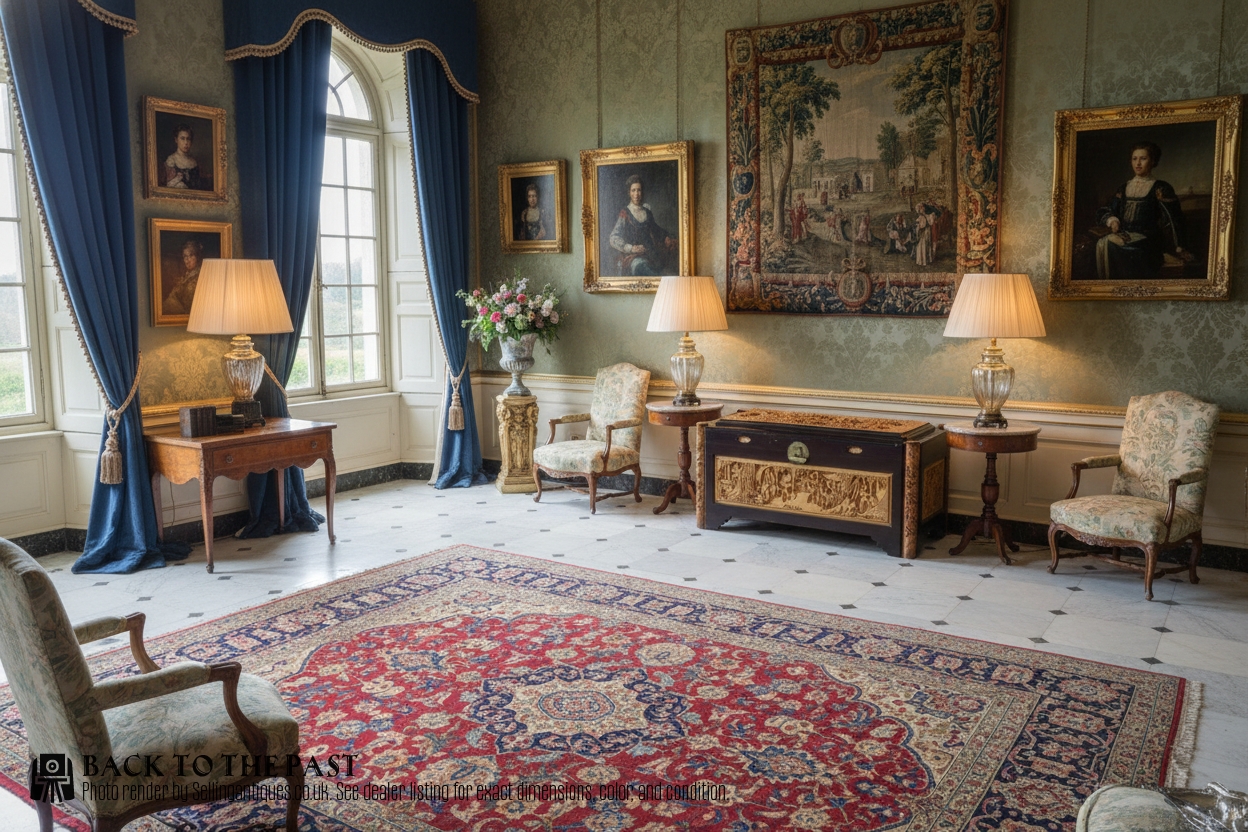
Antique Blanket Boxes
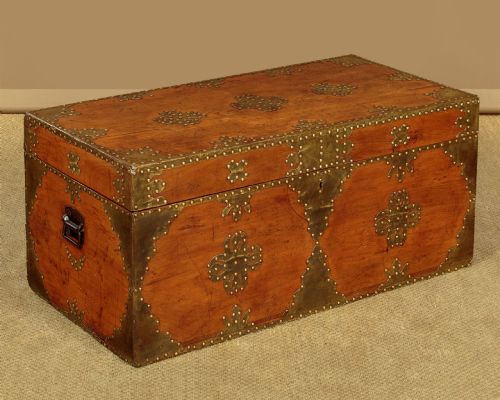
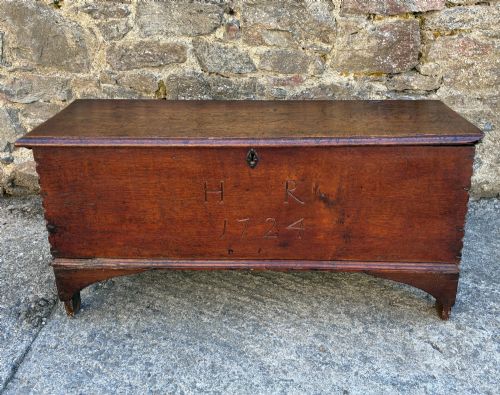
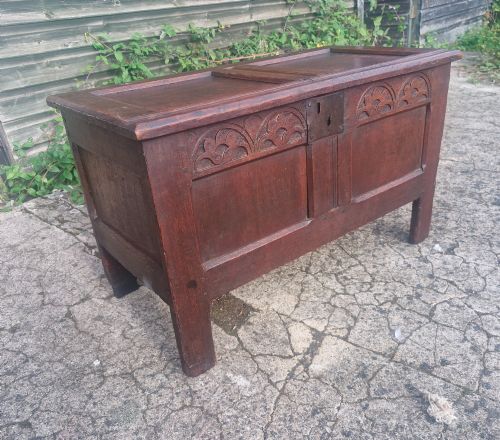
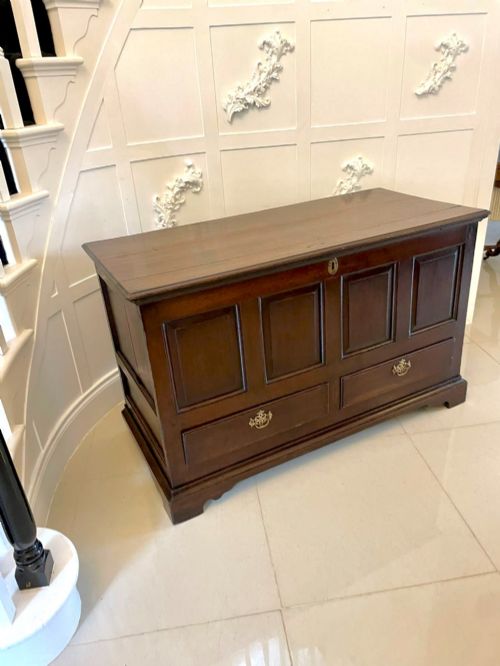
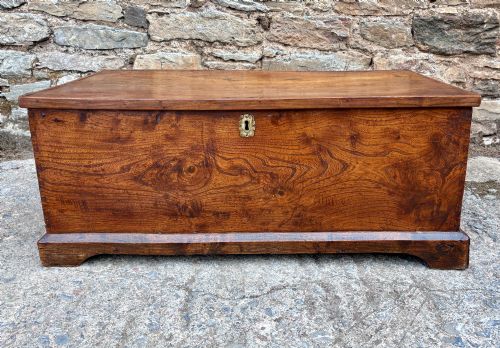
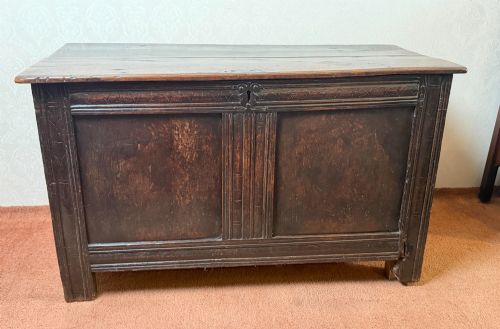
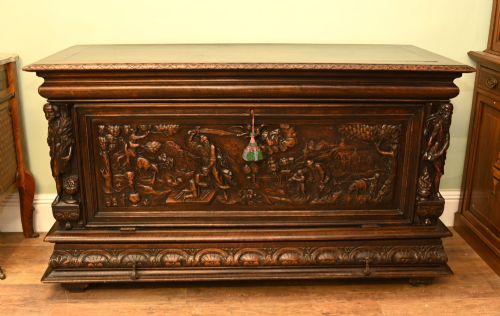
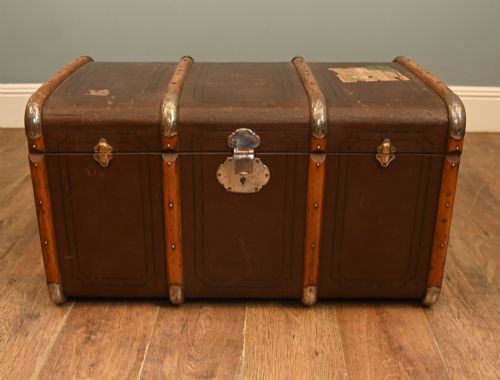
The lidded chest is one of the oldest domestic furniture forms in Europe, used to store and carry textiles and valuables long before the chest of drawers took over. The heading covers a wide span: joined and boarded oak coffers, Victorian pine boxes, mule chests with drawers in the base, and travelling trunks in camphor, leather or metal-bound wood.
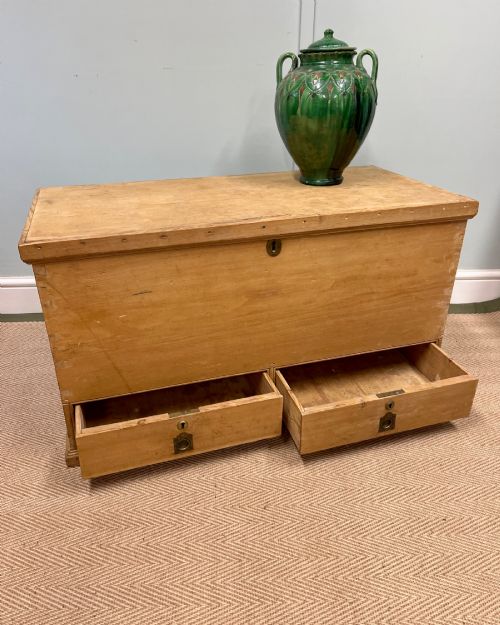
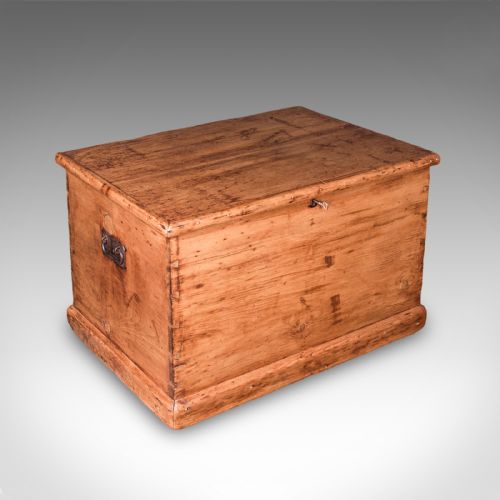
Two forms dominate. Oak appears in 458 of 1,173 titles and "coffer" in 377, which is the joined or boarded oak chest, often panelled and often carved. Against that sits pine, in 265 titles, the plainer 19th-century blanket box described as stripped, waxed or in original paint.
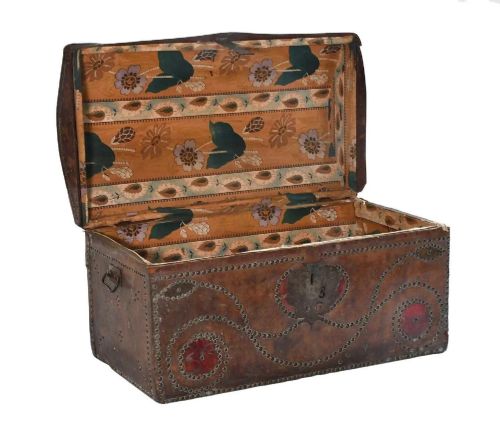
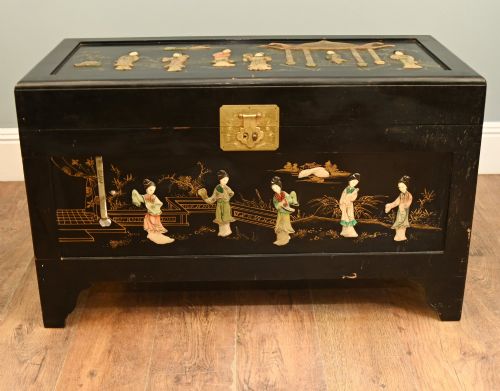
Trunks are the other big thread, in roughly a fifth of titles. Camphor wood turns up in 81, and campaign trunks in camphor or teak with brass fittings form a sub-market of their own alongside steamer, coaching, sea and cabin trunks. Mule chests account for 87 titles.
Dating is mostly done by label rather than year. "19th Century" is the largest bucket at 233 listings, then Victorian, 18th Century and 17th Century, with Georgian adding more. Sampled listings reach back to 16th-century oak and walnut, filed under broad labels rather than a clean date. Titles routinely stack names, so "chest coffer blanket box" describes one object.

What Sets Them Apart
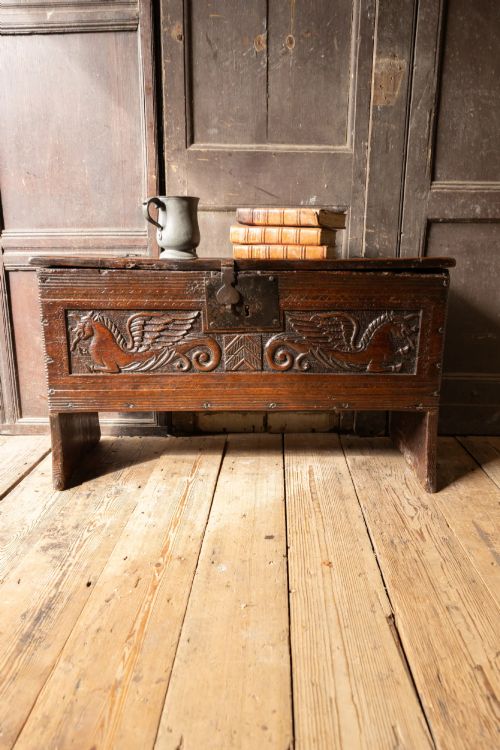
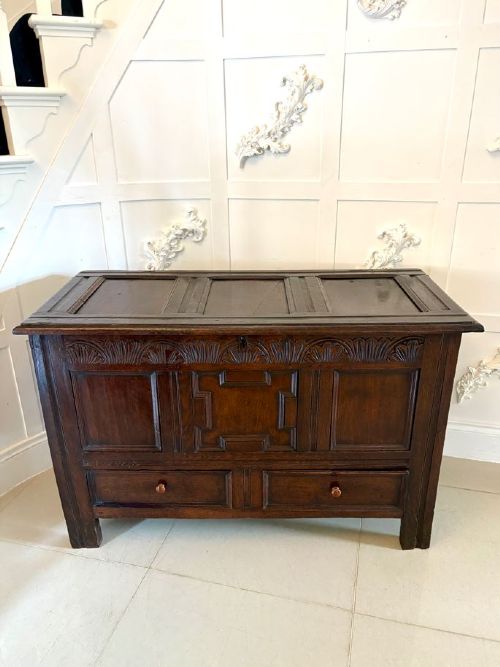
Age and carcase do most of the work. Early joined and panelled oak sits at the top of the range, with 16th- and 17th-century coffers the highest of all, while plain Victorian pine blanket boxes occupy the bottom. Decoration pushes the same way: carved appears in 107 titles, and linenfold, arcaded, scratch-carved, inlaid and marquetry fronts all climb above plain ones.
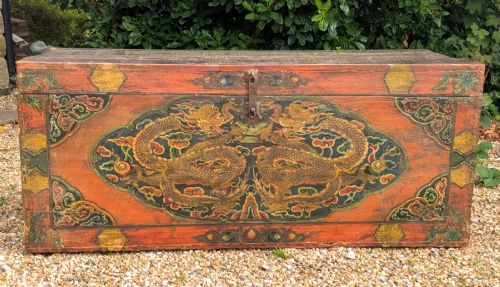
Within the pine group the surface is the argument. Original paint, scumble graining and boxes described as original throughout stand above stripped and waxed examples, and painted survivals are a group in themselves, including Swedish and Scandinavian folk-painted work and Hungarian painted pine.
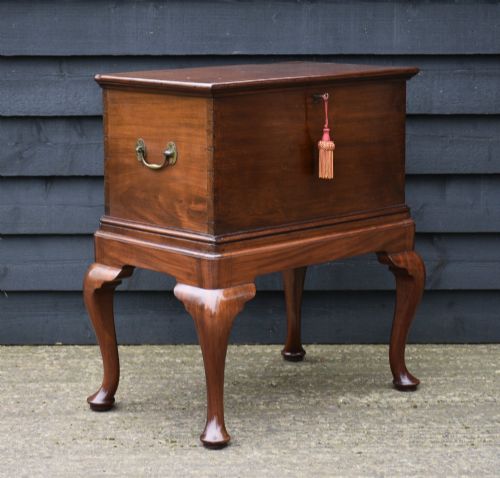
Fittings and interiors count. Drawers in the base, internal candle boxes, hidden drawers, lift-out slides, working locks with keys, and iron or brass banding all lift a piece. So does a named region: Welsh work is a distinct thread, and titles name Yorkshire, Lakeland, Westmorland, Dorset, the West Country and Lancashire. Imported chests in camphor, or Chinese, Anglo-Indian and Italian examples, sit well above the pine baseline.
Antique Blanket Boxes Retail Price Guide 2026
Typical UK retail prices for blanket boxes, calculated from the Sellingantiques database of over a million retail prices indexed since 2003. This retail price guide relies exclusively on Sellingantiques data; no external sources or auction records are used, so the figures do not describe the wider market.
Blanket boxes have been listed on Sellingantiques since 2009, and more than four hundred have passed through since.
The Antique Blanket Boxes Glossary
- Coffer
- The older name for a chest with a hinged lid, used in 377 titles and usually of oak.
- Mule chest
- A chest with one or more drawers built into the base below the lidded compartment; 87 titles.
- Plank or boarded coffer
- Made of wide boards nailed or pegged together rather than framed and panelled. Listings count them: "5 plank coffer", "six plank chest".
- Camphor wood
- Aromatic, moth-resistant timber used for trunks and chests, and the signature trunk timber on Sellingantiques with 81 mentions.
- Scumble grained
- Painted graining that imitates a finer timber, common on pine boxes and trunks.
- Coffer bach
- Welsh small chest, sometimes raised on turned feet or a stand, and a recurring term in the Welsh group.
Antique Blanket Boxes: Frequently Asked Questions
What's the difference between a coffer and a blanket box?
Coffer is the older word for a chest with a hinged lid, and on Sellingantiques it is used in 377 titles, nearly always for oak.
Blanket box tends to attach to the lighter, later boxes, particularly Victorian pine. In practice the titles stack the words together, so one object can be listed as a chest, coffer and blanket box at once.
How old are most of these?
Dating is usually given as a period label rather than a year. "19th Century" is the largest bucket at 233 of 1,173 listings, followed by Victorian, 18th Century and 17th Century.
Only 251 listings carry a clean year, and that field runs 1680 to 1940. Sampled titles reach further back than the field does, describing 16th-century oak and walnut chests and pieces put at circa 1560 and circa 1600.
Are blanket boxes signed by makers?
No maker name recurs across dealers in this category at all. These are anonymous country and trade pieces.
Descriptions identify them by timber, form and region instead: oak or pine, plank or panelled, Welsh or Yorkshire or West Country.
What is a mule chest?
A chest with one or more drawers built into the base, below the lidded compartment. It sits halfway between a coffer and a chest of drawers.
Mule chests account for 87 titles, with two- and three-drawer examples both turning up, and oak is the usual timber.
Why do so many trunks smell of camphor?
Camphor wood is aromatic and moth-resistant, which made it the timber of choice for chests holding clothes and linen on long journeys.
It appears in 81 titles, and campaign trunks in camphor or teak with brass fittings form a distinct sub-market alongside steamer, sea and cabin trunks.
Do people use them as furniture rather than storage?
Openly, and dealers say so. Twenty-two titles offer the piece as a coffee table, and others as a TV stand, hall seat, window seat or log bin.
Size varies enormously, which helps. Titles run from "Monumentally Large" and "Enormous" down to miniature and apprentice pieces, with 107 saying large and 59 saying small.