Antique Pine Chests
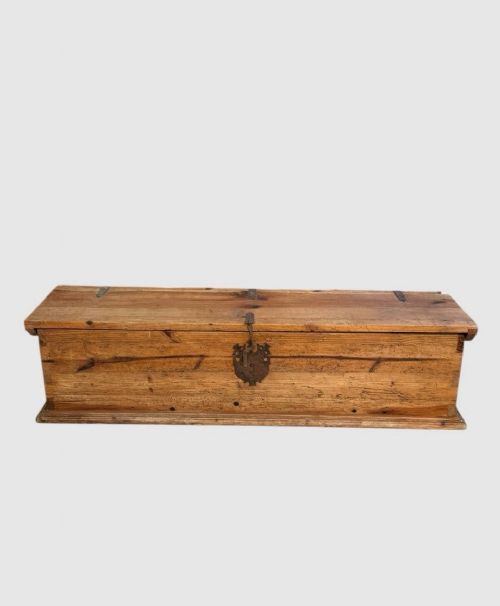
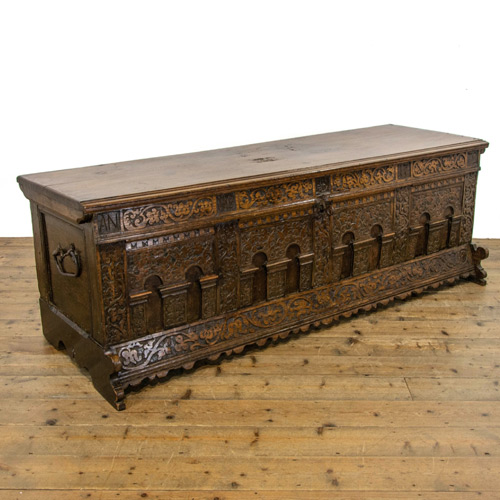
A lidded pine box, built plain and cheap for bedding, clothes or a tradesman's tools, and used for storage long before fitted cupboards were common.

What Are Antique Pine Chests?
Three words do most of the work in these listings: box appears in 301 titles, trunk in 245 and blanket in 226. They often share one title, so the same object turns up as "Antique Pine Trunk or Blanket Box" and is catalogued under all three at once. Read the shape and the lid rather than the noun.
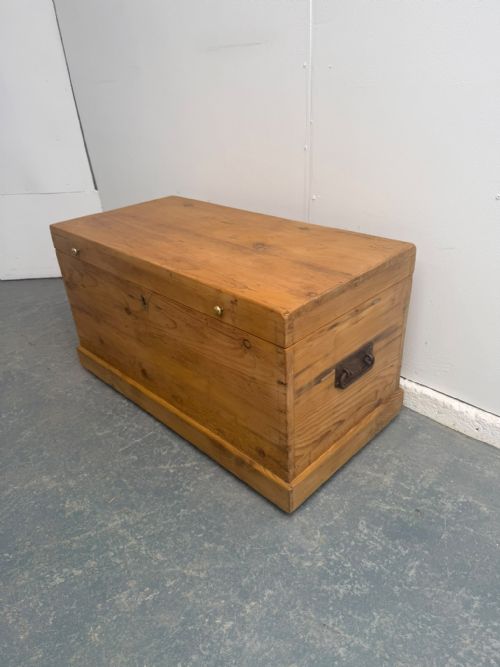
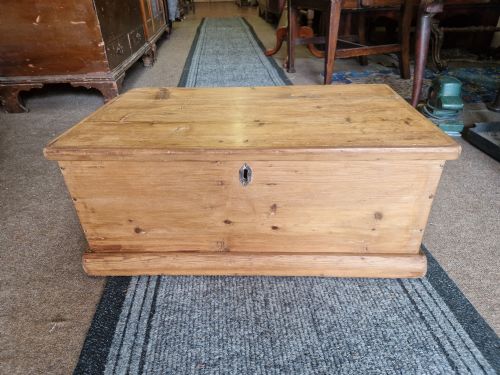
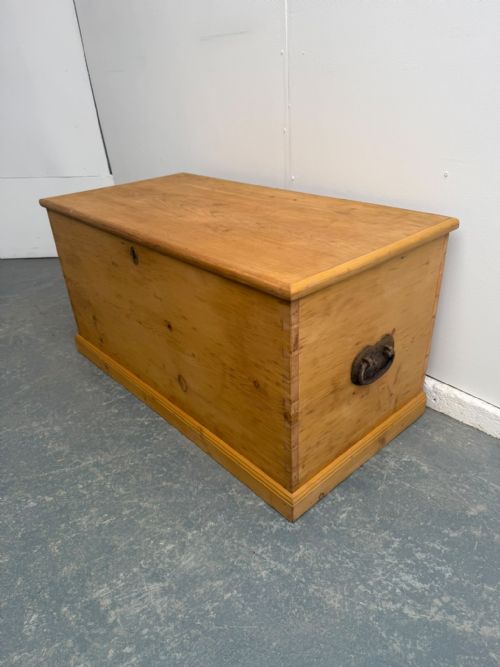
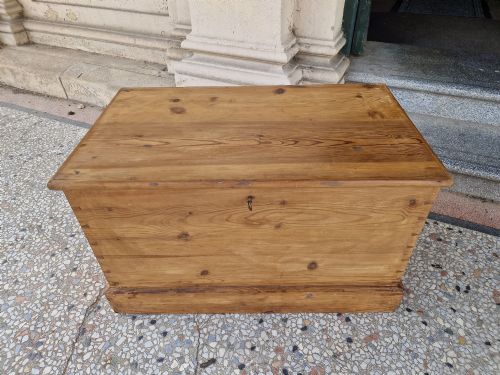
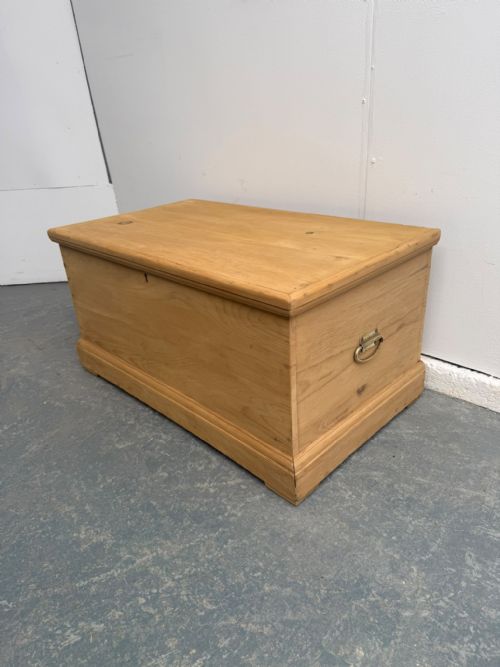
The form you'll meet most often is a Victorian English pine blanket box: flat lid, no decoration, stripped or waxed, sold for storage, as a toy box, or with a dozen titles suggesting it as a coffee table. Victorian appears in 263 titles, and the Victorian and "19th Century" period fields together cover 489 of the dated listings.
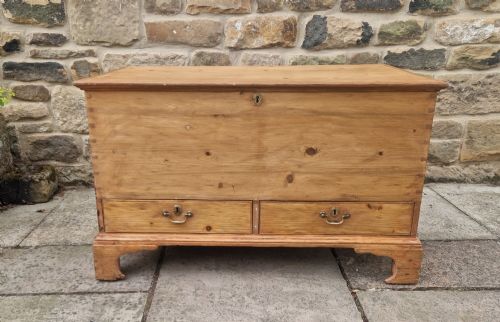
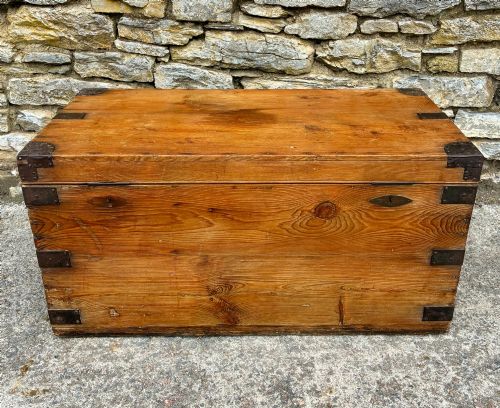
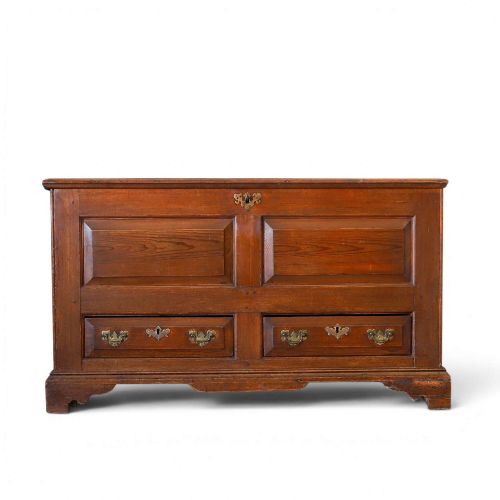
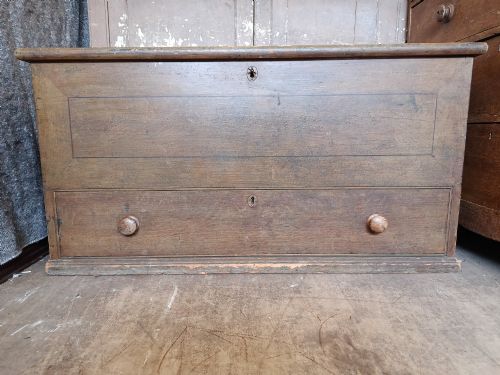
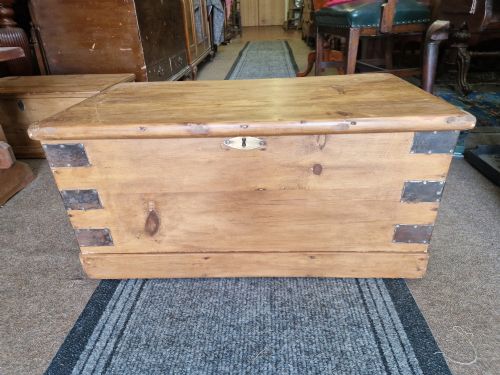
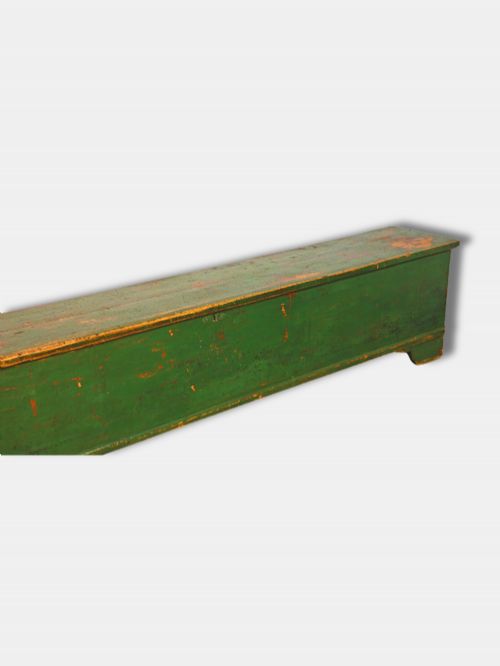
Around it sit the other branches. Travelling and carriage trunks make up a quarter to a third, dome-top or flat-top, often iron bound or tin lined, some named for steamer, mail, railway or sea use. Mule chests with drawers under the box and plank or panelled coffers account for roughly one in seven. Trade chests, from shipwrights to cobblers and farriers, are a visible minority.
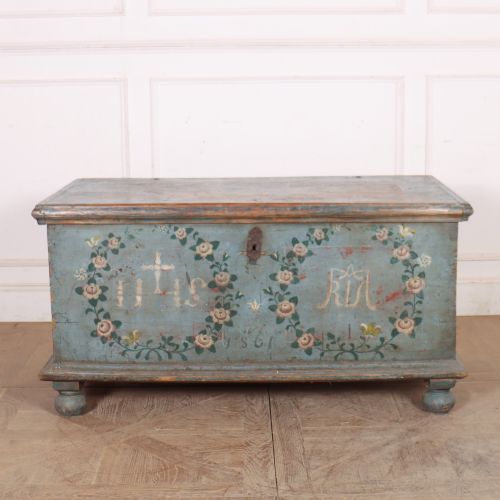
Dating is broad rather than precise. Only 193 of 775 listings carry a clean year, and the field spans 1700 to 1930, so pieces are usually placed to a reign or a century by feel. A handful of titles quote a date painted or inscribed on the chest itself, which is a different order of evidence from a dealer's period field.

Where The Range Splits
Surface separates the top from the bottom more than anything else. The highest-priced pieces sampled are hand-painted Swedish, Hungarian, Romanian and Alpine chests, several carrying painted dates. Painted runs through 133 titles. Stripped and waxed, by contrast, cluster at the plain end, and a stripped Victorian box is the baseline of the category.
After paint comes evidence of who owned or used the thing. Shipwright's, joiner's, cobbler's, farrier's and cabinet maker's chests sit well above the anonymous box, as do trunks inscribed with a regiment, a railway company or an owner's name. What's inside counts too: drawers in the base, candle boxes, lift-out slides, fitted or secret compartments.
Age and scale pull in their own directions. The scarce seventeenth- and eighteenth-century entries, panelled and six-plank coffers among them, sit far above the Victorian norm, which fills the middle. Size language is polarised, with large in 111 titles against small in 44, and the extremes described as huge, enormous or massive.
Retail Price Guide 2026
Typical UK retail prices for pine chests, calculated from the Sellingantiques database of over a million retail prices indexed since 2003. This retail price guide relies exclusively on Sellingantiques data; no external sources or auction records are used, so the figures do not describe the wider market.
The oldest pine chests on Sellingantiques reach back past the eighteenth century, a coffer given as the 1690s, and the newest are 1930s storage boxes.

The Antique Pine Chests Glossary
- Blanket box
- A plain lift-lid chest for bedding, and the commonest description in the category, used in 181 titles.
- Mule chest
- A box chest with one or more drawers built into the base; 56 titles use the term, specifying two, three or four drawers.
- Coffer
- An older-pattern chest, plank-built or panelled, named in 53 titles and generally applied to the earlier end.
- Dome top
- A curved or arched lid, usual on travelling trunks. Thirty-six titles say dome top, 42 say dome; the flat-lidded alternative appears in 24.
- Scumble
- A painted finish imitating figured hardwood, dragged or combed while the paint is wet. It shows up as scumbled, scrumbled and "combed grained".
- Kist
- The Scots and northern English word for a chest, used in several titles alongside marriage or dowry chest, which appears 14 times.
Frequently Asked Questions
What's the difference between a trunk and a blanket box?
In practice the words overlap. Trunk usually points to a travelling chest, often dome-topped, iron bound or tin lined; blanket box to a flat-lidded domestic chest for bedding.
Many titles use both of them for one object, so the description and the photographs tell you more than the noun does.
How old are most pine chests on the site?
Victorian and "19th Century" between them cover the majority of dated listings, with Georgian, 18th Century and Regency used as period labels rather than years.
The field as a whole runs from 1700 to 1930, taking in a coffer dated to the 1690s at one end and 1930s storage boxes at the other.
Why are painted chests priced above plain ones?
The painted group is small but strongly represented, and it occupies the top of the range. Swedish chests account for 21 titles, Hungarian 10, with one-off Norwegian, Romanian, Alpine, Spanish, Dutch and East German pieces.
Several carry dates painted on the front, from 1819 to 1912. Stripped and waxed pine sits at the other end.
What is a mule chest?
A chest with the usual lift-lid box above and one or more drawers built into the base. Fifty-six titles use the term.
Listings specify two-, three- and four-drawer versions. Drawers, fitted interiors and secret compartments all push a chest up the range.
Are tool chests common in this category?
They're a visible minority, concentrated at the upper end. Tool appears in 24 titles and carpenters in 10.
The job titles run wide: shipwright, joiner, cobbler, farrier, boat builder, cabinet maker, journeyman and fisherman, alongside railway, mail and carriage trunks.
Do pine chests carry maker's names?
Rarely. This is a vernacular category, made for bedrooms, workshops and travel rather than for show, and no maker or retailer name recurs across the archive.
What does appear instead is ownership: regimental marks, railway company initials, and names or dates painted or inscribed by hand.