


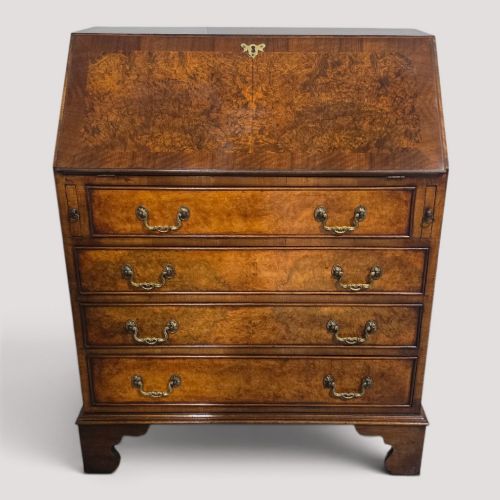
Vintage Burr Walnut Chest
A vintage burr walnut chest brings rich grain and deep warmth into a room, offering practical storage disguised as high ornament.
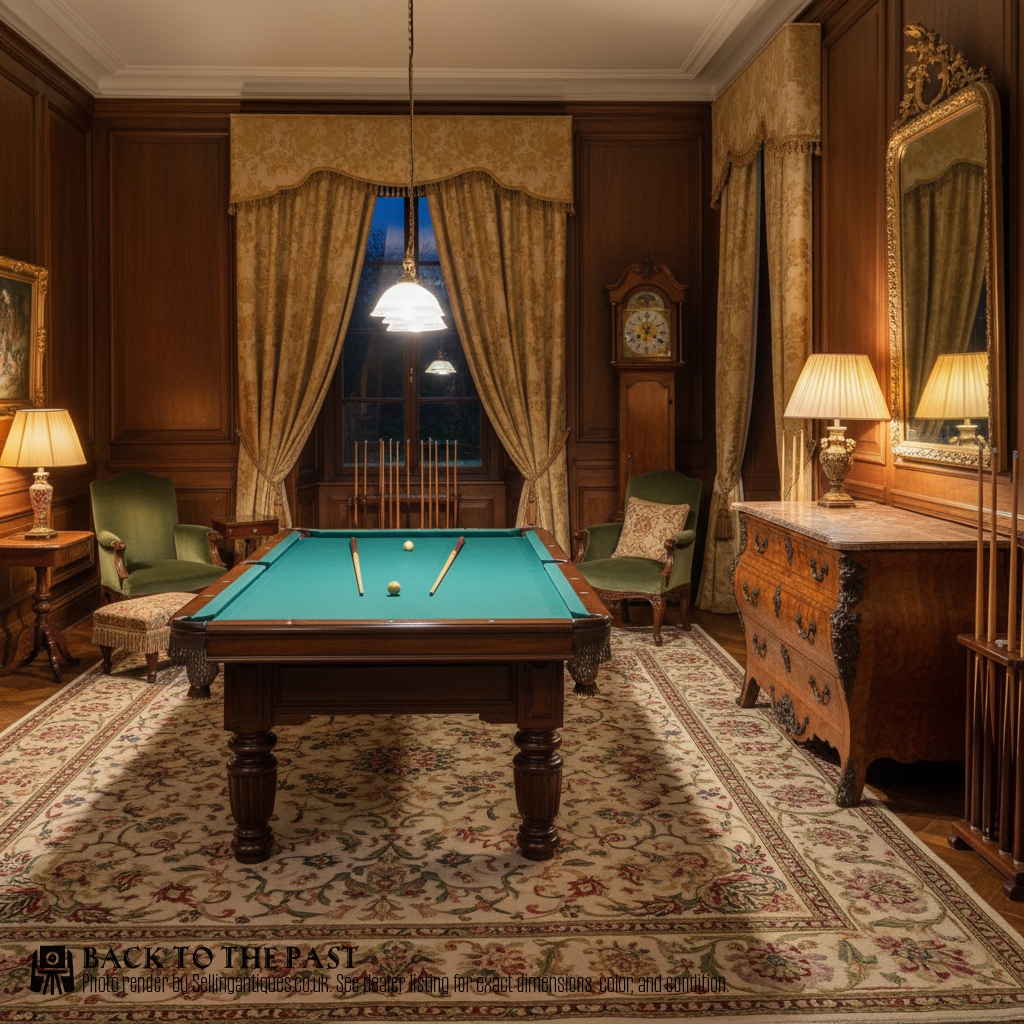
Vintage Burr Walnut Chest
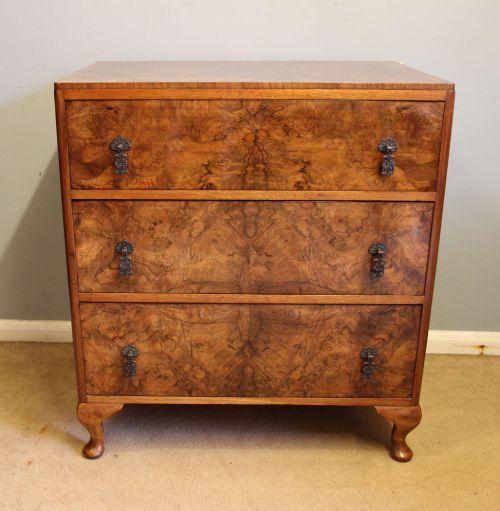
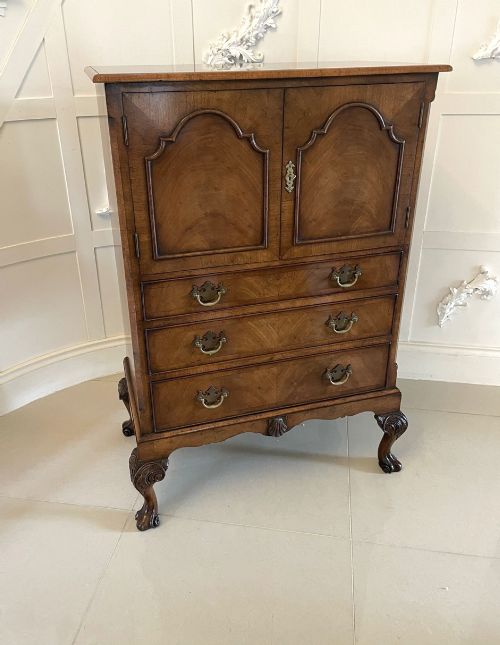
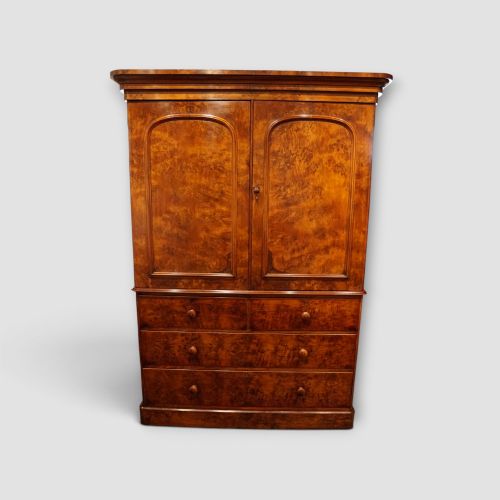
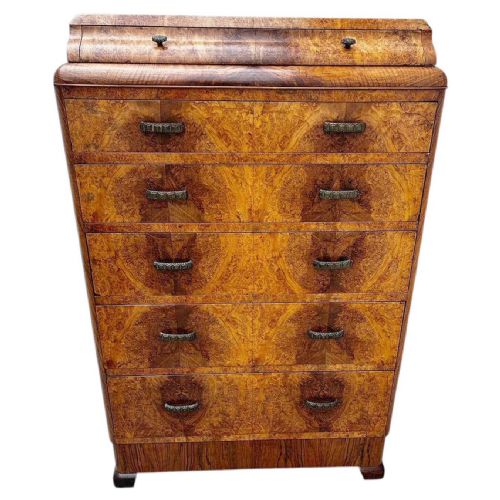
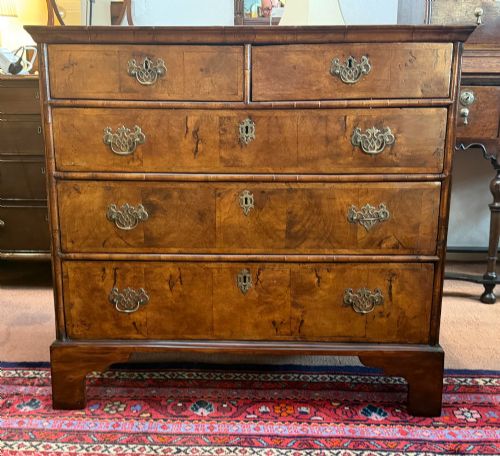
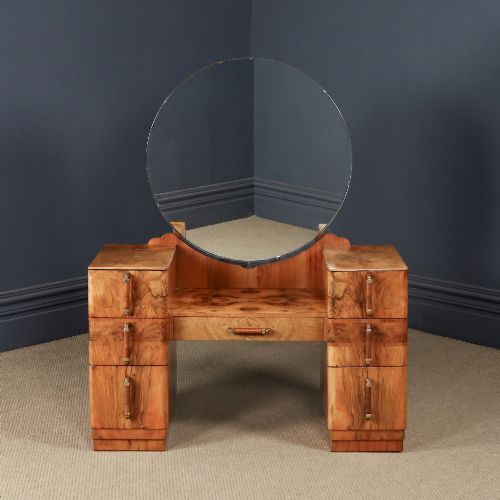
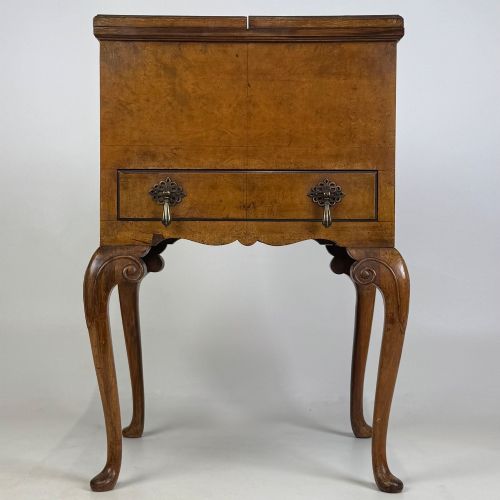
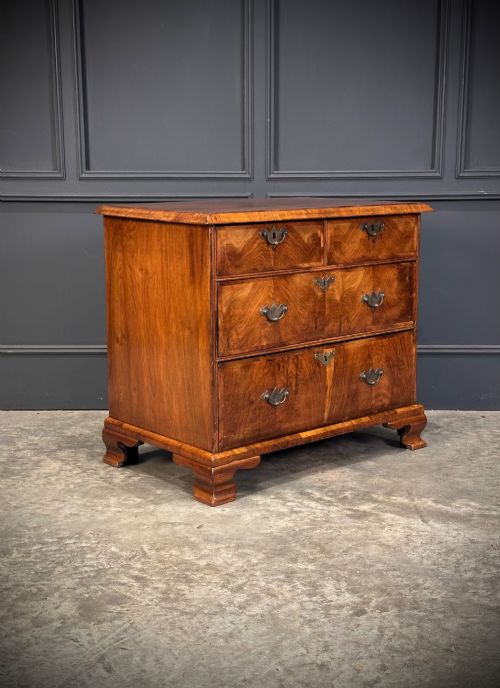
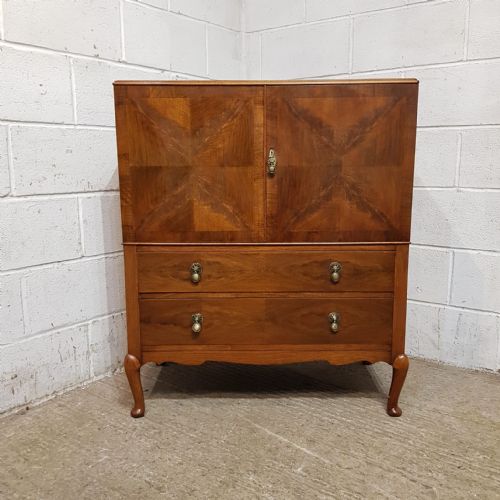
A vintage burr walnut chest encompasses a range of storage forms, from traditional chests of drawers and tallboys to bedside tables, commodes, and cocktail cabinets. Buyers searching for a vintage burr walnut chest will encounter pieces spanning the eighteenth century through to the Edwardian era, Victorian period, and Art Deco designs of the nineteen-twenties and nineteen-thirties.
The selection frequently includes revival pieces, notably Queen Anne style and Georgian revival works, alongside genuine eighteenth-century examples and early twentieth-century creations. Alongside standard drawer configurations, variations such as chests on stands, lowboys, and dressing tables appear across the inventory.
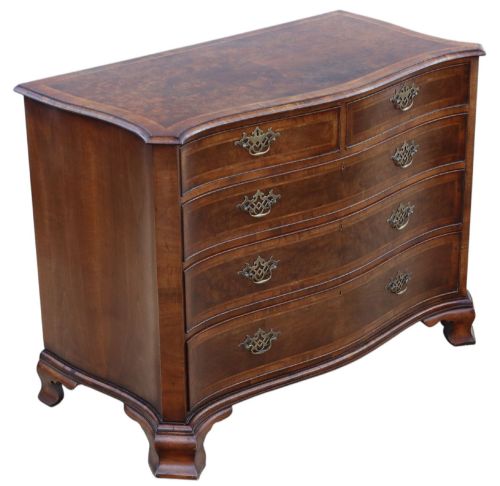
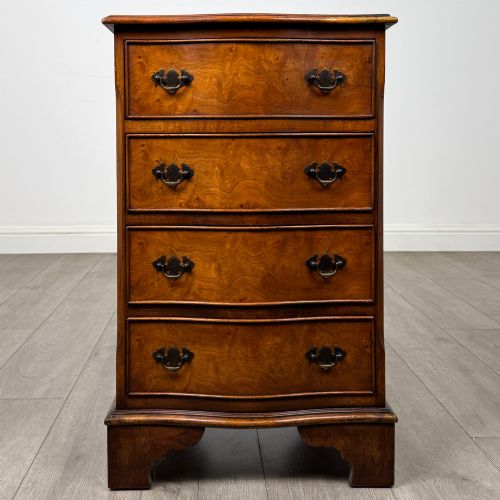
Origin and period dictate the structural character of these items, with English and French workshops contributing significantly to the available forms. Whether choosing a serpentine commode or a compact bedside cabinet, the fundamental appeal lies in the figured timber surfaces.
Judging Quality
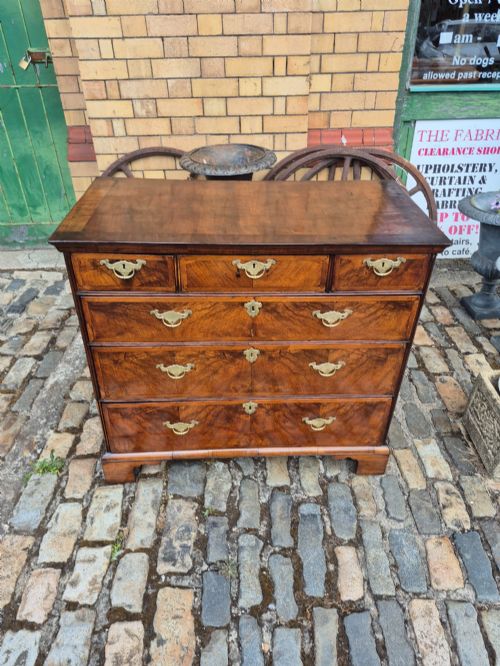
Quality rests upon the selection and placement of the burr walnut veneer, where symmetrical matching across drawer fronts creates a balanced, harmonious visual rhythm. The crispness of the crossbanding and the retention of original brass hardware further distinguish superior examples from standard production.
Structural stability and the preservation of the timber's natural lustre separate finer commissions from simpler items. Superior cabinetmaking shows in the seamless integration of secondary woods like oak and the precision of the drawer linings.
Listings feature burr walnut pieces across Georgian, Victorian, Edwardian, and Art Deco periods, combining walnut veneer with oak and brass.
Frank Taylor & Co.
The Vintage Burr Walnut Chest Glossary
- Burr walnut
- A specialised wood veneer taken from the wart-like growths on walnut trees, prized for its swirling, highly figured grain patterns. It creates a decorative surface used extensively on high-end cabinet fronts.
- Crossbanding
- A strip of veneer applied perpendicular to the surrounding grain along the borders of a panel or drawer front. This technique frames the central wood and provides a clean visual boundary.
- Serpentine
- A curved furniture front characterised by a convex centre flanked by concave sides, or vice versa. This undulating shape demands advanced woodworking skill.
- Tallboy
- A tall storage unit consisting of one chest of drawers stacked on top of another, or built as a single tall carcase. They maximise vertical storage capacity while maintaining a compact footprint.
- Lowboy
- A small dressing table or side table featuring a low chest of drawers supported on four legs. Originating in the eighteenth century, they serve versatile functions in domestic spaces.
Vintage Burr Walnut Chest: Frequently Asked Questions
How do I care for burr walnut furniture?
Keep wooden surfaces away from direct sunlight and heat sources to prevent the veneer from drying out or splitting.
Apply a traditional wax polish occasionally and buff gently with a soft cloth to maintain the natural sheen.
What is the difference between a tallboy and a chest on chest?
A tallboy generally refers to a single tall chest or a combination of a chest mounted on a stand or lower base.
A chest on chest specifically comprises two distinct drawer sections stacked directly together, often scaling down in depth from bottom to top.
Can I use a cocktail cabinet as a bedside table?
Cocktail cabinets are usually taller and deeper than standard bedside tables, designed to house glassware and bottles rather than bedside essentials.
Placing one beside a bed requires adequate floor space and ceiling clearance given its height and compartment layout.
How do I distinguish an eighteenth-century piece from a revival piece?
Eighteenth-century pieces display authentic hand-cut dovetails, older secondary woods, and natural wear patterns accumulated over generations of use.
Revival pieces from the Edwardian or Art Deco eras often utilise twentieth-century machine methods while mimicking earlier stylistic motifs.