



Curved Walnut Chest
A curved walnut chest brings striking grain and fluid silhouette to a room, offering practical storage with distinct period character.
Curved Walnut Chest
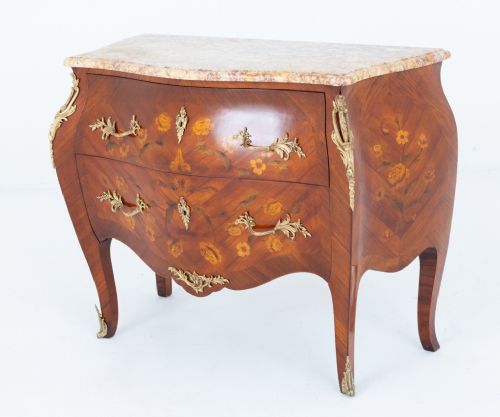
A curved walnut chest gathers several centuries of cabinetmaking, ranging from eighteenth-century continental commodes to early twentieth-century British bow fronts. When you search for a curved walnut chest, you encounter forms that curve at the front or swell entirely in the bombe manner.
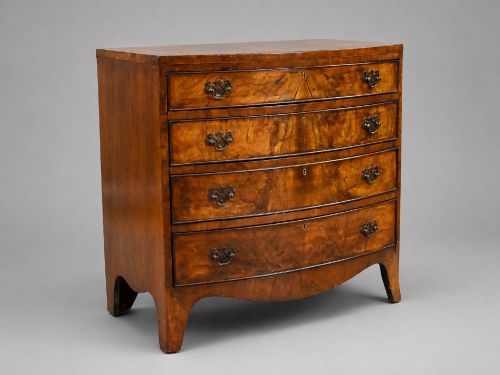
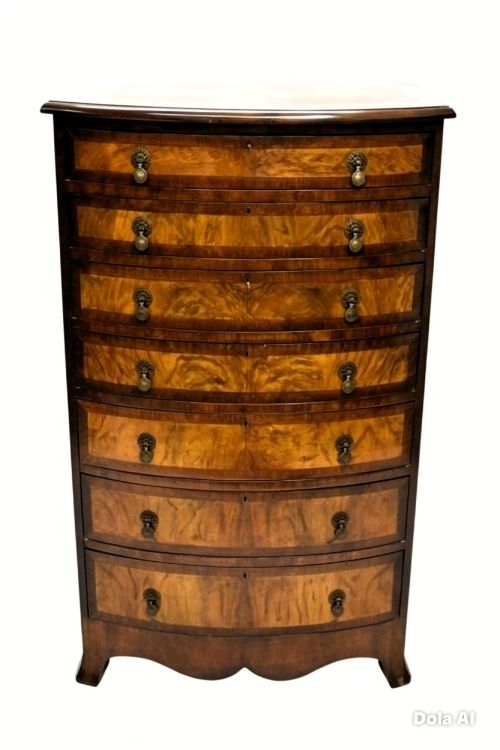
The selection on this page relies heavily on early twentieth-century bow front chests and continental commodes, alongside Georgian and Victorian iterations. Woods include plain walnut, burr walnut, and kingwood, often enhanced by crossbanding or marquetry.
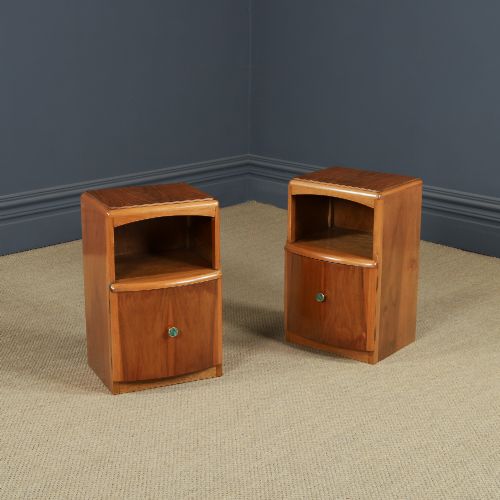
Forms extend beyond standard chests of drawers to include tallboys, bedside tables, dressing chests, and credenzas. Each piece demonstrates how makers used the natural figuring of walnut to accentuate curved drawer fronts and sides.
How they were made
Cabinetmakers constructed these pieces using solid or veneered walnut over secondary timbers such as oak, shaping the carcass to create bow fronts or swelling bombe contours. Burr walnut veneers were applied carefully to drawer fronts to display intricate figuring, often framed by crossbanding in contrasting timber.
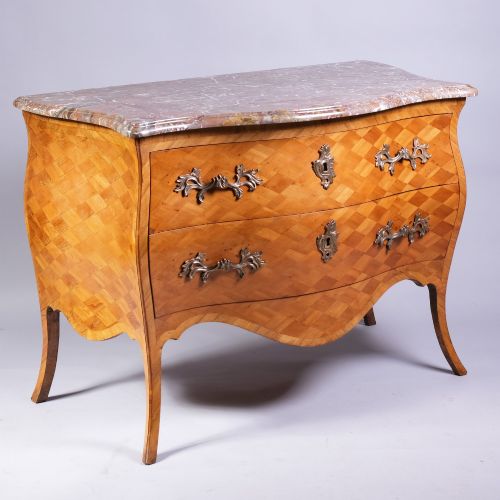
Many continental and Victorian examples feature heavy marble tops, mirror glass, or cast ormolu mounts that accent the structural curves. Brass handles and escutcheons complete the construction, functioning as both operational hardware and decorative ornament.
Materials documented across the inventory include walnut, burr walnut, oak, marble, ormolu, brass, mirror glass, and kingwood.
What varies in quality
The calibre of a curved walnut chest rests upon the selection and matching of the veneer, particularly on serpentine or bombe surfaces where grain alignment requires immense skill. Uniformity in the burr patterning across multiple drawers indicates a workshop of higher standing.
The integrity of the structural curves and the crispness of any marquetry or inlay separate standard utility pieces from exceptional ones. Finer examples also retain original mounts, marble slabs, and handles that complement the proportions of the carcass.
Maurice Adams·Heal's
The Curved Walnut Chest Glossary
- Bombe
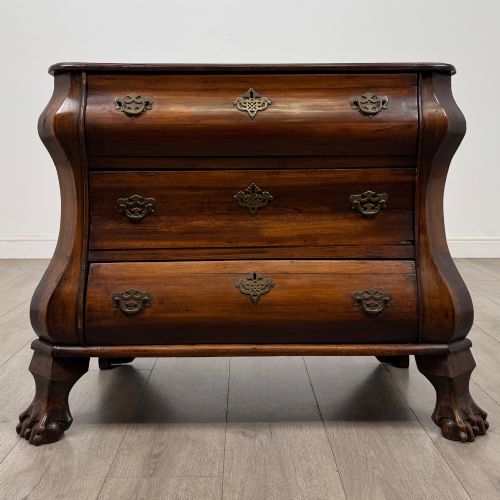
- A swelling, bulging chest shape that curves outward on the front and sides, originating in continental Europe. This form demands advanced veneering techniques to follow the complex contours.
- Bow front
- A convex curved front that projects outward in the centre, commonly seen on British and continental chests. This shape softens the profile of standard rectilinear furniture.
- Burr walnut
- Timber taken from a growth or burl on a walnut tree, yielding swirling, knotty grain patterns prized for decorative surfaces. It is typically sliced into thin veneers for drawer fronts.
- Crossbanding
- A border technique where narrow strips of veneer are laid perpendicular to the grain of the main panel. This frames the primary walnut surface and adds visual definition.
- Marquetry
- Inlaid pieces of wood, shell, or ivory fitted together to form pictorial or geometric designs on a furniture surface. It frequently decorates the top and sides of continental commodes.
Curved Walnut Chest: Frequently Asked Questions
How do I care for walnut veneer?
Walnut veneer requires protection from direct sunlight and sharp fluctuations in temperature to prevent fading and splitting. Keeping the timber away from heat sources preserves the natural oils in the wood.
Applying a traditional wax polish occasionally maintains the lustre of the grain without building up heavy residue. Avoid using excessive moisture when cleaning finished surfaces.
Where does a bow front chest fit best?
A bow front chest works effectively in bedrooms, hallways, or living rooms where a flat-fronted cabinet might feel too blocky. The curved profile softens room layouts and allows easier passage in tighter spaces.
These pieces pair well with both traditional and modernist interiors, acting as focal points against plain walls.
What is the difference between a commode and a chest of drawers?
A commode generally refers to continental European low chests of drawers, often featuring decorative mounts, marble tops, or intricate marquetry. They were traditionally designed for formal rooms rather than private bedchambers.
Standard chests of drawers follow more utilitarian British or regional formats, prioritising storage capacity over ornate continental ornamentation.