



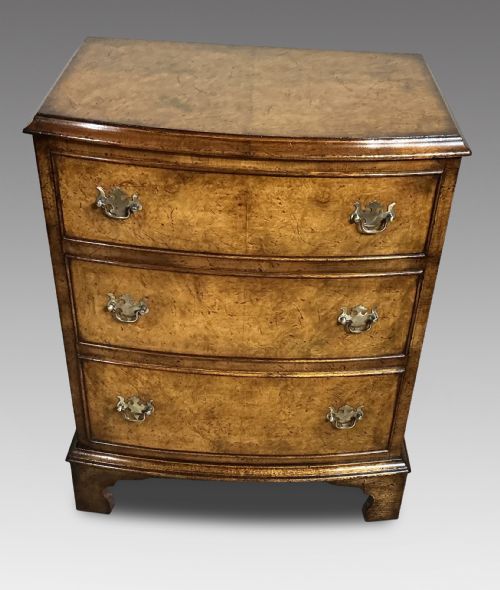


Walnut Bowfront Chest
A walnut bowfront chest brings curving warmth to a room, offering deep drawers disguised by a swelling facade.
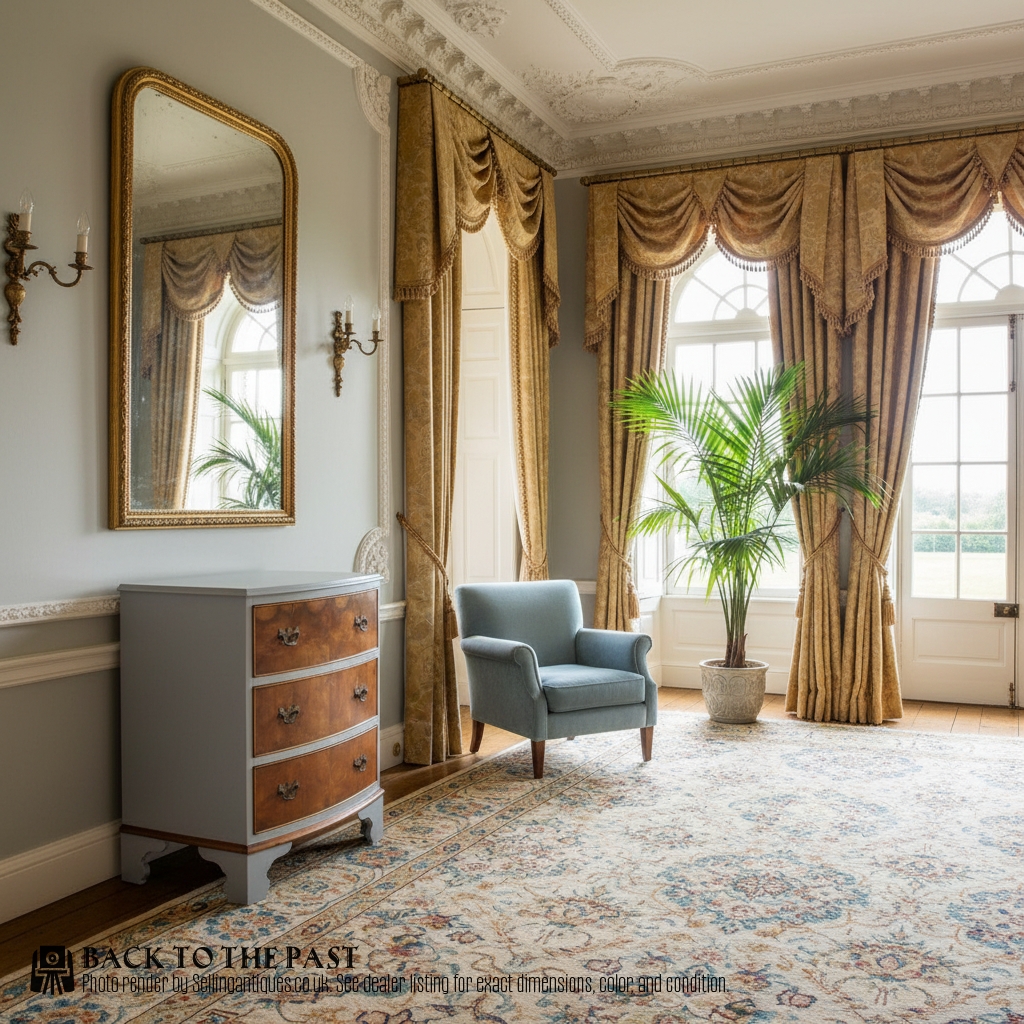
Walnut Bowfront Chest
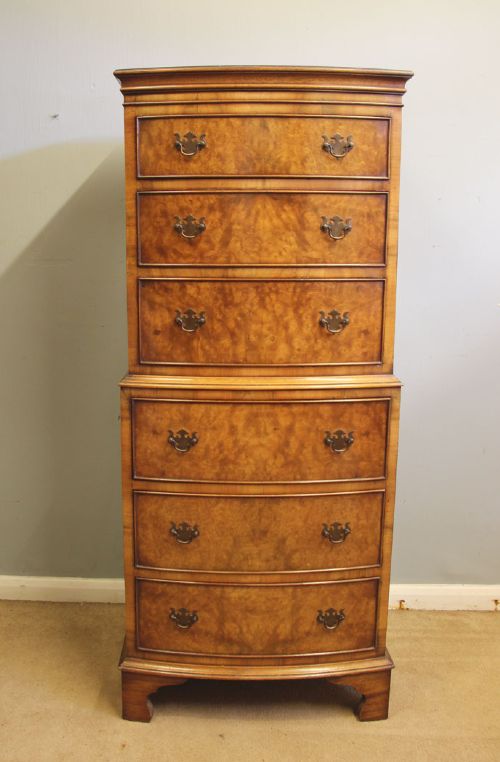
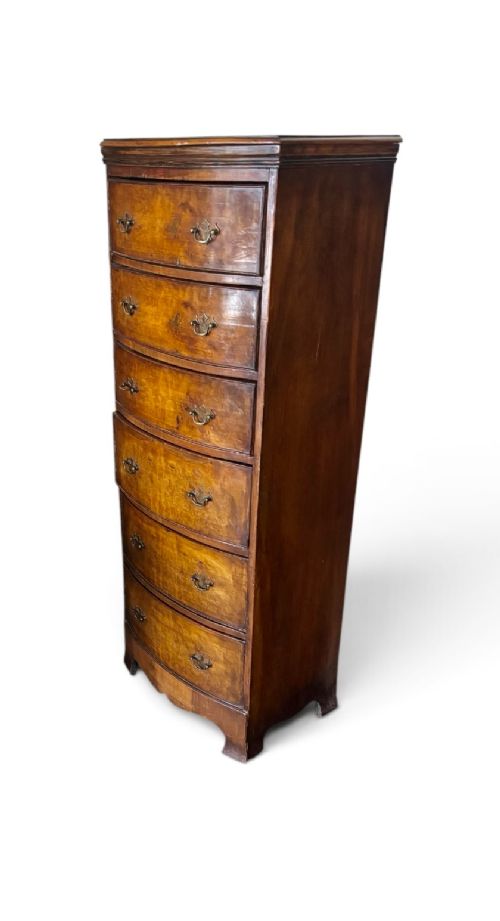
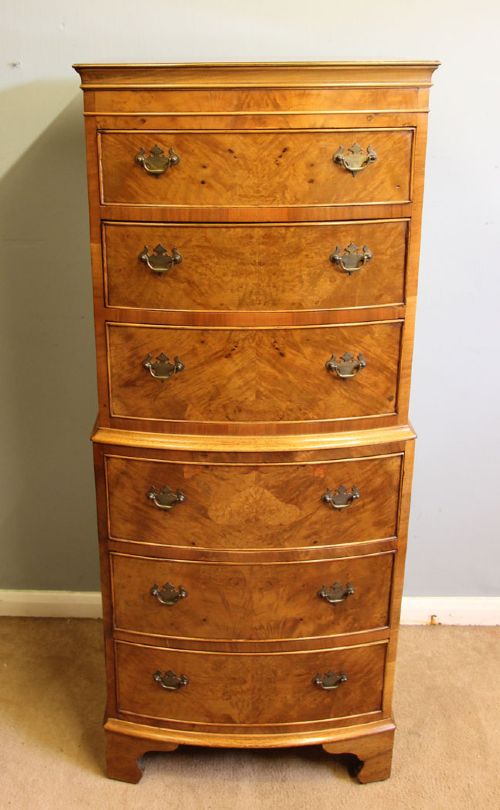
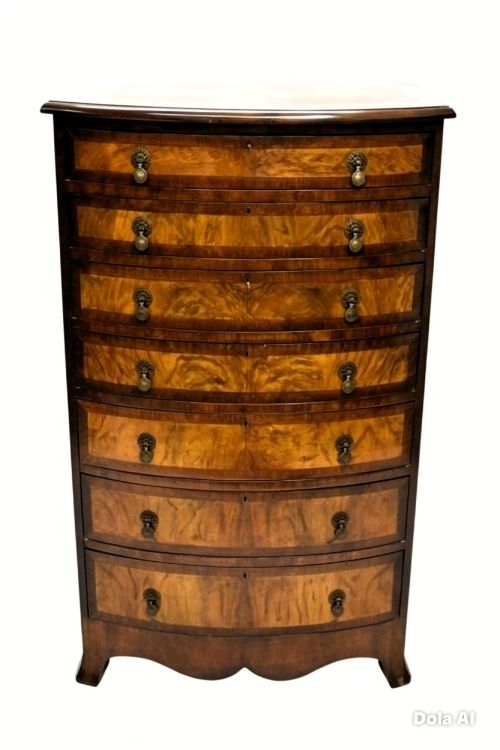
A walnut bowfront chest presents a convex curved front profile that softens the rigid geometry typical of older case furniture. The pieces seen here span compact bedside cabinets, small tallboys, chest on chest forms, and marble top washstands.
Most examples originate from the early twentieth century, including the 1920 and 1930 decades, alongside Georgian periods and Queen Anne or Georgian Revival styles. French Provincial and Art Deco influences also appear across the selection.
Buyers will most frequently encounter variations employing burr walnut veneer, figured wood, and crossbanding upon standard timber carcases. These drawer units range from modest single bedside proportions up to towering double chests.
How they were made
Construction relies upon applying fine veneer slices, specifically burr walnut and figured timber veneer, over stable secondary woods like oak. Cabinetmakers matched these grain patterns symmetrically across the curved drawer fronts to create rhythmic visual movement.
Brass hardware, including swing handles and keyhole escutcheons, provides functional contrast against the dark timber tones. Marble tops occasionally cap specific washstand forms, introducing a durable stone surface to the wooden carcase.
Walnut Bowfront Chest Retail Price Guide 2026
Typical asking prices for walnut bowfront chest among the pieces listed under this phrase on Sellingantiques today, from the lower quarter to the upper quarter. They describe what is for sale here now, not the wider market.
Some tallboys hide their impressive vertical capacity behind deceptively polite curved facades.
What varies in quality
Quality rests upon the selection and preservation of the walnut grain, where dense burr patterns and careful crossbanding elevate the visual impact. The tightness of the curved joints and the seamless application of veneer across the bow shape dictate the execution level.
Structural integrity shows in the smooth running of the deep drawers and the crisp retention of the original brass handles. Pieces maintaining unblemished veneer surfaces and solid internal framing represent the finer end of the scale.
Heal's
The Walnut Bowfront Chest Glossary
- Bowfront
- A convex curved front facade that swells outward in the centre. This curved profile requires skilled joinery to shape the drawers and carcase correctly.
- Burr Walnut
- Wood harvested from the irregular growths on walnut trees, showing highly figured, swirling grain patterns. It is typically sliced into thin veneers for decorative furniture surfaces.
- Crossbanding
- A narrow strip of veneer laid perpendicular to the grain of the main surface, often framing drawer fronts. This technique creates a neat border that highlights the central wood selection.
- Tallboy
- A tall chest of drawers, often constructed in two sections with a smaller chest sitting atop a larger base. These pieces maximise vertical storage space.
- Chest on Chest
- A form featuring one tall chest stacked directly upon another, providing numerous deep drawers. This stacked configuration dates back centuries and offers substantial capacity.
Walnut Bowfront Chest: Frequently Asked Questions
Where should I place a walnut bowfront chest?
These chests suit bedrooms, hallways, or living spaces where the curved front softens tight corners. Their substantial storage depth accommodates clothing, linens, or daily items while keeping surfaces clear for display.
Ensure placement avoids direct sunlight and intense heat sources to protect the delicate walnut veneer and polish from drying out over time.
How do I care for walnut veneer surfaces?
Dust the wood regularly with a soft, dry cloth to prevent particulate buildup in the grain. Apply a quality wax periodically to nourish the timber and maintain a gentle sheen.
Avoid using modern liquid silicone sprays or placing damp items directly onto the polished wood or marble tops to prevent staining and lifting of the underlying veneer.
How can I distinguish an Edwardian piece from an 18th-century one?
Examine the interior drawer construction, timber thickness, and secondary woods used within the carcase. Earlier pieces often display hand-cut dovetails and native oak linings, whereas later revival items from the 1920s or 1930s utilise machine tooling.
Stylistic cues such as the specific interpretation of Queen Anne curves or Art Deco lines also offer clues to the manufacturing era.
What is the difference between a tallboy and a standard chest?
A tallboy rises higher off the ground, frequently built as a two-part stacked unit or an elongated single carcase designed to hold more drawers vertically. This configuration suits rooms with limited floor space.
Standard chests maintain a lower profile with a wider stance, often topped with a surface suitable for mirrors or decorative objects.