

Tall Walnut Drawers
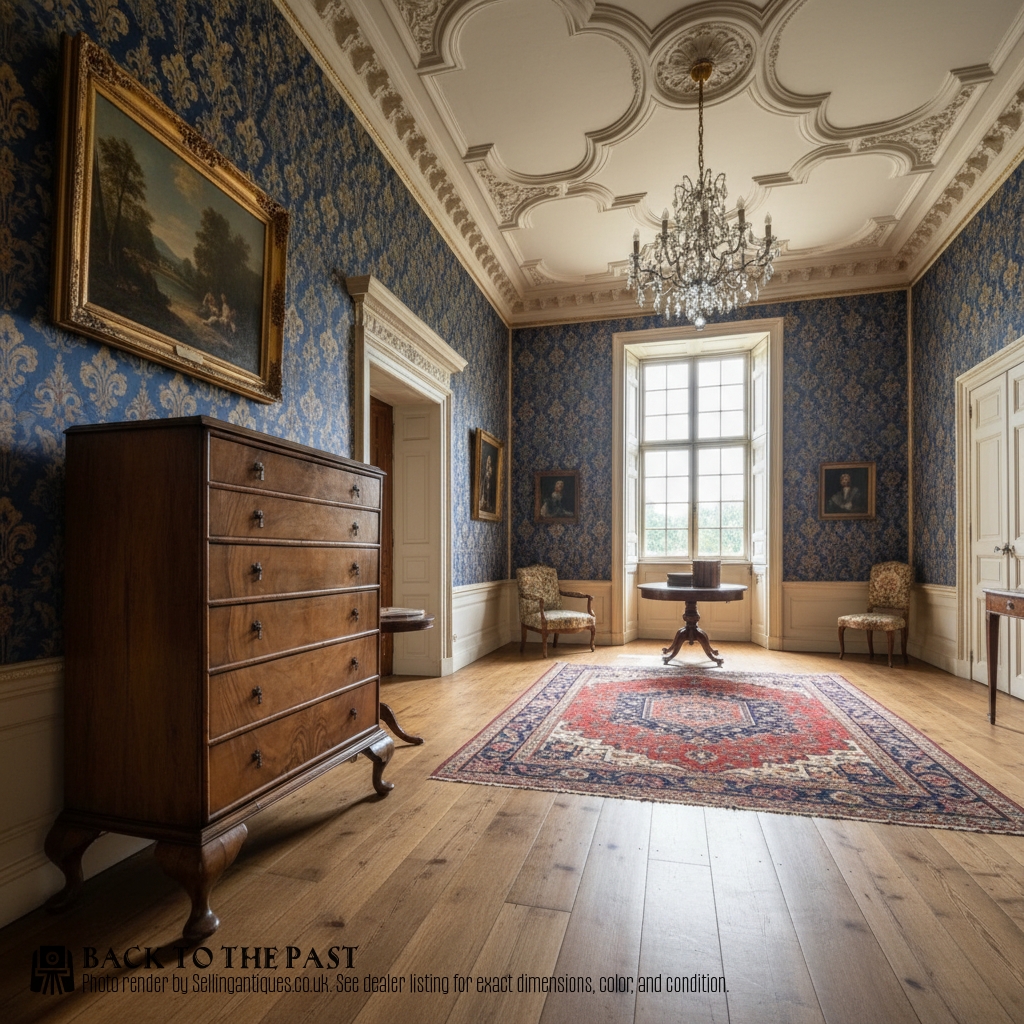
Tall walnut drawers offer remarkable vertical storage while bringing rich timber grain into a room.
Tall walnut drawers
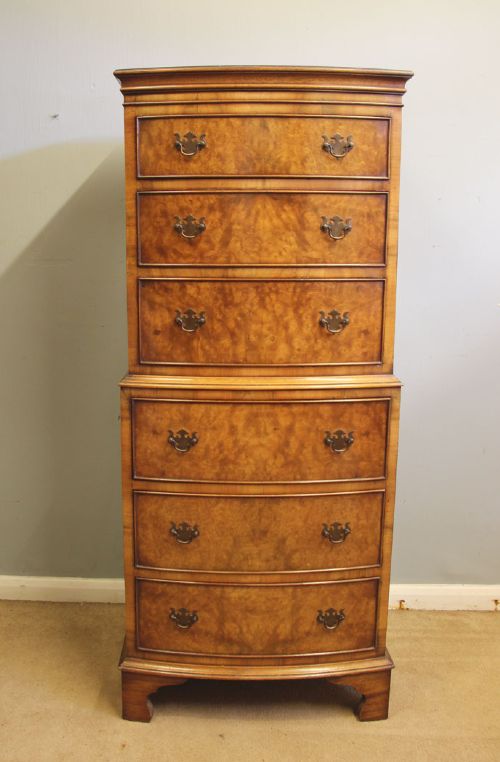
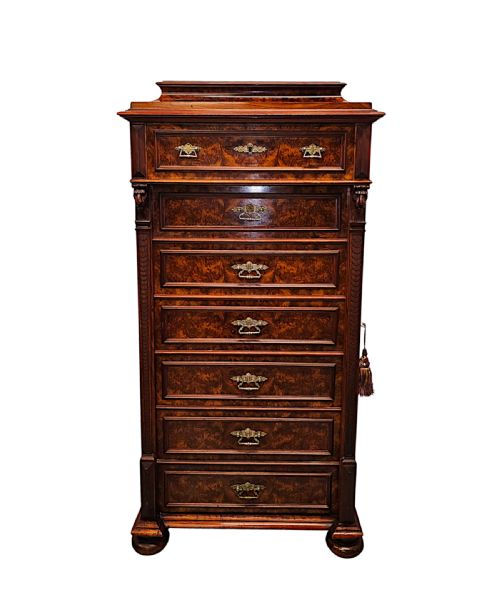
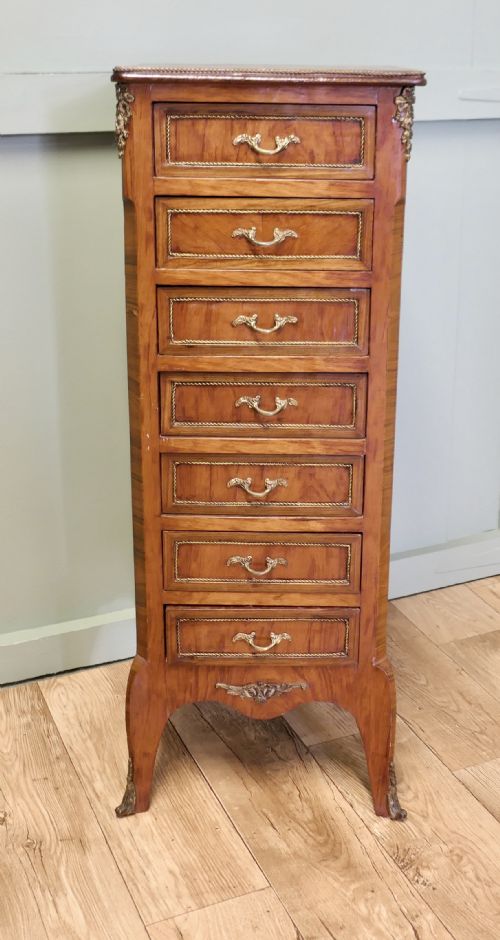
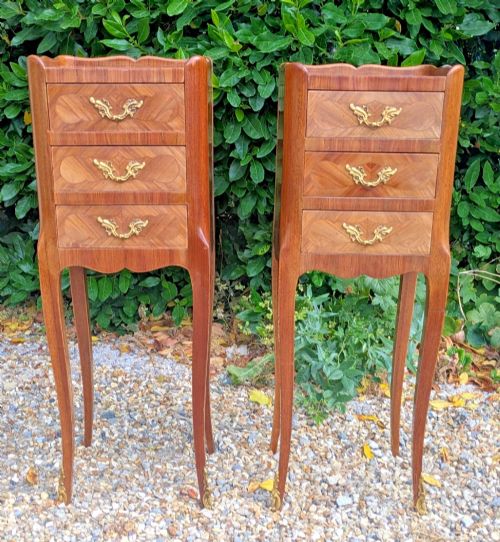
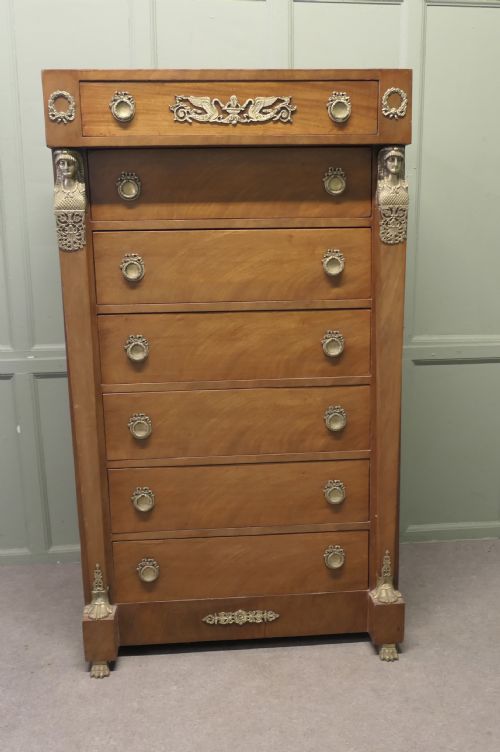
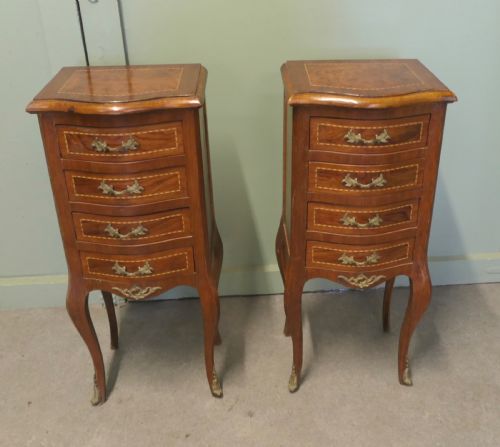
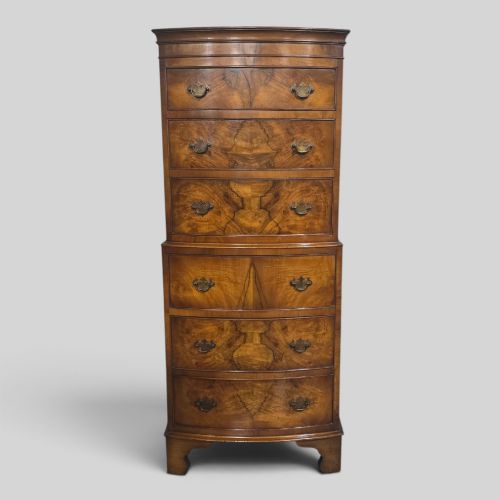
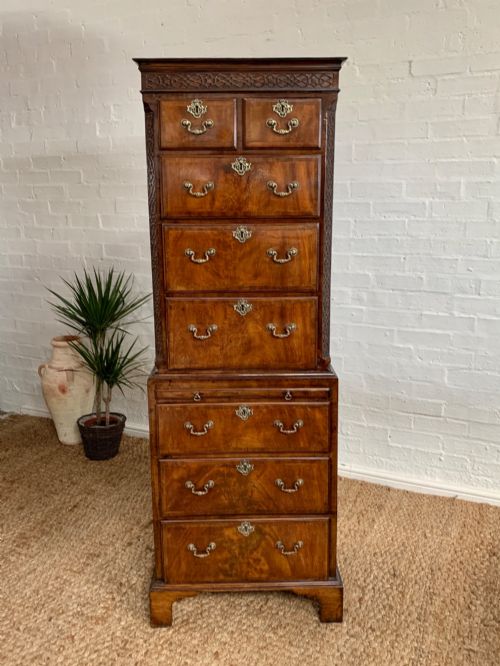
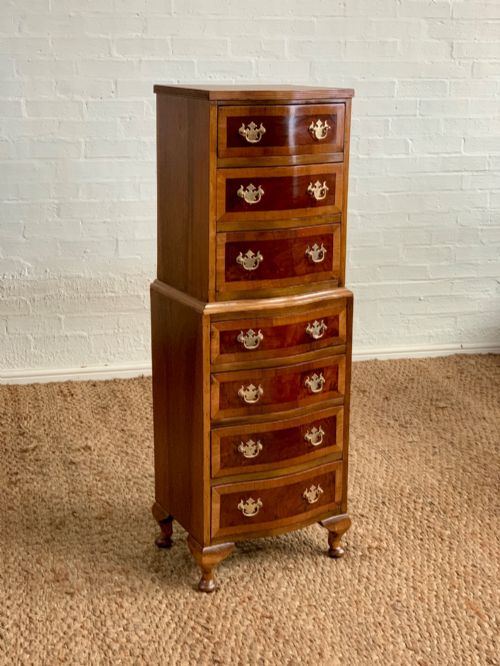
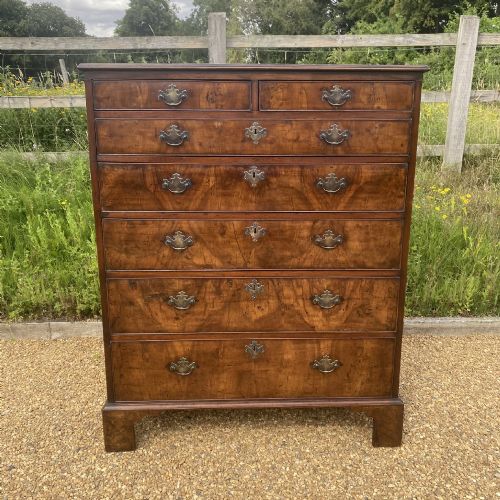
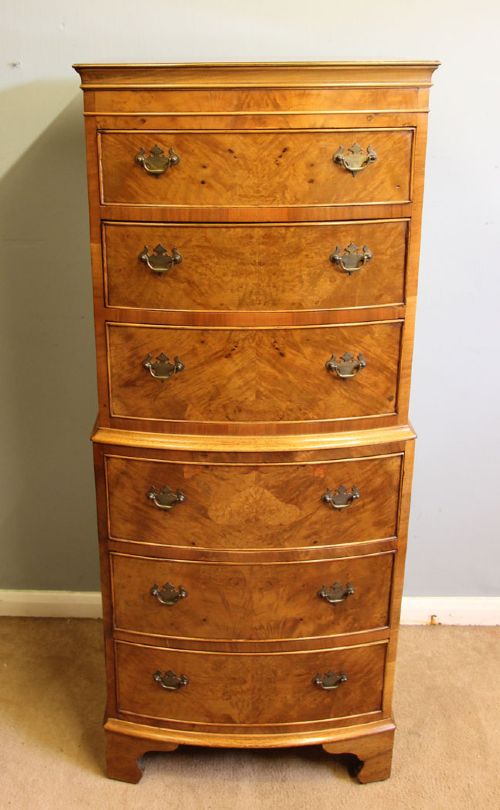
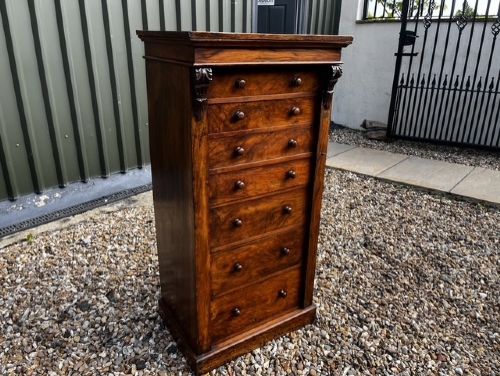
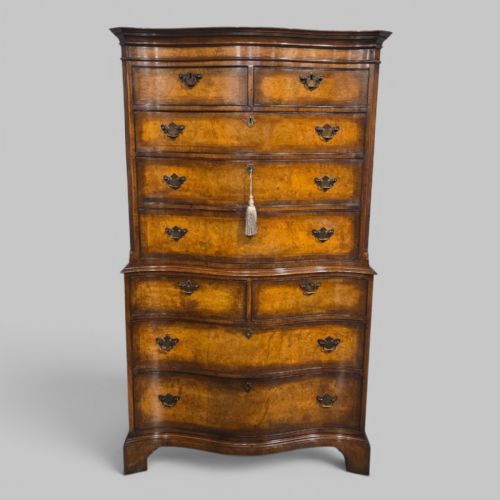
When you search for tall walnut drawers, you encounter vertical storage furniture designed to maximise capacity while occupying a compact floor footprint. These pieces span multiple forms, including tallboys, chests on chests, and narrow ten-drawer cabinets.
The selections on this page draw from several eras, ranging from early eighteenth-century designs and Victorian examples to Art Deco interpretations and 1930s revivals. Georgian style and Queen Anne style pieces recur frequently, alongside bow-front variations.
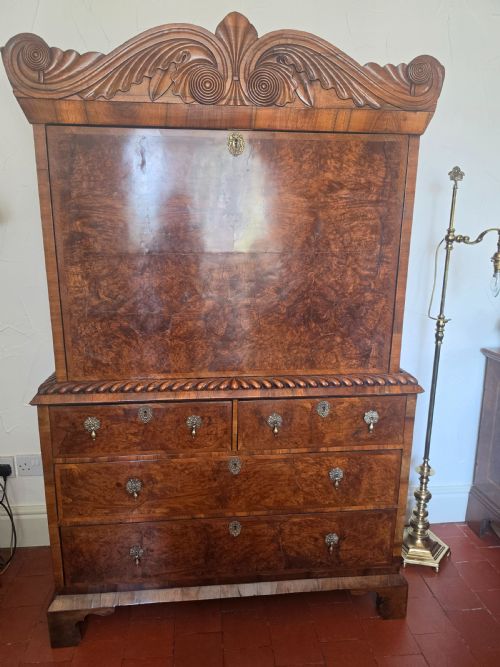
Makers often divided these tall carcasses horizontally into two distinct sections or constructed them as single towering units. Buyers most commonly meet pieces finished in burr walnut, figured walnut, or standard walnut timber.
Materials and construction
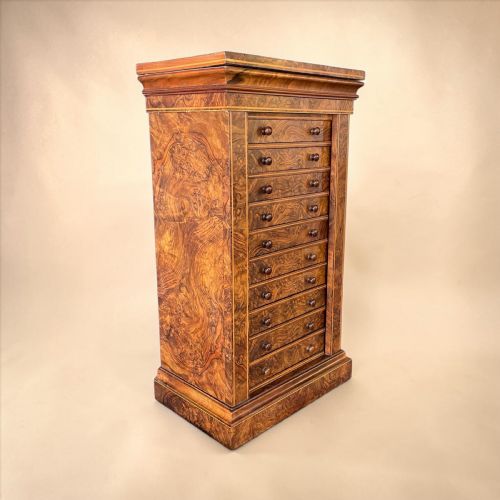
Cabinet makers utilised solid walnut and oak for internal framing, drawer linings, and structural carcasses. Artisans applied thin veneers of burr walnut or figured walnut to external drawer fronts and main panels to create striking, decorative grain patterns.
Joinery techniques involved precise dovetailing for drawer construction and sturdy tenon joints for the main frames. Brass handles, escutcheons, and cup pulls provide functional hardware accents across many of the listed examples.
Retail Price Guide 2026
Typical UK retail prices for tall walnut drawers, calculated from the Sellingantiques database of over a million retail prices indexed since 2003. This retail price guide relies exclusively on Sellingantiques data; no external sources or auction records are used, so the figures do not describe the wider market.
The inventory spans Victorian, Art Deco, and 1930s periods alongside Georgian and Queen Anne revival styles.
Determining quality
The visual impact of the exterior timber dictates much of the distinction across these pieces. Premium examples display carefully matched burr or figured walnut veneers that wrap seamlessly around the vertical carcass, while lesser pieces rely on plain or uneven grain selection.
Proportion and execution of historical styles set the finer specimens apart from standard production. Refined mouldings, crisp carving details on Queen Anne or Georgian style legs, and tidy internal oak drawer construction indicate superior workshop standards.
Holland & Sons
The Tall Walnut Drawers Glossary
- Tallboy
- A tall chest of drawers, often constructed as a chest on chest or a single towering cabinet.
- Burr walnut
- A highly prized timber veneer sourced from walnut tree growths, featuring swirling, complex grain patterns.
- Chest on chest
- A two-piece tall furniture form where a slightly smaller chest sits stacked directly upon a wider lower base.
- Wellington chest
- A tall, narrow chest of drawers secured by a hinged vertical locking side bar, named after the Duke.
- Figured walnut
- Timber exhibiting distinctive natural grain variations and reflective patterns used for decorative cabinet fronts.
Frequently Asked Questions
How do I style tall walnut drawers in a modern bedroom?
These vertical chests provide a strong focal point against neutral walls while offering deep storage capacity for clothing and linens.
Keep surrounding furniture simple to let the figured grain and rich timber tones remain the primary visual feature of the space.
What is the difference between a tallboy and a standard chest?
Tall walnut drawers typically rise higher than conventional chests, often incorporating a two-piece chest-on-chest format or a narrow multi-drawer configuration.
This vertical orientation delivers significantly more storage space without demanding extra floor area in smaller rooms.
How do I care for antique walnut furniture?
Maintain walnut surfaces by applying quality beeswax periodically and keeping pieces away from direct heat sources and strong sunlight.
Avoid excessive moisture during cleaning to protect the delicate burr veneers from lifting or drying out over time.
How can I tell a Georgian style piece from an original?
Examine the internal construction methods, timber ageing, and secondary woods such as oak used inside the drawer carcasses.
Revival pieces from the 1900s or 1930s replicate historical Georgian and Queen Anne styles while displaying distinct modern hardware fittings or machine-cut dovetails.