
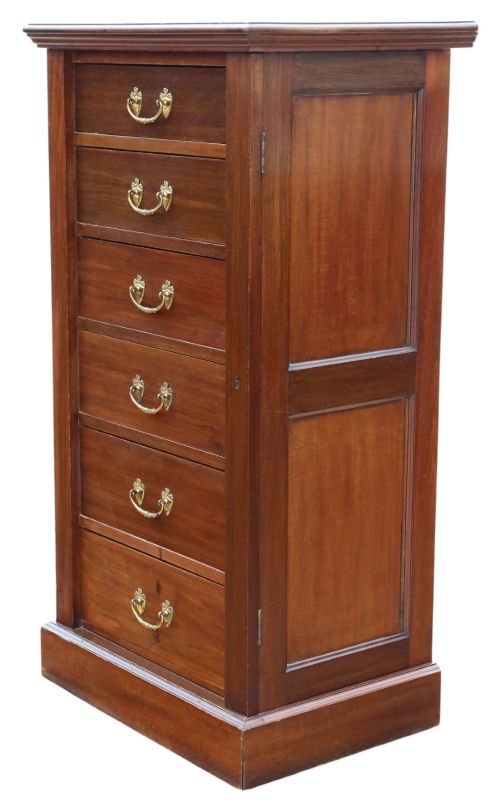
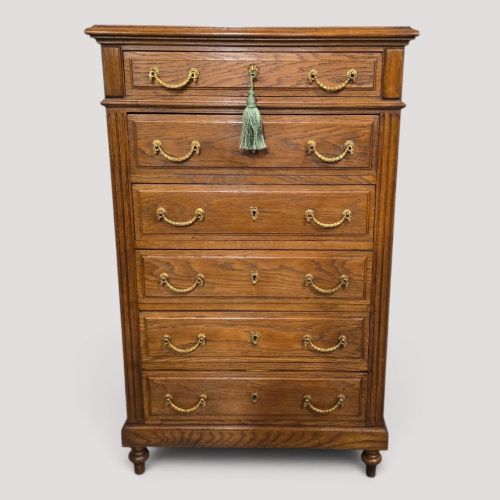
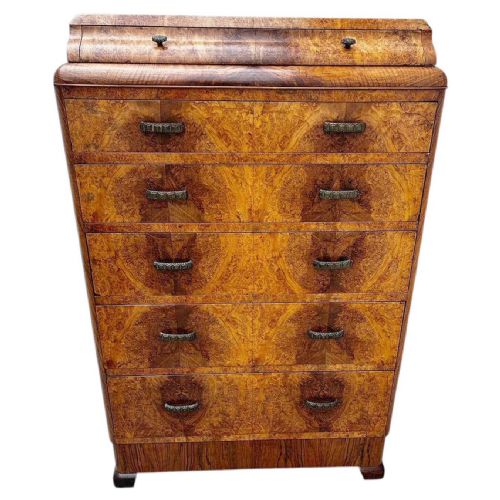
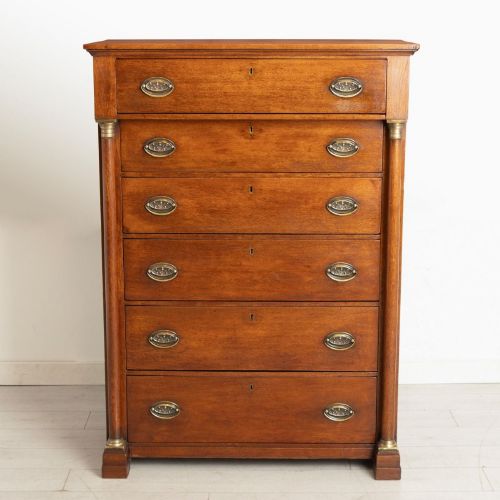
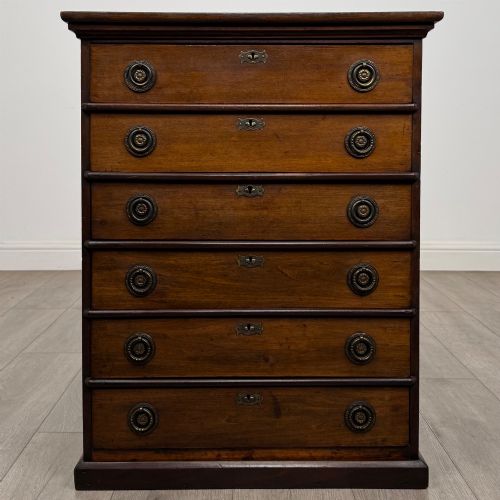
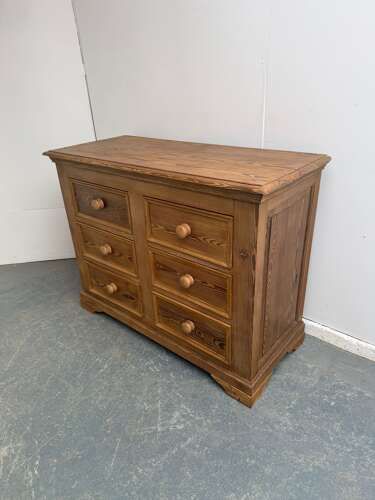
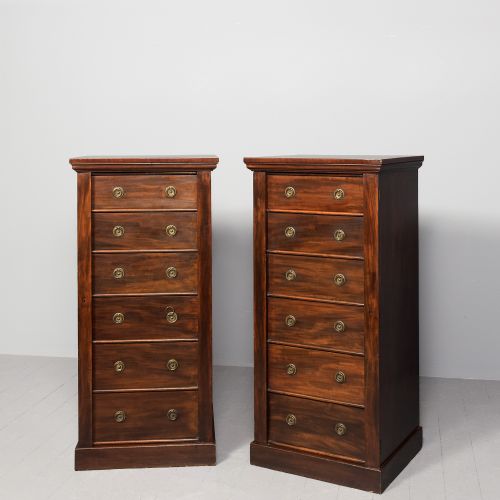
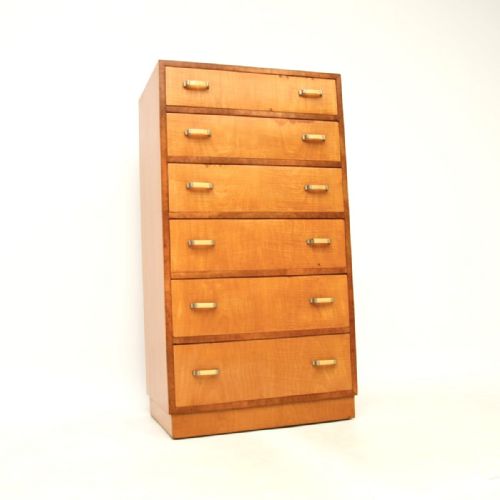

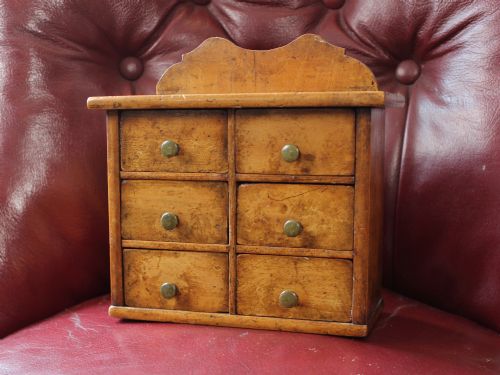


Six Drawer Chest
A six drawer chest offers serious storage in mahogany, oak, walnut, or pine, built to stand tall and hold its place in a room.
What a six drawer chest is
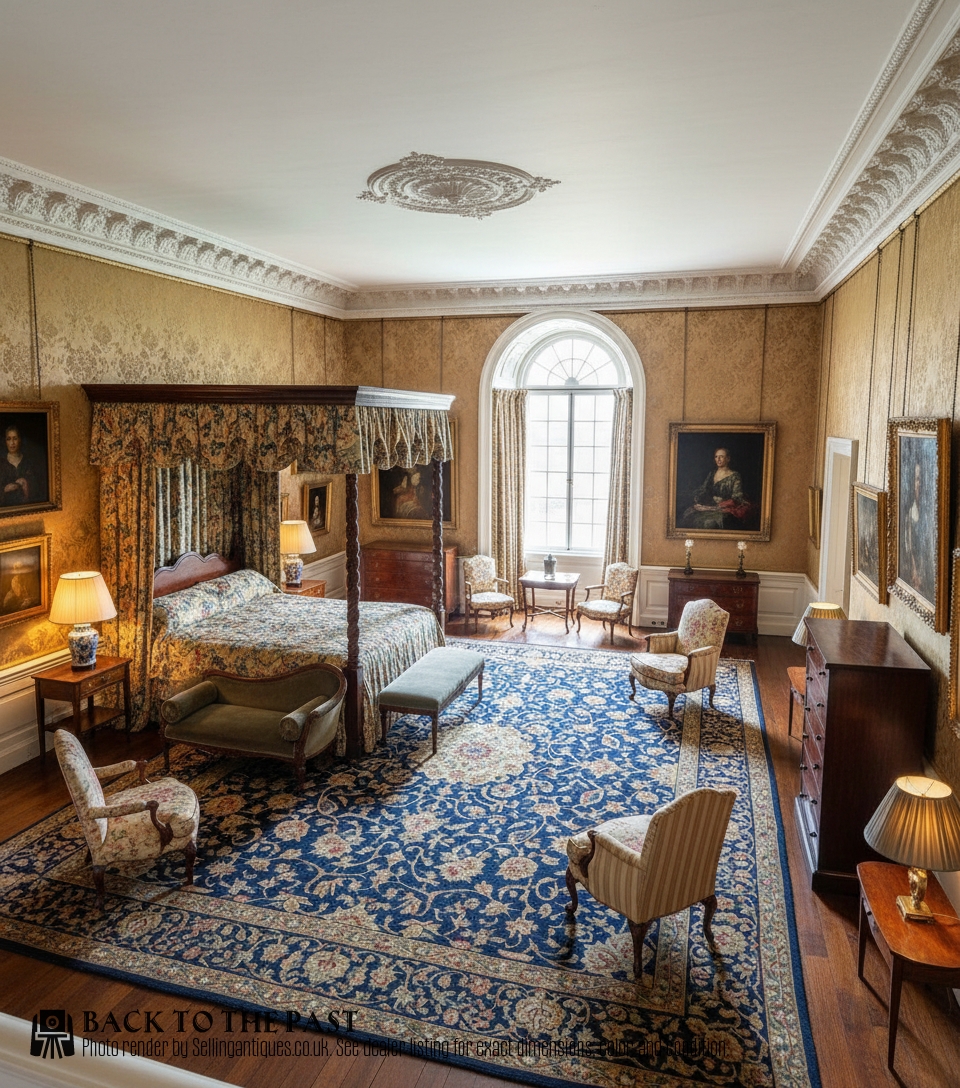
A six drawer chest provides tall storage across multiple tiers, keeping bedrooms and dressing rooms ordered. These pieces emerge in styles ranging from Victorian and Queen Anne to French Empire, Art Deco, and country vernacular.
The format spans upright tallboys, Wellington chests with locking side arms, and bow front designs. Mahogany, walnut, oak, and pine form the core of what appears here, often enhanced by flame veneers or marble tops.
What varies in quality
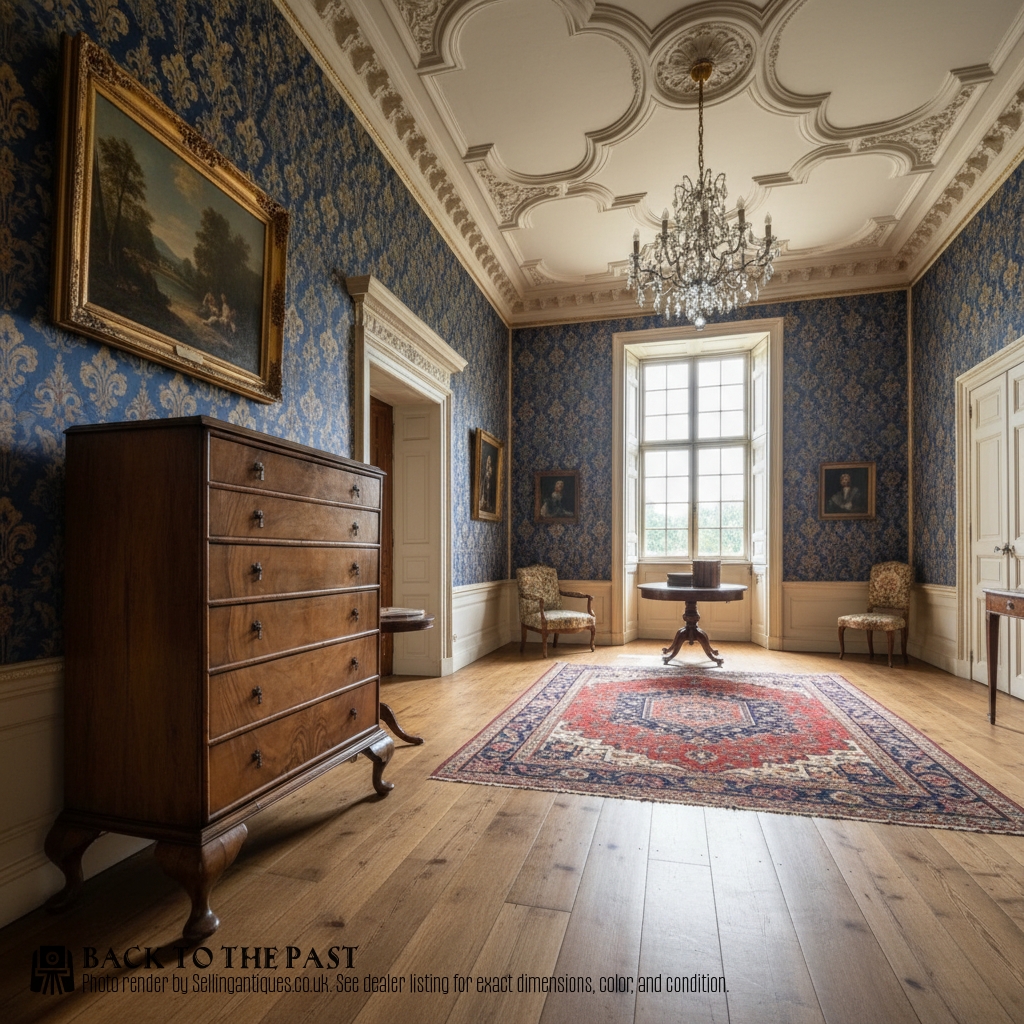
Depth of grain and matching veneer work separate standard examples from finer pieces. Timber selection determines the presence of rich flame mahogany or burr walnut figures across the drawer fronts.
Structural integrity depends on the weight of the timber and the precision of the drawer fit. High-grade examples incorporate solid brass hardware, marble tops, and disciplined proportions across all six heights.
Retail Price Guide 2026
Typical UK retail prices for six drawer chest, calculated from the Sellingantiques database of over a million retail prices indexed since 2003. This retail price guide relies exclusively on Sellingantiques data; no external sources or auction records are used, so the figures do not describe the wider market.
Listings feature pieces from the 19th century up to the 1930s, using mahogany, oak, walnut, brass, and marble.
The Six Drawer Chest Glossary
- Wellington chest
- A tall, narrow chest featuring six drawers secured by a hinged locking side stile. This form originates from the nineteenth century.
- Bow front
- A convex curved drawer front that projects outward at the centre. This profile adds formal presence to nineteenth-century pieces.
- Tallboy
- A tall storage piece comprising two stacked sections or a single elevated chest. It maximises vertical capacity in period chambers.
- Flame mahogany
- Timber veneer cut to reveal a flickering, wave-like grain pattern. Cabinetmakers used this on primary display surfaces during the Georgian and Victorian eras.
- Graduated drawers
- Drawers that decrease in depth from bottom to top. This arrangement creates visual balance on tall six-tier forms.
Frequently Asked Questions
How do I date a six drawer chest?
Dating relies on timber choice, construction methods, and hardware styles. Nineteenth-century examples often feature mahogany or oak with hand-cut joinery.
Later pieces from the 1920s and 1930s introduce Art Deco veneering techniques and alternative woods like birch and plywood.
What is a Wellington chest?
A Wellington chest is a tall, narrow storage piece with six drawers held by a hinged vertical locking bar. This bar fastens with a key to secure all drawers at once.
Originating in the nineteenth century, these chests utilise mahogany, walnut, or birch for compact vertical spaces.
Where should I place a tall chest?
A tall chest fits well in bedrooms, hallways, or dressing rooms where floor space is limited. Its vertical format provides substantial storage without dominating the room.
Ensure the piece sits level on a firm surface, particularly taller models with marble tops.
Are these chests made of solid wood?
Construction combines solid primary woods with fine veneers applied to drawer fronts and top panels. Common timbers include mahogany, walnut, oak, and pine.
Secondary woods form internal drawer linings and back panels, adhering to traditional cabinetmaking practices.