


Narrow Oak Chest
A narrow oak chest offers upright storage built to fit compact spaces without sacrificing character.
Narrow Oak Chest
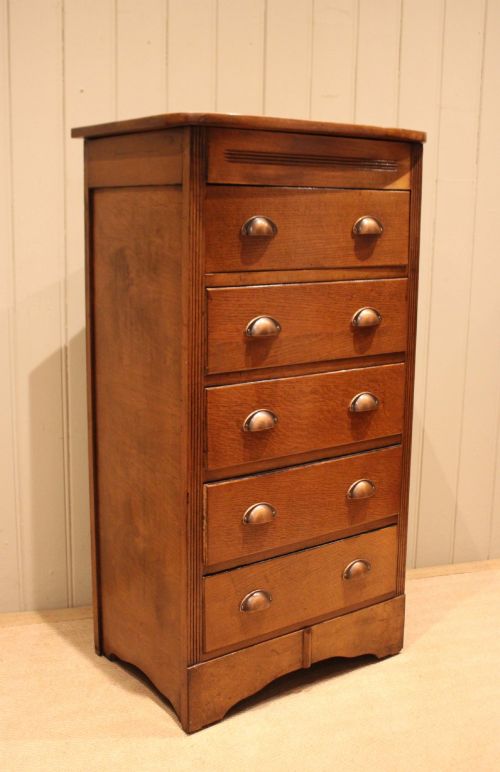
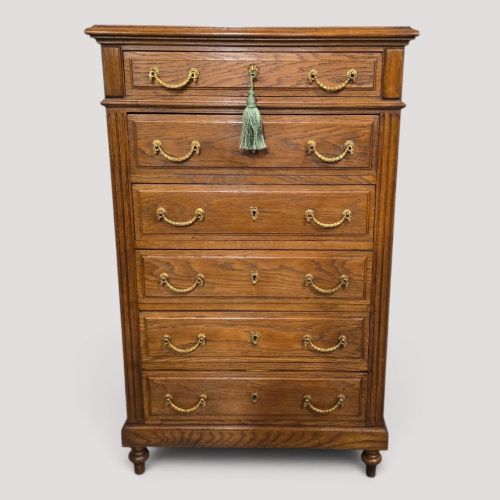
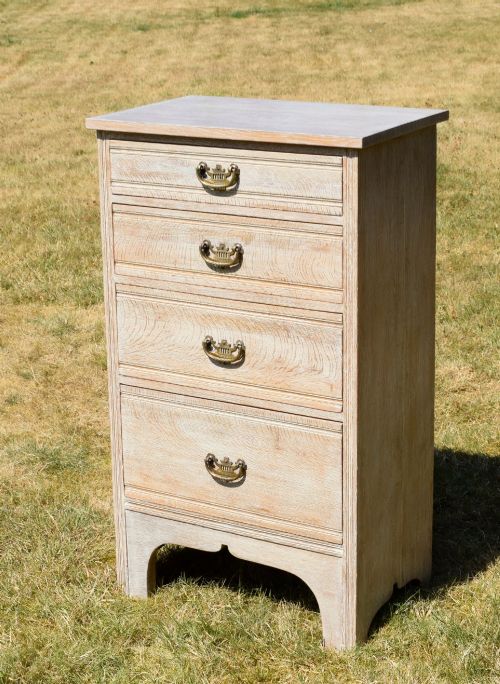
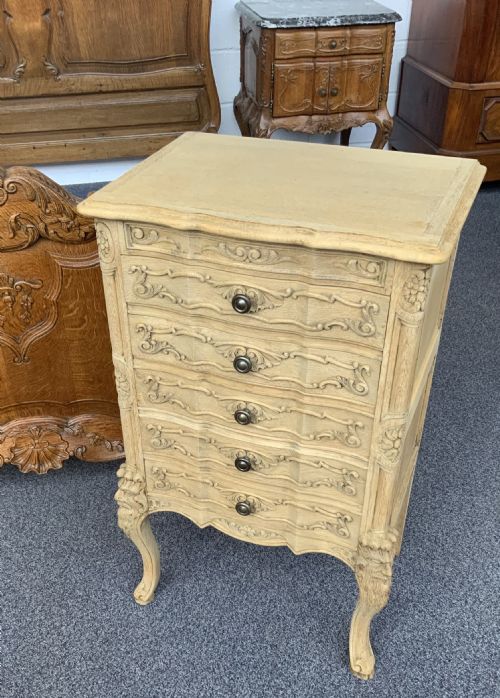
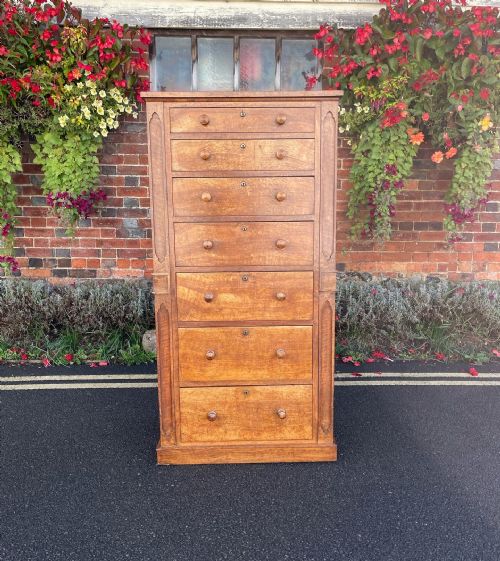
A narrow oak chest serves as a space-saving storage solution, appearing primarily in tall formats such as tallboys, Wellington chests, and slender drawer units designed for tighter floor plans. These pieces range from early provincial and Georgian examples to Victorian, Edwardian, and later twentieth-century iterations.
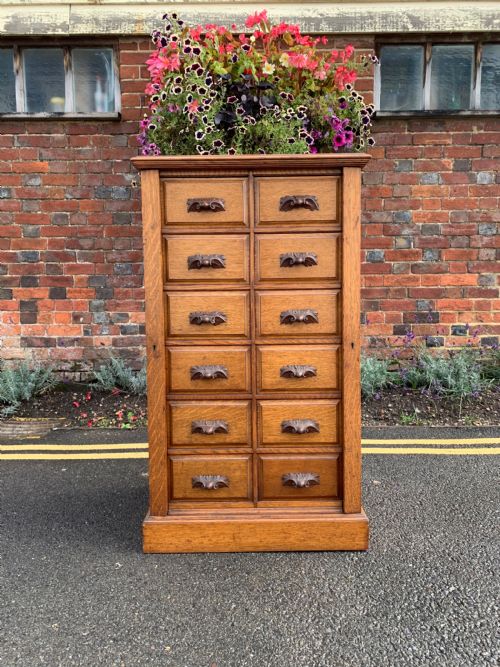
Most pieces seen here adopt vertical formats with multiple drawers, including bedside configurations, compact cabinets, and tall chests measuring modest widths. Oak dominates the construction, sometimes paired with specialised veneers or secondary timbers to achieve distinct finishes.
Makers and workshops across different eras adapted proportions to suit smaller rooms while maintaining functional storage depth. Buyers encounter both English vernacular pieces and continental French styles, spanning periods from the seventeenth century through the art deco era.
Materials and construction
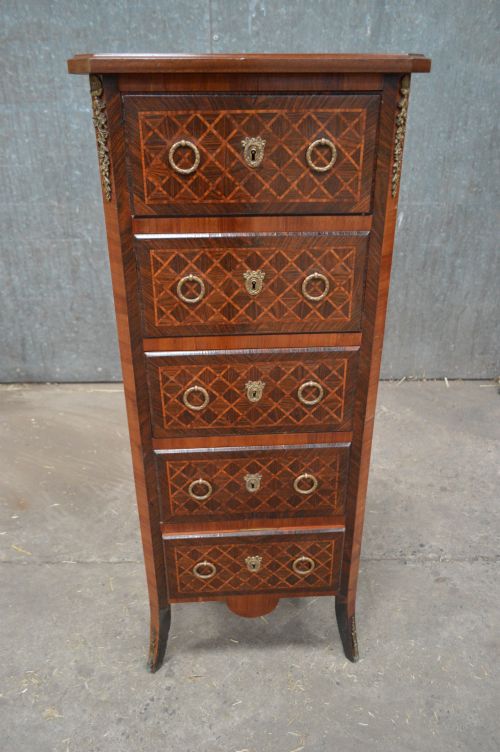
Construction relies heavily on solid oak and carefully selected veneers like pollard oak, kingwood, and rosewood, supported by secondary structural woods. Timber selection dictated the grain pattern, ranging from plain boards to highly figured surfaces.
Joinery techniques include traditional drawer framing and locking mechanisms typical of Wellington chests, alongside parquetry and carved detailing on continental examples. Brass and metal hardware, including handles and locking bars, complete the structural assembly.
Narrow Oak Chest Retail Price Guide 2026
Typical asking prices for narrow oak chest among the pieces listed under this phrase on Sellingantiques today, from the lower quarter to the upper quarter. They describe what is for sale here now, not the wider market.
The listings here span from the seventeenth century through the art deco period, featuring oak, pollard oak, brass hardware, and parquetry.
Assessing quality and craftsmanship
Quality reveals itself in the crispness of timber carving, the precision of parquetry work, and the tight fit of drawer construction. Superior pieces maintain original brass hardware, functioning locking mechanisms, and harmonious grain matching across the drawer fronts.
Proportion and execution distinguish finer examples from standard utility items, particularly in narrow formats where balance is difficult to achieve. The integration of specialised secondary timbers like pollard oak or rosewood elevates the decorative ambition of the piece.
Maple and Co
The Narrow Oak Chest Glossary
- Tallboy
- A tall chest of drawers, often constructed in two stacked sections to allow easier movement and placement in domestic chambers.
- Parquetry
- Geometric wood mosaic work used for decorative veneering on drawer fronts and surfaces. Artisans arrange contrasting timber tones to create optical patterns.
- Pollard oak
- Oak timber taken from trees that have been pollarded, producing a dense, highly figured grain with clusters of small knots. It was favoured for decorative veneering.
- Gothic Revival
- A nineteenth-century style drawing inspiration from medieval architecture, characterised by pointed arches, heavy linenfold carving, and structural verticality.
Narrow Oak Chest: Frequently Asked Questions
Where should I place a narrow oak chest?
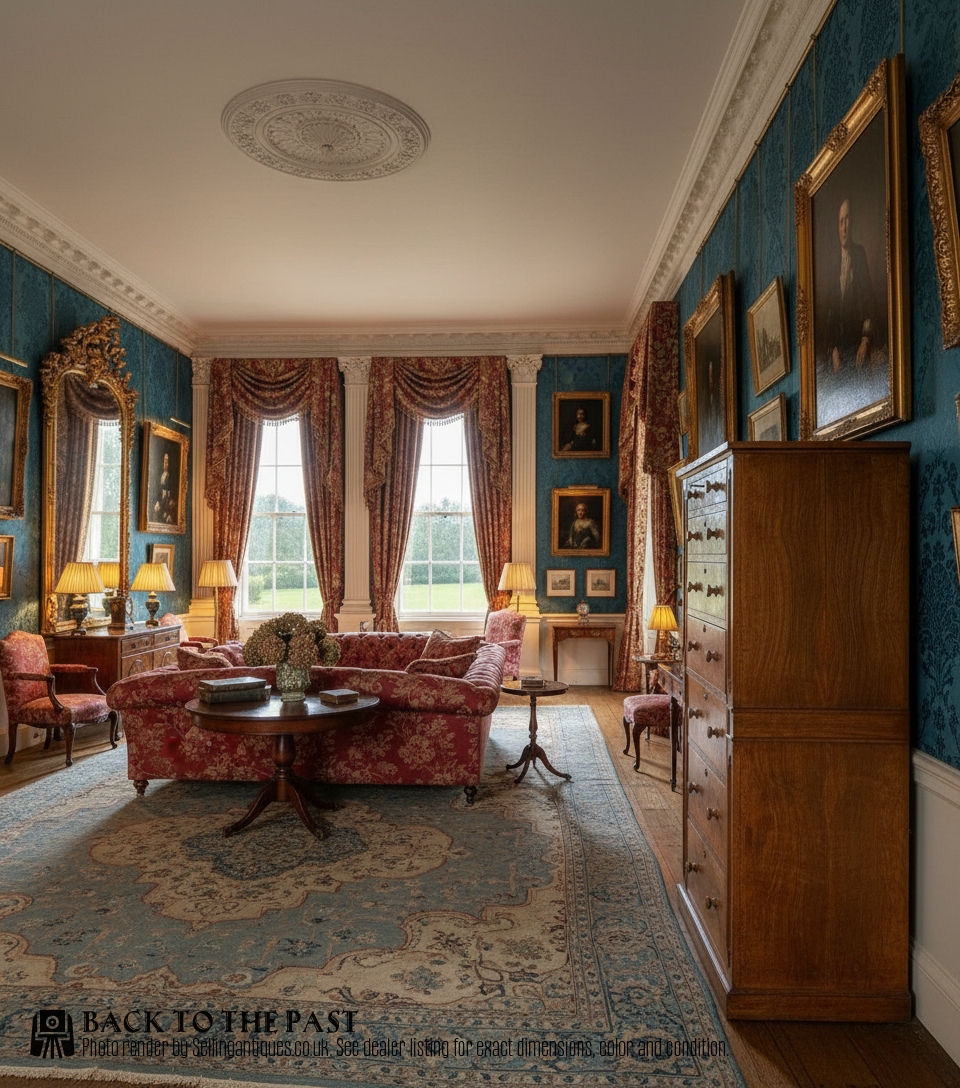
These compact pieces fit well in hallways, alcoves, or bedrooms where floor space is limited. Their vertical proportions provide substantial drawer storage without dominating the room.
They also serve effectively as bedside storage or secondary drawer units in studies and dressing rooms.
How do I care for antique oak furniture?
Keep wooden surfaces away from direct heat sources and strong sunlight to prevent the timber and veneer from drying out or splitting. Regular dusting with a dry cloth maintains the finish.
Apply a traditional beeswax polish occasionally to nourish the grain and preserve the surface sheen without building up heavy residue.
What is a Wellington chest?
A Wellington chest is a tall, narrow style featuring a vertical locking bar on one side that secures all the drawers simultaneously. This design originated in the nineteenth century for secure document storage.
Opening the chest requires unlocking the side stile and swinging it clear before individual drawers can be pulled out.
How do I distinguish Georgian from Victorian pieces?
Georgian pieces often display restrained lines, bracket feet, and solid timber construction focused on proportion. Victorian examples frequently introduce bolder grain choices, applied carvings, or side-locking mechanisms like those on Wellington chests.
Examining the drawer linings, backboards, and handles helps confirm the manufacturing period and joinery methods used.