


Oak Wellington Chest
An oak wellington chest is a tall, narrow set of drawers secured by a locking side pilaster, prized for secure storage in compact spaces.
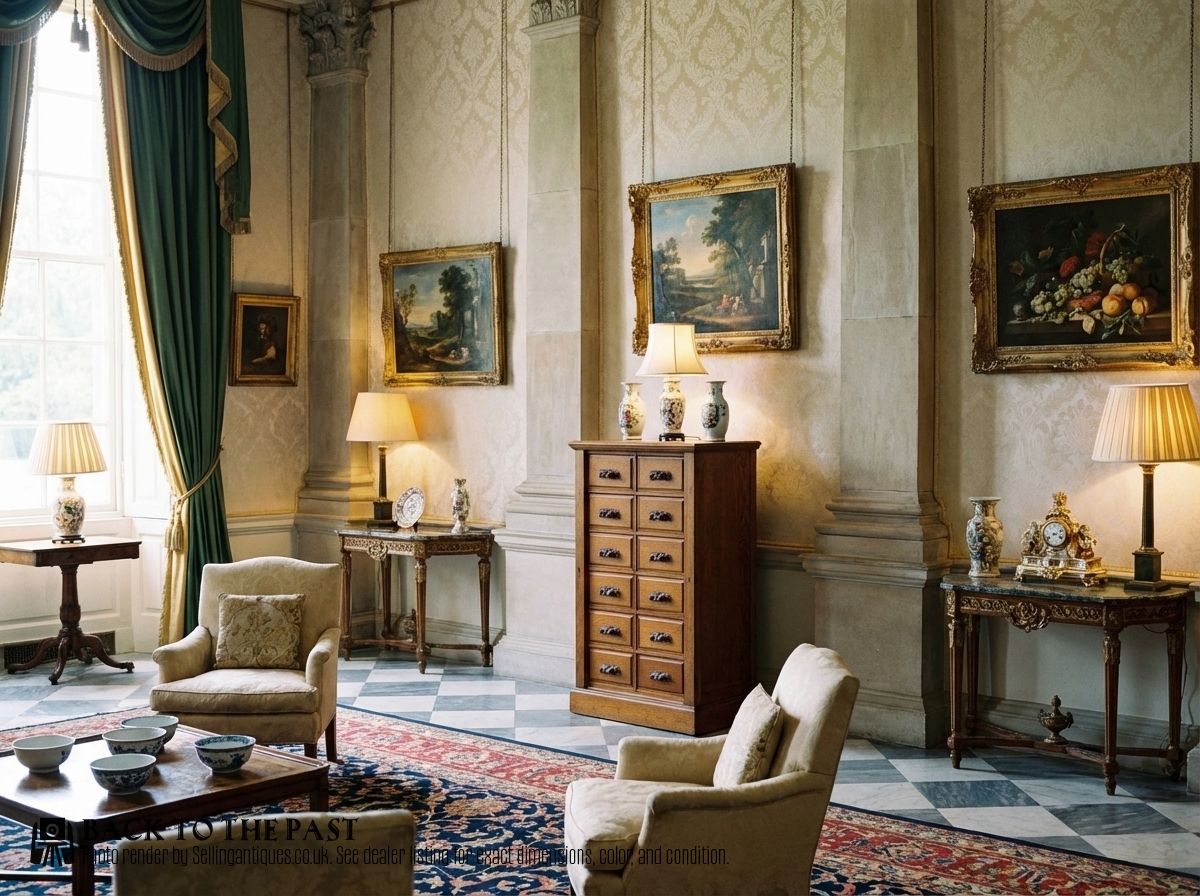
Identifying an oak wellington chest
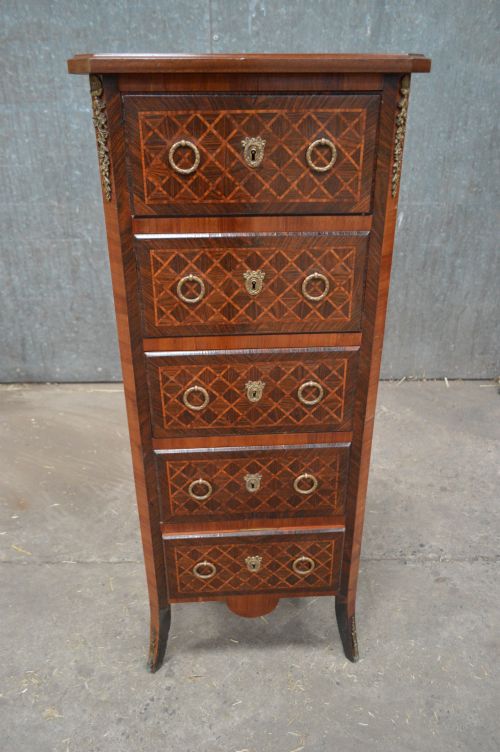
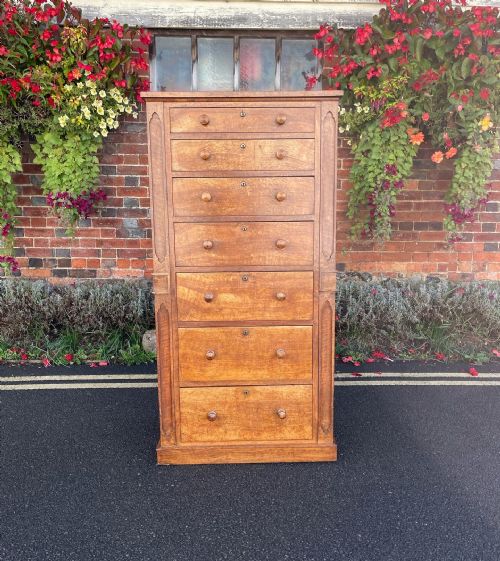
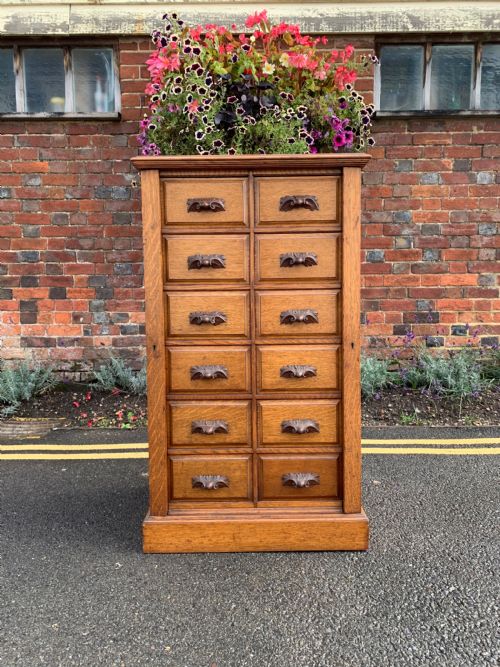
An oak wellington chest presents a tall and slender silhouette containing multiple graduated drawers, typically five to twelve, stacked vertically. This design allows maximum storage within a minimal footprint.
The defining characteristic is the hinged locking stile or pilaster on the right side, which secures all drawers simultaneously when padlocked or key-locked in place. Most pieces found here date from the Victorian era, spanning the mid to late nineteenth century.
Makers utilised various native and figured timbers, producing standard oak alongside blonde oak, golden oak, and richly figured pollard oak. Certain examples incorporate specific carving styles such as foliate motifs and Green Man masks.
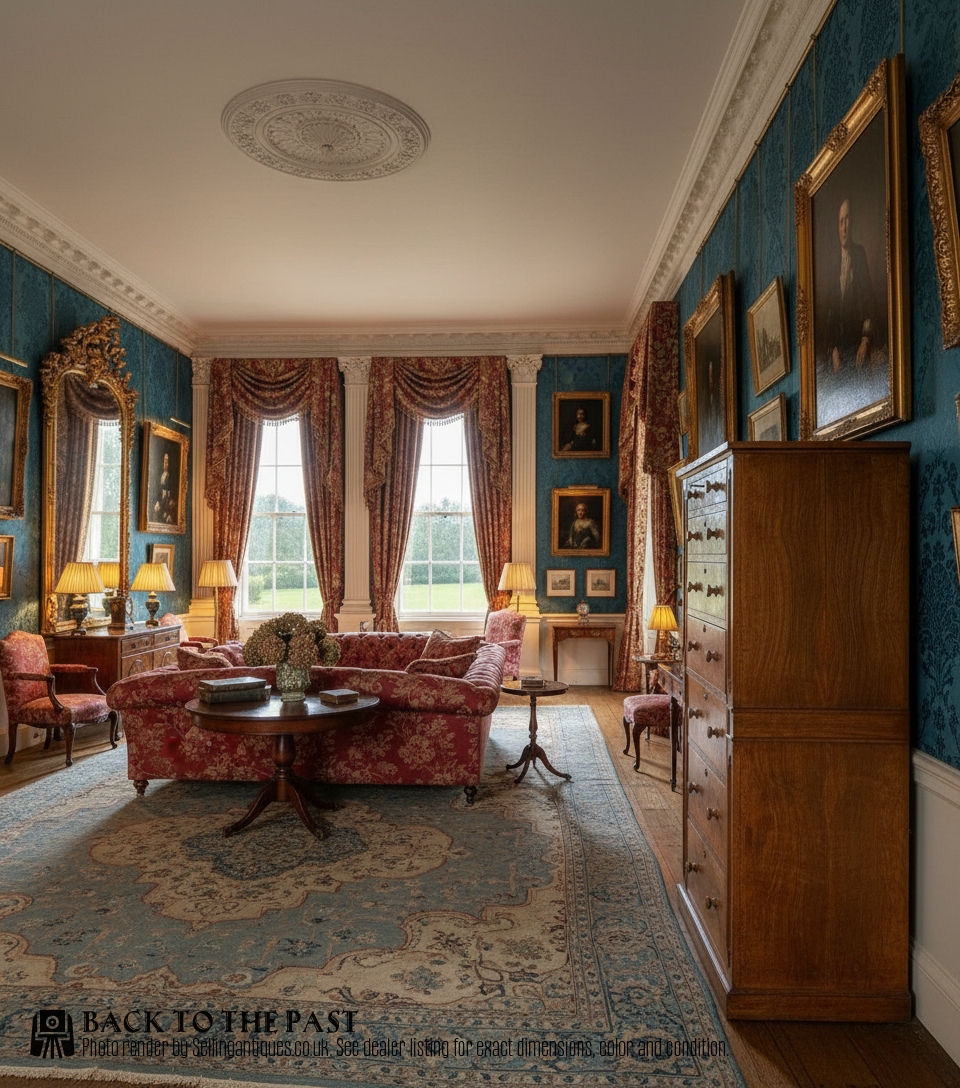
Materials and construction
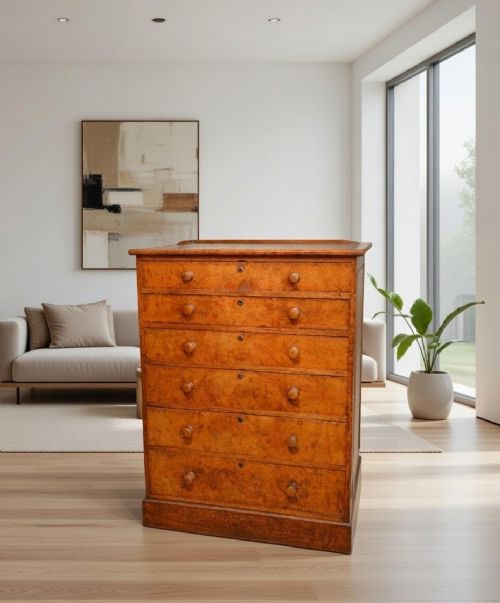
Cabinet makers constructed these chests using solid oak and wood veneers, frequently selecting pollard oak or burr walnut for decorative surfaces. Brass hardware appears on drawer pulls and the locking mechanisms.
Drawers are built with traditional joinery methods and vary in number from five to twelve depending on the specific cabinet. The locking stile swings open only when the top drawer is unlocked, revealing the drawer stack.
Retail Price Guide 2026
Typical UK retail prices for oak wellington chest, calculated from the Sellingantiques database of over a million retail prices indexed since 2003. This retail price guide relies exclusively on Sellingantiques data; no external sources or auction records are used, so the figures do not describe the wider market.
Listings feature Victorian era examples alongside Edwardian and William IV pieces, constructed in plain oak, blonde oak, pollard oak, and burr walnut.
Assessing quality and craftsmanship
Quality rests in the selection of timber figures, such as pollard oak or blonde oak, and the crispness of any carved details like Green Man masks. Plain timber surfaces rely entirely on proportion and polished finish.
The mechanical action of the locking side pilaster and the smooth operation of the graduated drawers determine the standard of manufacture. Pieces bearing attribution to known workshops command distinct regard.
Edwards & Roberts·Gillows·Shoolbred
The Oak Wellington Chest Glossary
- Wellington chest
- A tall, narrow chest of drawers featuring a hinged locking stile on one side. This mechanism secures the entire stack of drawers with a single key.
- Stile
- The vertical member on the side of the chest that swings open to release the drawers. It acts as the primary security bar.
- Pollard oak
- Timber taken from trees that have been pollarded, producing a highly figured and speckled grain pattern. Cabinet makers used this for decorative drawer fronts.
- Graduated drawers
- A series of drawers that decrease in depth from bottom to top. This arrangement provides structural stability and visual balance.
- Foliate carving
- Ornamental carving shaped like leaves and foliage. It frequently decorates Victorian period drawer fronts and pediments.
Frequently Asked Questions
Why do these chests have a locking side bar?
The locking stile secures all drawers at once when the key is turned. This design originated to keep private papers and valuables safe.
In period bedrooms or offices, a single lock prevented unauthorized access to the entire contents of the cabinet.
How many drawers should an oak wellington chest have?
Drawers range in number from five to twelve depending on the height and purpose of the cabinet. Seven drawers is a common configuration.
Tall versions with numerous shallow drawers often functioned as specimen cabinets for collectors.
What is pollard oak?
Pollard oak comes from trees pruned close to the trunk, creating a dense cluster of branches that yield heavily patterned timber. This wood exhibits rich, swirling grain variations.
Cabinet makers utilised pollard oak veneers on statement pieces to highlight the dramatic natural figuring.
How do I open the drawers?
You must first open the top drawer to release the hinged side locking bar. Swinging the bar outward then allows the remaining drawers to pull open.
Attempting to force the drawers without unlocking the side pilaster will damage the internal mechanism.