

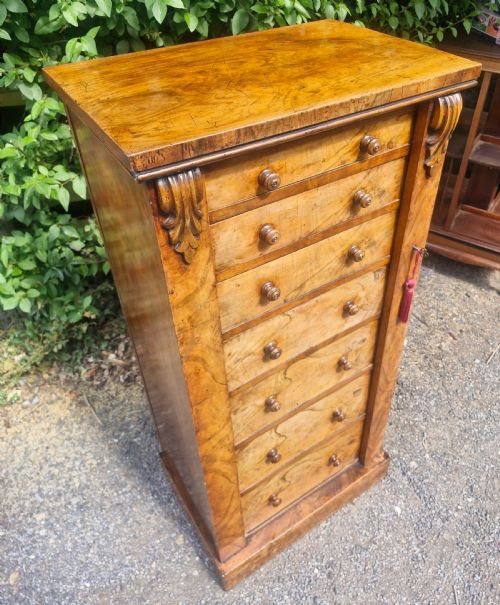
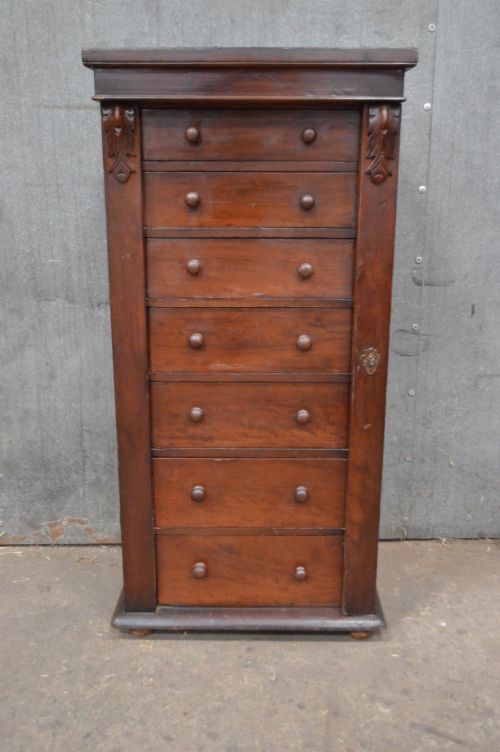


Locking Pilaster Chest
A locking pilaster chest is a tall, slender chest of drawers secured by a hinged side pilaster, offering a neat and compact form.
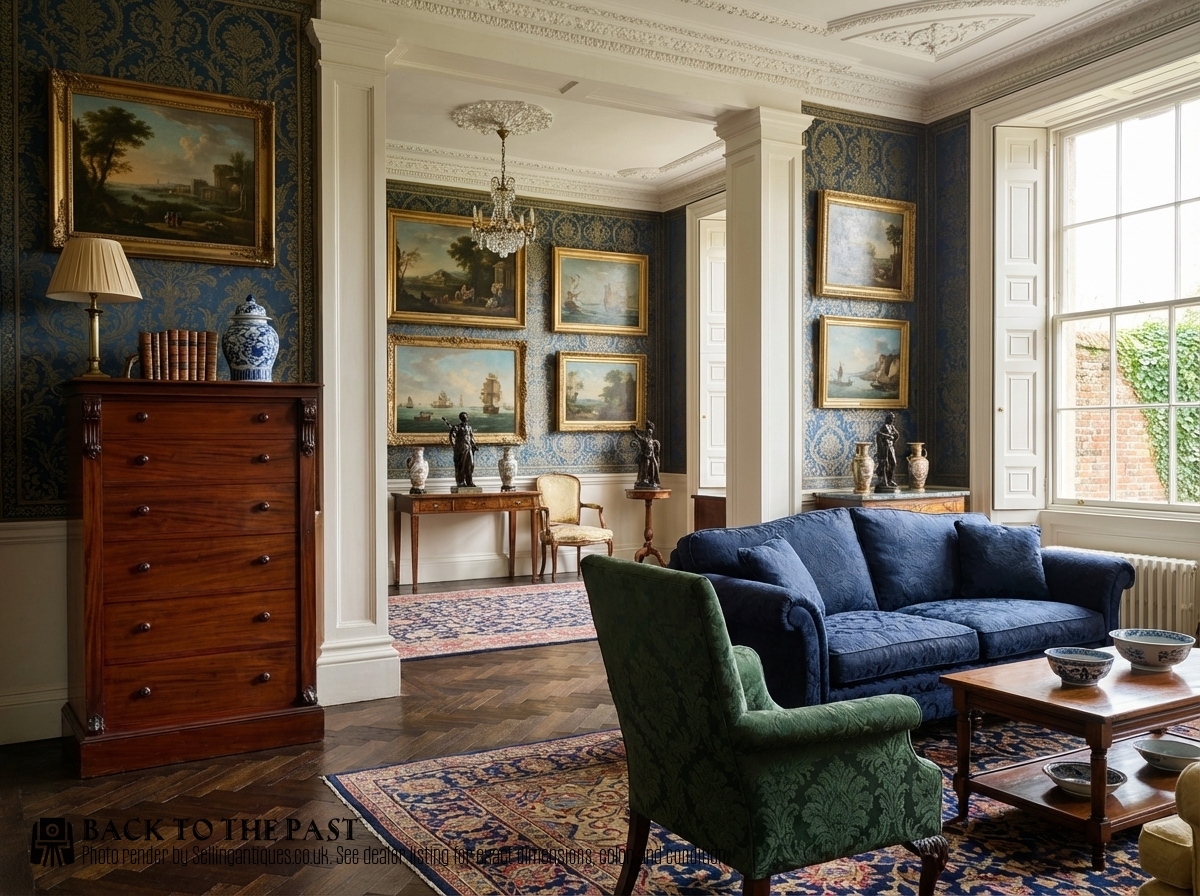
Locking Pilaster Chest
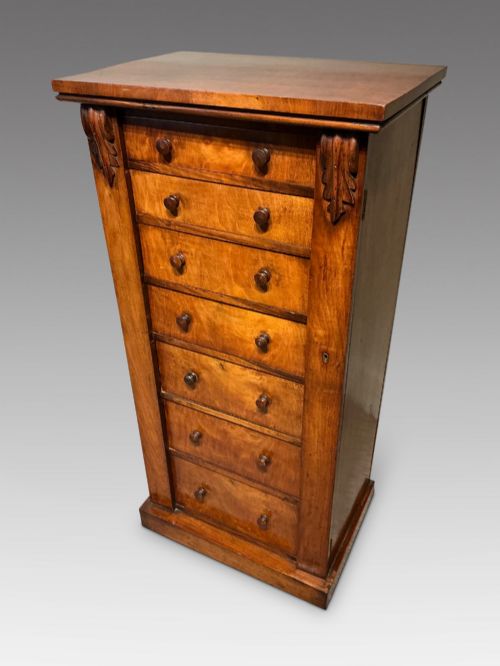
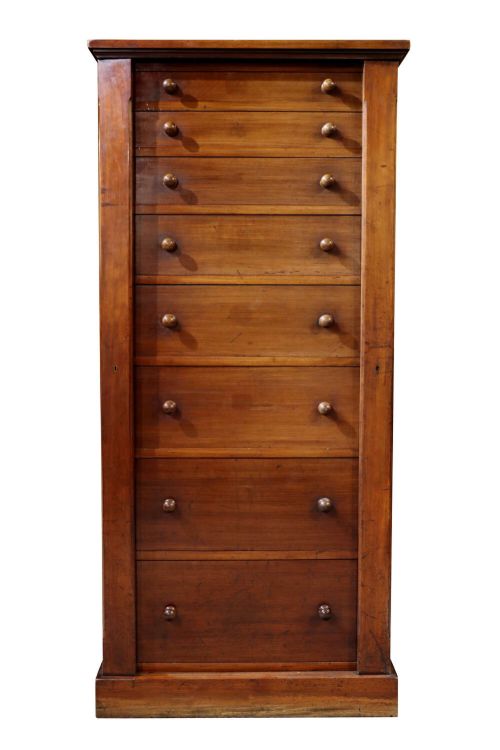
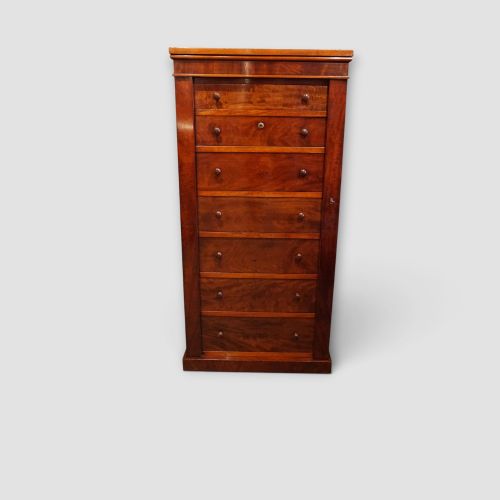
A locking pilaster chest, commonly known as a Wellington chest, stands out by its vertical proportions and narrow footprint. These pieces generally feature a column of small drawers housed within a sturdy carcase, designed to fit neatly into tight bedroom spaces.
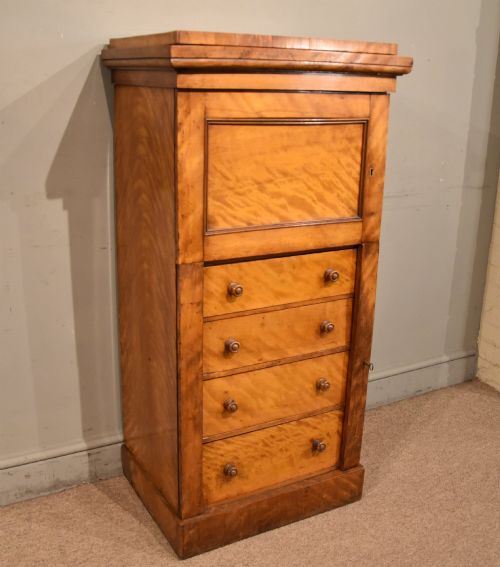
Most examples encountered on this page date from the Victorian period and the nineteenth century. Variations span standard drawer configurations to specialised secretaire and specimen formats.
Makers utilised diverse timbers, producing forms in mahogany, walnut, burr walnut, oak, satinwood, ash, and rosewood. French styles also appear alongside English examples, occasionally presenting double forms.
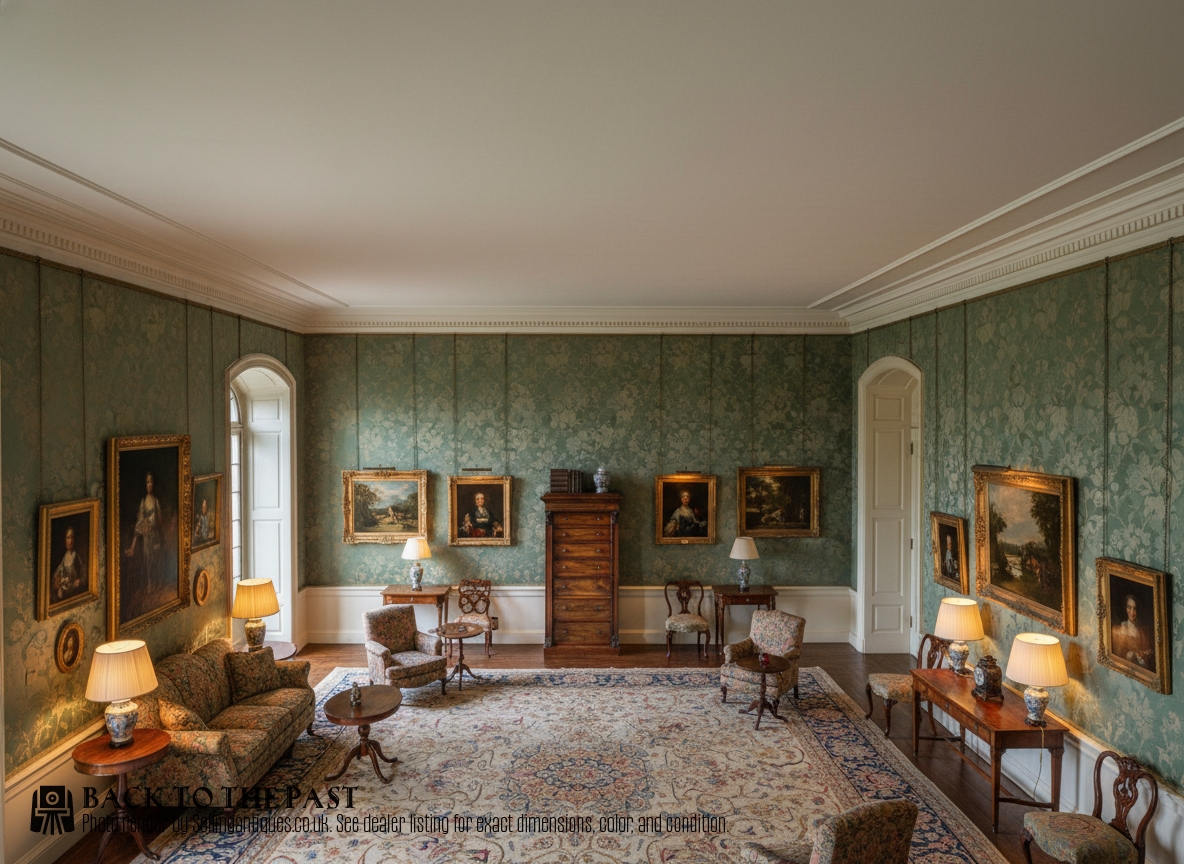
Materials and construction
Cabinetmakers constructed these chests using solid framing timbers paired with decorative veneers such as flame mahogany and burr walnut. These surfaces rely on careful timber selection to display rich grain patterns across the drawer fronts and top panels.
The defining mechanism involves a swinging locking pilaster on the right or left edge of the carcase. When closed and secured by a lock, this side pillar blocks the drawer fronts from opening.
Locking Pilaster Chest Retail Price Guide 2026
Typical asking prices for locking pilaster chest among the pieces listed under this phrase on Sellingantiques today, from the lower quarter to the upper quarter. They describe what is for sale here now, not the wider market.
Assessing quality
Quality rests upon the selection of timber figures and the precision of the locking mechanism. Finer pieces display highly figured veneers and smooth mechanical action in the pilaster hinge.
The integrity of the internal drawer construction and the retention of original brass hardware elevate the standing of a piece. Finer examples maintain crisp detailing inlays and uncompromised timber surfaces.
S. Mordan & Co·Gillows of Lancaster
The Locking Pilaster Chest Glossary
- Pilaster
- A vertical architectural member projecting from a pier, which functions here as the locking flap securing the drawers.
- Secretaire
- A desk component fitted into the upper drawers of a chest, dropping down to provide a writing surface.
- Specimen drawers
- Shallow compartments designed for the storage of natural history collections or small collector items.
- Burr walnut
- Timber taken from a tree growth, yielding intricate and swirling grain patterns prized for decorative veneer.
Locking Pilaster Chest: Frequently Asked Questions
What is a locking pilaster chest?
A locking pilaster chest is a tall, narrow set of drawers secured by a hinged side locking bar. This design keeps the contents secure behind a single fastened pillar.
Most pieces date from the Victorian era and utilise timbers like mahogany, walnut, and rosewood.
How does the locking mechanism work?
The mechanism relies on a hinged wooden pilaster attached to the front edge of the carcase. Closing this pillar over the drawer edges and locking it prevents the drawers from opening.
This single lock secures the entire vertical column simultaneously.
Where were these chests placed?
Their tall and narrow proportions allowed them to fit into tight bedroom corners where standard wide chests would not go. They provided ample storage without occupying much floor space.
Some examples also served as collector cabinets or writing desks in studies.
What woods were commonly used?
Cabinetmakers employed a variety of native and exotic hardwoods for these pieces. Mahogany and walnut appear frequently, often enhanced by burr walnut or flame mahogany veneers.
Oak, satinwood, ash, and rosewood also feature across the period.