

Victorian Locking Chest
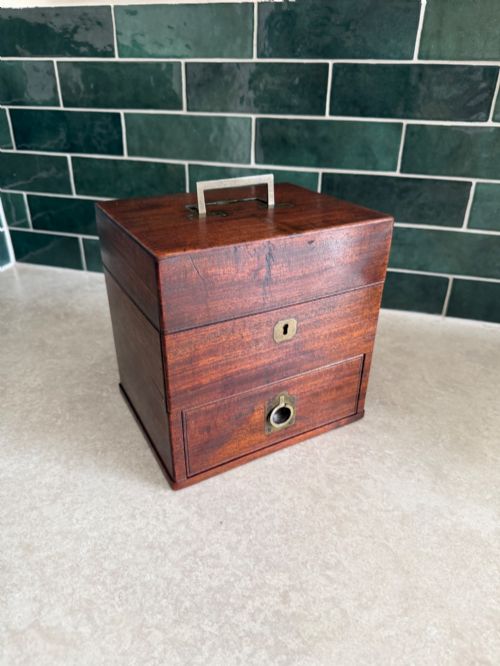
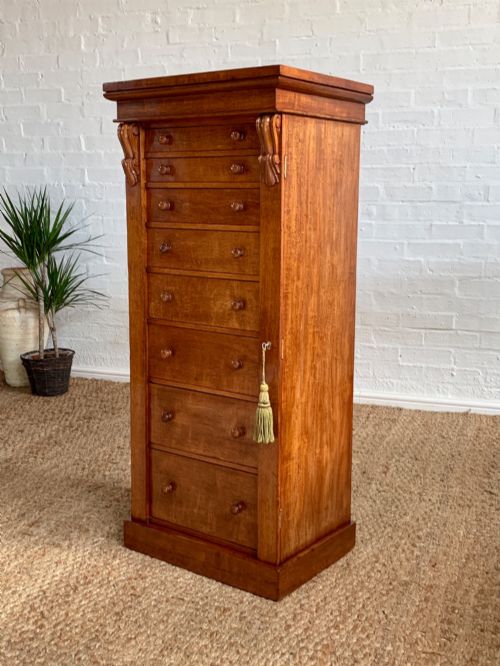
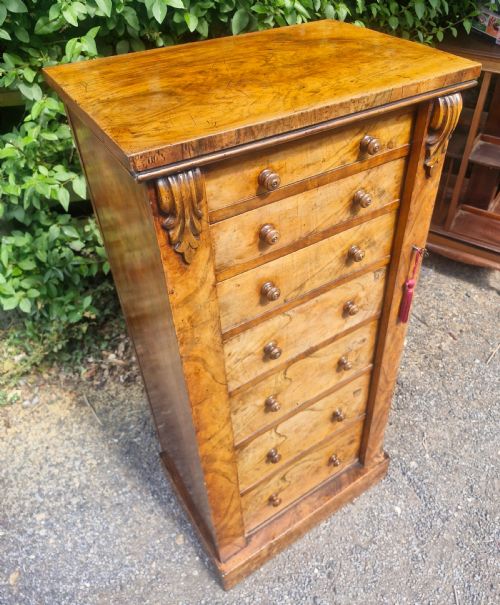
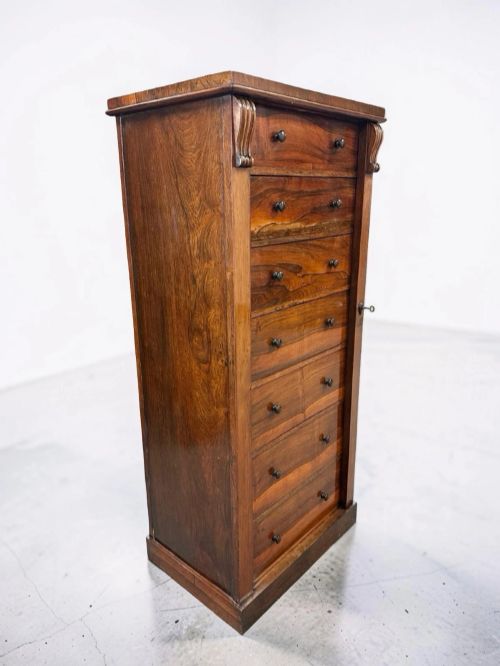
These Victorian locking chest examples combine secure drawer locking mechanisms with robust timber construction.
What a victorian locking chest is
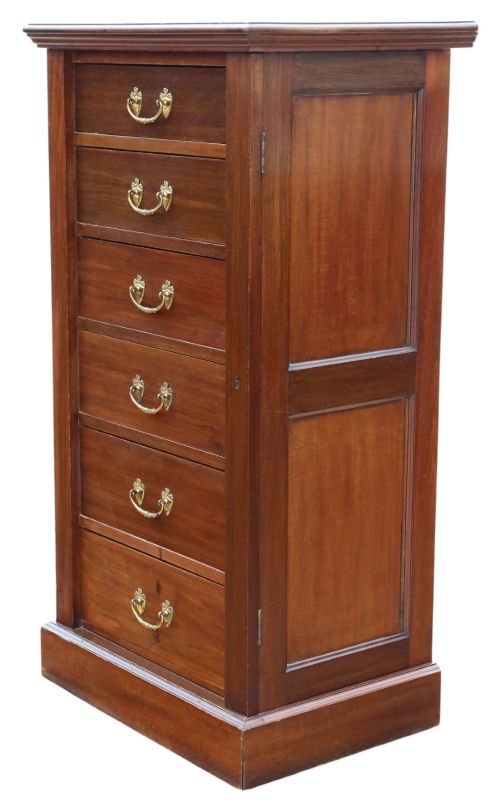
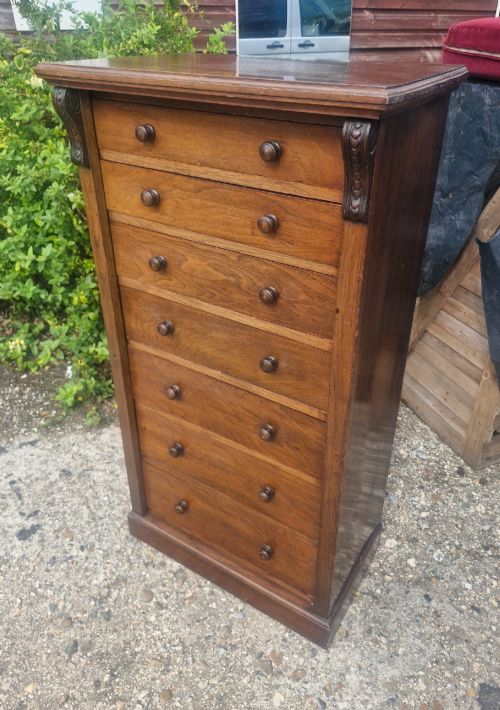
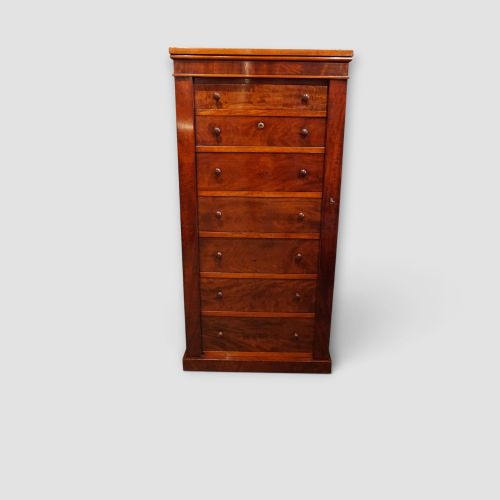
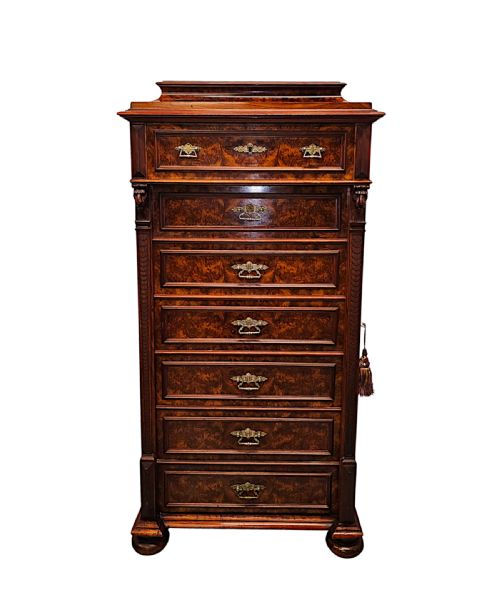
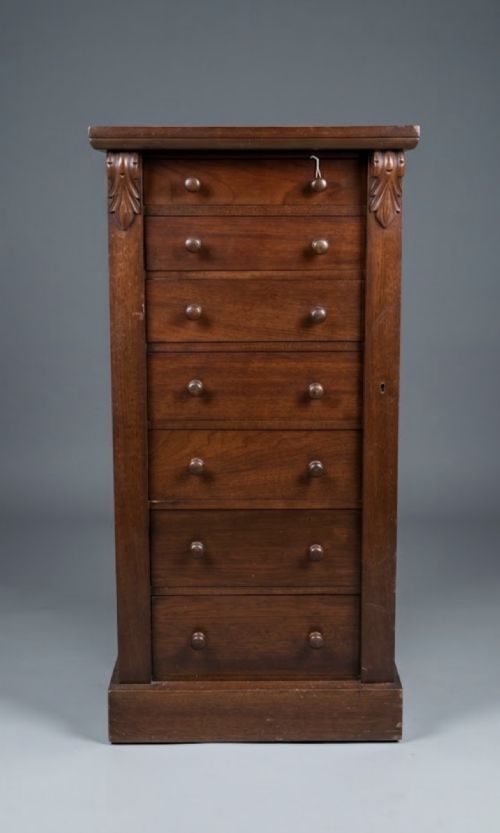
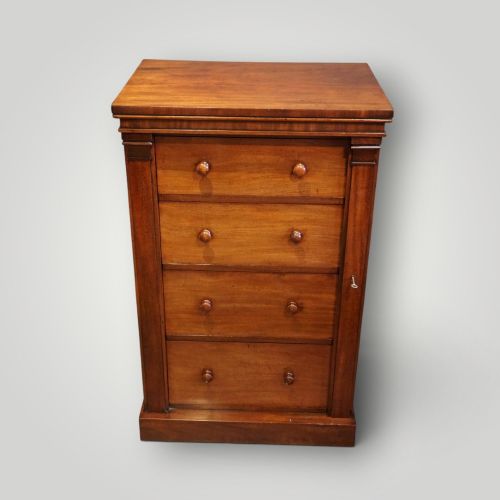
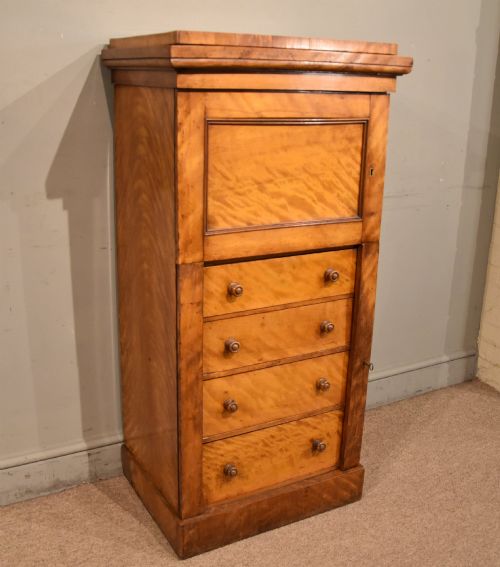
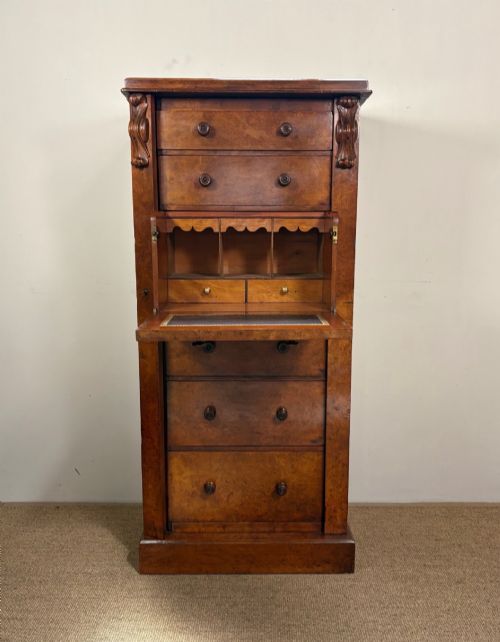
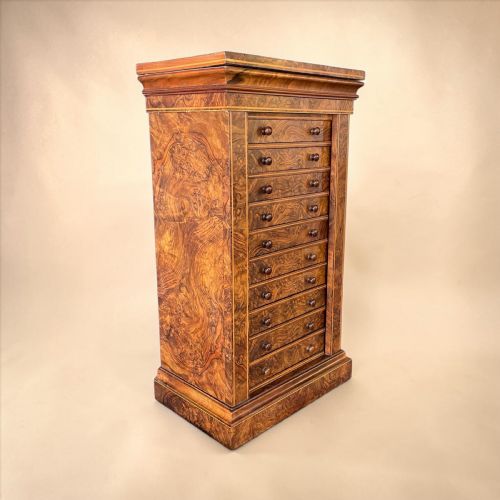
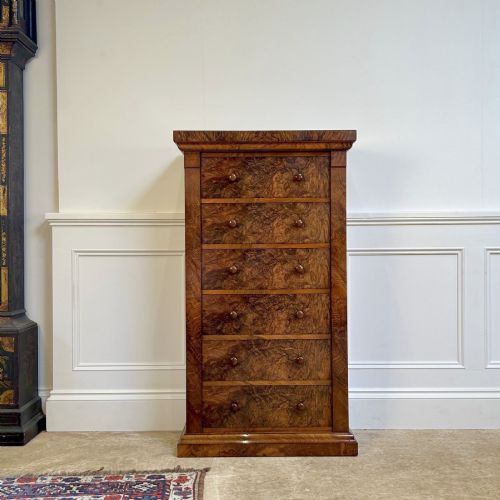
A victorian locking chest typically takes the form of a narrow Wellington chest, designed with a hinged locking stile that secures all drawers simultaneously. These pieces date across the nineteenth century, including specific years like eighteen-sixty and eighteen-seventy.
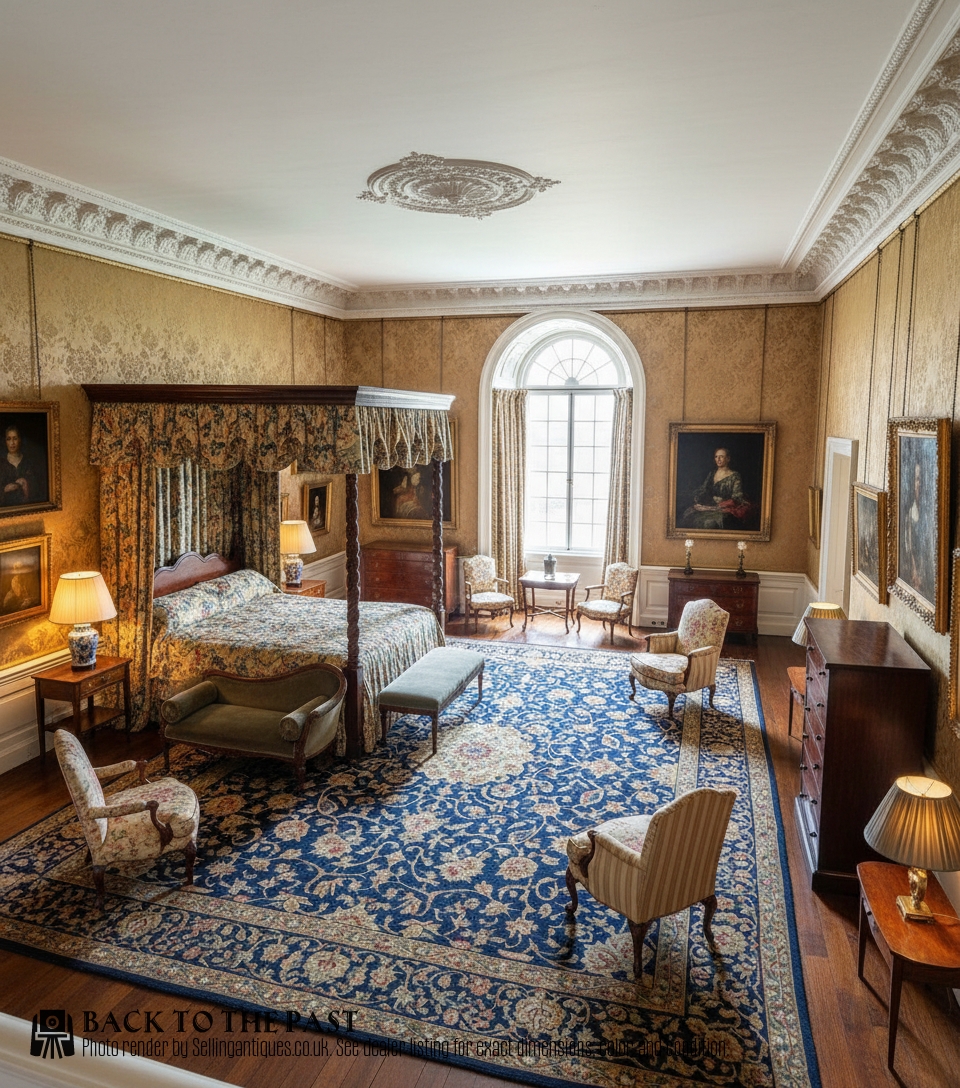
How they were made
Cabinet makers utilised solid timbers such as mahogany and oak alongside walnut and burr walnut veneers. Figured mahogany veneer and figured walnut provide distinct grain patterns across the drawer fronts and primary surfaces.
Brass hardware and glass elements appear alongside integrated locking mechanisms operated by the hinged pilaster. Skilled joinery ensures the deep, narrow carcase maintains structural integrity while housing multiple drawers.
Retail Price Guide 2026
Typical UK retail prices for victorian locking chest, calculated from the Sellingantiques database of over a million retail prices indexed since 2003. This retail price guide relies exclusively on Sellingantiques data; no external sources or auction records are used, so the figures do not describe the wider market.
The locking stile on a Wellington chest acts like a bouncer for your socks, ensuring no drawer gets opened without proper clearance.
What varies in quality
The choice of timber veneer dictates much of the visual distinction, with highly figured walnut or burr walnut marking out superior examples. The execution of inlaid details and the fidelity of the locking bar mechanism further separate standard production from finer cabinet work.
Overall proportion and the retention of original brass fittings influence the integrity of each piece. Superior items demonstrate precise joinery in the narrow drawer construction and smooth operation of the locking stile.
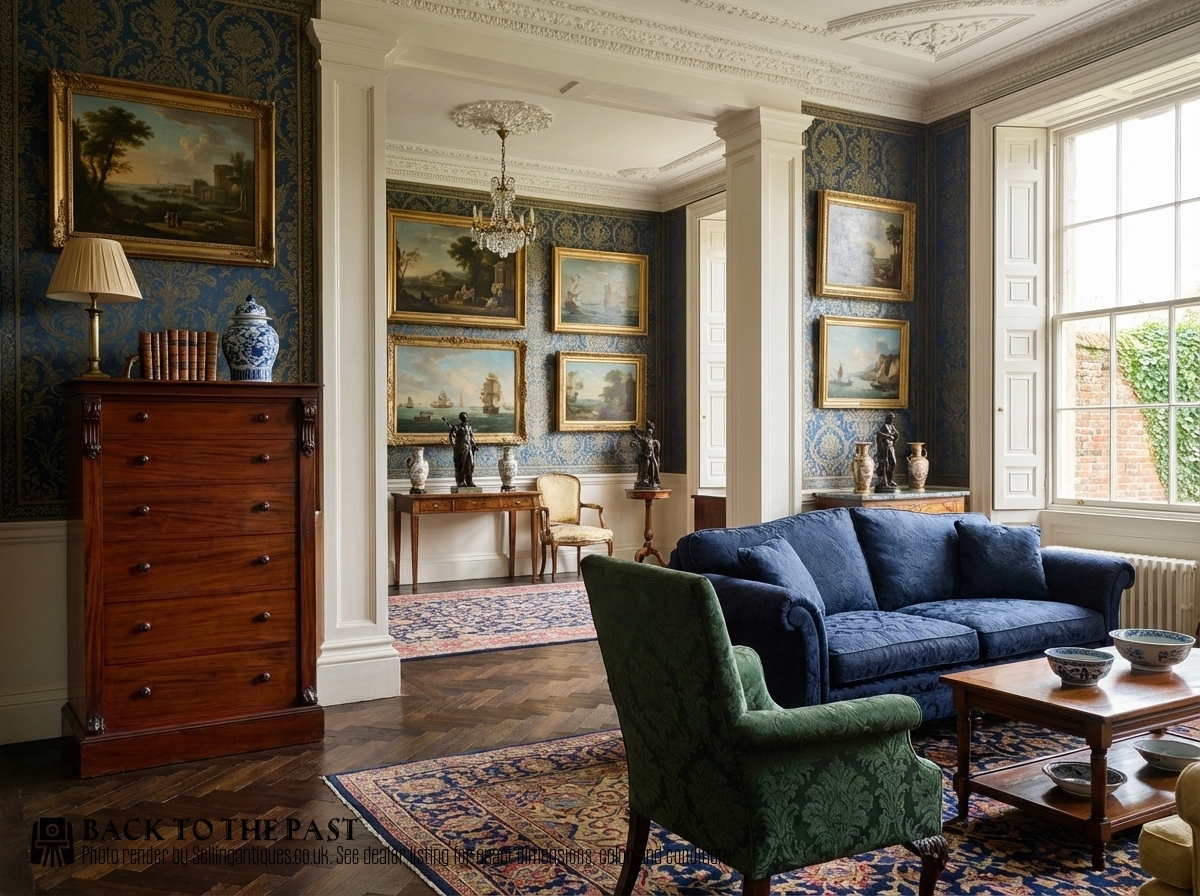
Holland & Sons
The Victorian Locking Chest Glossary
- Wellington chest
- A tall, narrow chest of drawers featuring a hinged vertical locking bar on one side that secures the drawers when locked. This form became popular during the nineteenth century for papers and linen.
- Secretaire
- A piece of furniture incorporating a pull-down writing drawer fitted with internal compartments and small drawers. It combines writing functionality with standard drawer storage.
- Burr walnut
- Timber taken from the warted growths on walnut trees, yielding highly decorative, swirling grain patterns used for decorative veneers. Cabinet makers prized this material for high-status Victorian furniture.
- Figured mahogany
- Mahogany timber displaying irregular, highly reflective grain patterns produced by growth variations. It adds visual depth to flat drawer fronts and carcase sides.
Frequently Asked Questions
What are specimen collector drawers?
Specimen collector drawers are shallow internal compartments designed for organising small scientific samples, coins, or natural history items. They feature precise internal dividers within the standard drawer carcase.
These additions indicate a cabinet commissioned for a collector rather than general household clothing storage.
Where were these chests placed?
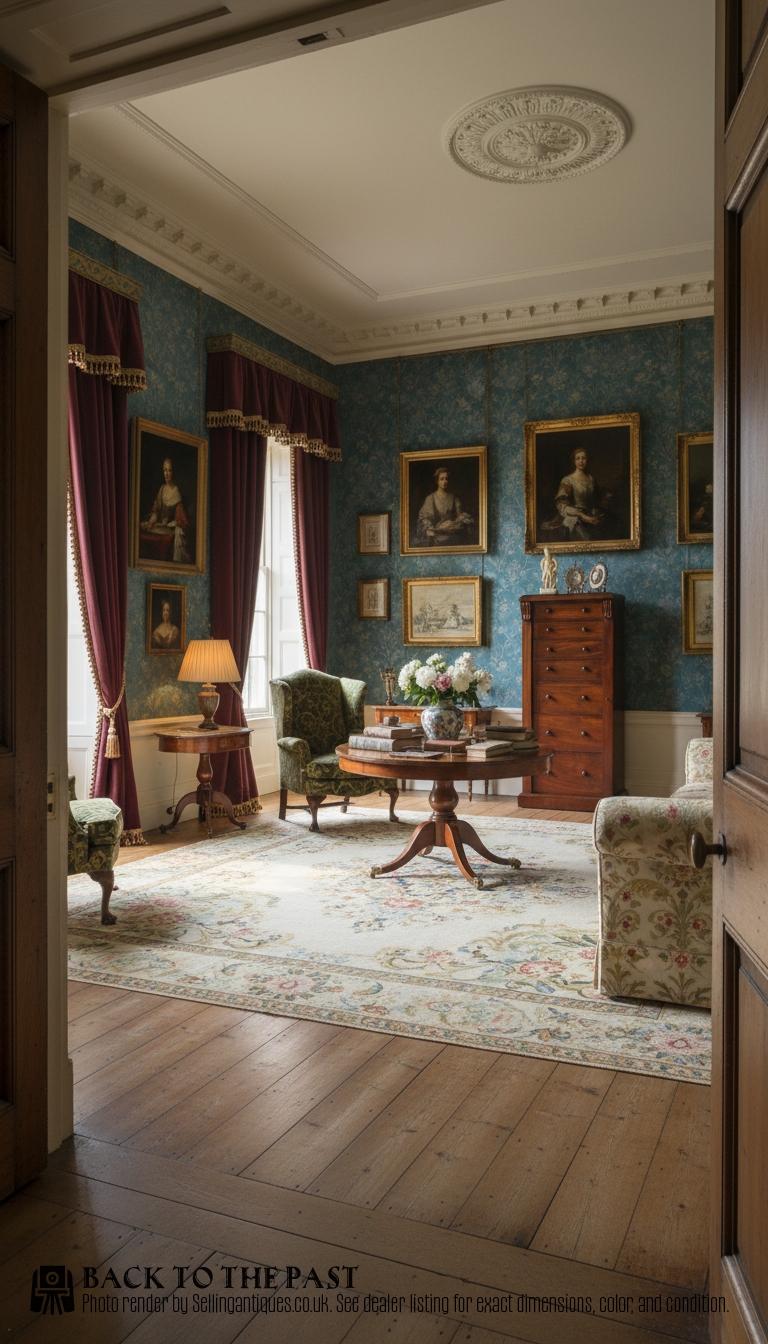
Their narrow footprint allowed these chests to fit into confined spaces such as bedrooms, studies, or libraries where floor area was restricted. The vertical orientation provided substantial drawer capacity without occupying a wide wall space.
This design suits modern domestic interiors for similar space-saving reasons.
How do I care for mahogany and walnut surfaces?
Maintain timber surfaces by dusting with a dry, soft cloth and avoiding direct sunlight that can fade the grain and veneers. Periodic application of traditional wax helps nourish the wood without building up heavy residues.
Keep pieces away from sudden temperature shifts to protect the underlying veneers.