
Antique Locking Drawers
These antique locking drawers span robust Victorian Wellington chests to Georgian writing slopes, offering secure storage for papers and valuables.
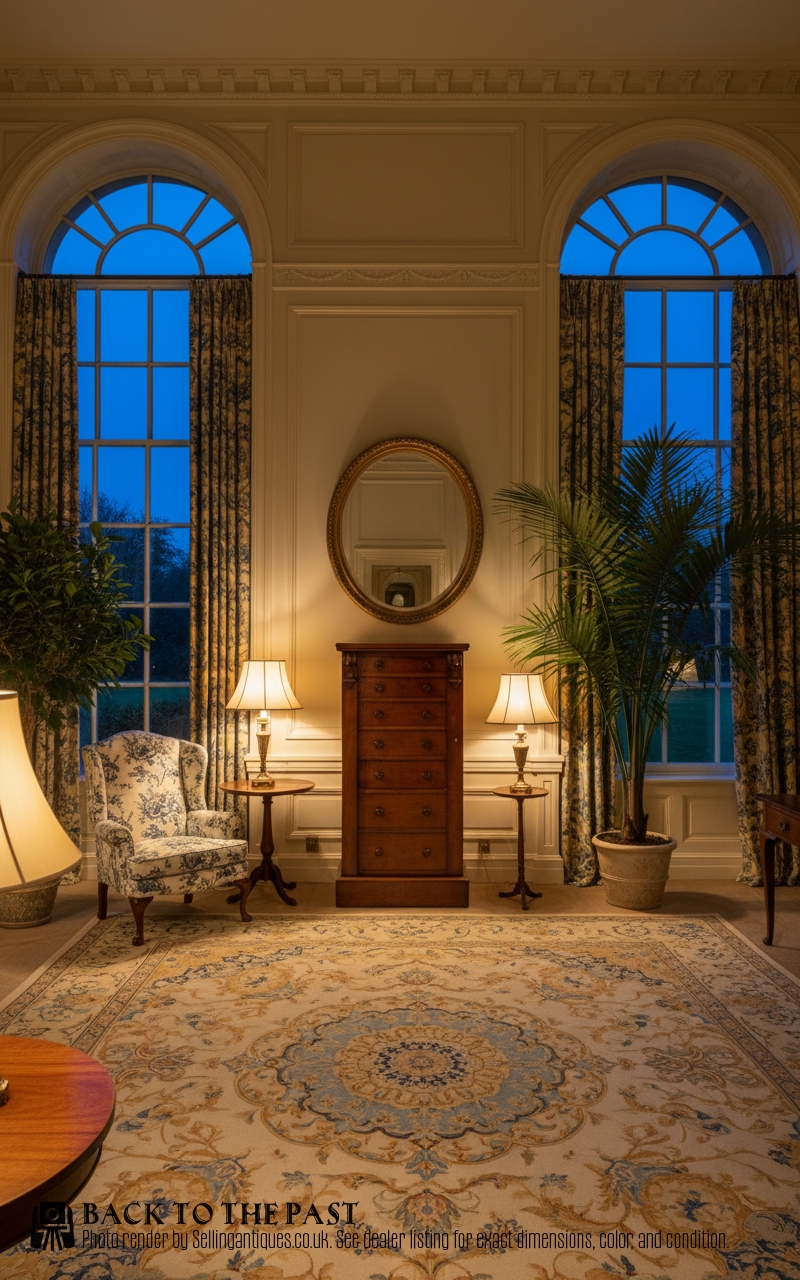
Antique Locking Drawers
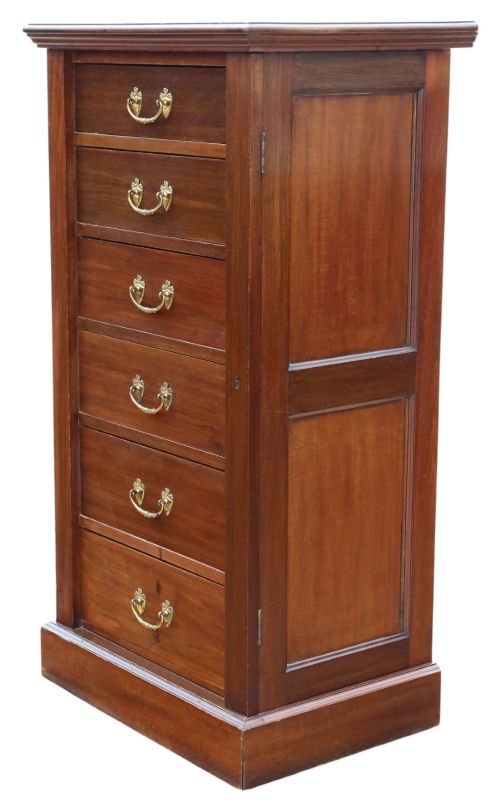
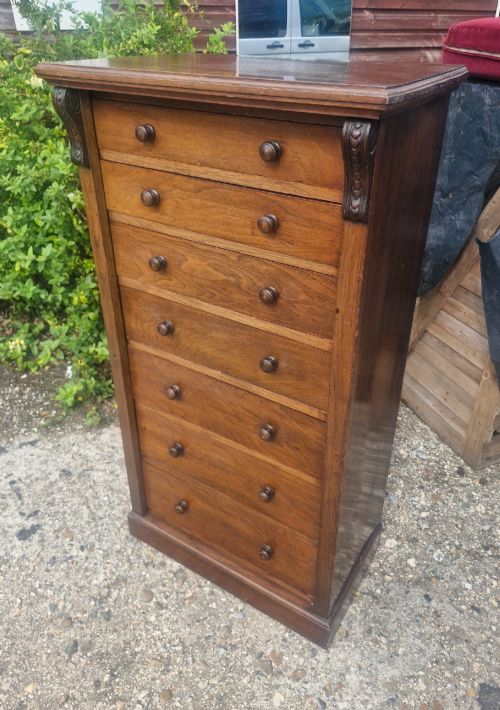
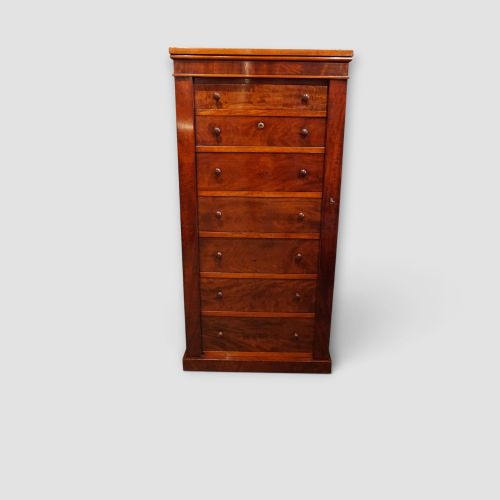
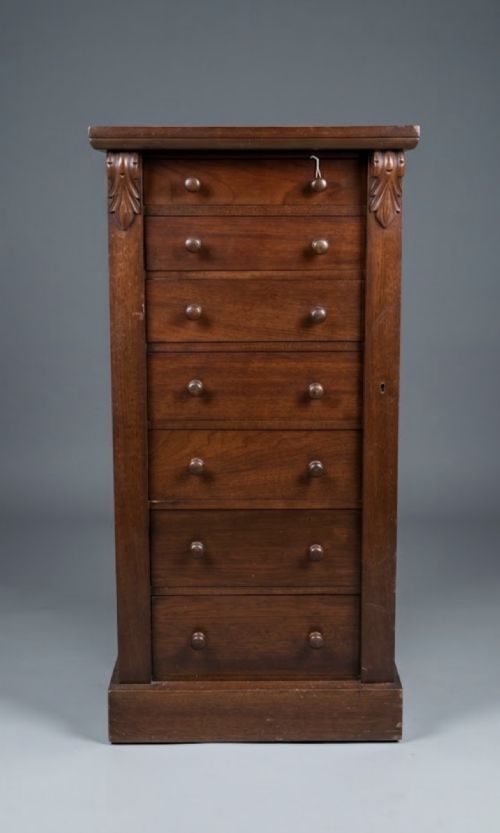
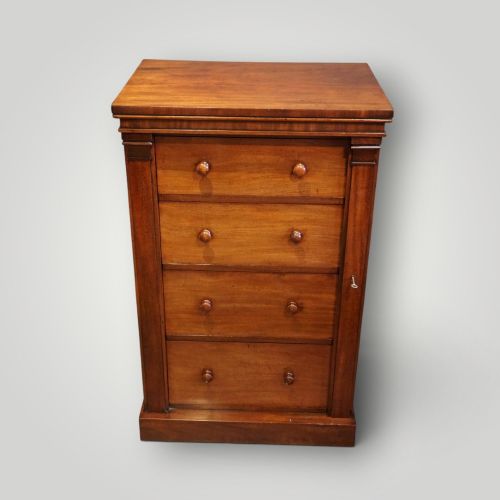
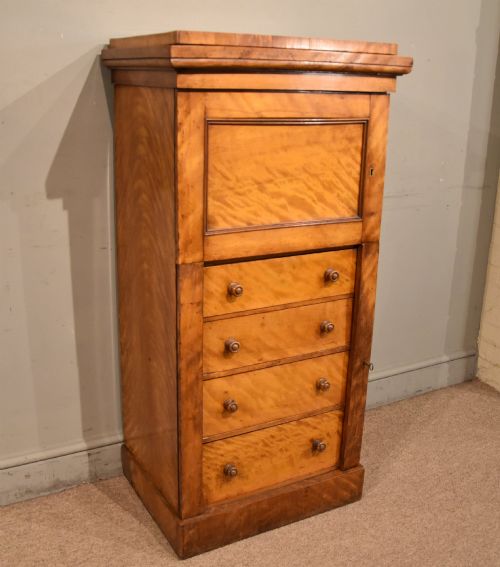
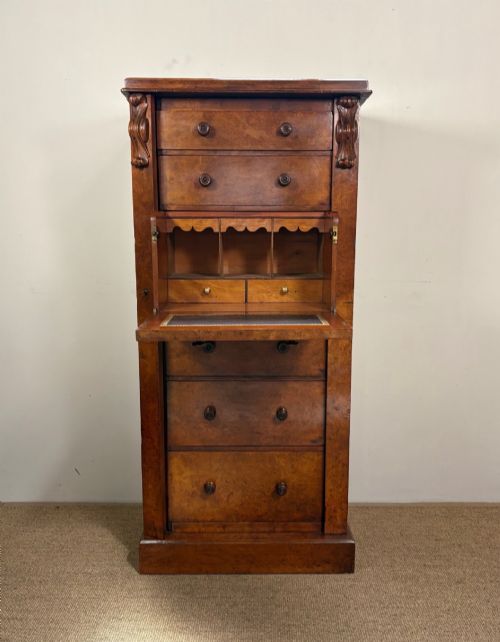
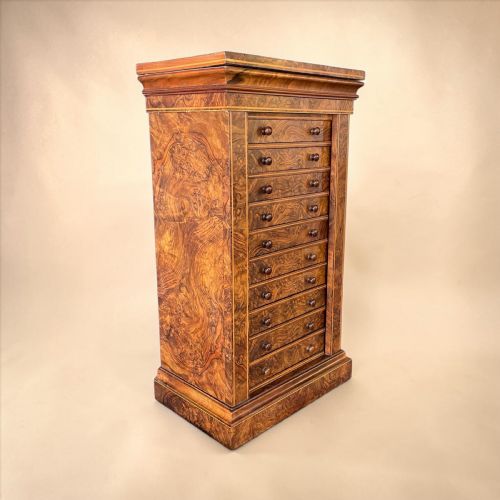
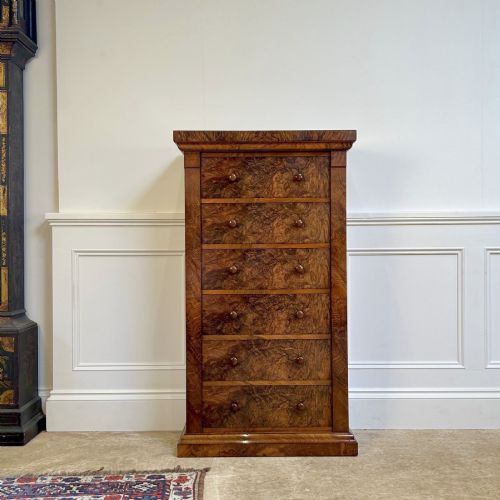
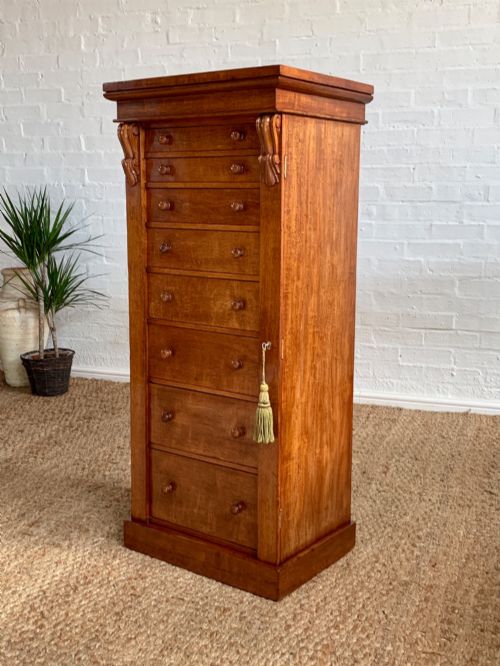
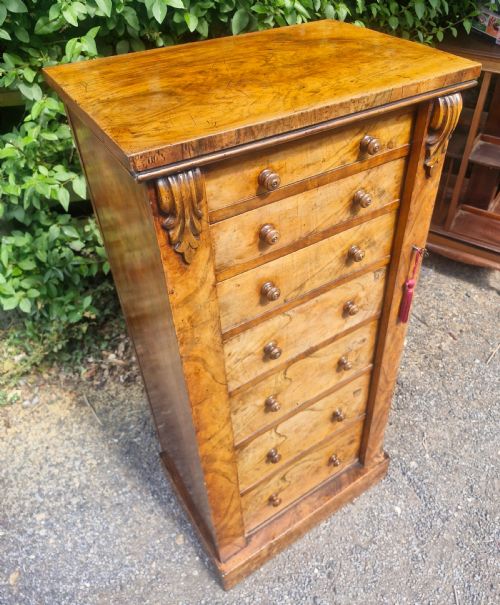
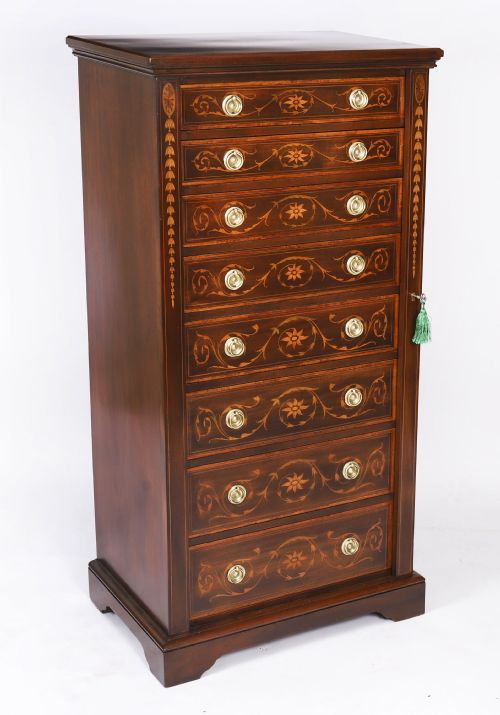
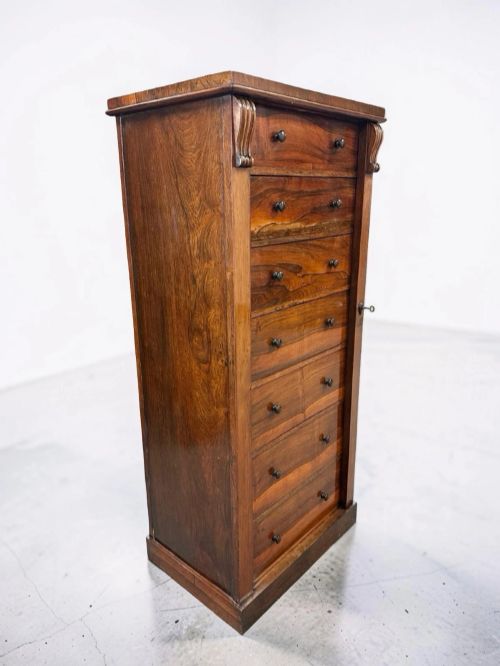
When you search for antique locking drawers, you encounter pieces designed to secure personal belongings using internal mechanisms and locking bars. The predominant form on this page is the Wellington chest, a tall and slender chest of drawers featuring a hinged locking flap down one side that secures all drawers simultaneously.
How they were made
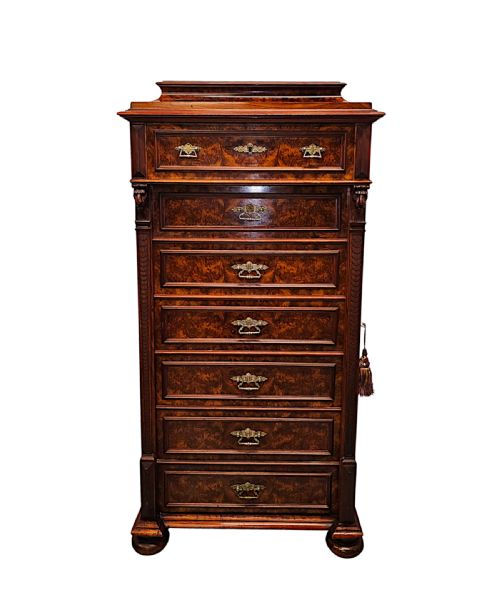
Cabinet makers utilised dense timber stocks such as mahogany, walnut, and oak to construct the carcase and drawer frames of these secure pieces. Fine veneers including burr walnut, flame mahogany, and satinwood frequently face the exterior surfaces to create rich visual patterns.
Brass hardware figures prominently, providing structural reinforcement and housing the complex mechanical locks required to secure the drawers. Internal locking stiles or secret compartments demand precise joinery to ensure the locking bar engages smoothly with every drawer.
The listings here demonstrate a strong representation of Victorian mahogany and walnut Wellington chests alongside earlier Georgian pieces.
What varies in quality
Quality separates ordinary utility pieces from exceptional commissions through the choice of timber figure and the precision of the locking mechanism. Superior examples display highly figured veneers like burr walnut or fiddleback mahogany, matched symmetrically across the drawer fronts.
The engineering of the locking stile and the presence of original branded locks indicate workshop status and overall grade. Finer pieces retain matching turned knobs, original keys, and secondary timbers of substantial thickness without excessive replacement parts.
Gillows·J Shoolbred·Holland & Sons
The Antique Locking Drawers Glossary
- Wellington chest
- A tall, narrow chest of drawers characterised by a hinged locking flap on one vertical edge that secures the entire stack.
- Secretaire
- A desk form incorporating a drop-front writing surface combined with internal drawers and pigeonholes.
- Bramah lock
- A patented high-security cylindrical lock mechanism invented in the late eighteenth century, frequently found on superior furniture.
- Scumble paint
- A decorative surface finish applied to imitate more expensive wood grain through semi-transparent pigments.
- Writing slope
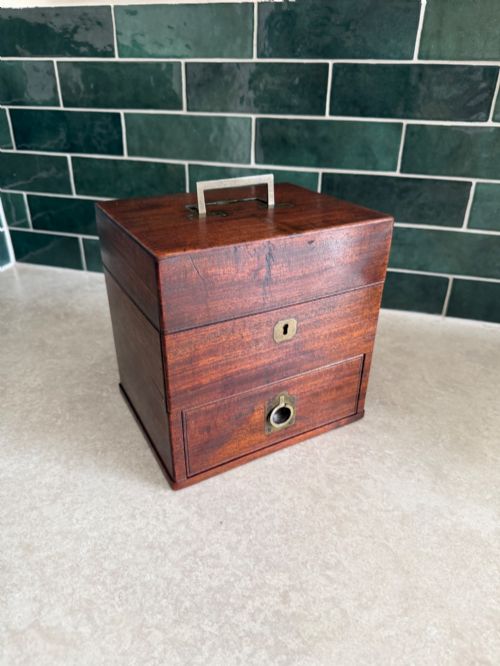
- A portable box with an angled, hinged lid that opens to reveal a velvet or leather-lined writing surface and internal compartments.
Antique Locking Drawers: Frequently Asked Questions
How does a Wellington chest lock?
A Wellington chest locks via a vertical wooden flap, known as a locking stile, hinged to one side of the chest frame. When the drawer stack is closed, this flap swings shut over the drawer edges and is secured with a key at the top or bottom.
This single action engages a mechanism that blocks all the drawers simultaneously. To open the drawers, the side flap must be unlocked and swung clear first.
What were Wellington chests used for?
Wellington chests served as compact, secure storage units for gentlemen's linen, personal papers, and valuable small items in period bedchambers and studies. Their tall, narrow footprint allowed them to fit into tight spaces where a standard wide chest would not go.
The locking mechanism provided privacy and security for personal belongings before the widespread use of fitted bedroom furniture and modern domestic safes.
How do I care for mahogany veneer?
Maintain mahogany veneer by keeping the piece away from direct sunlight and heat sources to prevent the wood from drying out and the veneer from lifting. Dust regularly with a dry cloth and apply a quality beeswax sparingly to nourish the polished surface.
Avoid using silicone-based polishes or wet cloths, as excess moisture can penetrate microscopic cracks in the old finish and damage the underlying glue.
Are keys usually original?
Original keys are uncommon on antique locking furniture because keys were easily lost or separated from pieces over generations of use. Many pieces now rely on replacement keys or period-appropriate substitutes fitted to operate the original locks.
The presence of an original working key adds interest for collectors, but functional replacement keys are standard for pieces of this age.