

Victorian Chest of Drawers
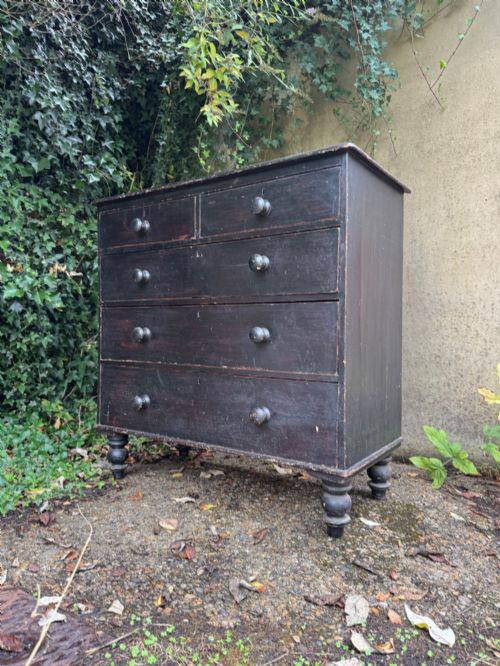
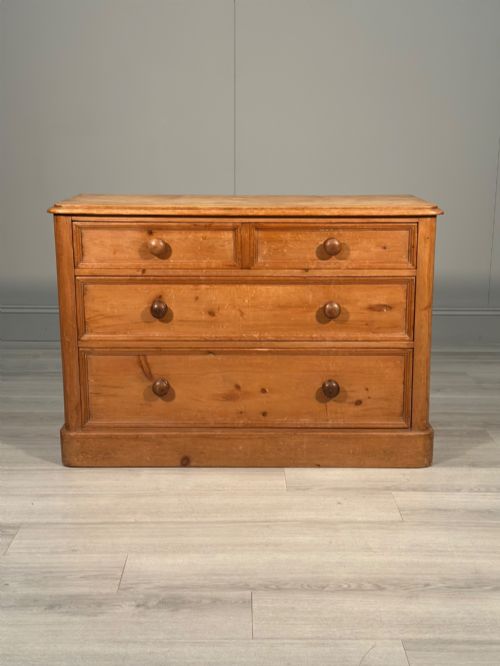
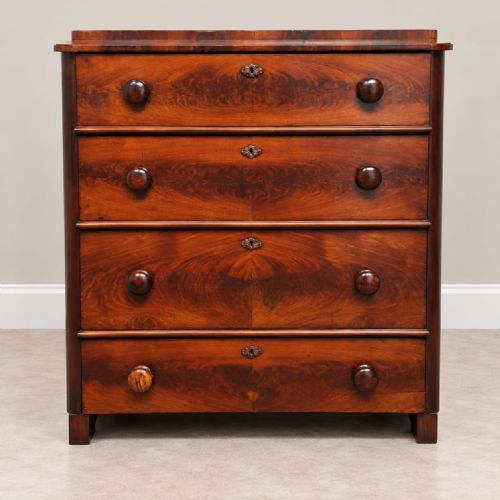
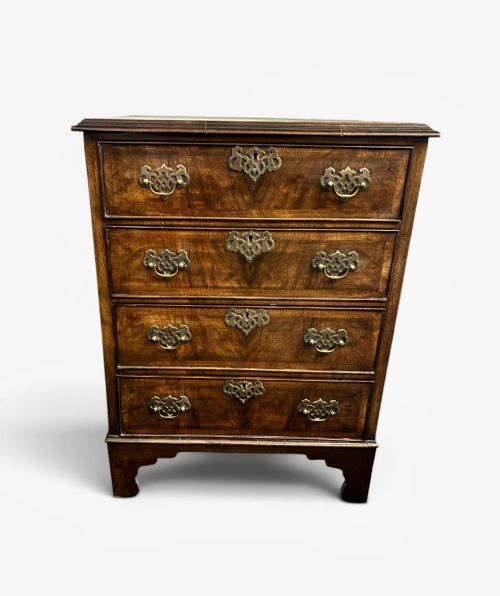
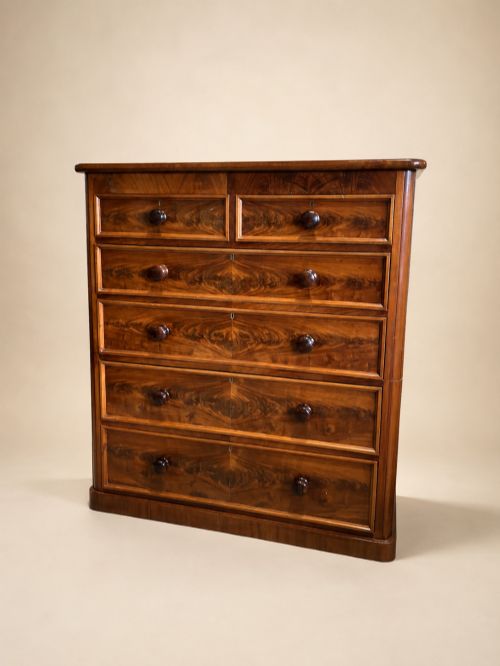
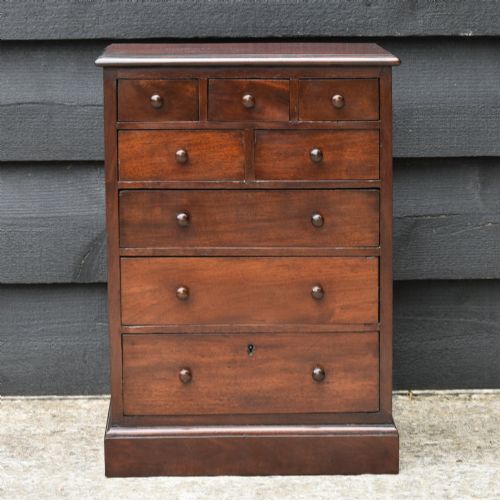
A Victorian case piece of stacked drawers, usually four or five in a straight-fronted rectangular carcase, made in quantity for bedroom and general household storage.
What They Are
The chest of drawers grew out of the seventeenth-century lidded chest, swapping a single lift-up box for stacked drawers. By the nineteenth century it was standard bedroom furniture, turned out in enormous numbers in plain softwood and in figured hardwoods alike.
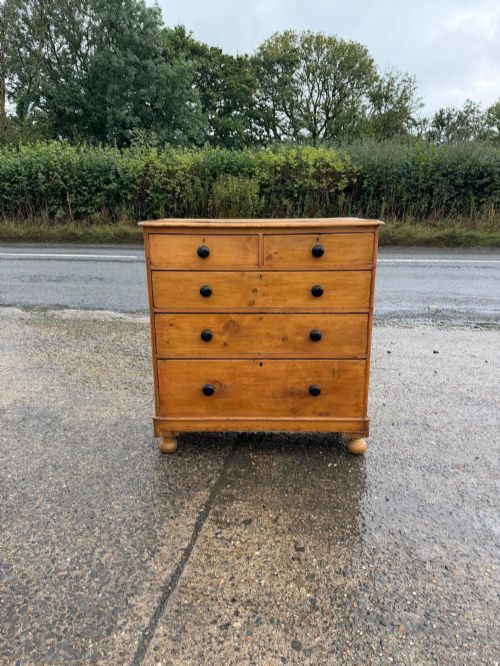
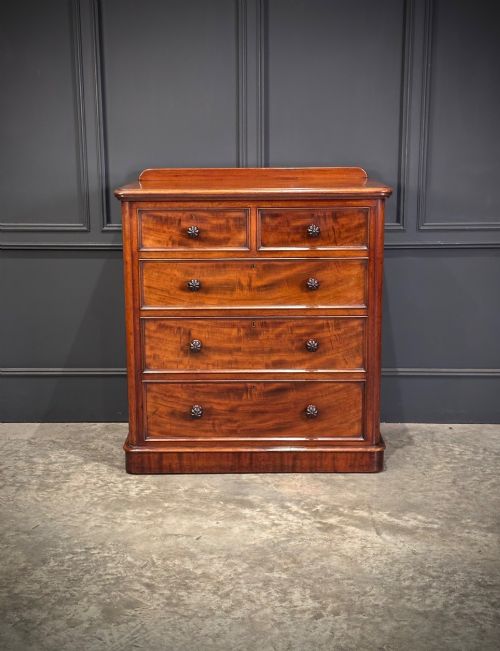
The chest you are most likely to meet is a straight-fronted mahogany or pine one of four or five drawers, listed as nothing more than "Victorian mahogany chest of drawers". Mahogany leads the titles, pine comes second and walnut third; oak, teak, rosewood, ash and birch trail well behind. Layouts come in shorthand: 2 over 3, 2+2, four height, five height.
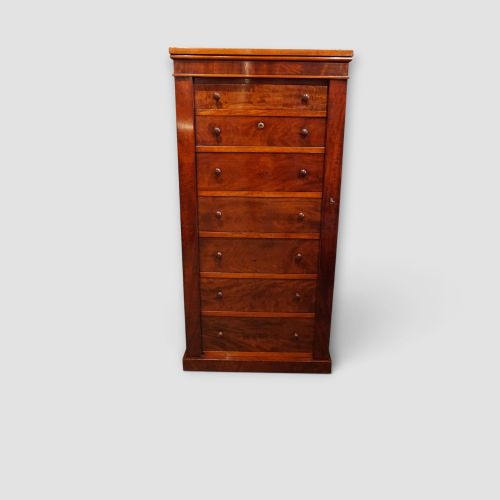
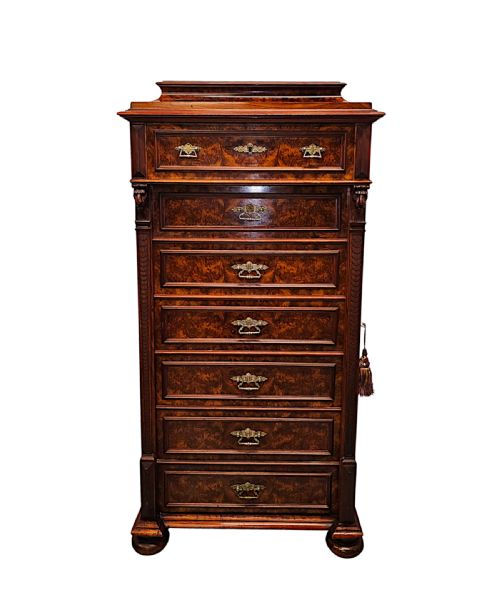
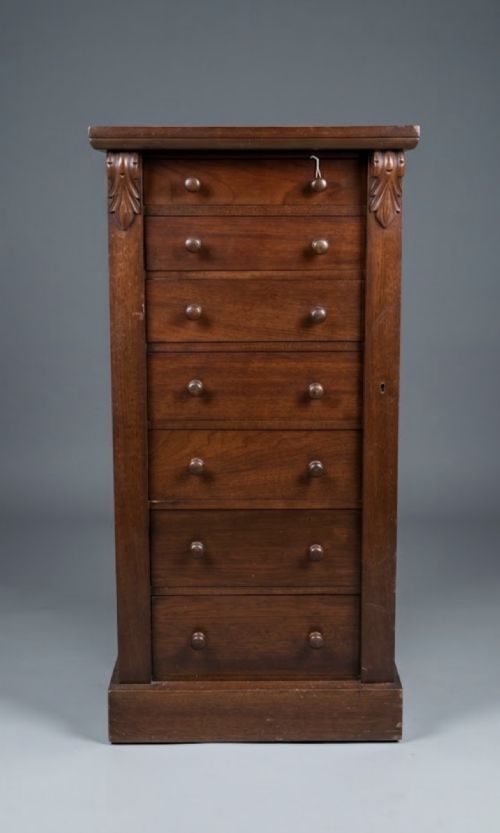
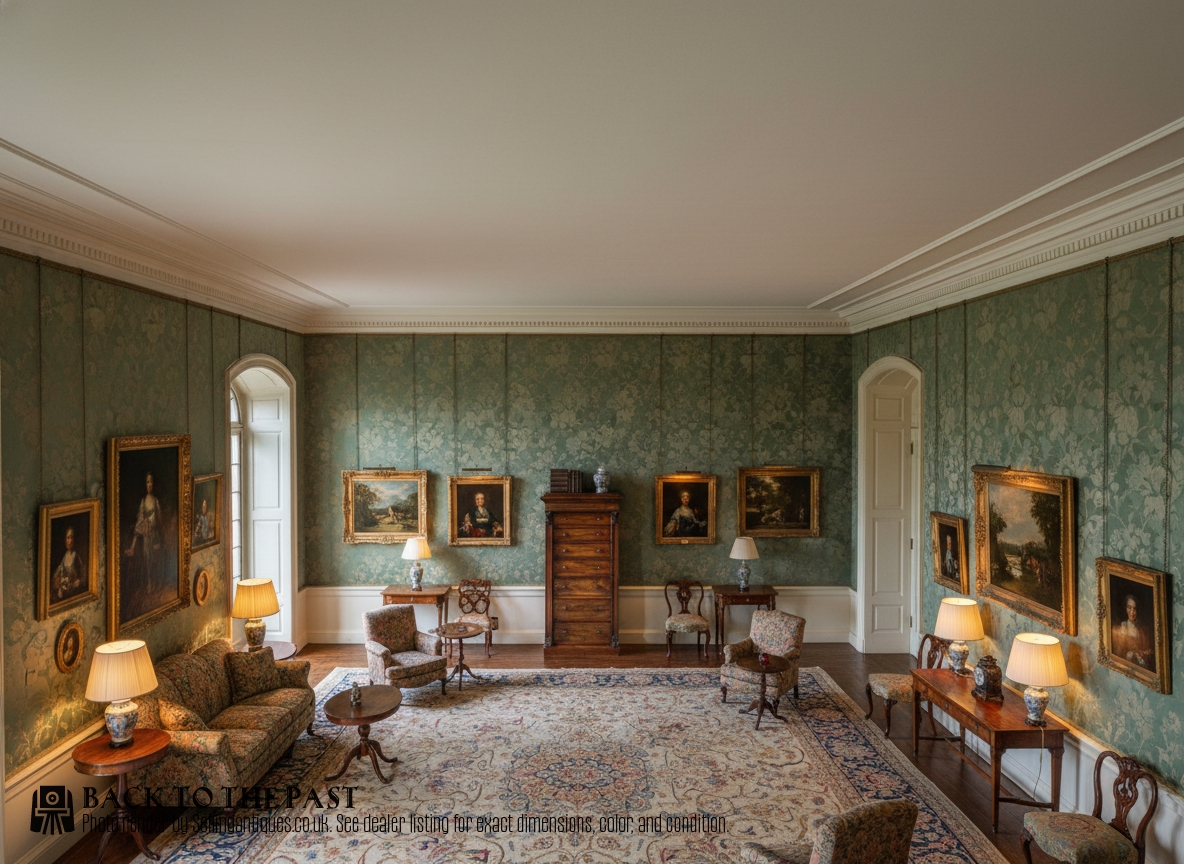
Two forms stand apart inside the category. The Wellington chest is tall and narrow, with six to twelve small drawers and a hinged locking pilaster down one side, and it turns up in 313 titles. The two-part brass-bound military or campaign chest, built to stack and travel, is a much smaller group. Bow fronts account for 153 titles, so straight fronts dominate.
Dating is loose by habit rather than by accident. Of 2,677 listings, 1,591 say only "Victorian" and another 226 only "19th Century". Where a clean year is given, the 1880s lead, followed by the 1860s and 1870s. The stated range stretches from 1800 to 1920, so the heading sits a little wider than the reign.
Where The Range Splits
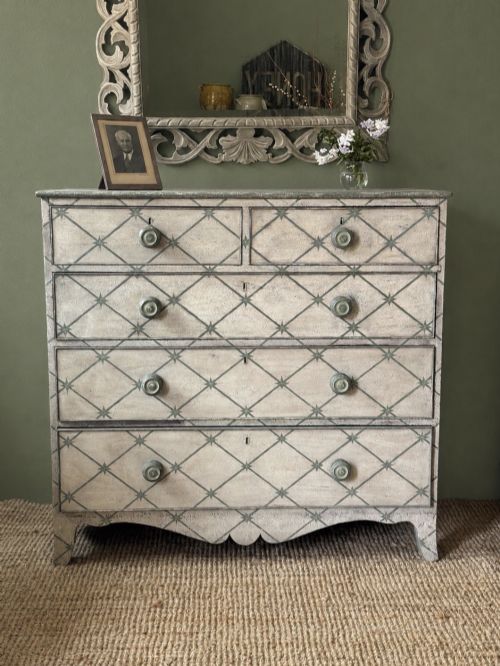
Timber does most of the work. Plain pine sits at the bottom of the range, whether stripped, waxed, painted or scumbled to imitate a better wood. Above it comes plain mahogany, and above that the figured veneers: burr walnut in 164 titles, flame and figured mahogany in a further eighty or so between them.
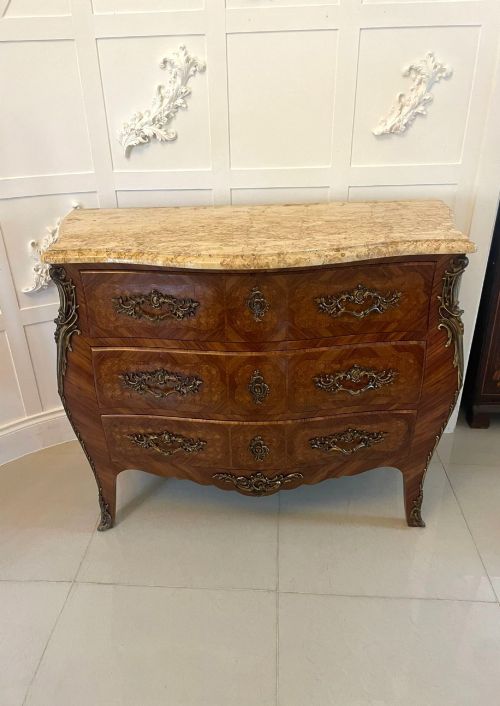
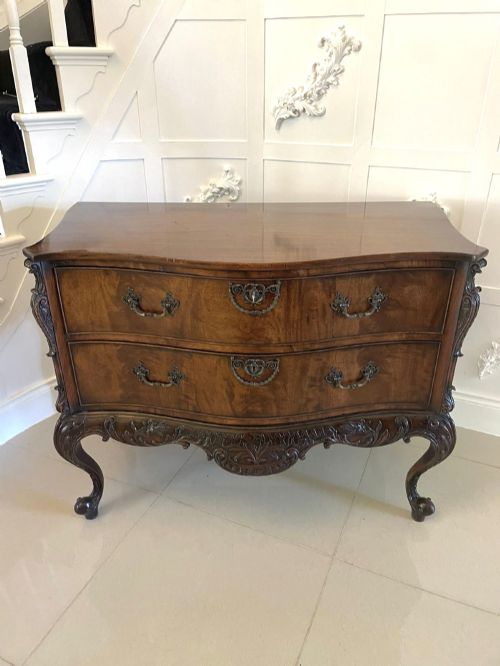
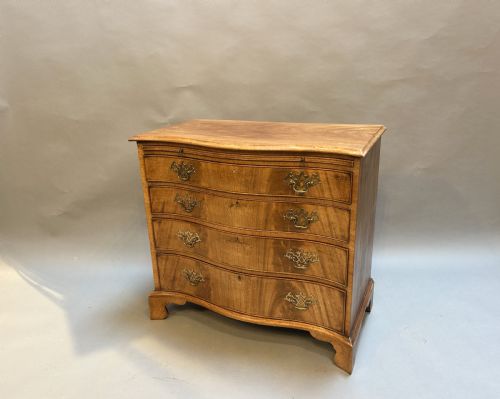
Form matters as much as wood. The two-part military and campaign chests with flush brass handles and bound corners, along with French marble-topped ormolu-mounted commodes, are where the highest-priced listings concentrate. Bow and serpentine fronts sit above straight ones. Plain straight-fronted pine and mahogany chests make up the cheapest end.
Two smaller things lift a chest. A named cabinetmaker or retailer attribution pushes it well above the plain equivalent, and it stays the exception: only two names clear three dealers across the whole archive. Titles that specify original turned knobs, original feet or a complete key with working lock also sit higher, and such claims turn up only in scattered listings.
Retail Price Guide 2026
Typical UK retail prices for victorian chest of drawers, calculated from the Sellingantiques database of over a million retail prices indexed since 2003. This retail price guide relies exclusively on Sellingantiques data; no external sources or auction records are used, so the figures do not describe the wider market.
The stated dates on Sellingantiques for these chests run from 1800 to 1920, a little wider than the reign itself.
Gillows·Edwards & Roberts
The Victorian Chest of Drawers Glossary
- 2 over 3
- Drawer layout shorthand: two short drawers side by side above three full-width ones. Also written 2+3 or 2/3.
- Four height, five height
- Dealer shorthand for the number of drawer tiers in the carcase. Five height chests are taller by one tier, nothing more.
- Bow front
- A convex curved front to both carcase and drawers, used in 153 titles. Straight front is the default, and gets stated only when a dealer wants to rule out a bow.
- Wellington chest
- Tall narrow chest of many small drawers, usually with a hinged locking pilaster down one side that secures the lot. Samples run from six drawers to twelve.
- Campaign chest
- Built in two stacking halves with flush brass handles and brass-bound corners for transport. Listed as military or campaign, sometimes both, and sometimes in teak or camphor wood.
- Secretaire
- A drawer front that drops to form a writing surface, named in 70 titles and found on Wellington and military chests alike.
Frequently Asked Questions
How many are listed each year?
Around 292 Victorian chests of drawers are listed on Sellingantiques in a year, and 231 different dealers have handled one. That is among the widest dealer bases of any furniture form on the site.
The total archive runs to 2,677 listings, so this is a category where the same broad type comes round again and again.
What wood are they usually made from?
Mahogany leads the titles and pine follows, so the two between them cover two-thirds of everything listed. Walnut comes third.
After that the timbers thin out fast, with oak, then teak, rosewood, ash and birch. Olive wood, yew, camphor wood, birdseye maple, chestnut, lacewood, kingwood and satin birch each surface in isolated titles.
Why do so few listings give a date?
Dealers name the period rather than the year. Only 709 of the listings carry a clean year, while 1,591 say simply "Victorian" and 226 say "19th Century".
Among those that are dated, the 1880s is the best-represented decade at 203 listings. The 1840s is the thinnest, at five.
What is a Wellington chest?
A tall narrow chest of many small drawers, with a hinged pilaster down one side that swings across and locks the whole stack at once. Sampled versions run to six, seven, eight, ten and twelve drawers.
It appears in 313 titles, most often in mahogany or walnut. Secretaire versions, with a drawer front that drops for writing, turn up too.
Do chests come in pairs?
Occasionally. Forty-one titles offer two chests together, usually described as bedside chests.
The rest of the archive is single pieces.
Are unusual forms found in this category?
Some. Miniature and apprentice chests appear in 37 titles, and a Wellington chest made for a child turns up more than once.
Genuinely one-off entries include a sign-written advertising chest, a pharmacy chest, an apothecary's chest, a haberdashery bank of drawers and a faux bamboo chest.