


Antique Jacobean Chest of Drawers
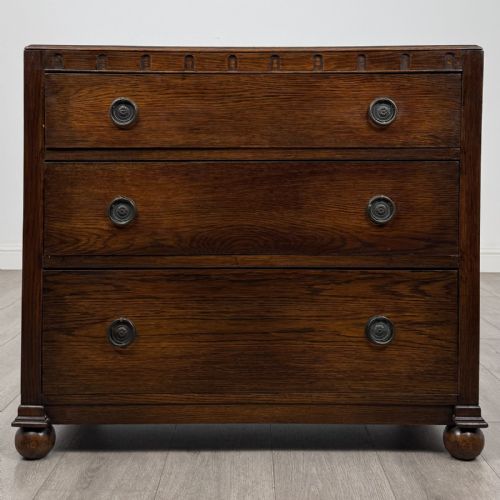
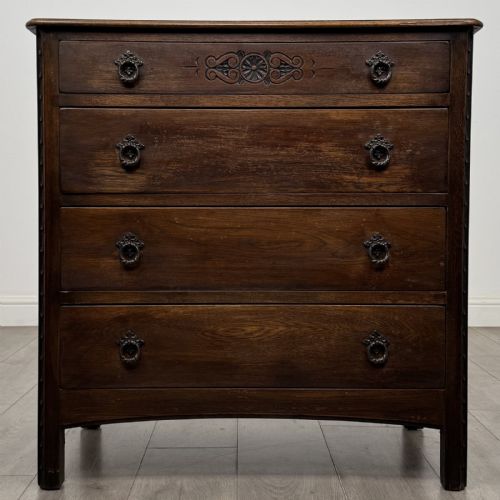
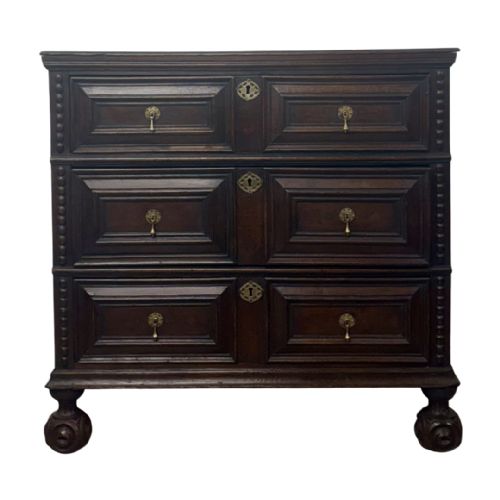
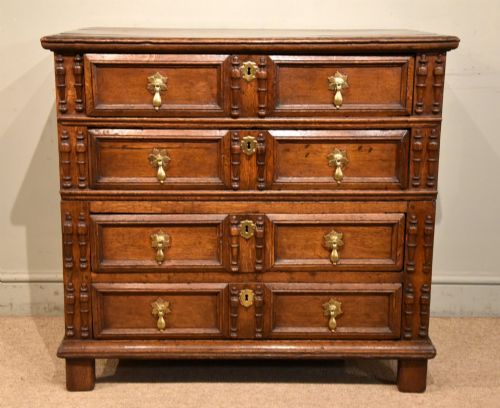
An oak chest of drawers in the 17th-century English manner, built to hold linen and clothes in tiers of long drawers rather than under a lift-lid.

Antique Jacobean Chest of Drawers
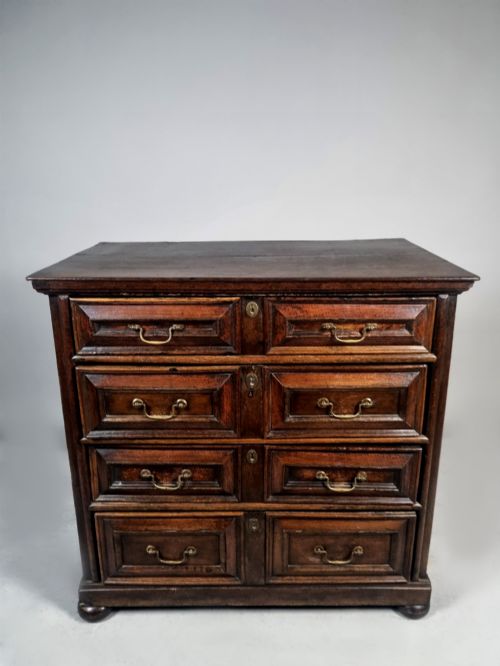
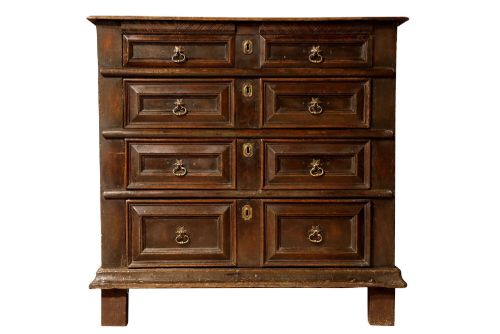
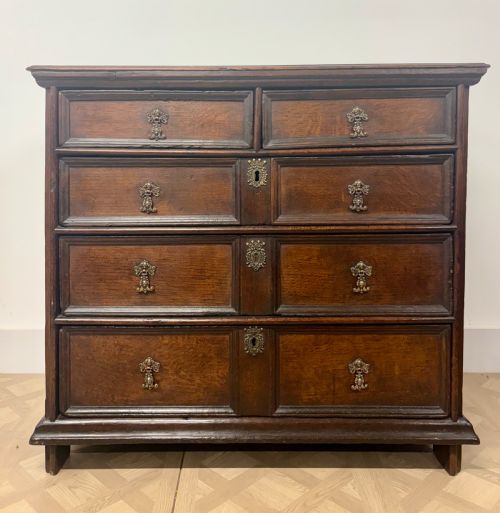
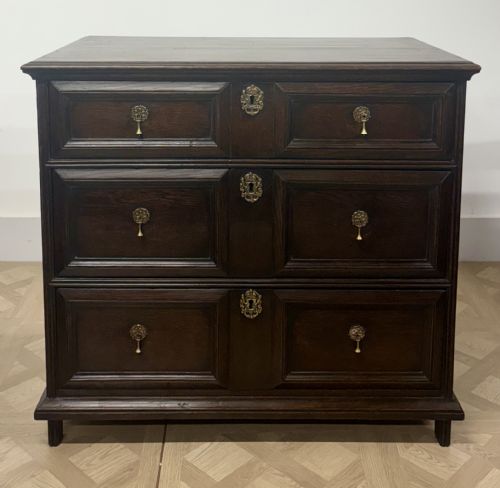
The chest of drawers took shape in England during the seventeenth century, as chests with lift-lids gave way to cases fitted with drawers. Oak was the timber, and the fronts were often built up with applied mouldings. That is the form the Jacobean heading covers, usually three or four long drawers in a single carcass.
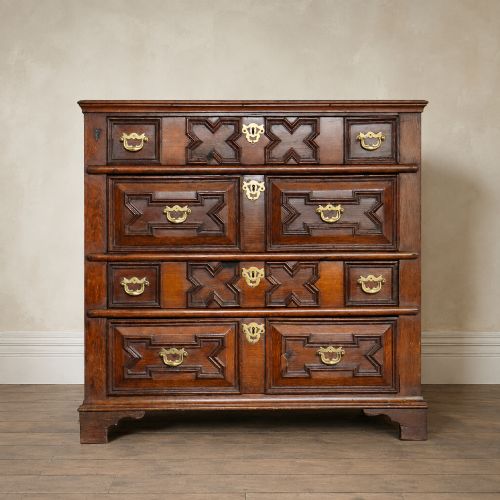
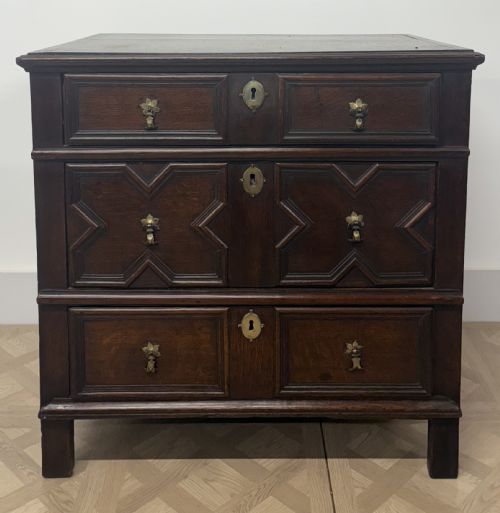
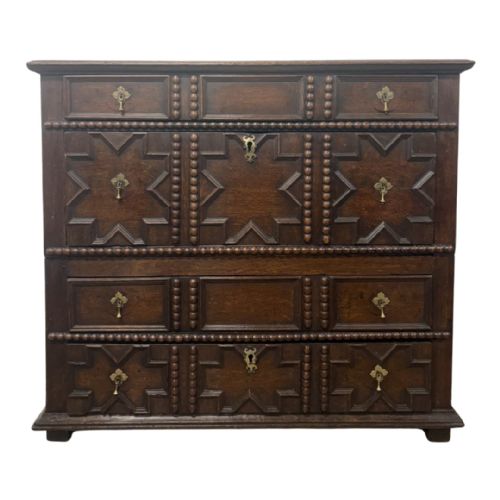
Oak dominates. It appears in 109 of the 122 titles on Sellingantiques, so walnut, fruitwood, cedar, stained pine and oyster veneer turn up as one-offs rather than alternatives. The signature front is the geometric or moulded type, mouldings applied in rectangles, lozenges and panels across the drawer faces.
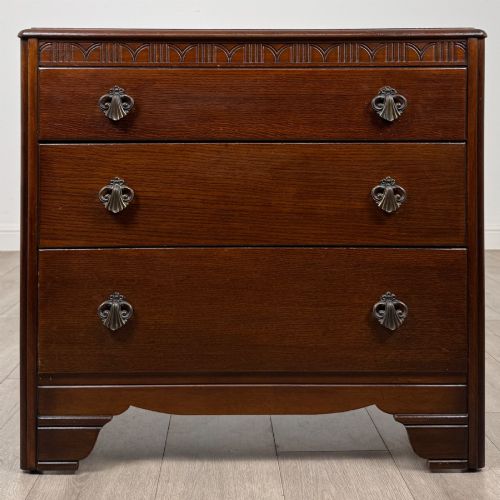
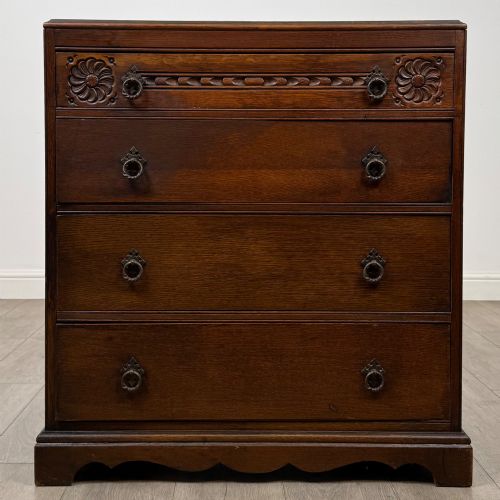
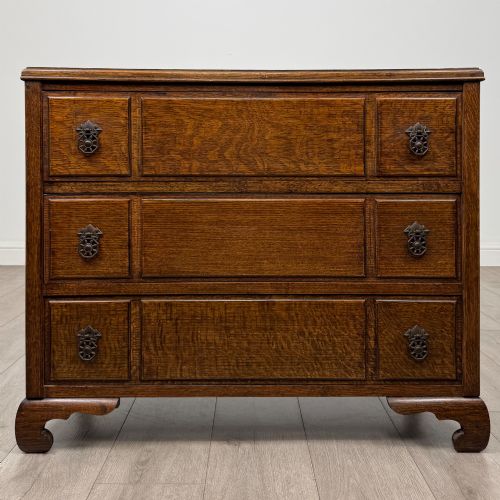
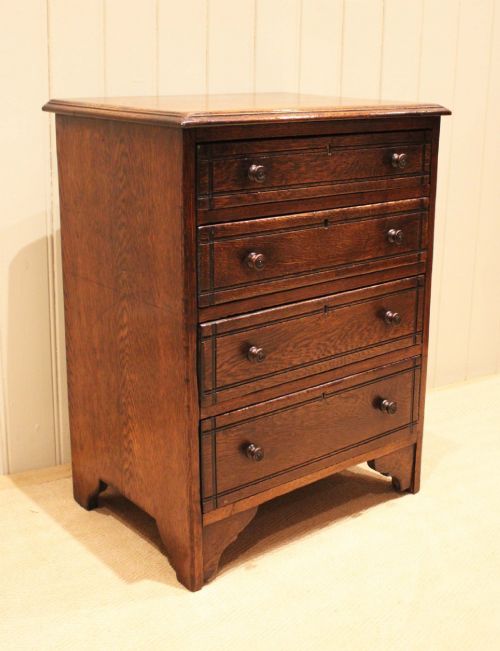
The category splits in two. Forty-nine listings are dated 17th Century and ten Before 1700, with c.1680 the single most repeated date in the titles and Charles II naming twenty of them. Against that sits a revival wave: ten pieces from the 1920s, nine from the 1910s, five Edwardian, listed as Jacobean Style or Jacobean Revival. Nine 18th-century oak chests carry the label too.
Around one in ten is something other than a plain single carcass. Two-part chests, made in separable halves for moving, recur among the earliest pieces, and chests on stand appear across both the period and revival ends. The revival branch produced its own chest on chest and cabinet on stand. One title dates itself as an early 19th-century copy, a century before the main revival.

What Separates Them
Age does most of the work. The 17th Century and Before 1700 pieces fill the upper end of the range, while chests marked Jacobean Style or Jacobean Revival from the 1910s and 1920s sit firmly at the bottom. The label in the title tells you which half you are in before anything else does.
Then the front. Geometric and moulded fronts run through the dearer half, including block-front Charles II chests, and a flat drawer face doesn't compete with a panelled one. Timber pulls the same way: walnut, fruitwood, snakewood, cedar, oyster veneer and inlay all sit above plain oak, and stained pine sits low.
Construction and history add the rest. Two-part chests and chests on stand cluster above single carcasses. Titles that specify original brasses, original condition or stated provenance appear only among the period pieces, and they sit high.
Antique Jacobean Chest of Drawers Retail Price Guide 2026
Typical UK retail prices for jacobean chest of drawers, calculated from the Sellingantiques database of over a million retail prices indexed since 2003. This retail price guide relies exclusively on Sellingantiques data; no external sources or auction records are used, so the figures do not describe the wider market.
c.1680 is the date repeated most often in titles on Sellingantiques, turning up across a dozen separate chests.
The Antique Jacobean Chest of Drawers Glossary
- Jacobean
- Used in these titles for genuinely 17th-century oak and, with 'style' or 'revival' attached, for much later furniture in the same taste.
- Jacobean style
- Signals a copy rather than a period piece, concentrated in the 1890s to 1930s listings.
- Geometric
- Applied mouldings arranged in rectangles, lozenges or panels across the drawer fronts. Named in fourteen titles.
- Moulded front
- Drawer fronts built up with applied mouldings rather than left flat. Eight titles use the full phrase, eleven say 'moulded'.
- Charles II
- Reign-based dating for the 1660 to 1685 period, in twenty titles and often paired with c.1680.
- Oyster veneer
- Cross-cut branch veneer laid in roundels. Named once, at the very top of the range.
Antique Jacobean Chest of Drawers: Frequently Asked Questions
What wood are Jacobean chests of drawers made from?
Oak, in 109 of the 122 titles on Sellingantiques. It is close to compulsory for the form, both at the 17th-century end and among the revival copies.
The exceptions are few: walnut, walnut and fruitwood, cedar, stained pine, snakewood and fruitwood decoration, and one oyster-veneered chest. Those non-oak pieces are genuine one-offs in this category.
How can I tell a period chest from a revival one?
The title usually says. Period pieces are dated 17th Century, Before 1700 or by reign, with Charles II and William and Mary both used. Revival pieces read 'Jacobean Style' or 'Jacobean Revival'.
The revival dates are firm: 1910s and 1920s between them account for nineteen listings, with Edwardian, 1890s, 1900s, 1880s and 1930s filling in around them.
Why do so many listings just say 17th Century?
Because that is how the dealers date them. Only 29 of the 122 listings carry a clean year, and 49 sit in the '17th Century' bucket with a further ten at 'Before 1700'.
Titles tend to be more specific than the dated field. c.1680 recurs across a dozen separate chests, with a c.1690 and a William and Mary among the earliest.
What is a two-part chest?
A carcass built in two separable halves so it can be carried and moved in pieces. Several turn up in the archive, described as 'Two Part', '2 Part' or 'Two-Part'.
Two-part construction shows up mainly among the earliest chests, and those titles cluster in the upper half of the range.
Are chests on stand part of this category?
Yes. The drawer case raised on a separate legged base appears across both branches, in period listings and revival ones.
About one in ten of the category is a chest on stand, a two-part chest or similar. The revival end also produced a chest on chest and a cabinet on stand.
How often do these come up for sale?
Around eleven a year come to market on Sellingantiques.
Seventy-one different dealers have listed one, so this is a form most dealers handle once rather than stock.