


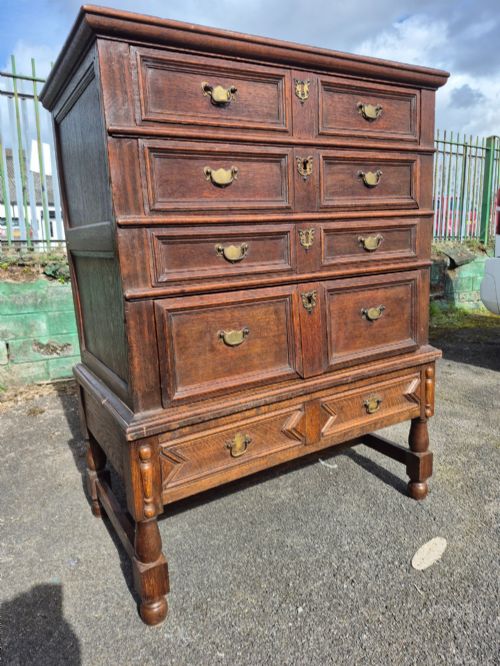
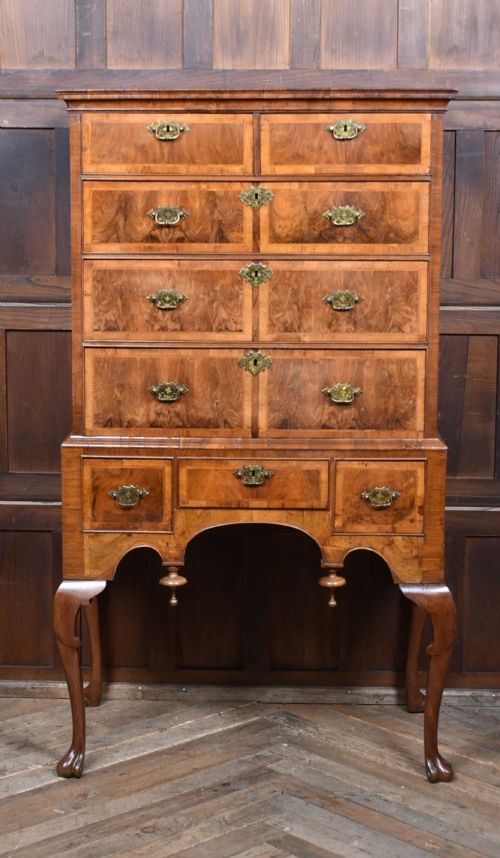
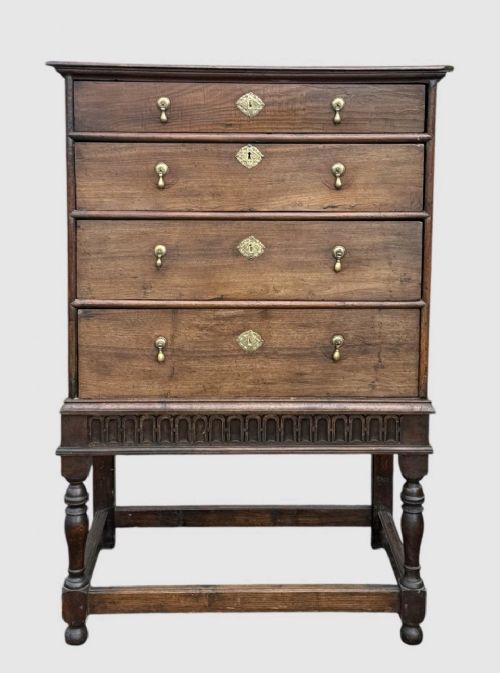
Antique Chest on Stand
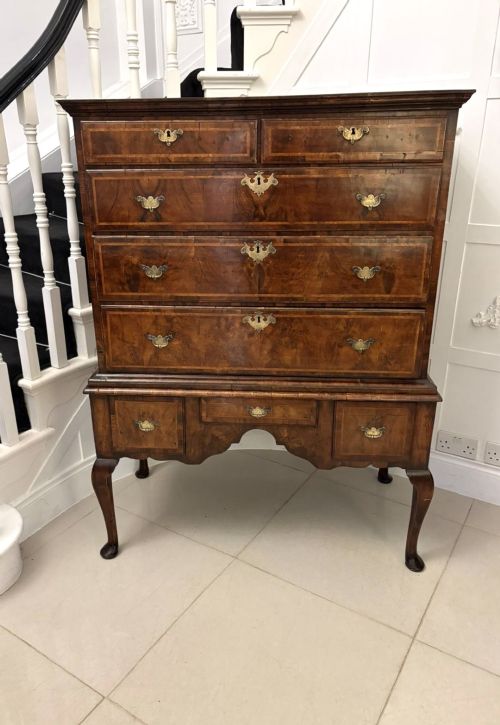
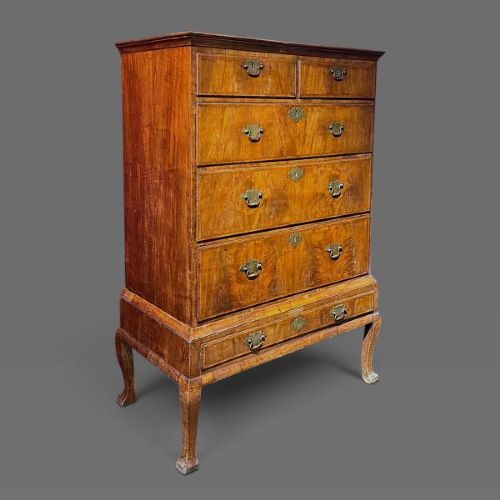
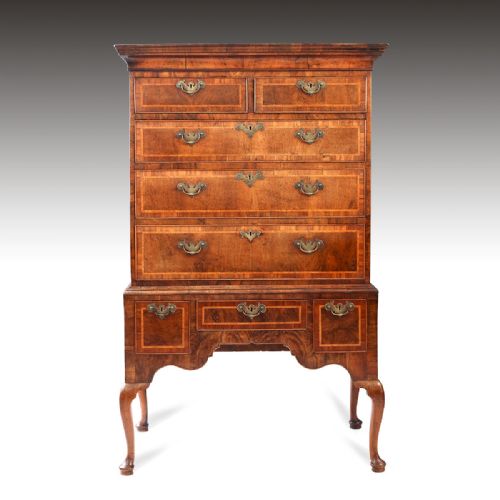
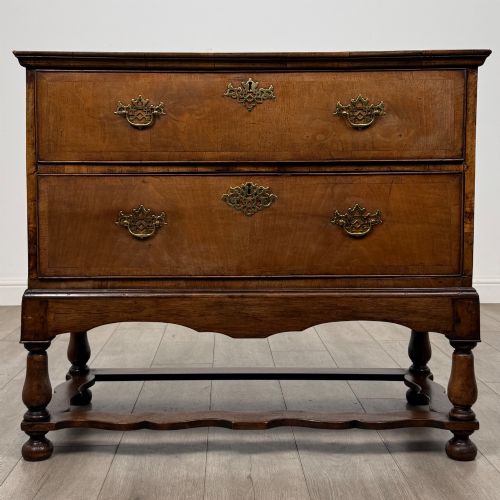
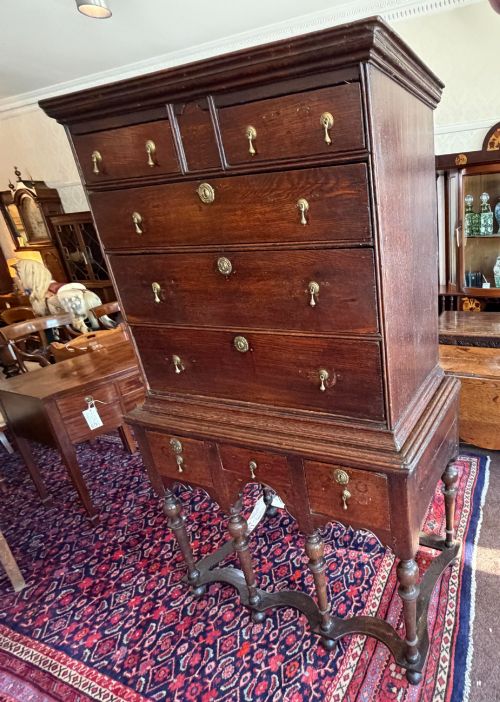
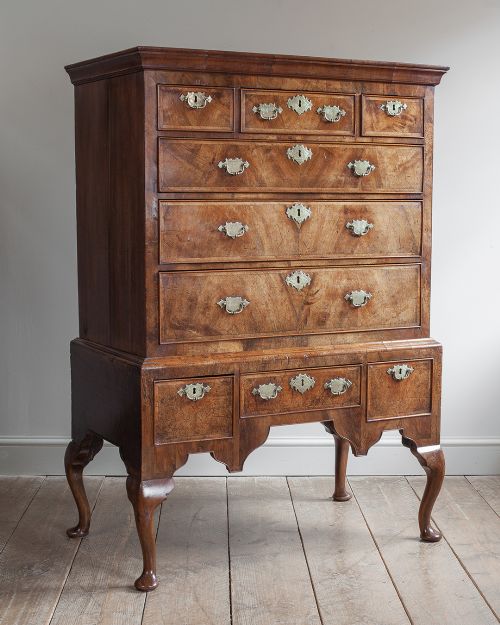
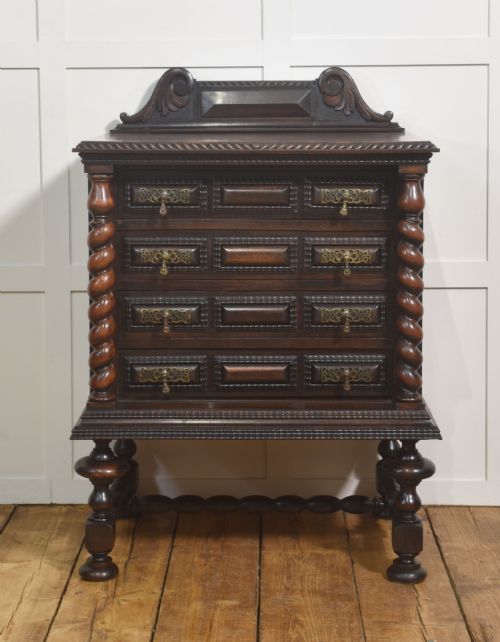
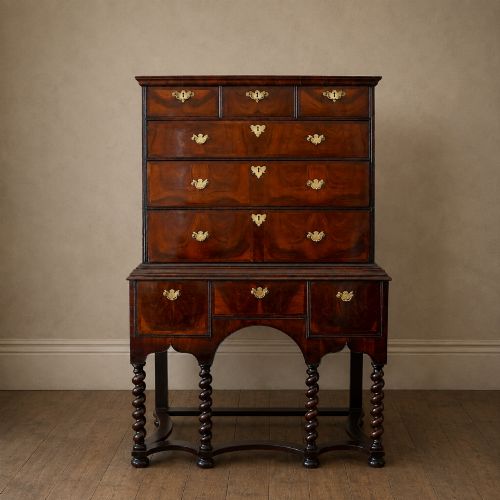
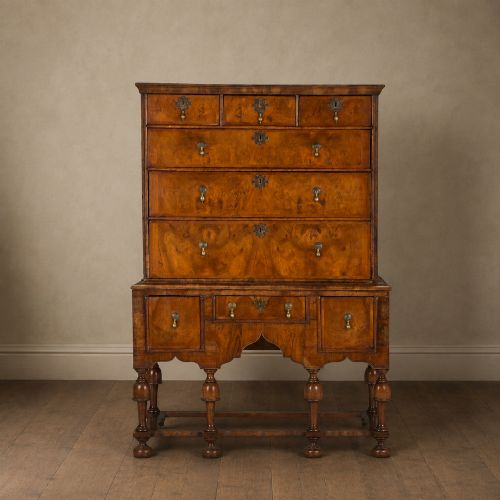
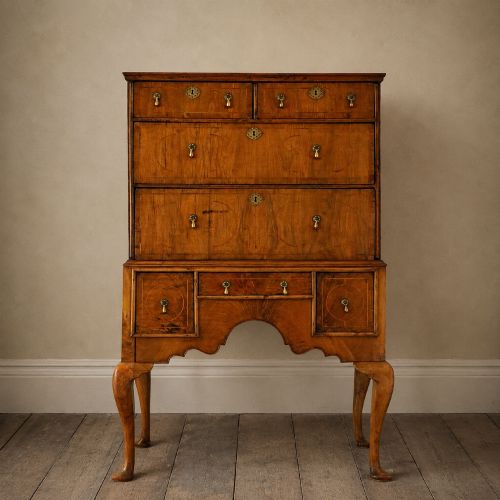
A chest of drawers built in two parts, the upper case lifted onto a separate legged base, made from the later 17th century as bedroom and dressing-room storage.
Antique Chest on Stand
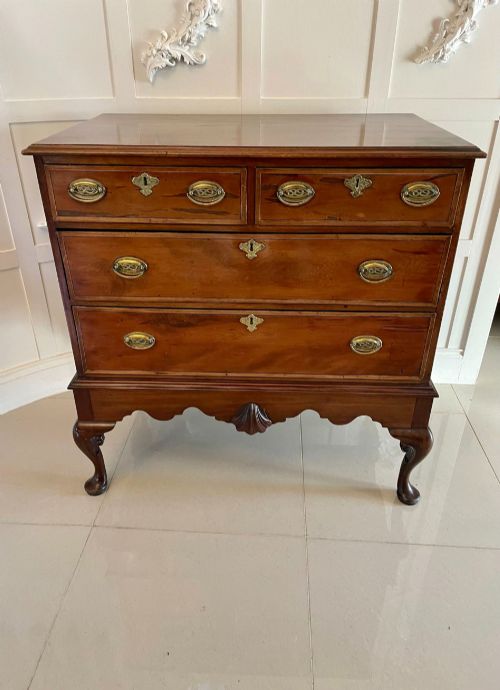
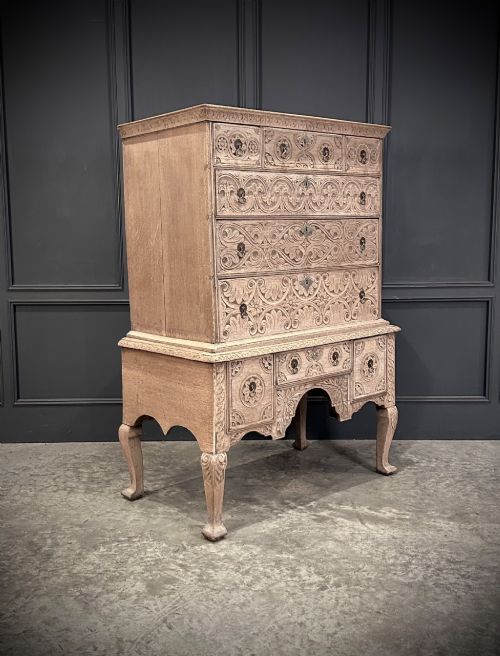
The form appeared in England in the later 17th century, when a case of drawers was set on an open base with turned or cabriole legs. That raised the drawers to a convenient height and put veneered fronts at eye level. The stand often carries drawers of its own, and the two parts lift apart.
Walnut dominates. It is named in well over half the titles on Sellingantiques, and nearly half of all titles read simply "walnut chest", usually late 17th to mid 18th century, with burr and figured veneers among them. Oak and other country timbers are the clear second strand, joined occasionally by elm, yew, laburnum, fruitwood and mulberry. Mahogany turns up in a smaller group, mostly later in date.
Dating here is usually a period name rather than a year. The largest single bucket is "18th Century", followed by "Georgian", with reign labels doing the work in a good number of titles: George, Queen Anne, William and Mary. Only 111 listings carry a clean year, and the dated field and the title sometimes disagree, so both are worth reading.
Alongside the period pieces sits a real early-20th-century strand, roughly one in seven, worded as "Queen Anne Style", "George I Style", "Queen Anne Revival" or "Jacobean style". Related shapes appear at the edges too: tallboys, chest on chest, lowboys, cabinet on stand and the odd specimen or music chest.
Where The Range Splits
Surface decoration, not timber figure, holds the top of the range. Marquetry, chinoiserie japanning and lacquer examples sit at the highest end of the archive. Below them come the showy cuts of veneer: burr walnut, figured walnut, oyster-piece work in laburnum, olive and yew, burr elm and burr yew. Plain oak and pine sit at the bottom.
Period against revival is the other big divide. Titles that read "William & Mary period" or "George I period" cluster high, while the 1920s, Edwardian and 1910s copies worded "style" or "revival" cluster low, even where the shape is the same one.
Two smaller things move the needle. Small, neat proportions are singled out in the wording, with "very small" and "outstanding small" attached to George I, George II and William and Mary examples. And because these are two-part pieces, originality of the stand shows in the titles: "associated stand" and "on later stand" read differently from "very original William & Mary period".
Antique Chest on Stand Retail Price Guide 2026
Typical UK retail prices for chest on stand, calculated from the Sellingantiques database of over a million retail prices indexed since 2003. This retail price guide relies exclusively on Sellingantiques data; no external sources or auction records are used, so the figures do not describe the wider market.
Among the rarities to pass through: one described as Zanzibar, one Portuguese rosewood, one South African inlaid, and one with the date 1717 inlaid on it.
The Antique Chest on Stand Glossary
- Chest on stand
- A chest of drawers made in two parts, the upper case sitting on a separate legged base. This wording covers all but a handful of titles in the category.
- Stand
- The lower open frame the chest sits on, often fitted with one or more drawers of its own.
- Cabriole leg
- An S-curved leg, named in several stand descriptions and typical of the Queen Anne and early Georgian window.
- Burr
- Veneer cut from a knotty growth on the tree, giving a swirling figure. Thirty-nine titles use the word, most often burr walnut.
- Oyster veneer
- Veneer cut across small branches so each patch shows its growth rings as an oval. Found here in walnut, laburnum, olive and yew.
- Feather banding
- A narrow inlaid band of two veneer strips laid in a herringbone, used round drawer fronts; it appears on a chest carrying an inlaid date of 1717.
Antique Chest on Stand: Frequently Asked Questions
How many come up for sale each year?
Around 41 chests on stand come to market on Sellingantiques in a year, and 125 different dealers have listed one.
That spread means it is a form scattered thinly across the trade rather than anyone's specialism. Supply is steady but never deep in any one timber or period.
What wood are they usually made from?
Walnut. It is the defining timber of the category, and nearly half of every title reads simply "walnut chest", often with burr or figured veneer specified.
Oak and country timbers make up the second strand. Mahogany appears in a smaller group and rises in current stock.
Are any makers recorded on these pieces?
No. A scan of the whole archive returned no named cabinetmaker, workshop or designer at all.
Dating and description do all the work instead: timber, veneer cut, reign name and whether the piece is period or a later copy.
Why do so many listings just say 18th Century?
Because that is how the trade dates them. The largest single period bucket is "18th Century" at 133 listings, with a further 70 giving only "Georgian".
Reign names carry much of the rest: George in 94 titles, Queen Anne in 44, William and Mary in 27. Clean years appear in 111 listings out of the whole archive.
Do 20th-century copies turn up often?
They are a real part of the supply. Thirty-one listings are dated to the 1920s, with 14 Edwardian and 11 from the 1910s.
The wording gives them away: "Queen Anne Style", "George I Style", "Georgian Revival", "Jacobean style". They repeat the period shapes and sit low in the range.
Which examples are the most expensive?
Decorated surfaces, rather than walnut figure. Marquetry, japanned chinoiserie and lacquered chests on stand appear only at the top of the sampled range.
One-off timbers sit high too: mulberry, laburnum oyster, burr elm, burr yew and olive oyster each show up only once or twice across the archive. Plain oak and pine hold the bottom.