
Antique Wellington Chest
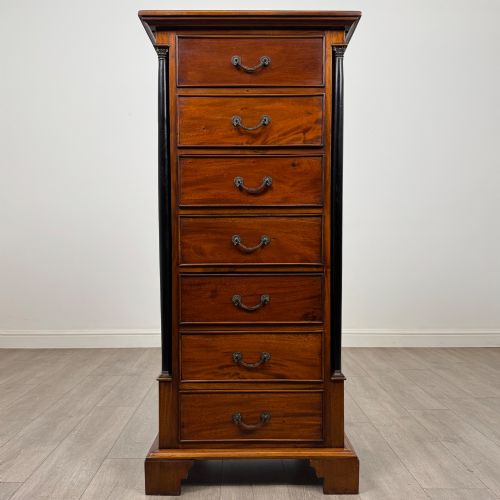
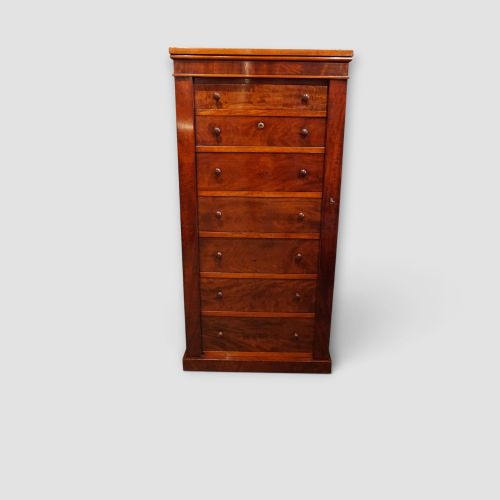
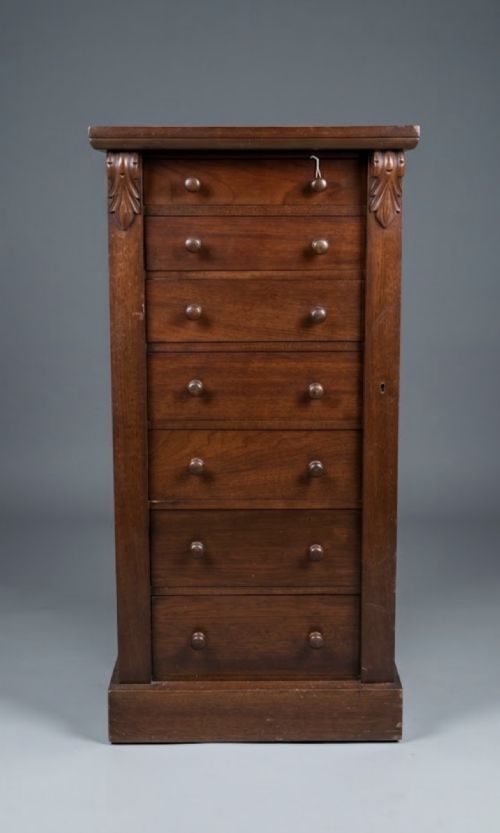
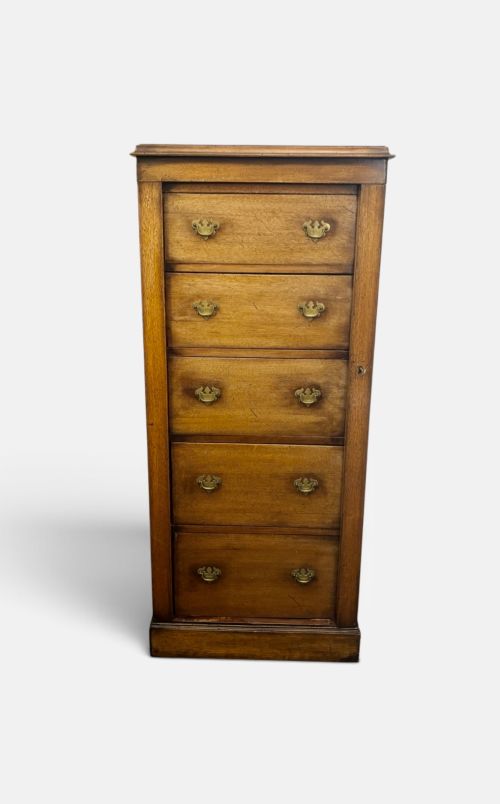
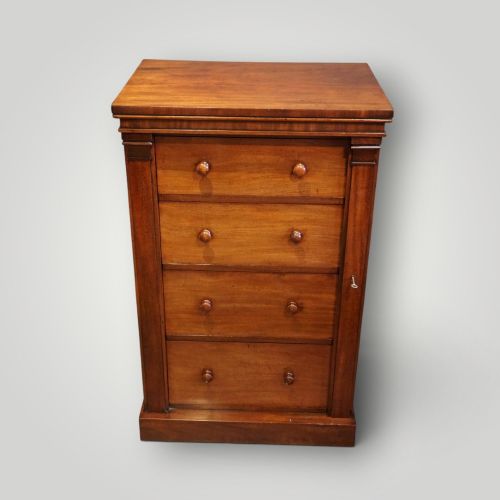
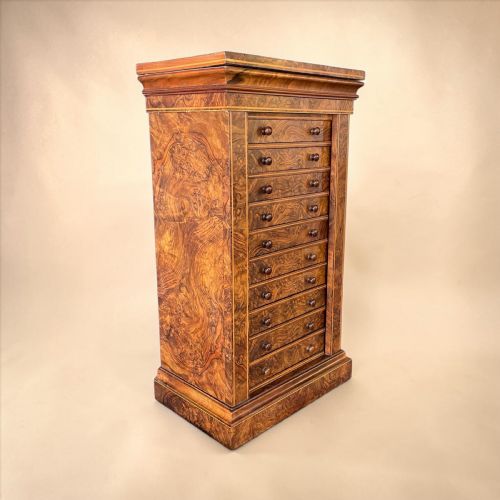
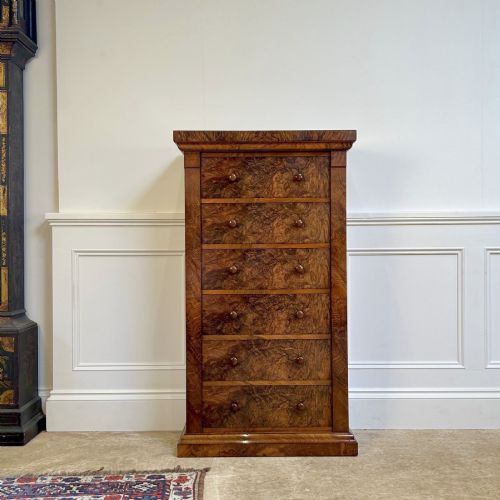
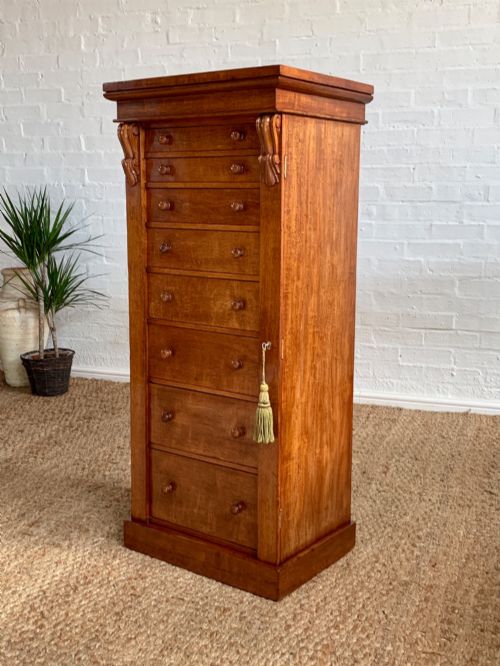
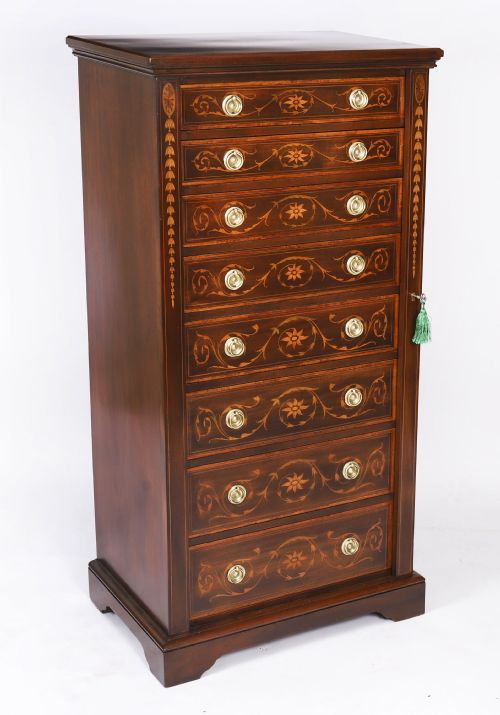
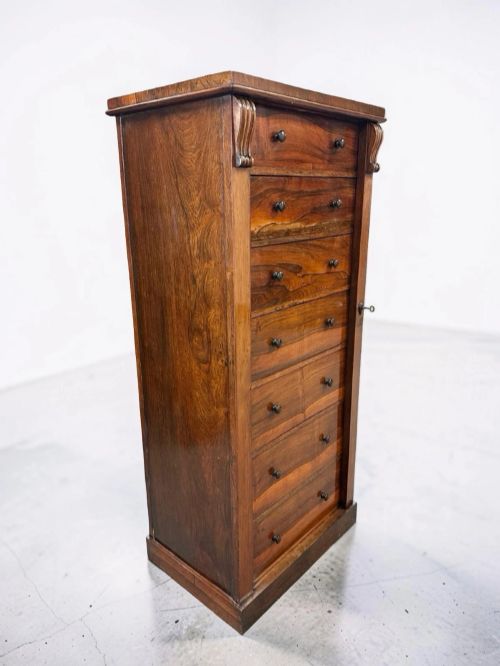
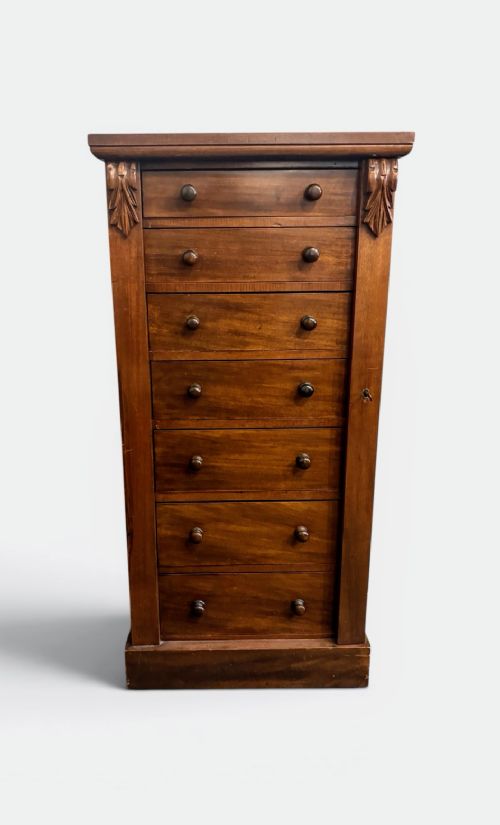
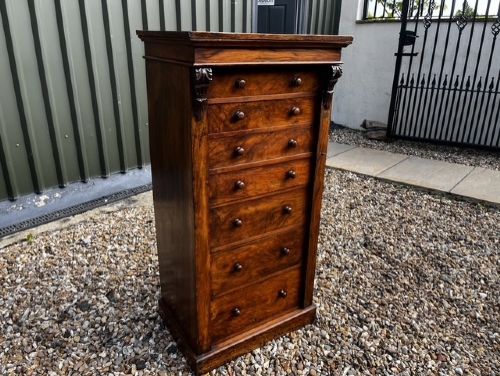
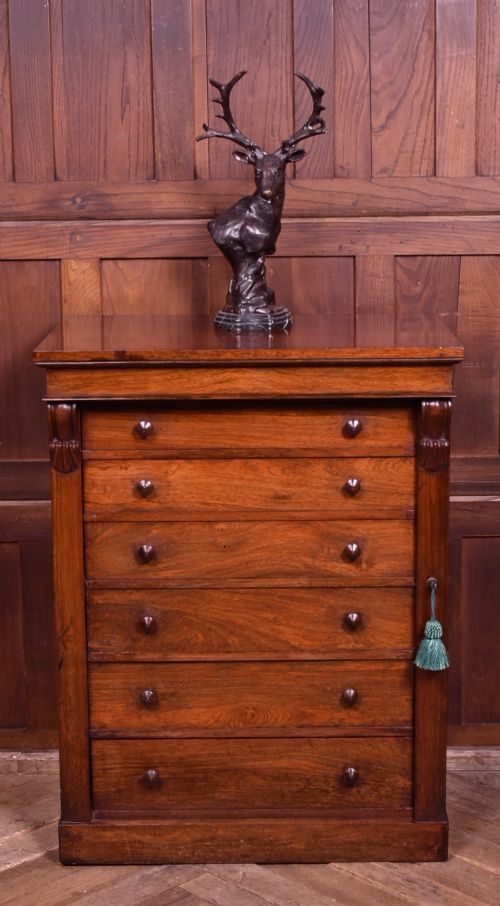
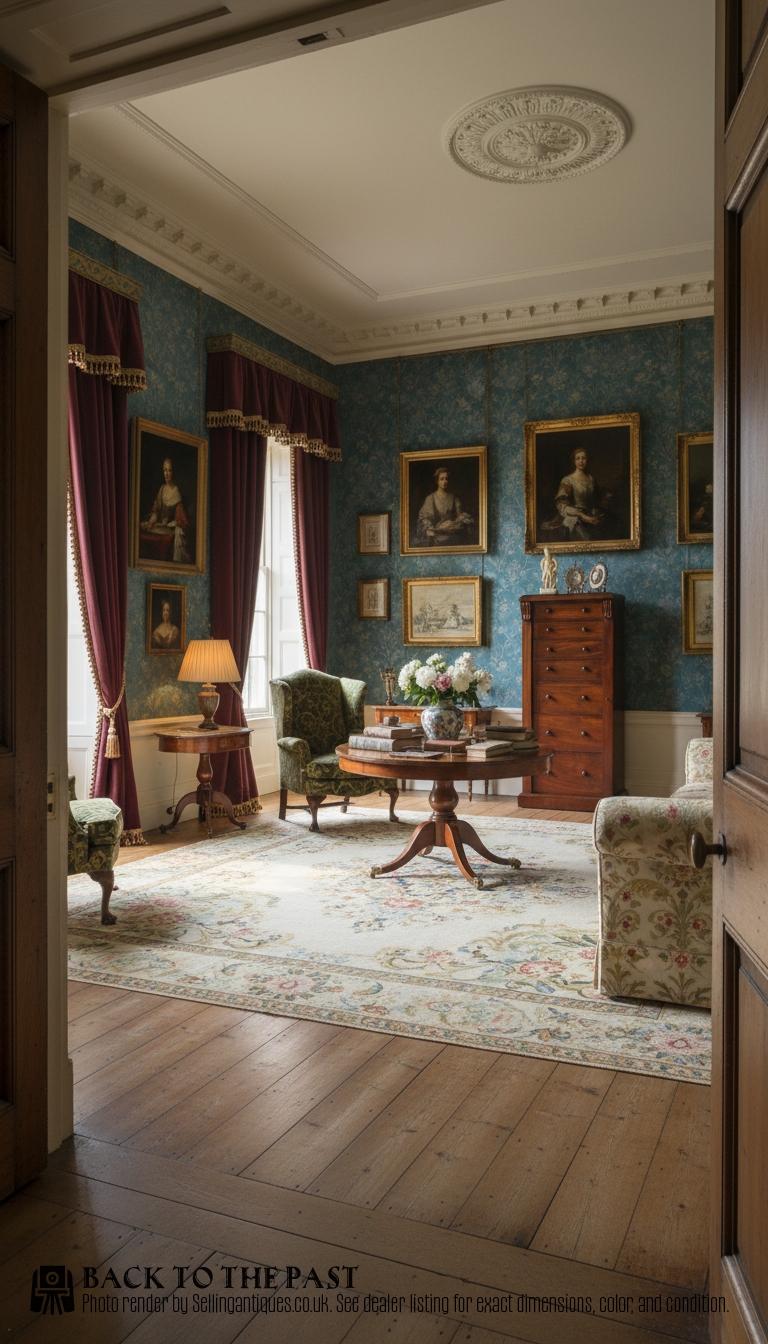
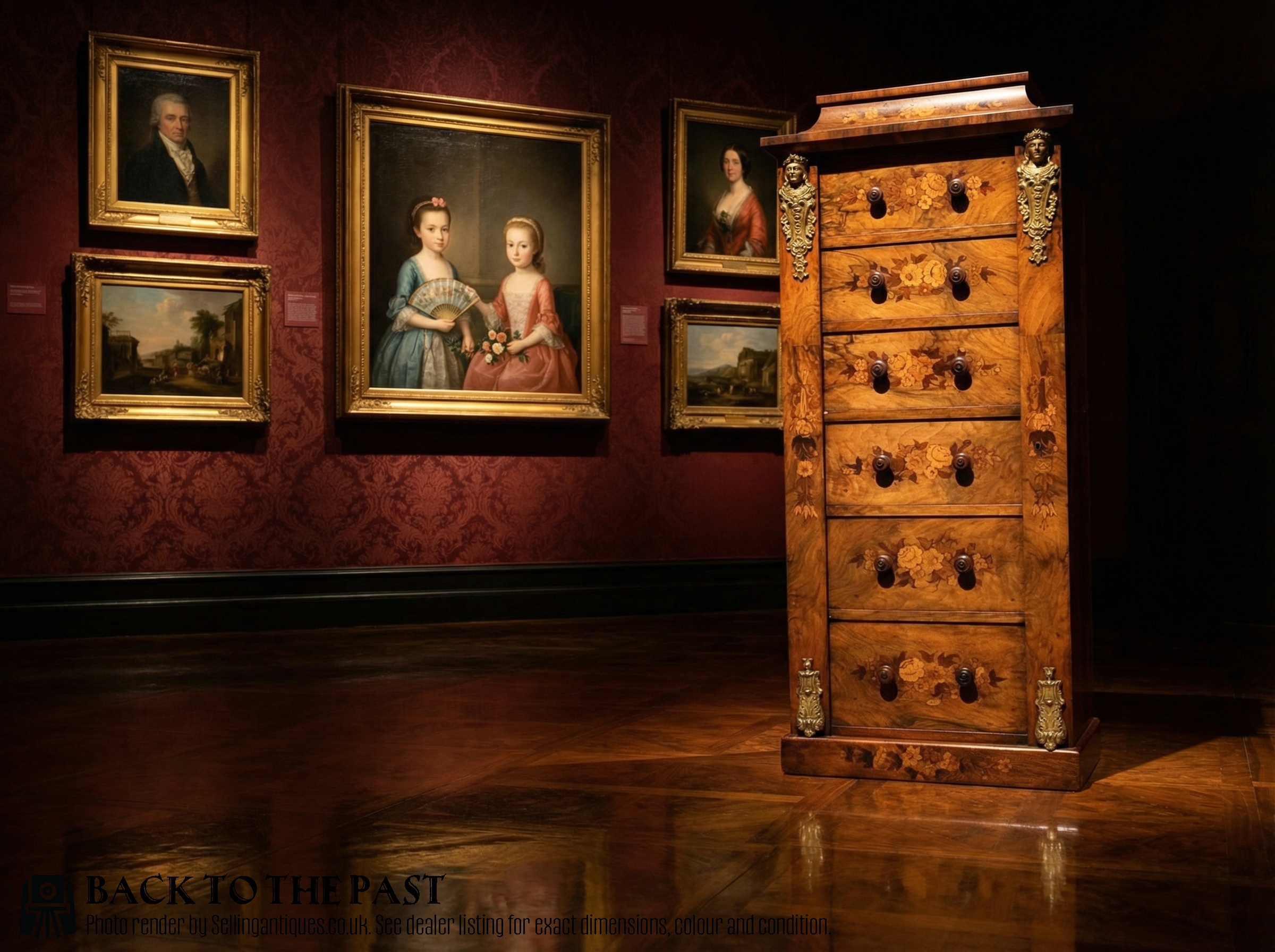
A tall, narrow chest of graduated drawers with a hinged pilaster down one side that locks the whole stack at once, made in 19th-century Britain for storing papers, coins, minerals and other collections in a small floor space.
What Is A Wellington Chest?
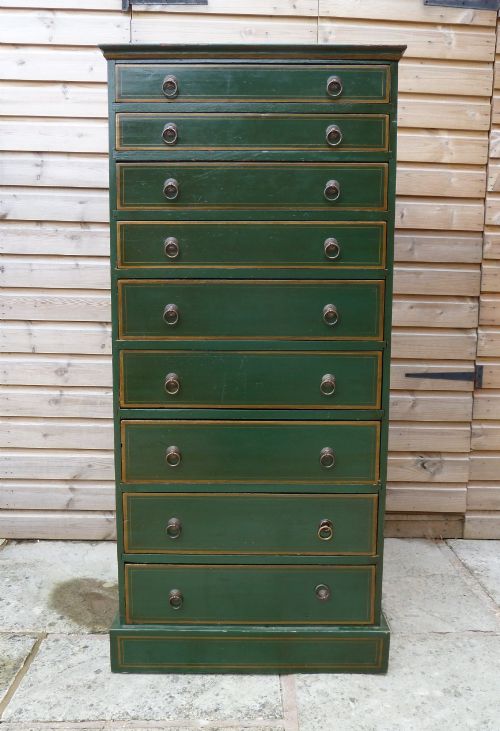
The form is British and 19th century: six to twelve shallow drawers stacked one above the other, each one deeper than the last, and a hinged upright at one edge that swings across and secures every drawer together. The name attached to it in the Victorian period and has stuck ever since.
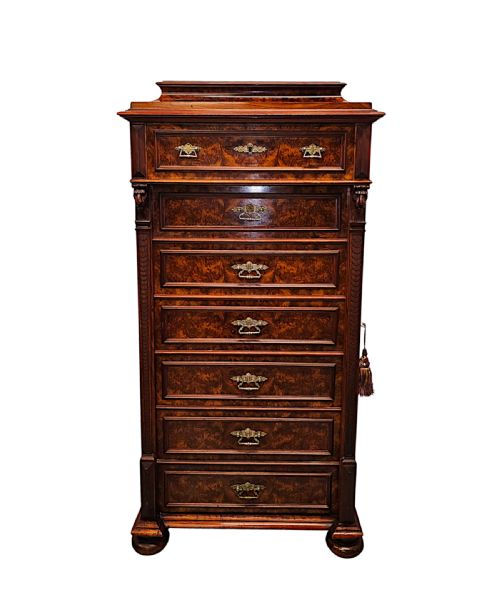
The chest you are most likely to meet on Sellingantiques is Victorian and mahogany. "Victorian" appears in 283 of 590 titles and "mahogany" in 223, with seven the drawer count named more often than any other. Walnut is the clear second timber, and of the walnut titles a good number are specifically burr walnut, cut for its swirled figure.
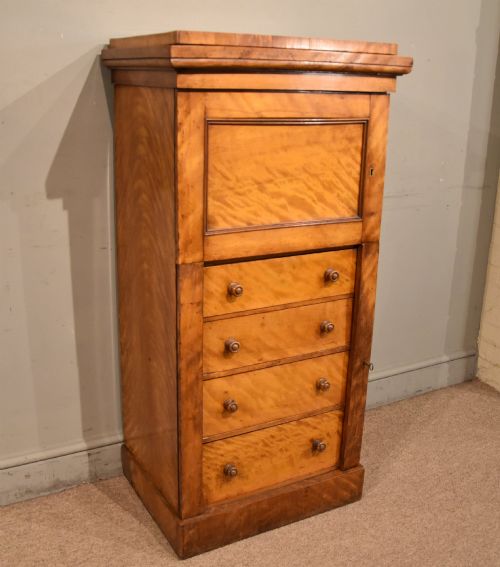
Beyond those two run several smaller streams. Oak accounts for about one in nine titles, including golden oak, pollard oak and a recurring niche of carved examples with Green Man masks. Roughly one in fourteen carries a secretaire drawer, its front hinged to fall forward as a writing surface. A small but persistent group are miniature, table-top, specimen or collectors' chests, and the archive throws up satinwood, satin birch, birds-eye maple, yew, ash, olive wood and teak alongside plainer pine and deal.
Dating is broad rather than exact. Just over half the archive is filed only as "Victorian" or "19th Century", and where decades are given they cluster on the 1860s, 1870s and 1880s, with an Edwardian tail running towards 1930. Non-British pieces are unusual: Swedish, French, Irish and Anglo-Indian examples appear once or twice among hundreds of English ones.
What Sets Them Apart
Timber does most of the work. Burr and figured walnut, rosewood, satinwood and pollard oak sit in the upper half of the range, where the veneer is the point of the piece. Plain pine, deal and chests described as workshop drawers sit at the bottom, where the chest was a working object first.
Fitment and scale come next. A secretaire drawer pushes a chest upward, and the sampled secretaire examples turn up repeatedly in the higher reaches. So does size: large, tall and double chests, and those running to ten or twelve drawers, are among the biggest things in the archive and valued accordingly. The smallest plain examples sit lowest.
Then there is the piece that is simply not the usual thing. Pairs appear only a handful of times across the whole archive and land near the top when they do, as do outsized chests, child's and apprentice pieces, and unusual drawer arrangements. Titles naming a cabinetmaker or retailer, whether stamped or given as an attribution, are concentrated well above the middle.
Retail Price Guide 2026
Typical UK retail prices for wellington chest, calculated from the Sellingantiques database of over a million retail prices indexed since 2003. This retail price guide relies exclusively on Sellingantiques data; no external sources or auction records are used, so the figures do not describe the wider market.
The most expensive Wellington chest ever sold on Sellingantiques was a William IV mahogany double wellington chest, in November 2023.
The Antique Wellington Chest Glossary
- Locking pilaster
- The hinged upright at one edge that swings across the drawer fronts and secures all of them at once. Also described as a flap. It is the feature that makes a chest a true Wellington.
- Graduated drawers
- Drawers that increase in depth towards the bottom of the stack. "Graduated" and "graduating" both recur in dealer wording for the same thing.
- Secretaire drawer
- A drawer with a hinged fall front that drops to make a writing surface. Named in 45 titles, in walnut and mahogany about equally.
- Burr walnut
- Veneer cut from a burr growth on the tree, giving a dense swirled figure. It appears in 48 titles, more than any other qualified walnut.
- Figured, flame and fiddleback
- Terms for strongly patterned veneer, used most often of mahogany. "Figured" on its own appears in 20 titles.
- Double Wellington
- A wider two-bank version with drawers side by side. Nine titles use the word, and those chests are among the largest in the archive.
Frequently Asked Questions
How many drawers does a Wellington chest have?
Drawer counts named in titles run from four to twelve, and seven is by far the most common.
At the upper end, ten- and twelve-drawer chests and the wider double form are among the largest pieces in the archive.
What timber are they usually made from?
Mahogany leads, named in 223 of 590 titles, with walnut second at 131 and oak accounting for about one in nine.
Beyond those the archive turns up rosewood, satinwood, satin birch, pollard oak, birds-eye maple, yew, ash, olive wood, teak, pine and deal.
What is a secretaire Wellington chest?
One of the drawers has a hinged front that falls forward to give a writing surface. Sampled titles also describe fall-front, locking flap and cupboard variants.
About one in fourteen titles carries the word, and those chests appear repeatedly in the upper part of the range.
Why are so many listed simply as Victorian?
Just over half the archive is dated to a reign or a century rather than a decade: 196 listings say only "Victorian" and 126 only "19th Century".
Where decades are given they cluster on the 1860s, 1880s and 1870s. The dated field runs 1800 to 1930 and works better as a rough sort than a precise date.
Are miniature Wellington chests a real form?
Yes. Miniature, table-top, specimen and collectors' chests recur as a small but persistent group, and one sampled piece is described as an apprentice piece outright.
They were made to stand on furniture rather than the floor, with many shallow drawers suited to a collection.
How often do they come up for sale?
About sixty Wellington chests come to market on Sellingantiques in a year.
They have been listed by 143 different dealers, so the form is spread thinly across the trade rather than being the speciality of a few.