




Antique Military Chests
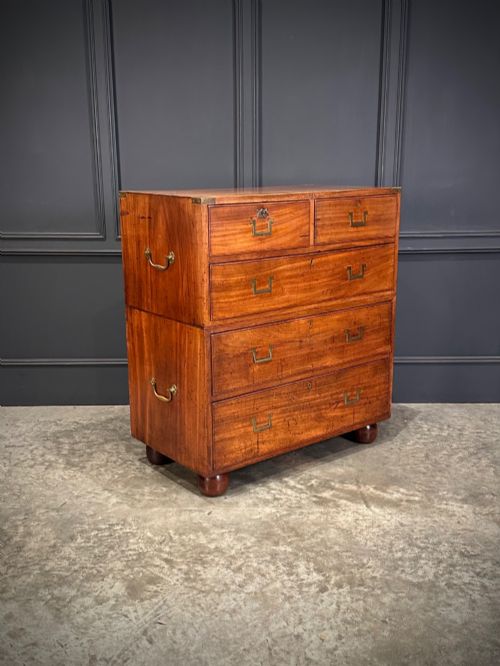
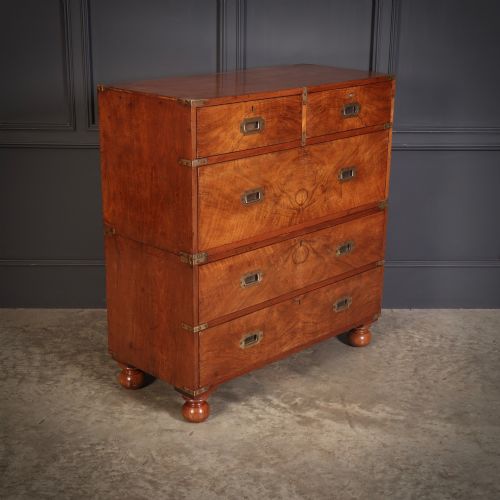
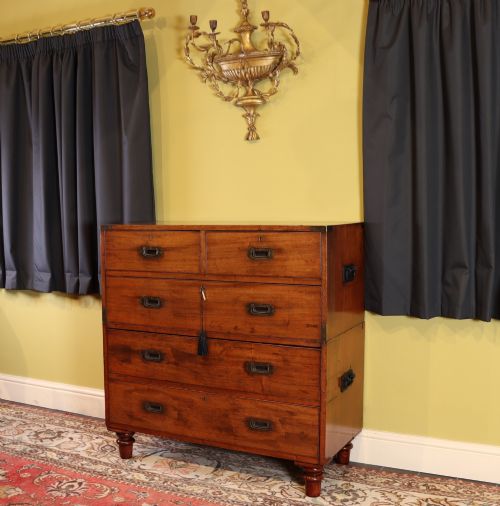
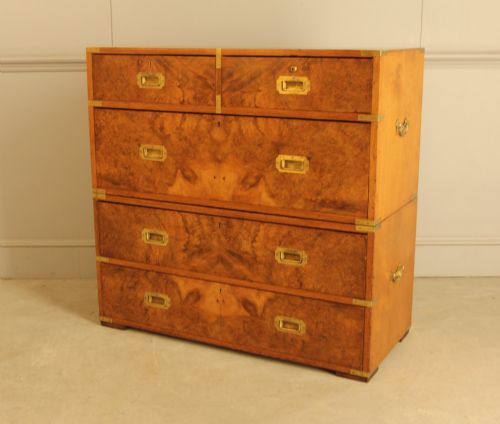
A chest of drawers built to travel: two sections that lift apart, brass sunk into the handles and corners, and feet that come off for the wagon or the ship's hold.
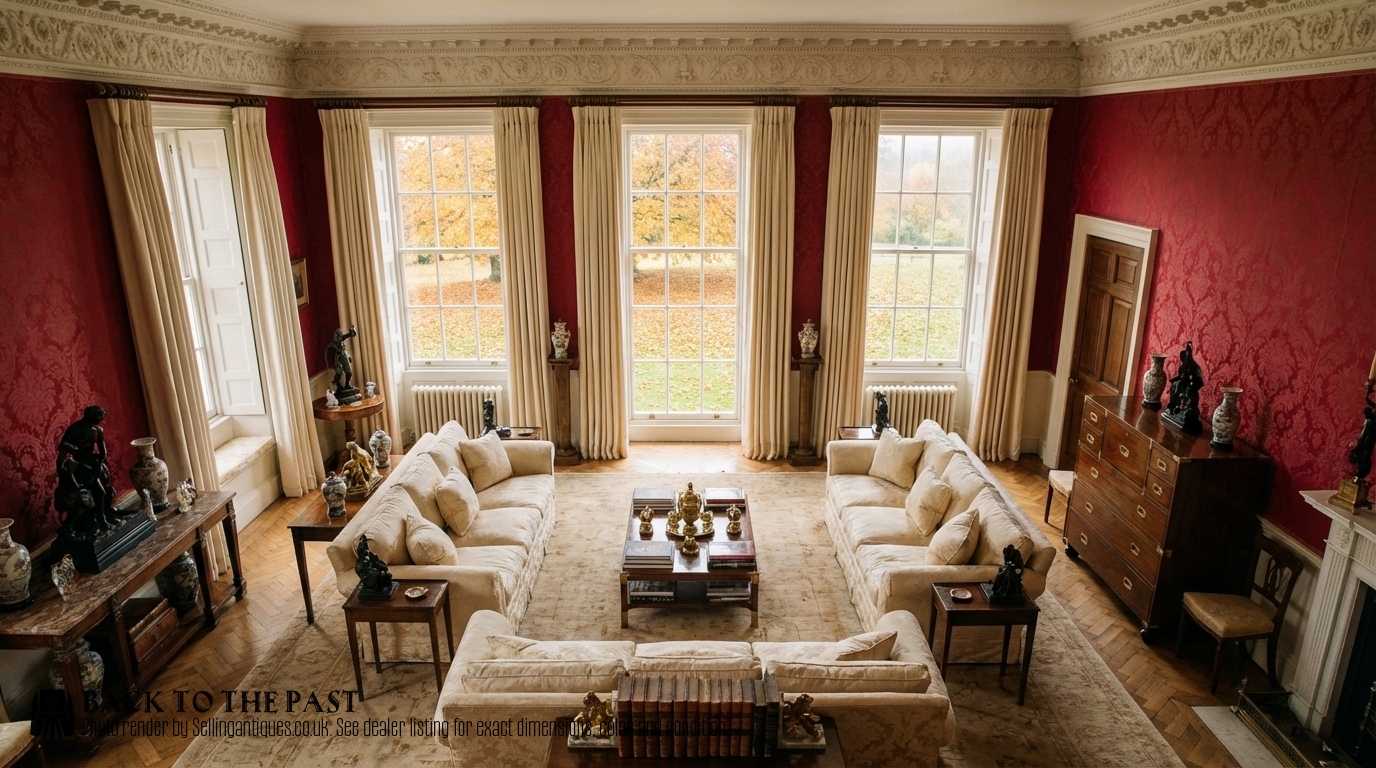
What Is A Military Chest?
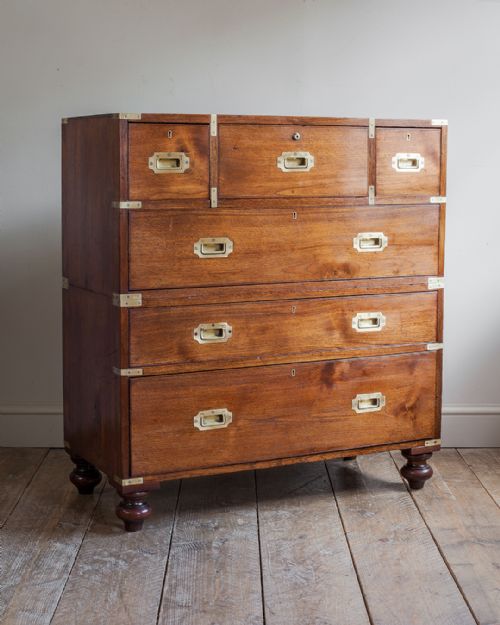
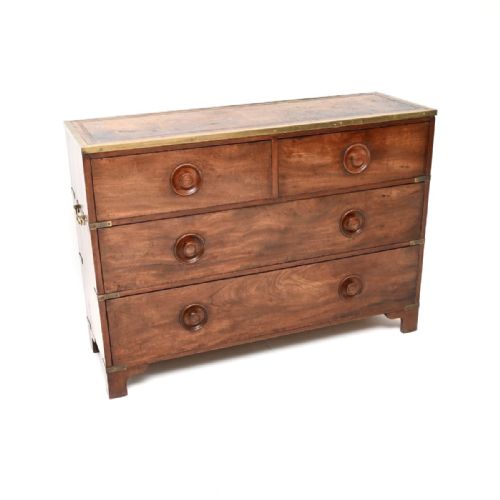
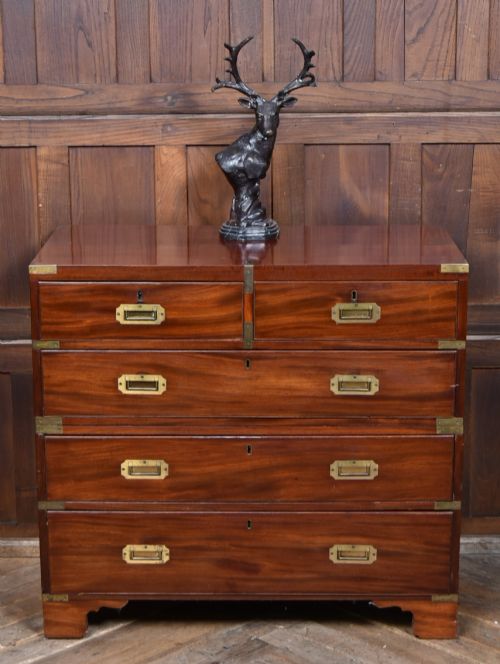
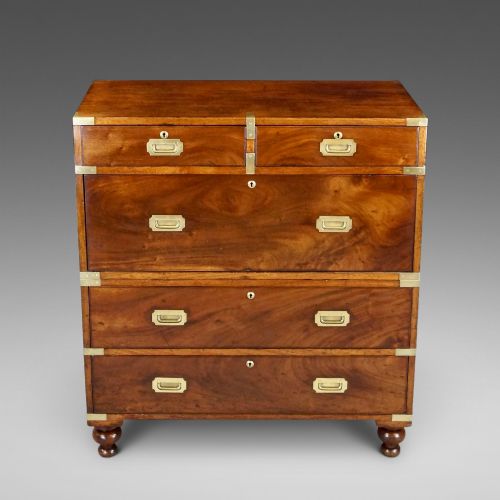
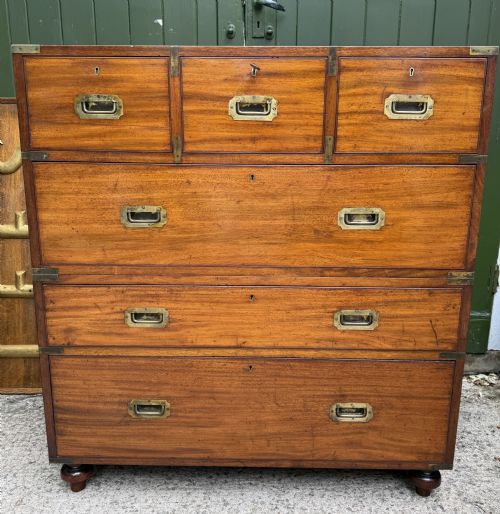
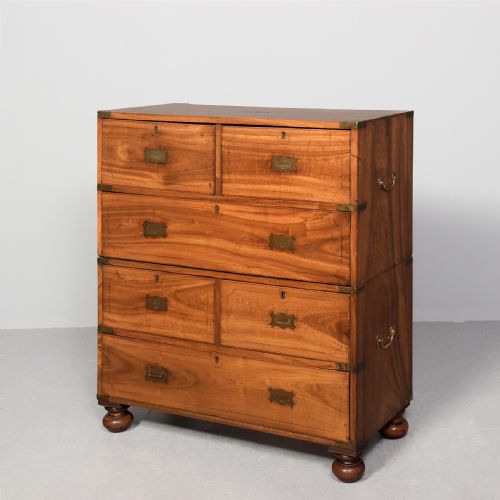
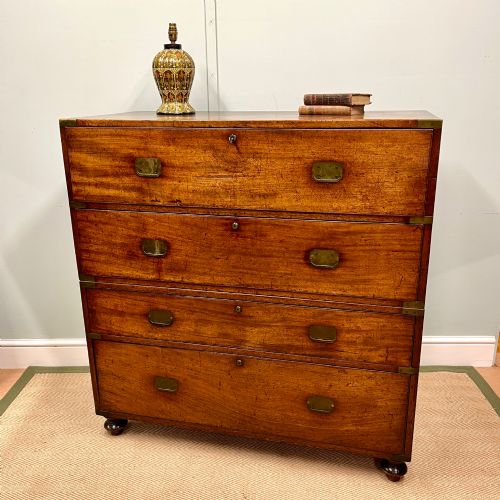
It's a chest of drawers made to be dismantled and moved. The carcase splits into an upper and lower half, each with its own recessed brass handles, and the brass at the corners or edges takes the knocks. Feet unscrew. Titles on Sellingantiques use "military", "campaign" and "military campaign" for the same object, with "campaign" alone in three titles out of five.
The type was made for army and naval officers and colonial travellers who had to shift their quarters, and it became commonplace during the long run of British campaigning overseas in the 1800s. The dated listings run from 1750 to 1930, but the weight sits in the middle decades of the 19th century, with the 1850s and 1860s the busiest buckets and the 1870s and 1880s close behind.
Timber tells you most of what you need. Mahogany leads at close to a third of titles, teak follows at about a fifth, often brass bound, and camphor wood makes up a smaller group that includes Chinese export and Anglo-Chinese pieces. Anglo-Indian and colonial chests form another small group, sometimes in padouk or rosewood.
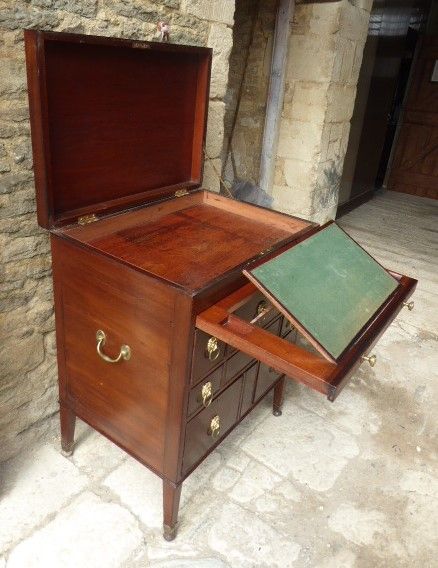
One drawer front in a fair number falls forward as a writing surface. Secretaire chests are about one in seven of everything sold on Sellingantiques and around a quarter of what's listed at any time. There's also a 20th-century tail, mostly dated to the 1920s and 1930s, and those titles tend to say "campaign style" rather than campaign.
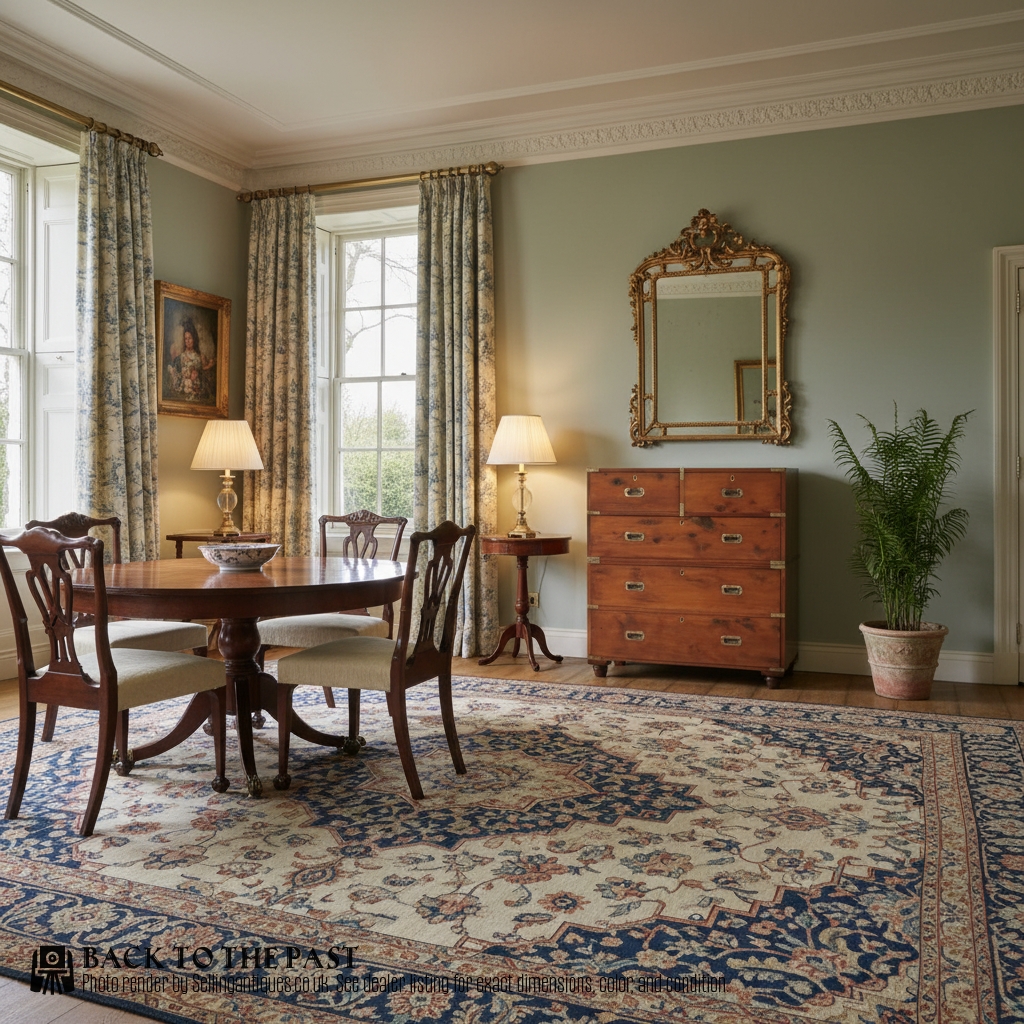
Where The Range Splits
The secretaire drawer moves a chest up. Titles carrying one cluster in the upper half of the range, and the highest-priced teak and camphor examples are nearly all secretaires. Brass does the same work: chests described as brass bound or brass mounted sit well above those noted only as having military brass handles.
Timber sorts the rest. Camphor wood and figured or burr walnut appear high in the range, and the Chinese export and Anglo-Chinese camphor chests, which turn up only a handful of times, sit at the very top. Pine, birch and fruitwood examples land at the bottom. A retailer or maker inscription, naming a London, Dublin or Liverpool address, lifts a chest too, though fewer than a dozen titles across the whole archive carry one.
Period claimed matters, and so does size. The 1920s and 1930s pieces titled "campaign style" concentrate at the lower end, while 19th-century chests hold the middle and upper ground. Words like small, neat and compact recur through the mid and upper range, so a reduced-height chest of genuine period is not the cheap option.
Retail Price Guide 2026
Typical UK retail prices for military chests, calculated from the Sellingantiques database of over a million retail prices indexed since 2003. This retail price guide relies exclusively on Sellingantiques data; no external sources or auction records are used, so the figures do not describe the wider market.
The earliest dated military chest on Sellingantiques is a George III Cuban mahogany secretaire campaign chest, given as 1750.
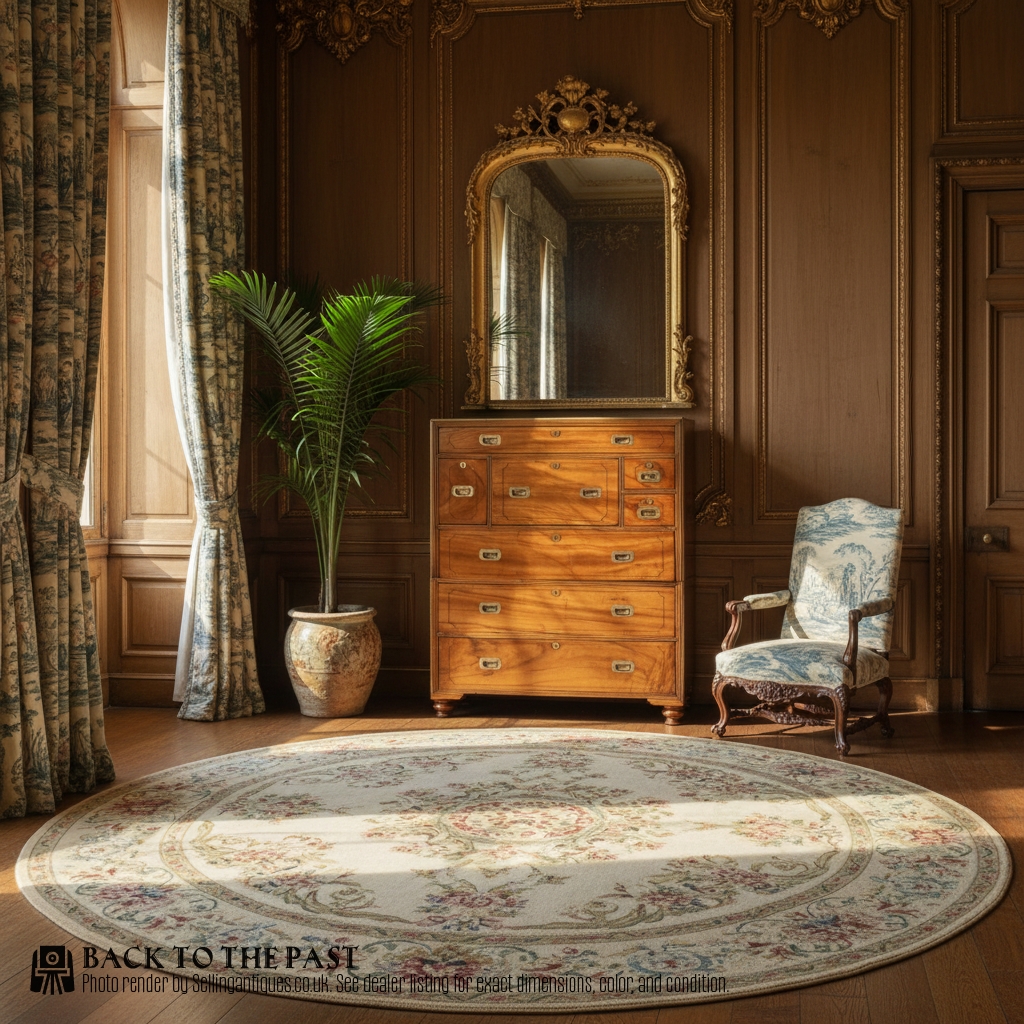
The Antique Military Chests Glossary
- Two part
- The chest separates into an upper and lower carcase for carrying, each half with its own recessed handles. "Two section" means the same thing.
- Secretaire
- A drawer front that drops forward to make a writing surface, usually with a fitted interior behind it. About one title in seven names one.
- Brass bound
- Brass strapping or corner plates protecting the edges of the carcase. Around two dozen listings use the phrase.
- Brass mounted
- Flush-set handles and escutcheons rather than protruding ones, so nothing catches when the chest is dragged or stacked.
- Campaign style
- Later furniture made in the idiom rather than for campaigning, concentrated in the 1920s and 1930s dated listings.
- Camphor wood
- An aromatic timber used for chests made in or destined for the East. Spelled camphor, camphor wood and camphorwood across the titles.
Frequently Asked Questions
What's the difference between military and campaign chests?
Nothing, in practice. Dealers use "military chest", "campaign chest" and "military campaign chest" for the same two-part travelling chest of drawers.
"Campaign" on its own is the commonest of the three, turning up in around three titles out of five.
Which timbers turn up most often?
Mahogany and teak account for half the titles that name a timber, mahogany ahead at close to a third and teak at about a fifth.
Camphor wood forms a third group of some size. After that it thins out fast: birch, fruitwood, pitch pine, pollard oak, cedar, yew, padouk and rosewood each appear only once or twice.
How old are most of these chests?
The dated field runs from 1750 to 1930, and half the listings carry a clean year rather than a period label. The largest single bucket is the vague "19th Century", followed by "Victorian".
Among the decade dates, the 1850s and 1860s dominate, with the 1870s and 1880s behind them. Georgian and Regency attributions form a thin early end.
Are secretaire versions common?
They're about one in seven of everything sold in the category, and running at roughly a quarter of current stock.
They sit high in the range. The top-priced camphor and teak chests are almost all secretaires.
Do these chests carry maker or retailer names?
Rarely. Fewer than a dozen titles across the whole archive record a retailer or maker inscription, naming addresses in London, Dublin and Liverpool.
No single name reaches three dealers, so this isn't a category read by maker. Where an inscription does appear, the chest sits in the upper part of the range.
Does the form ever appear as something other than a chest?
Once in a blue moon. A double military chest of drawers, a campaign tallboy, a pair of matching chests and a campaign style sideboard each appear a single time.
Everything else is the two-part chest of drawers, occasionally in three tiers.