
Wooden Tallboy
A wooden tallboy provides substantial vertical storage, combining utility with fine cabinetmaking across Georgian, Victorian and Edwardian periods.
Wooden Tallboy
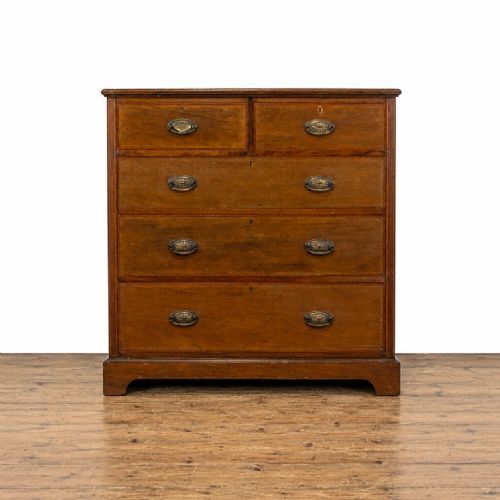
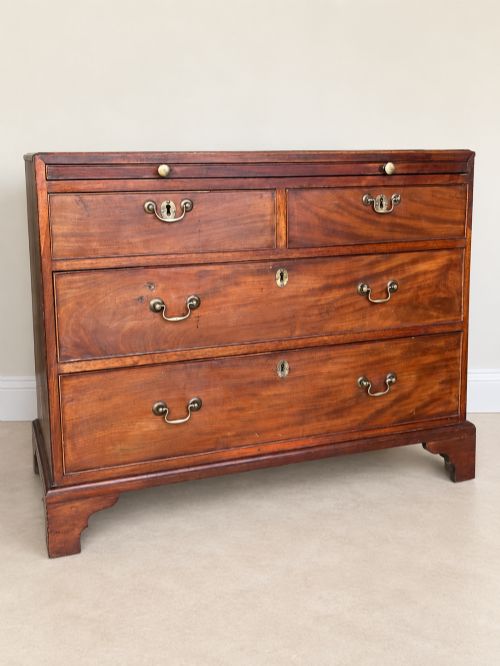
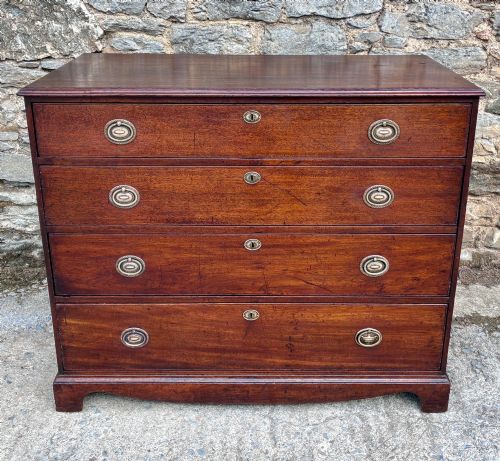
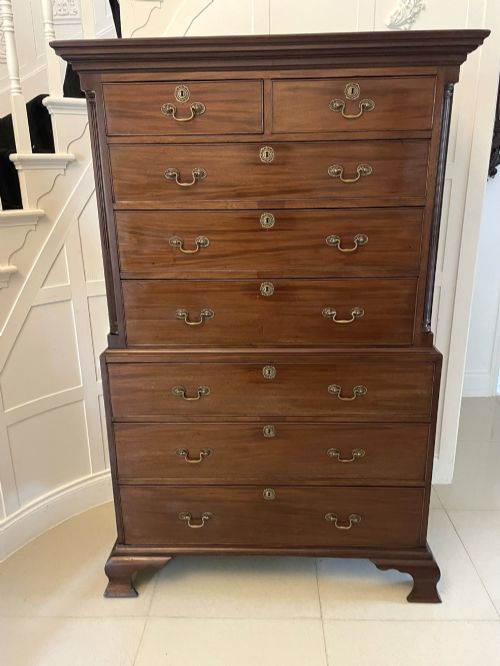
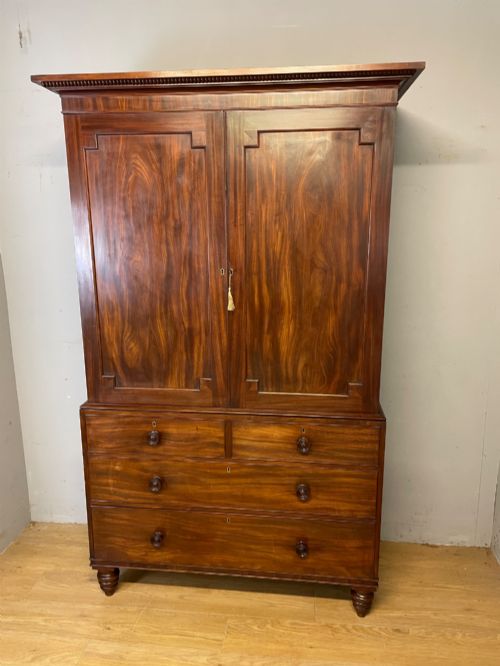
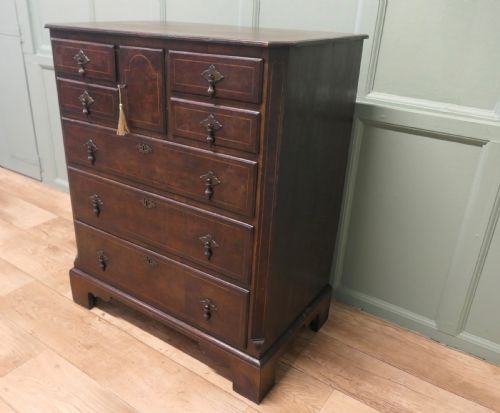
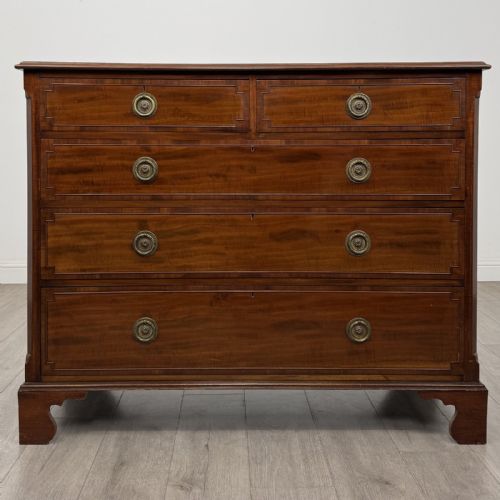
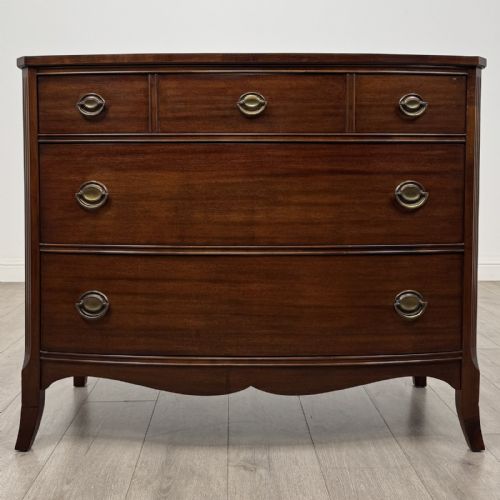
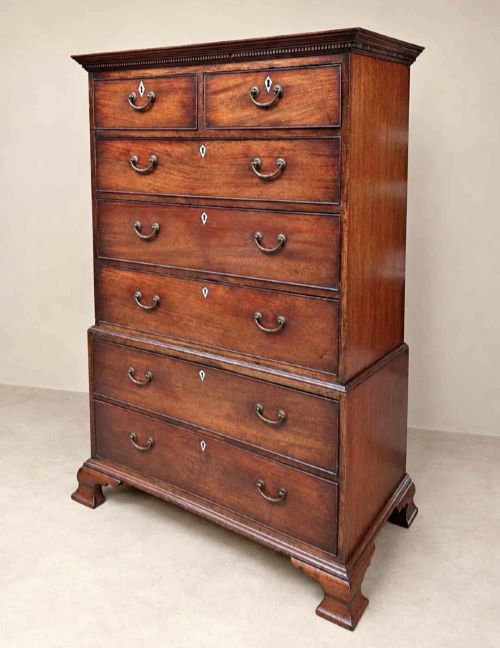
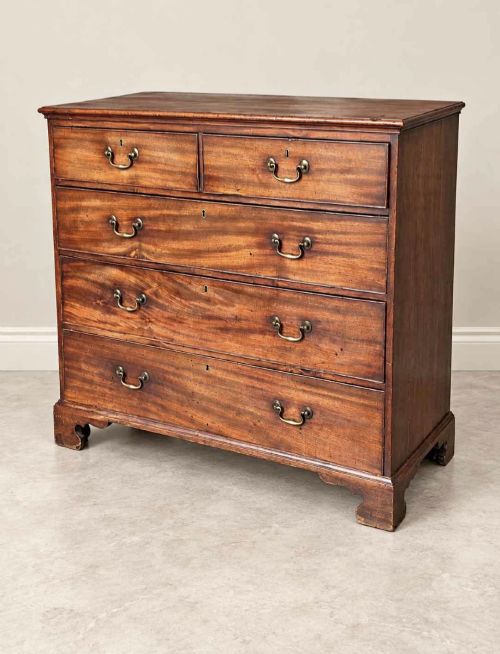
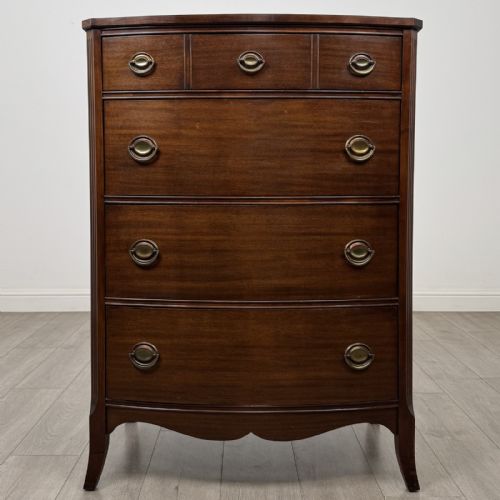
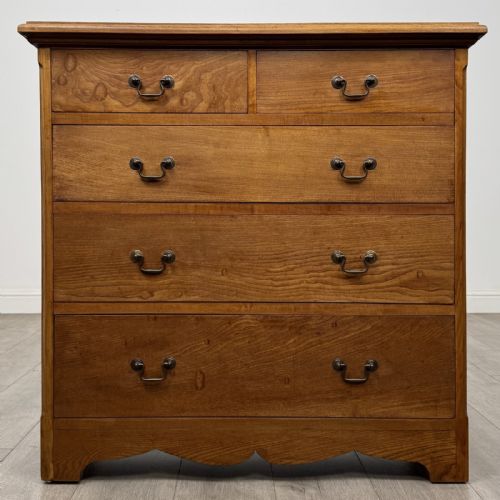
A wooden tallboy encompasses tall chests of drawers, chests on chest, and linen presses originating primarily from Georgian, Victorian, and Edwardian periods. Buyers seeking a wooden tallboy typically find tall configurations designed to maximise storage without claiming excessive floor space.
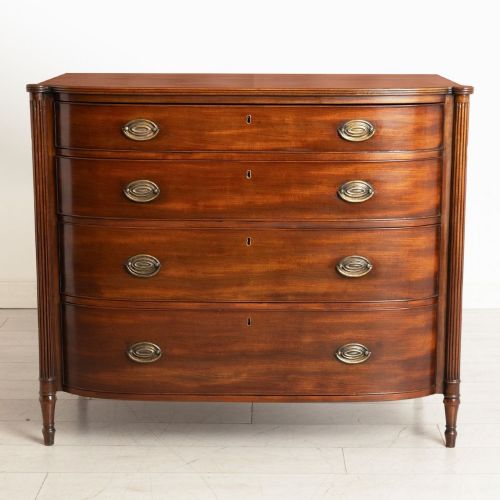
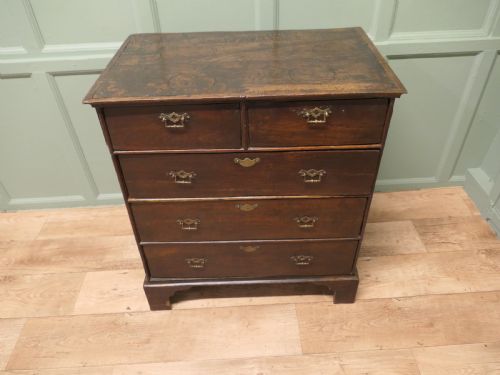
The inventory on this page ranges from compact oak pieces of the early eighteenth century to grand mahogany chests on chest and Regency linen presses. Regional pieces in pine and ash sit alongside sophisticated burr walnut and flame mahogany examples.
Materials and construction
Cabinetmakers utilised primary timbers such as mahogany, oak, walnut, and pine, frequently applying flame mahogany or satinwood veneers to drawer fronts for visual depth. Secondary timbers like deal or oak often form drawer linings and carcase backs.
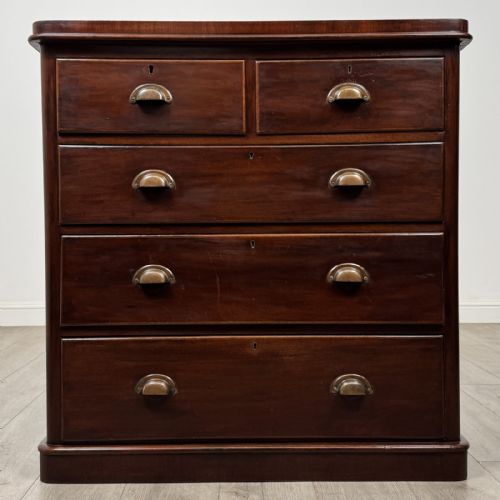
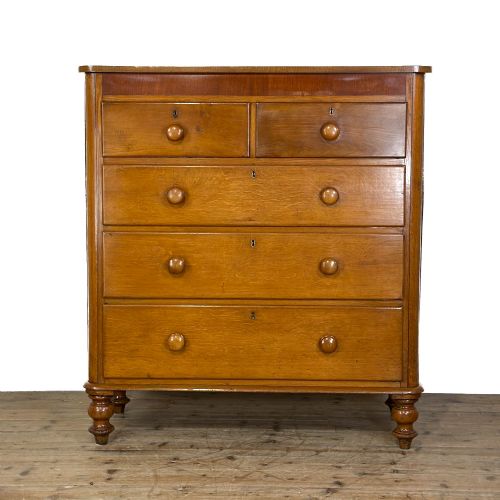
Construction methods rely on robust dovetail joints for drawers and panelled carcases to withstand seasonal timber movement. Brass handles, drop pulls, and cup handles secure to the drawer faces, while bracket feet, bun feet, or plain plinths support the base.
Some chests retain hidden interior compartments behind secret panels, designed long ago to guard family letters and currency.
Distinctions in craftsmanship
Quality separates along the precision of the cabinet work, visible in the tightness of the drawer dovetails and the grain selection of the timber. Superior pieces display continuous figure matching across stacked drawer fronts and retain original brass hardware.
The architectural presence of a piece depends on the crispness of mouldings, the proportion of upper and lower sections in double-tier forms, and the integrity of internal timber structures.
The Wooden Tallboy Glossary
- Tallboy
- A tall chest of drawers, often constructed as one chest stacked upon another to provide elevated vertical storage.
- Linen Press
- A tall piece of furniture featuring upper doors enclosing sliding trays for textiles above a base tier of lower drawers.
- Chest on Chest
- A two-part tall chest where a narrower upper cabinet rests directly upon a wider lower chest of drawers.
- Brushing Slide
- A pull-out board integrated into the upper carcase, traditionally used as a writing or sorting surface.
- Dovetail
- A corner joint formed by interlocking wedge-shaped fingers, securing drawer sides to drawer fronts with high tensile strength.
Wooden Tallboy: Frequently Asked Questions
What is a wooden tallboy used for?
A wooden tallboy serves primarily as a high-capacity storage unit for clothing and linens in bedrooms or dressing rooms. The vertical configuration allows it to hold significant volume while occupying a minimal footprint on the floor.
Historically, upper sections housed folded garments or linens, while deeper lower drawers accommodated bulkier items. Modern homes utilise these pieces in hallways and living spaces for versatile household storage.
How do I date a wooden tallboy?
Dating relies on examining timber species, construction techniques, hardware, and overall stylistic proportions. Early eighteenth-century examples often utilise solid oak with pegged frames and simple panel construction.
Later Georgian and Regency pieces favour mahogany and walnut with fine hand-cut dovetails and brass drop handles. Victorian and Edwardian iterations introduce machine-sawn elements, stained birch, and alternative brass cup handles.
Are tallboys and chest on chests different?
A chest on chest specifically denotes a two-part construction where an upper chest sits directly upon a larger lower chest, creating a distinct stepped profile. The term tallboy broadly applies to any tall chest of drawers, including single-carcase formats and linen presses.
Both forms share the vertical orientation characteristic of tall storage furniture developed during the eighteenth century.