

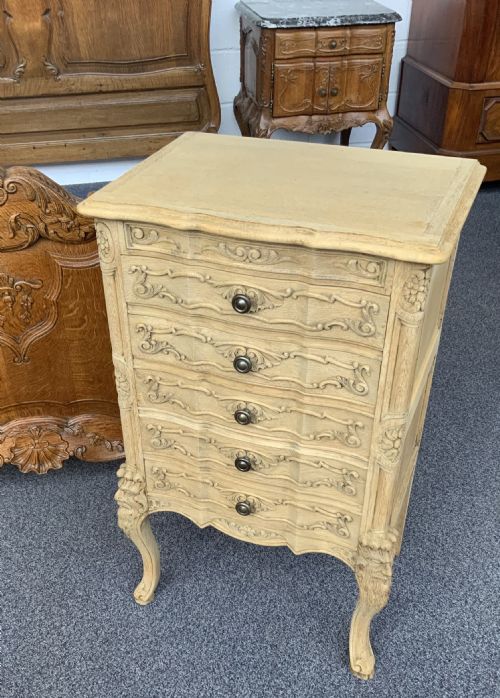
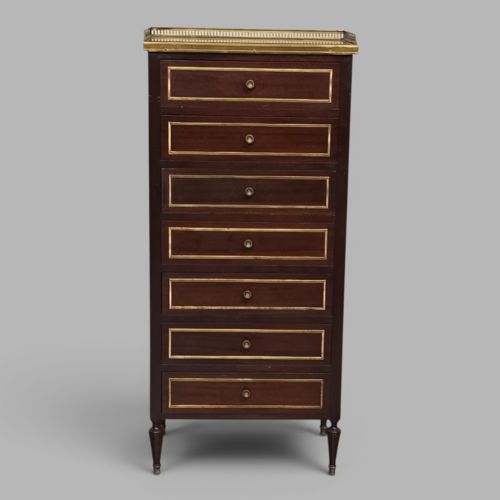

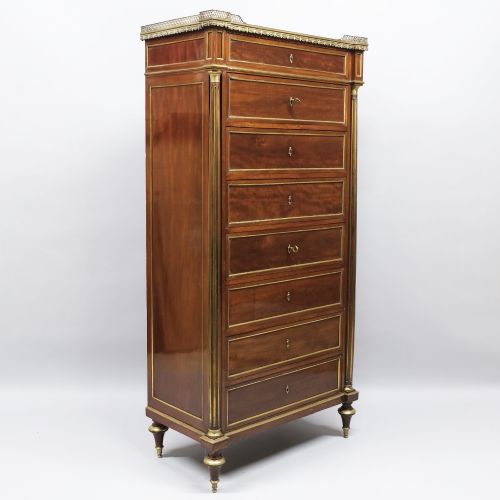
French Semainier Chest
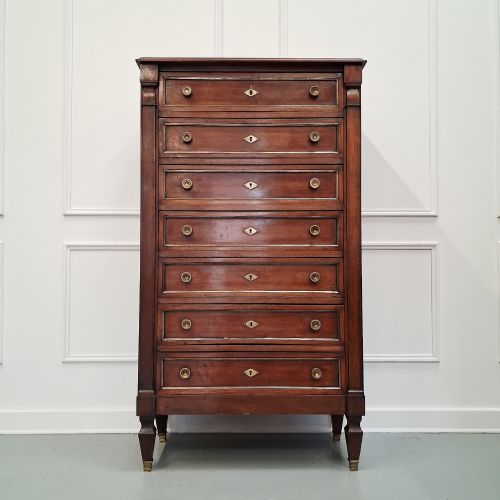
A french semainier chest provides tall, narrow storage with seven distinct drawers designed for weekly organisation in traditional bedrooms.
French Semainier Chest
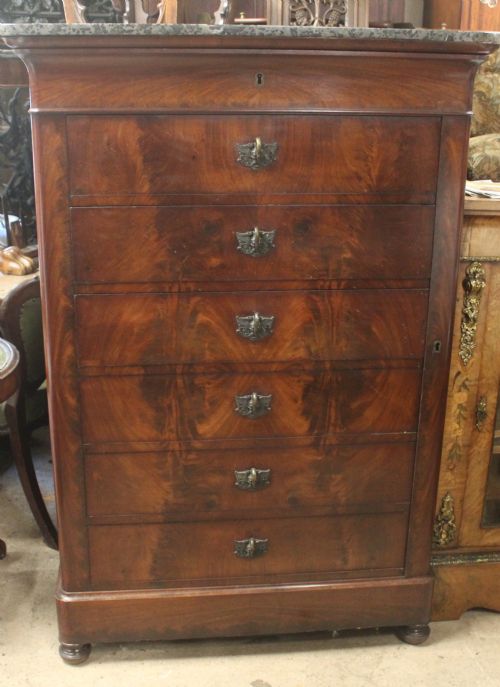
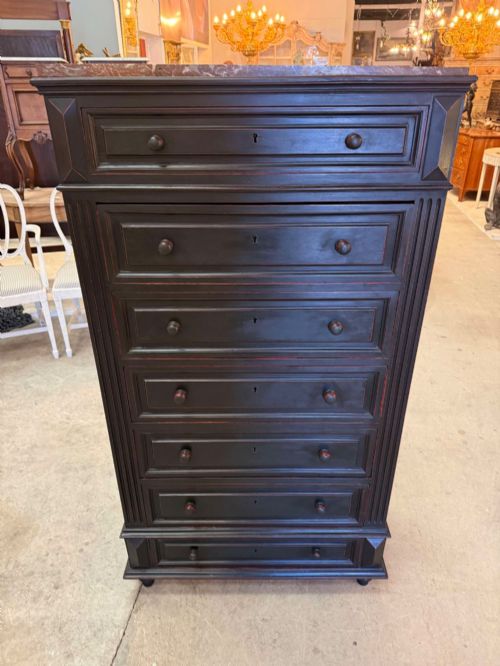
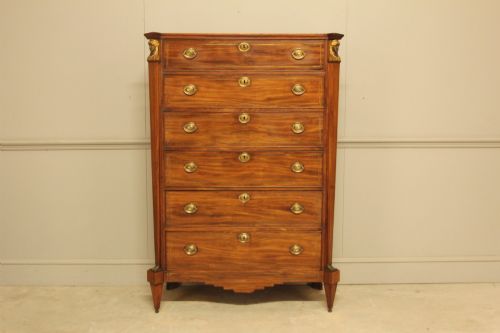
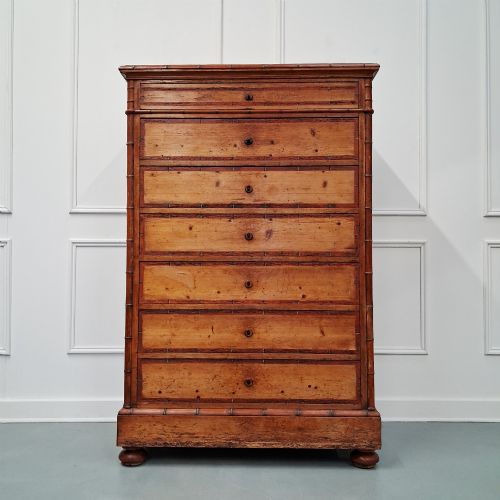
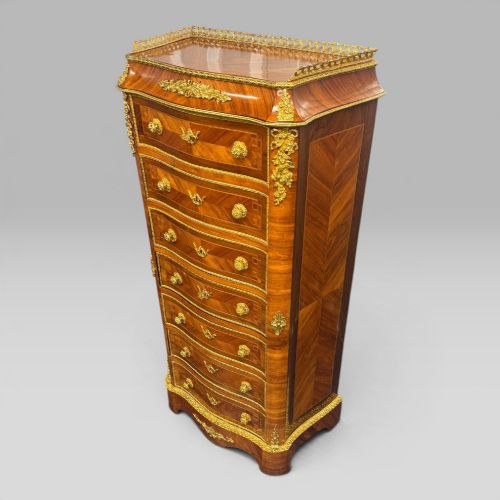
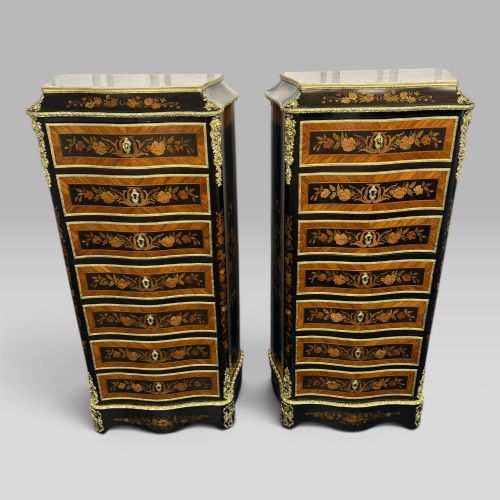
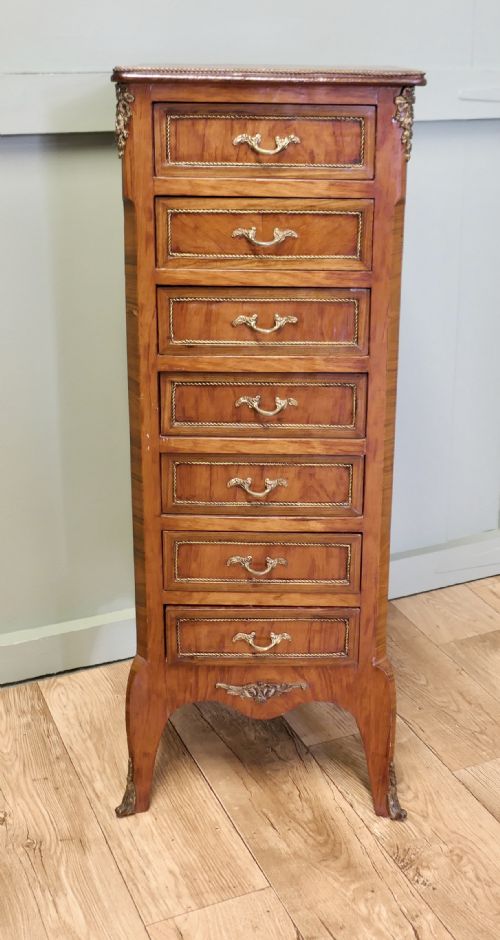
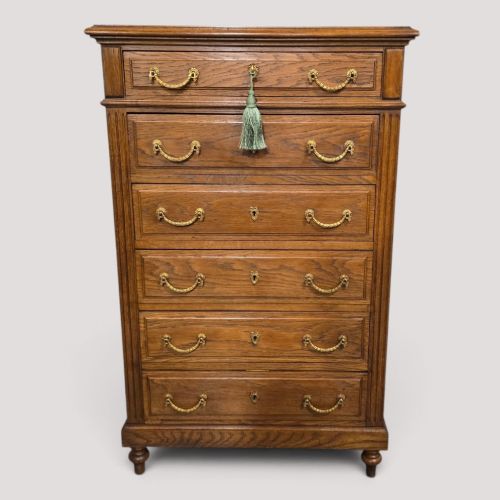
A french semainier chest is characterised by its slender, upright proportions and multiple drawers, typically numbering seven to correspond with the days of the week. These tall case pieces serve as efficient storage solutions where floor space is limited, frequently appearing in walnut, mahogany, oak, and exotic veneers.
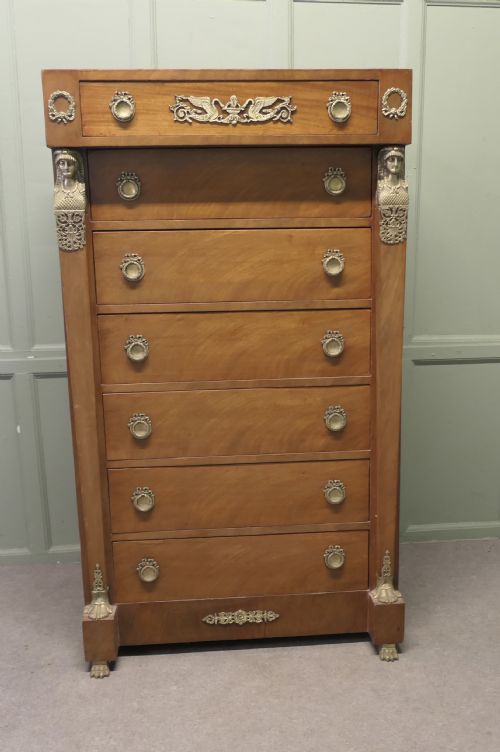
The versions met most often on this page date from the nineteenth century into the early twentieth century, spanning styles from French Empire and Louis XV revival to plain provincial oak. Many examples incorporate fitted secretaire compartments or contrasting marble tops.
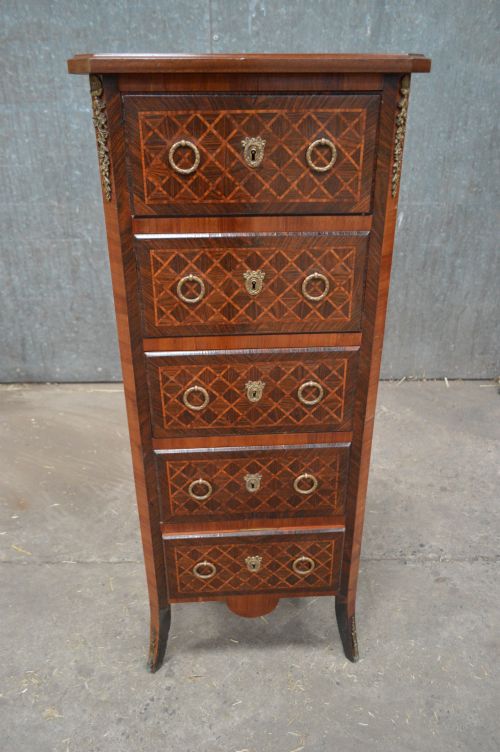
Makers and cabinetmakers produced these tall chests across various French regions, occasionally incorporating brass mounts, marquetry, and parquetry patterns into the exterior facade.
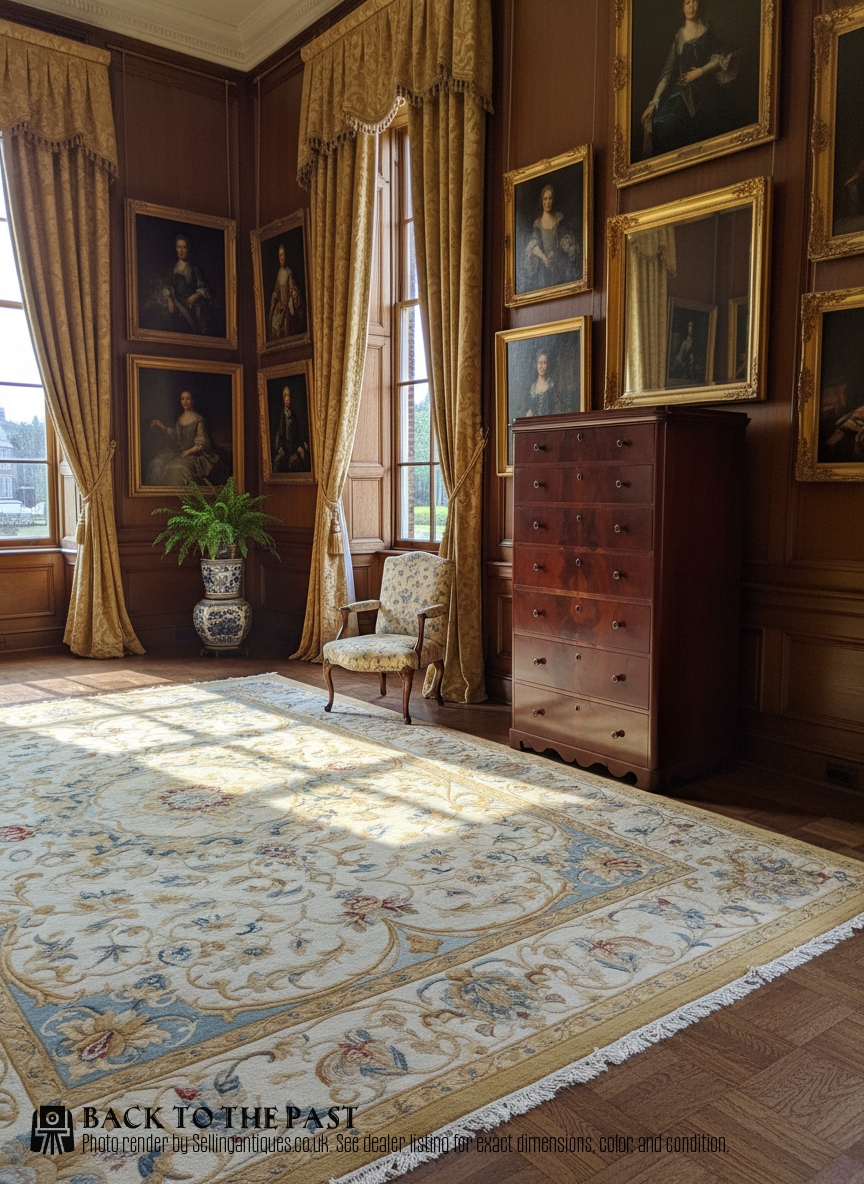
Materials and construction
Makers built the carcases of a french semainier chest using solid hardwoods such as oak, cherry, or walnut, frequently applying decorative veneers of mahogany, rosewood, kingwood, or walnut over secondary timbers. Bookmatched grains and geometric parquetry patterns provide surface decoration across the drawer fronts.
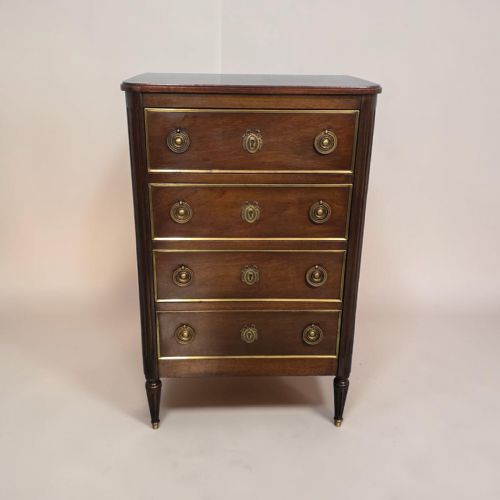
Surface details often include cast or gilt brass mounts, ormolu accents, and inset slabs of marble fitted neatly to the upper surface. Dovetail joinery secures the drawer construction, supporting the tall and narrow framework typical of the form.
French Semainier Chest Retail Price Guide 2026
Typical asking prices for french semainier chest among the pieces listed under this phrase on Sellingantiques today, from the lower quarter to the upper quarter. They describe what is for sale here now, not the wider market.
Periods represented span the nineteenth century, the Victorian era, and the early twentieth century up to the 1930s.
Distinctions in construction and finish
The standard of execution depends upon the precision of the veneer work, the thickness of the marble top, and the crispness of any gilt bronze or brass mounts. Finely figured timbers like flame mahogany or burr walnut elevate the visual presence of the piece.
Structural integrity relies on the alignment of the numerous drawers within the tall carcase, alongside the quality of the internal oak or softwood secondary framing.
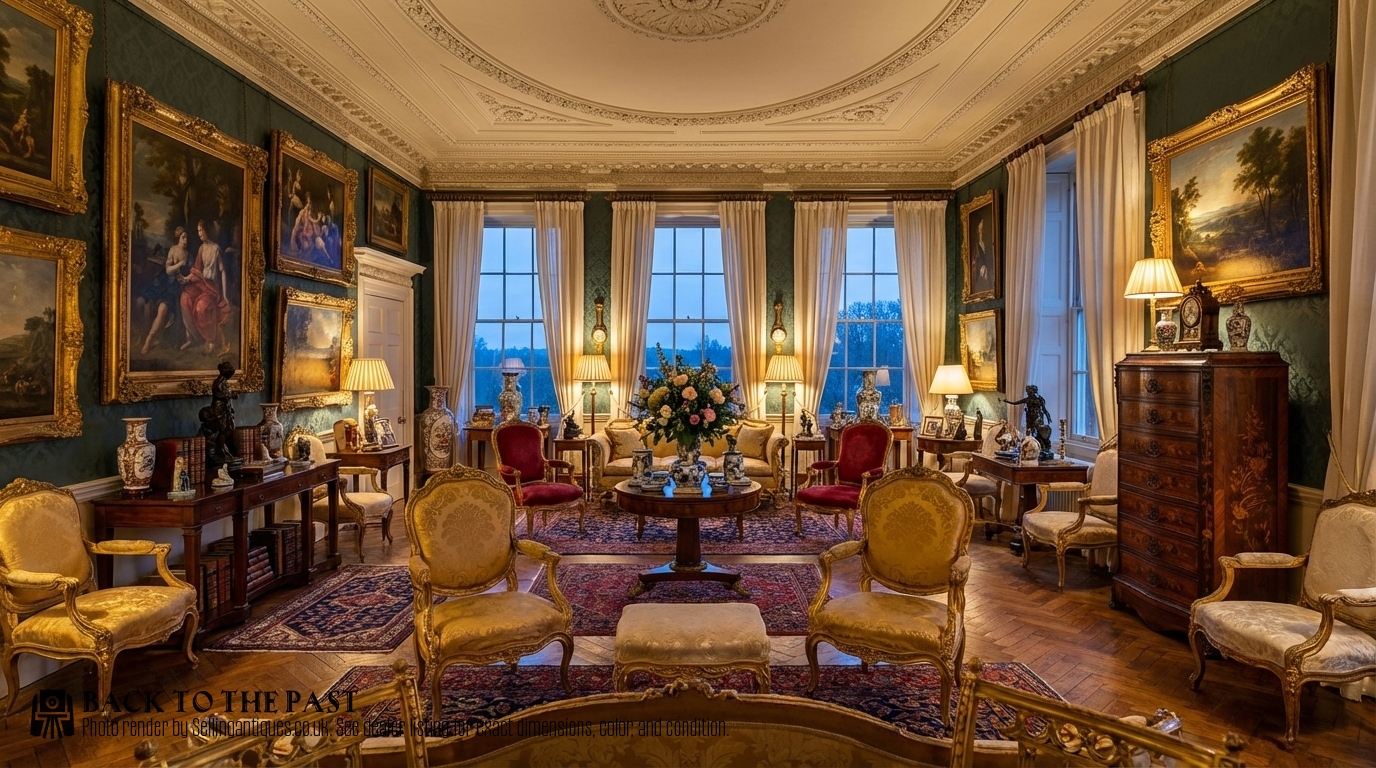
Maison Krieger
The French Semainier Chest Glossary
- Semainier
- A tall, narrow chest of drawers traditionally containing seven drawers, one for each day of the week. This form originated in France during the eighteenth century.
- Secretaire abattant
- A tall chest or cabinet featuring a drop-front writing flap that conceals small compartments and pigeonholes inside. It combines desk functionality with vertical storage.
- Ormolu
- Gilded bronze mounts and decorative accents applied to furniture. The technique involves a mercury gilding process popular on nineteenth-century French pieces.
- Parquetry
- Geometric wood inlay work arranged in patterns such as squares, lozenges, or cubes. Craftsmen apply thin veneers of contrasting woods onto the furniture surface.
- Wellington chest
- A tall, narrow Victorian chest of drawers secured by a hinged locking side pilaster bar. It shares the upright proportions of the semainier format.
French Semainier Chest: Frequently Asked Questions
What is a french semainier chest?
A french semainier chest is a tall, narrow storage furniture piece designed with seven individual drawers. The name derives from the French word for week.
These pieces offer substantial vertical storage while occupying minimal floor space in a room.
How were they used historically?
Historically, the seven drawers allowed individuals to organise garments or linens for each day of the week. Some variations also incorporate a fold-down desk drawer for correspondence.
They functioned primarily as bedroom furniture for personal items and documents.
How do I style one at home?
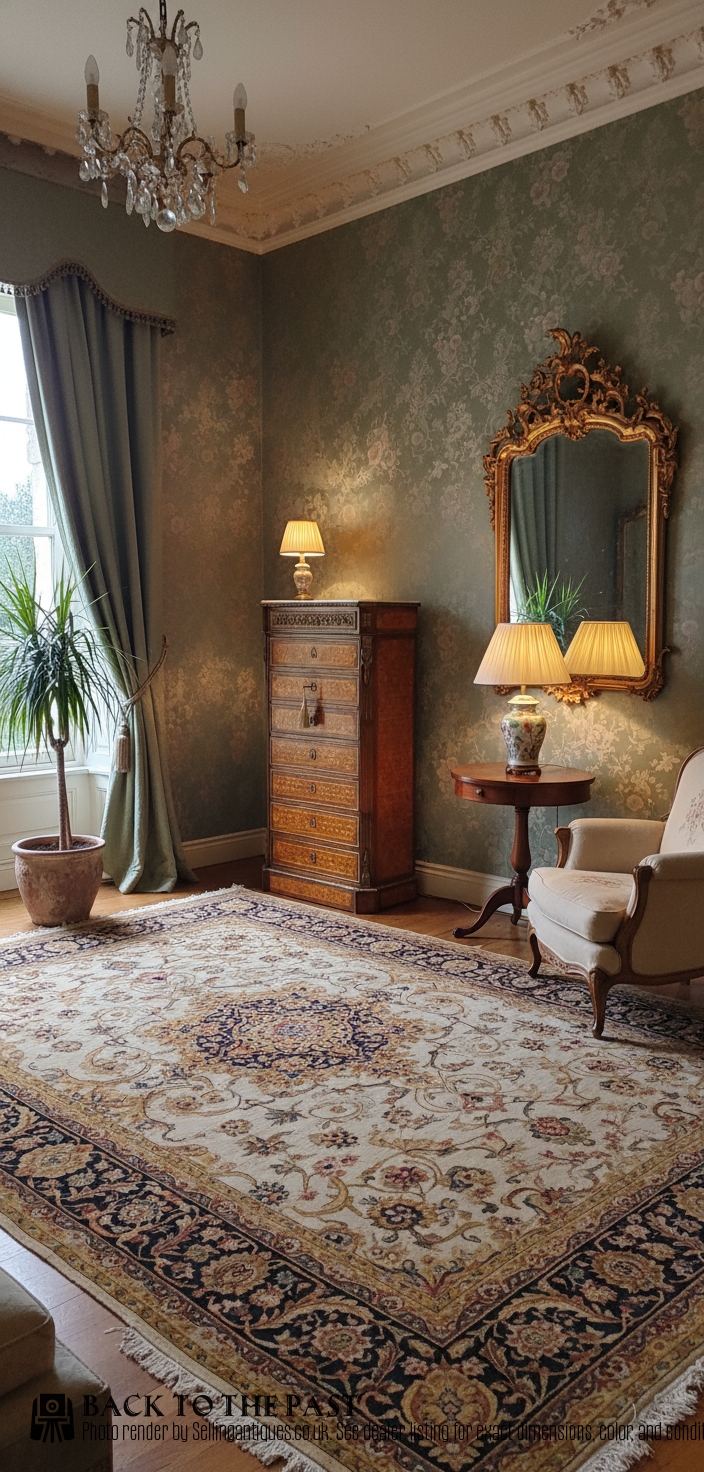
These tall chests fit well in bedrooms or hallways where floor space is restricted. Their upright proportions draw the eye upward.
Pair them with neutral walls to highlight the grain of walnut, mahogany, or exotic veneers.
How do I identify the period?
Nineteenth-century examples often feature heavy mahogany or walnut timbers, while pieces from the early twentieth century may display lighter parquetry or painted finishes. Marble tops and brass mounts provide further clues regarding the date of manufacture.
Construction methods inside the drawers also help confirm the era of production.