
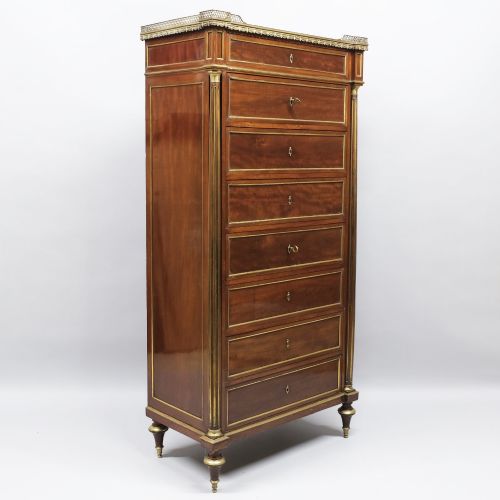


Nineteenth Century Semainier
A nineteenth century semainier stands as a tall, slender chest designed to hold the week's linen and small garments, offering generous storage in a remarkably compact footprint.
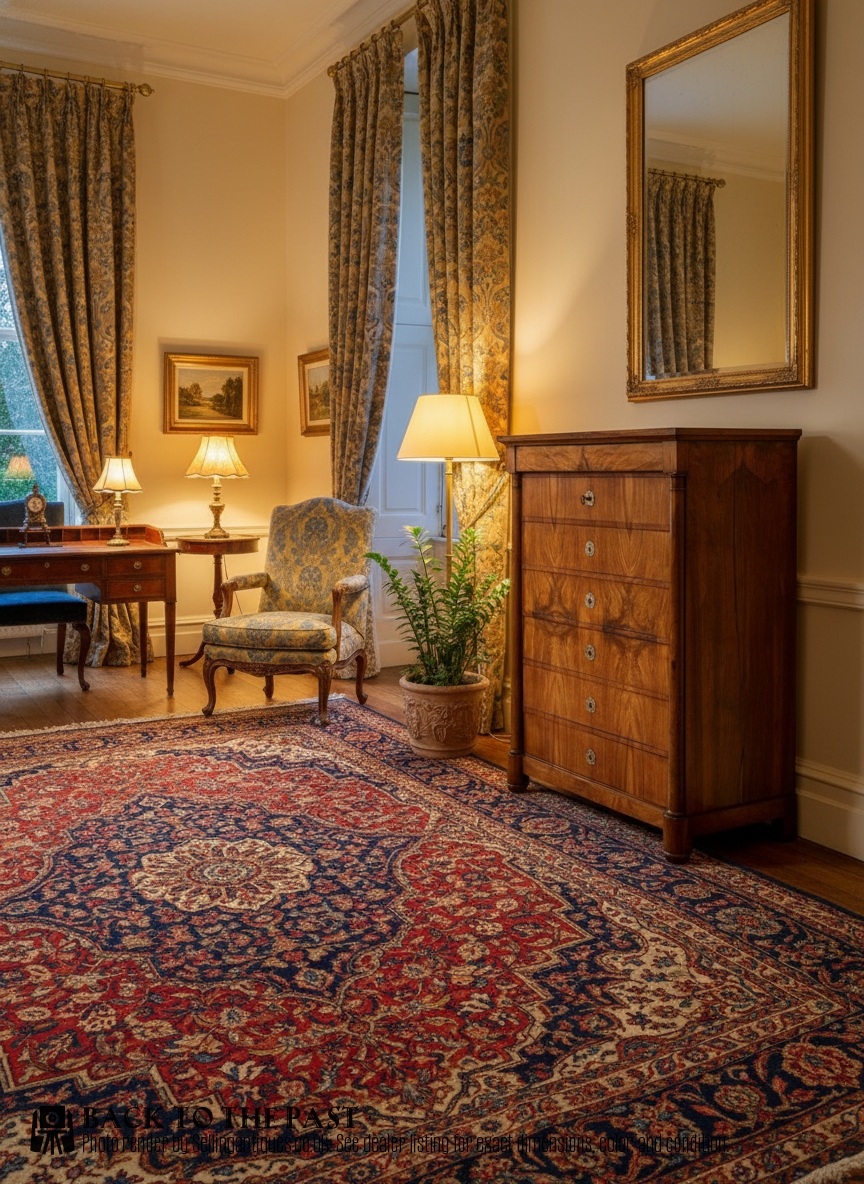
Nineteenth Century Semainier
The nineteenth century semainier takes the form of a tall, narrow chest of drawers designed for daily wardrobe organisation. Buyers seeking a nineteenth century semainier will encounter pieces originating from French, English, and Dutch workshops, frequently constructed with seven distinct drawers.
Most examples appearing on this page belong to the broader nineteenth century period, spanning Regency, Victorian, and Louis Philippe stylistic influences. Alongside standard upright forms, related tall chests and bedside variants occasionally surface within the selection.
Makers shaped these pieces from timber varieties such as mahogany, walnut, satin birch, and cherry, often mounting marble tops above the upper drawer. Such items combine vertical presence with modest floor space requirements, suiting smaller bedrooms and dressing rooms.
How they were made
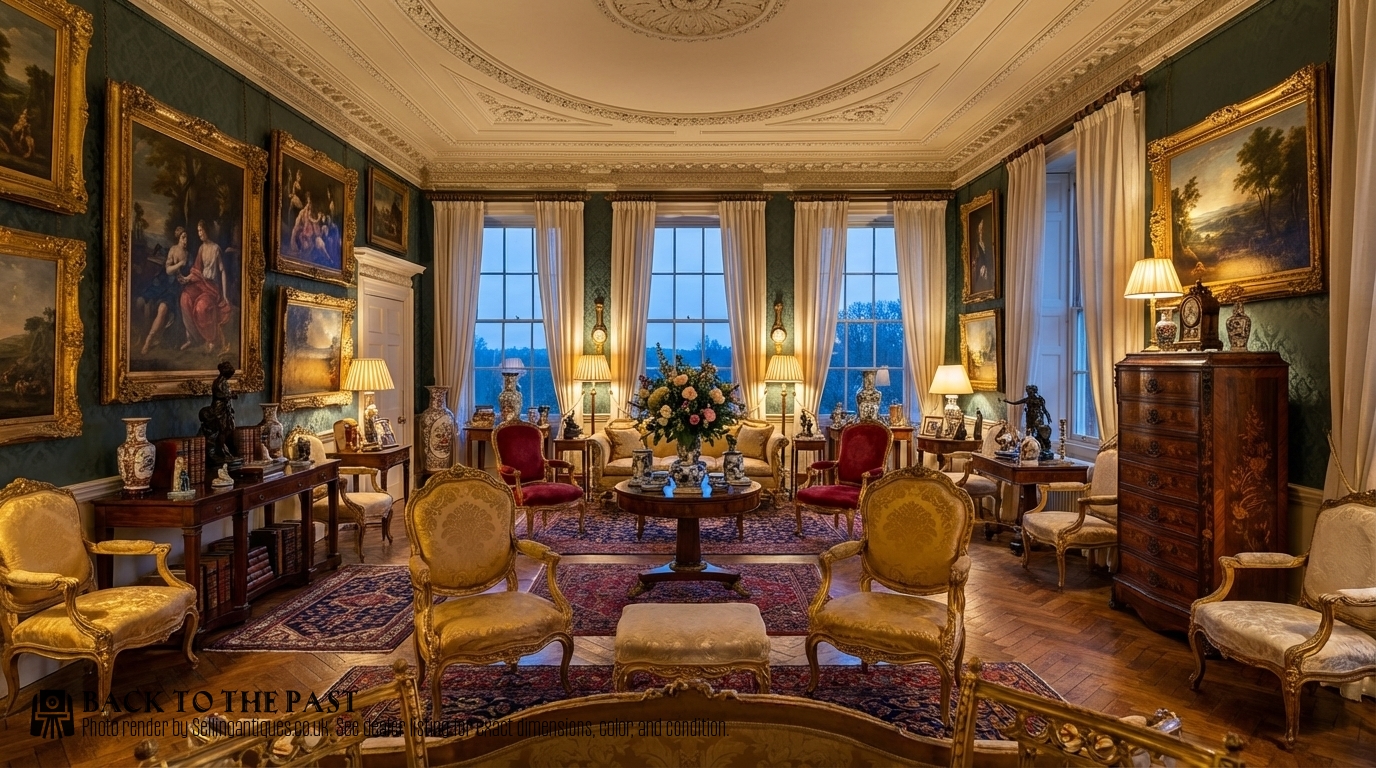
Cabinet makers built the primary carcass of a nineteenth century semainier using dense hardwoods like mahogany and walnut, frequently lining internal drawer boxes with pine. Outer surfaces received veneers of exotic timbers such as rosewood and satin birch, arranged to highlight natural grain patterns.
Many French and continental examples incorporate contrasting marquetry inlays alongside cast brass and ormolu mounts to accent the drawer framing. Heavy white or grey marble slabs sit atop the uppermost surface, providing a durable and decorative finish to the piece.
Nineteenth Century Semainier Retail Price Guide 2026
Typical asking prices for nineteenth century semainier among the pieces listed under this phrase on Sellingantiques today, from the lower quarter to the upper quarter. They describe what is for sale here now, not the wider market.
Early nineteenth-century cabinet makers occasionally built secret locking mechanisms hidden behind decorative brass ormolu mounts.
What varies in quality
The distinction between standard workshop production and finer craftsmanship lies in the selection and application of timber veneers. Superior examples display continuous grain matching across the drawer fronts and employ dense, well-figured marquetry rather than simple surface decoration.
Structural integrity also separates grades, visible in the snugness of drawer joints and the weight of the bronze or brass ormolu mounts. Finer pieces retain original marble tops that sit flush against the timber carcass without mortar repairs or heavy chipping.
The Nineteenth Century Semainier Glossary
- Semainier
- A tall, seven-drawer chest traditionally utilised to hold a week's supply of undergarments or linens. The name derives from the French word for week.
- Ormolu
- Gilded bronze mounts applied to furniture corners, handles, and key escutcheons. This decorative technique gained widespread use during the eighteenth and nineteenth centuries.
- Marquetry
- The art of applying thin pieces of wood veneer to a structure to form decorative patterns. Artisans used contrasting timbers to create floral or geometric designs.
- Wellington chest
- A tall, narrow chest of drawers secured by a hinged locking stile on one side. This design variation shares a similar vertical proportion to the semainier.
- Satin birch
- A light-coloured hardwood with a shimmering grain pattern used extensively for nineteenth-century veneering. It provides a bright, reflective surface finish.
Nineteenth Century Semainier: Frequently Asked Questions
Why does a semainier have seven drawers?
The traditional layout provides one drawer for each day of the week, allowing individuals to sort daily linens or garments systematically.
This vertical division maximises storage capacity while keeping the overall floor footprint remarkably narrow.
Can I use a semainier in a modern bedroom?
These tall chests fit exceptionally well beside modern wardrobes or in tight corners where standard wide dressers fail to clear door frames.
The vertical height offers substantial drawer space without crowding smaller contemporary living spaces.
How do I distinguish French and English styles?
French examples often incorporate marble tops, prominent ormolu mounts, and rich walnut or cherry veneers with Louis Philippe or Empire styling.
English and Dutch interpretations tend to favour figured mahogany, simpler brass hardware, and restrained classical proportions.
Are marble tops original to these chests?
Many continental pieces from this era were designed specifically to carry fitted marble slabs to protect the wood surface from toiletries and water.
Examining the underside and edges helps confirm whether the stone slab matches the period of the cabinet below.