




Grey Marble Top Chest
A grey marble top chest brings cool stone and rich timber together, offering solid storage with a handsome, durable surface.
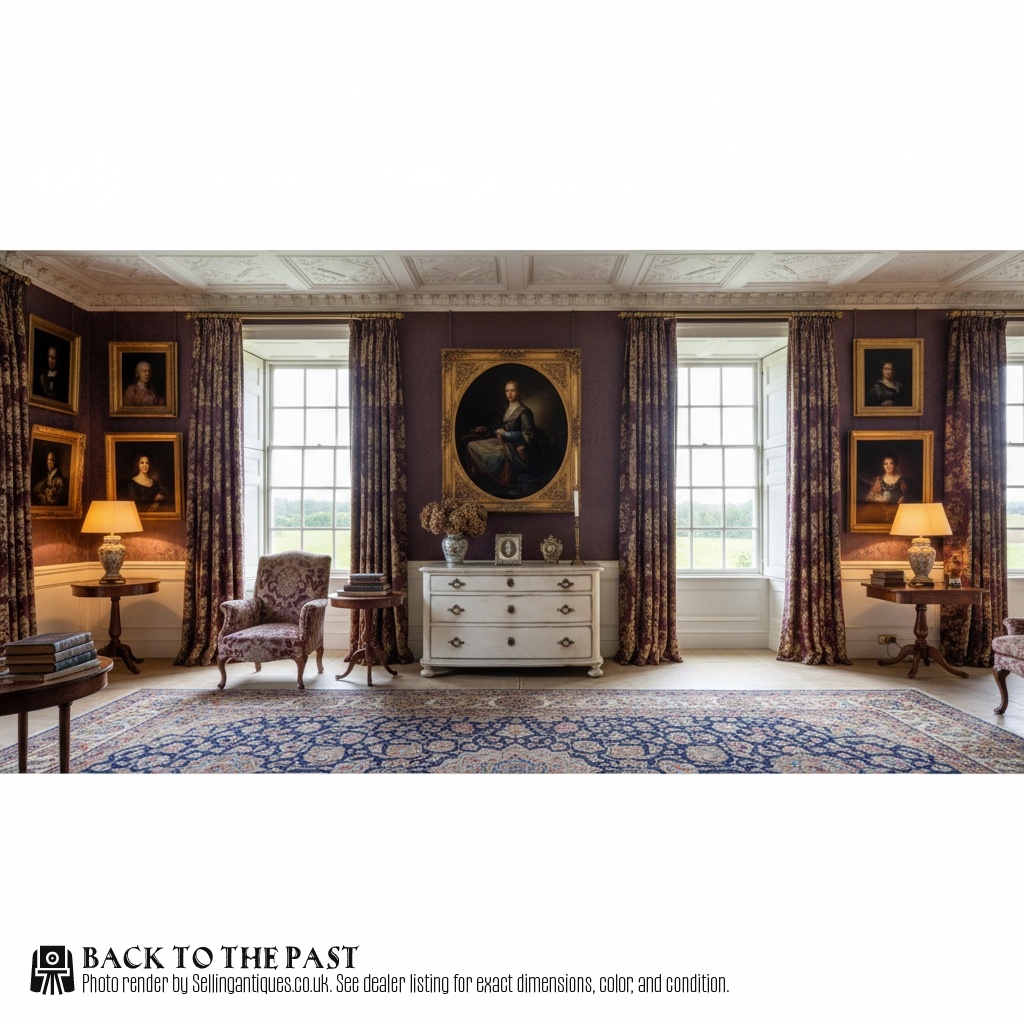
What a grey marble top chest is
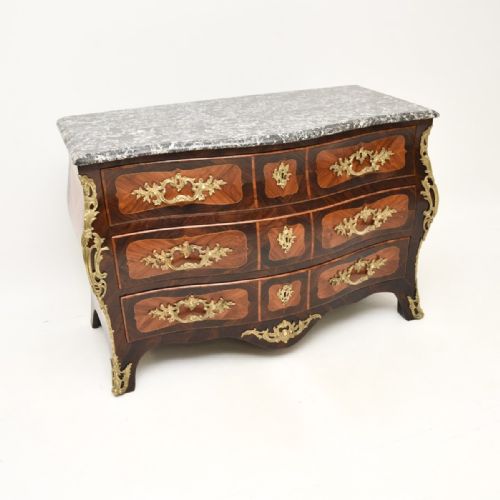
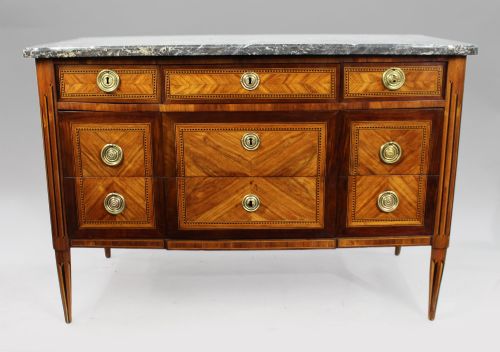
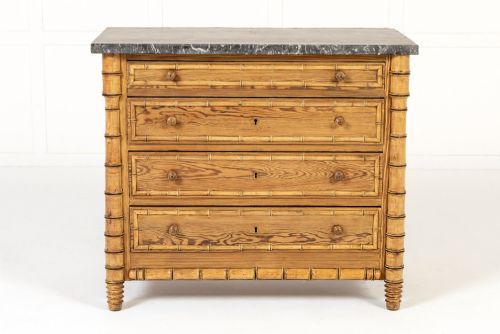
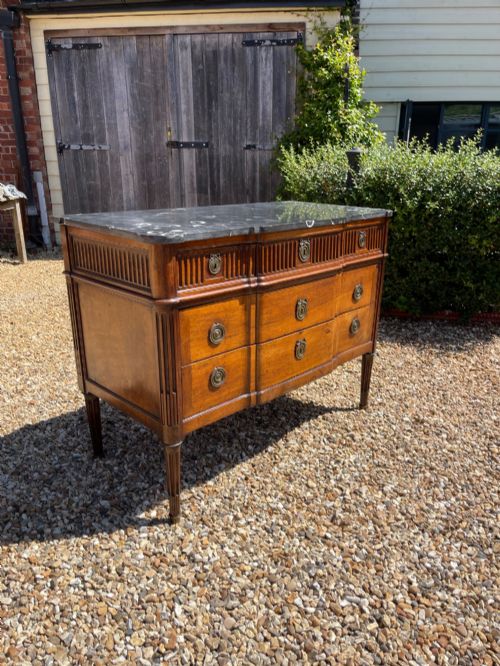
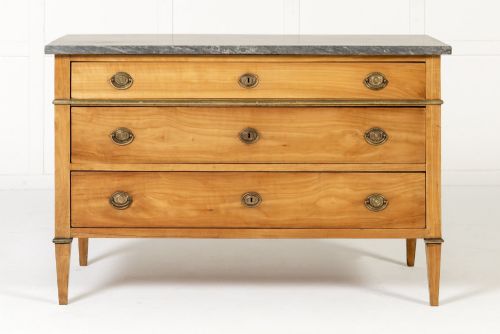
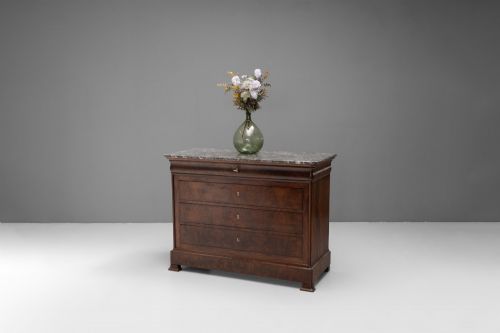
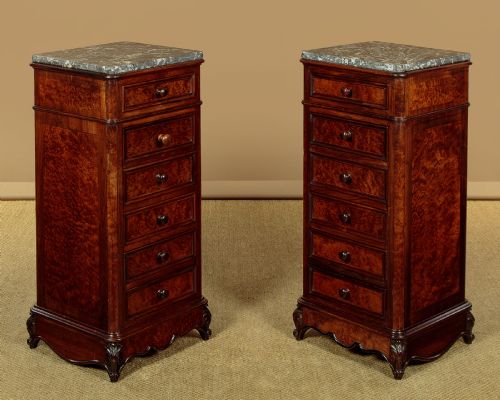
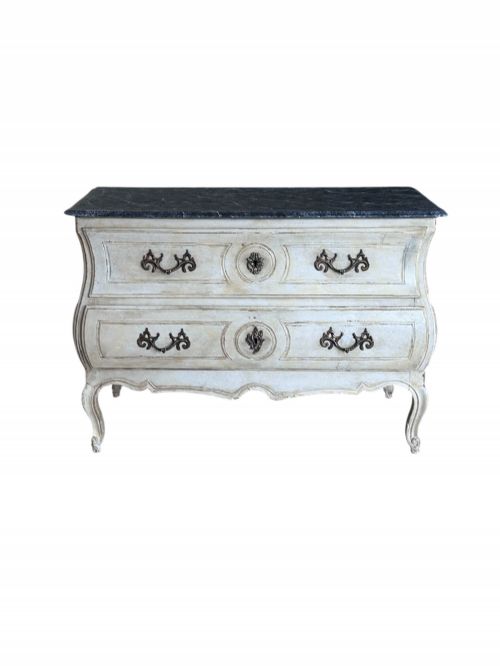
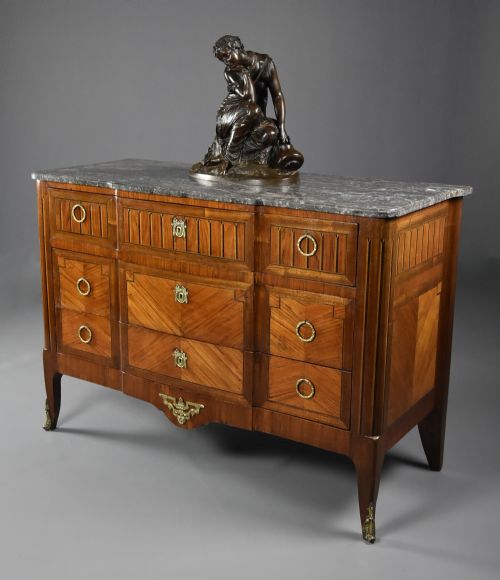
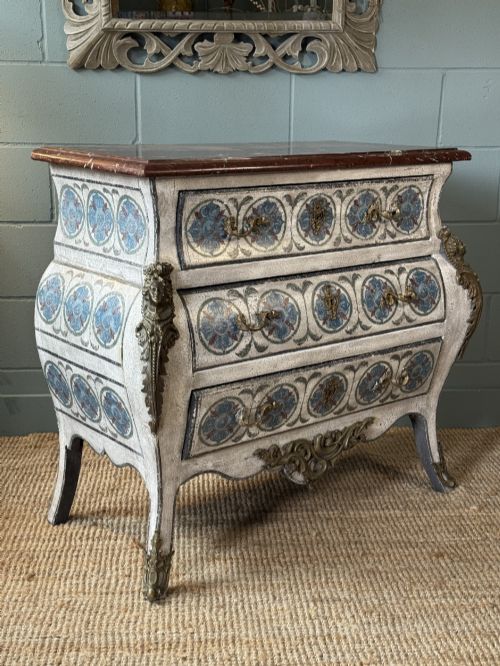
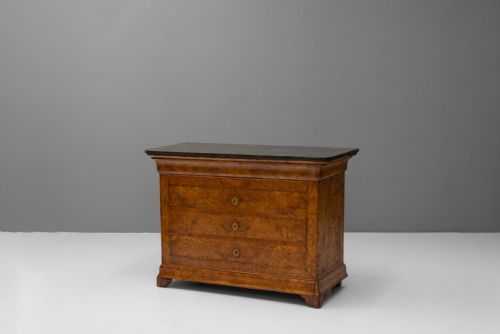
When you search for a grey marble top chest, you encounter substantial commodes and drawer chests spanning the late eighteenth and nineteenth centuries. These pieces originate largely from continental workshops and showcase classic French forms including bow fronts and tall semainiers.
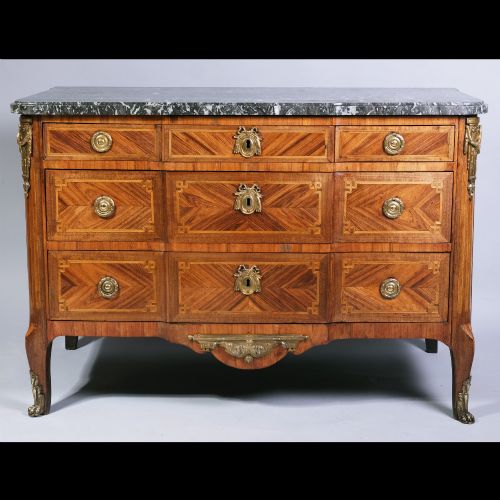
The heavy stone slab sits atop timber carcases constructed in elm, cherry, burr walnut, and flame mahogany. Formats range from standard multi-drawer chests to serpentine and bombe shapes finished with period brass hardware.
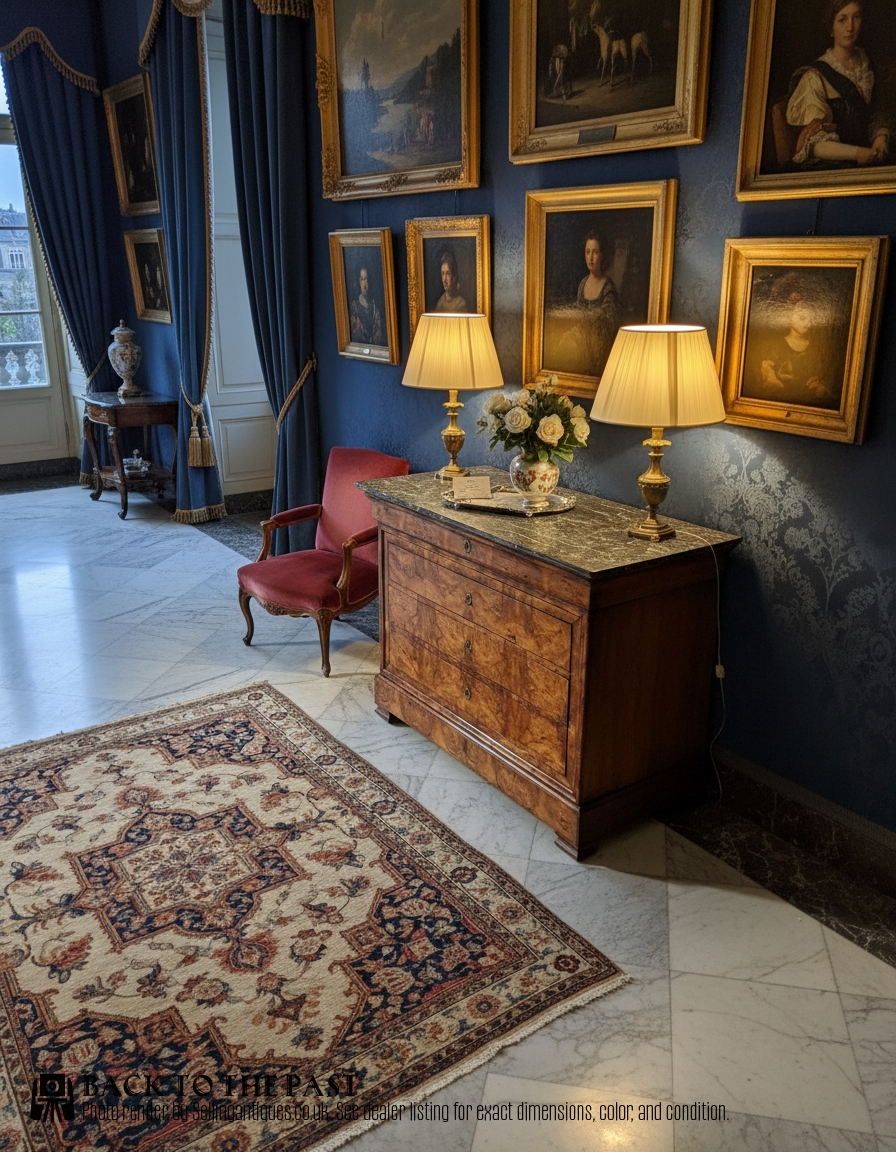
How they were made
Cabinet makers built these carcases using native and exotic timbers, often applying decorative veneers like burr walnut, flame mahogany, and intricate parquetry patterns over solid wood foundations. Drawers utilised traditional joinery methods suited to heavy daily use.
The defining grey marble tops were quarried, shaped, and polished to fit precisely over the timber frames. Metal mounts, handles, and escutcheon plates in brass were cast and fitted to complement the darker tones of the stone and polished wood.
Retail Price Guide 2026
Typical UK retail prices for grey marble top chest, calculated from the Sellingantiques database of over a million retail prices indexed since 2003. This retail price guide relies exclusively on Sellingantiques data; no external sources or auction records are used, so the figures do not describe the wider market.
Some nineteenth-century French commodes feature seven drawers specifically designed to hold a fresh set of linens for every single day of the week.
What varies in quality
Quality rests in the harmony between the grey marble slab and the underlying cabinetwork, where superior examples feature stone with deep mineral figuring that sits flush without excess gap. The choice of timber veneer, from standard elm to highly figured burr walnut and flame mahogany, dictates the visual weight of the piece.
Refinement shows in the crispness of the parquetry inlay, the weight of the cast brass hardware, and the precise hand-cut dovetails within the drawer construction. Structural integrity in the carcase ensures the heavy marble top rests securely over decades of use.
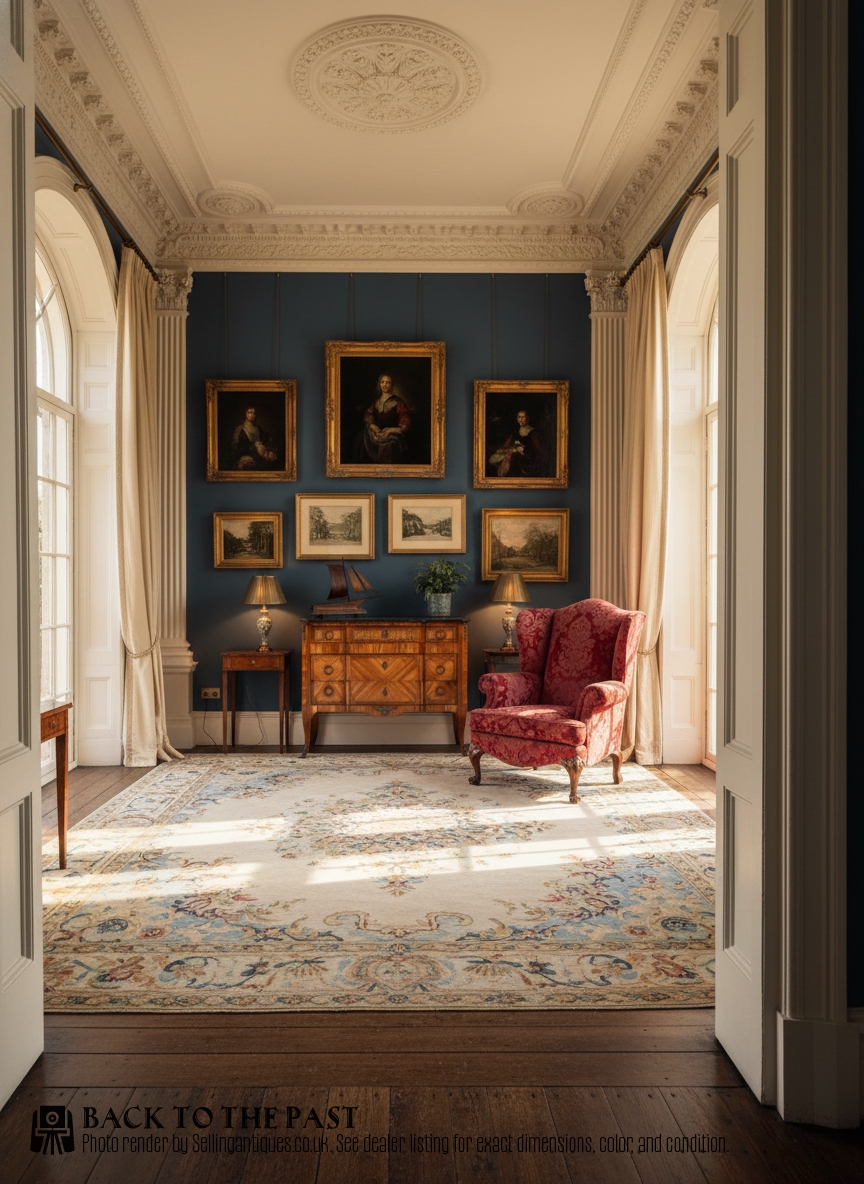
The Grey Marble Top Chest Glossary
- Commode
- A low chest of drawers, typically continental in origin and fashionable throughout the eighteenth and nineteenth centuries. These pieces often feature prominent decorative hardware and substantial stone tops.
- Semainier
- A tall, narrow chest of drawers traditionally designed with seven drawers, one for each day of the week. This form maximises vertical storage while retaining a compact footprint.
- Bombe
- A swelling or bulging curved profile characteristic of advanced cabinetmaking, particularly seen in continental commodes. This undulating shape requires complex timber bending and veneer work.
- Parquetry
- Geometric wood mosaic work formed by small veneer pieces laid down in repeating patterns across a surface. It adds texture and visual depth to drawer fronts and top surfaces.
- Escutcheon
- A protective plate surrounding a keyhole, usually cast in brass on these pieces to prevent wear to the surrounding timber veneer.
Frequently Asked Questions
How do I clean a marble top?
Wipe the surface regularly with a soft damp cloth and mild neutral soap to remove dust and daily grime. Avoid acidic cleaners, vinegar, and abrasive pads that can etch or dull the polished stone finish.
Dry the marble thoroughly after washing to prevent water spotting. A light application of specialist stone wax can help protect the surface from minor staining over time.
What styles are common?
Continental pieces dominate this category, featuring styles from the late eighteenth century through the nineteenth century. You will encounter Louis Philippe, French Empire, Neoclassical, and chateau designs.
Cabinetmakers of these periods favoured clean architectural lines, rich wood veneers, and subtle curves. The combination of austere grey stone with figured timber defines the aesthetic.
Where should I place it?
These chests work well in bedrooms, hallways, or living spaces where they provide a sturdy surface and generous drawer storage. Position them away from direct heat sources and strong sunlight to protect the wood veneers.
Ensure the floor is level, as the combined weight of the timber carcase and marble slab requires stable support. A flat surface prevents the drawers from binding within their frames.