

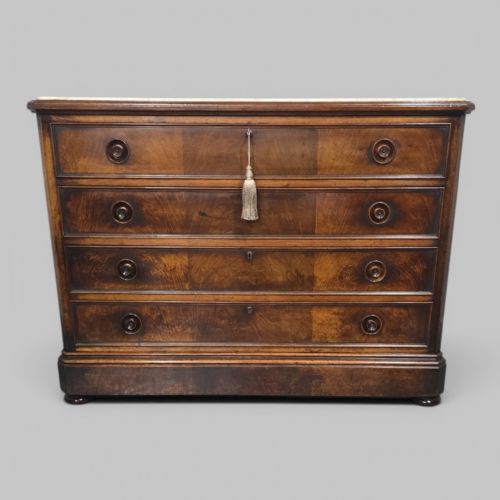
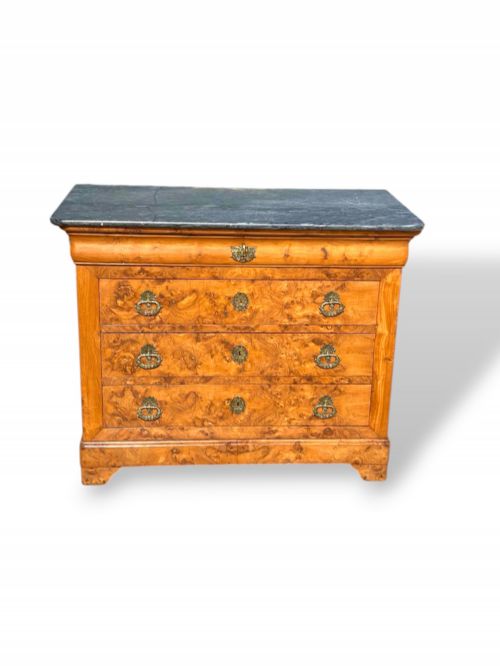
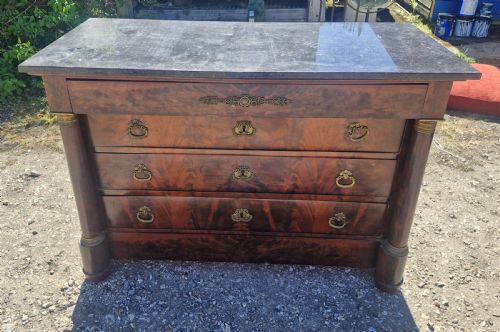


Louis Philippe Commode
A louis philippe commode brings understated French elegance to a bedroom with its clean lines, generous drawers, and heavy marble top.
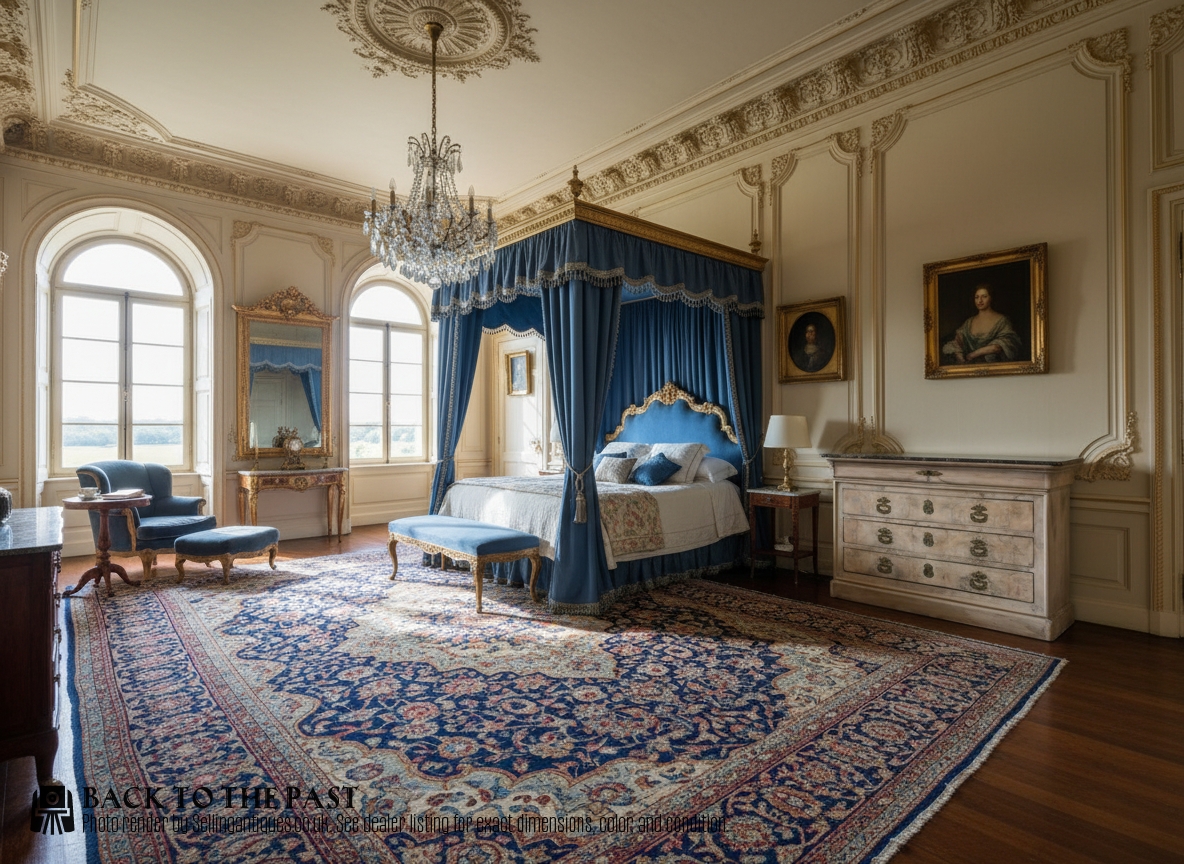
Louis Philippe Commode
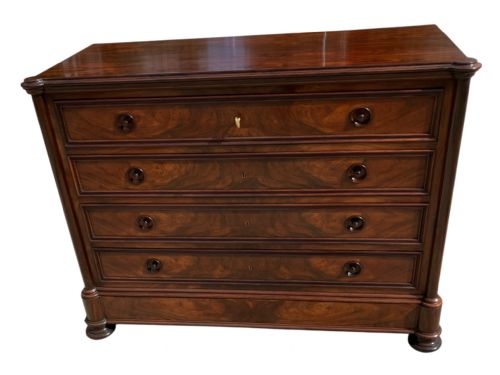
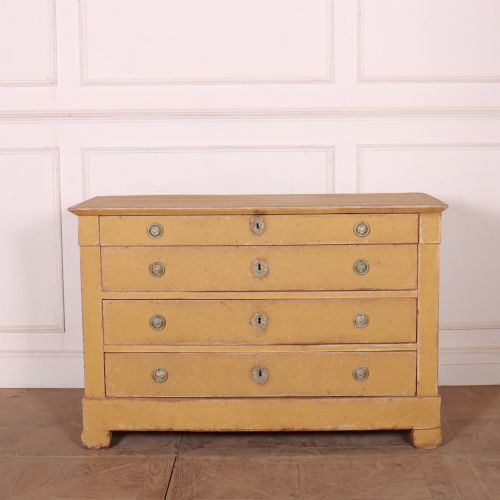
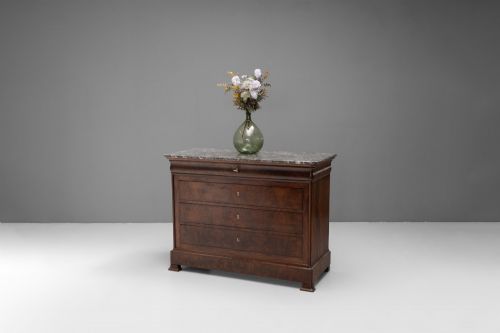
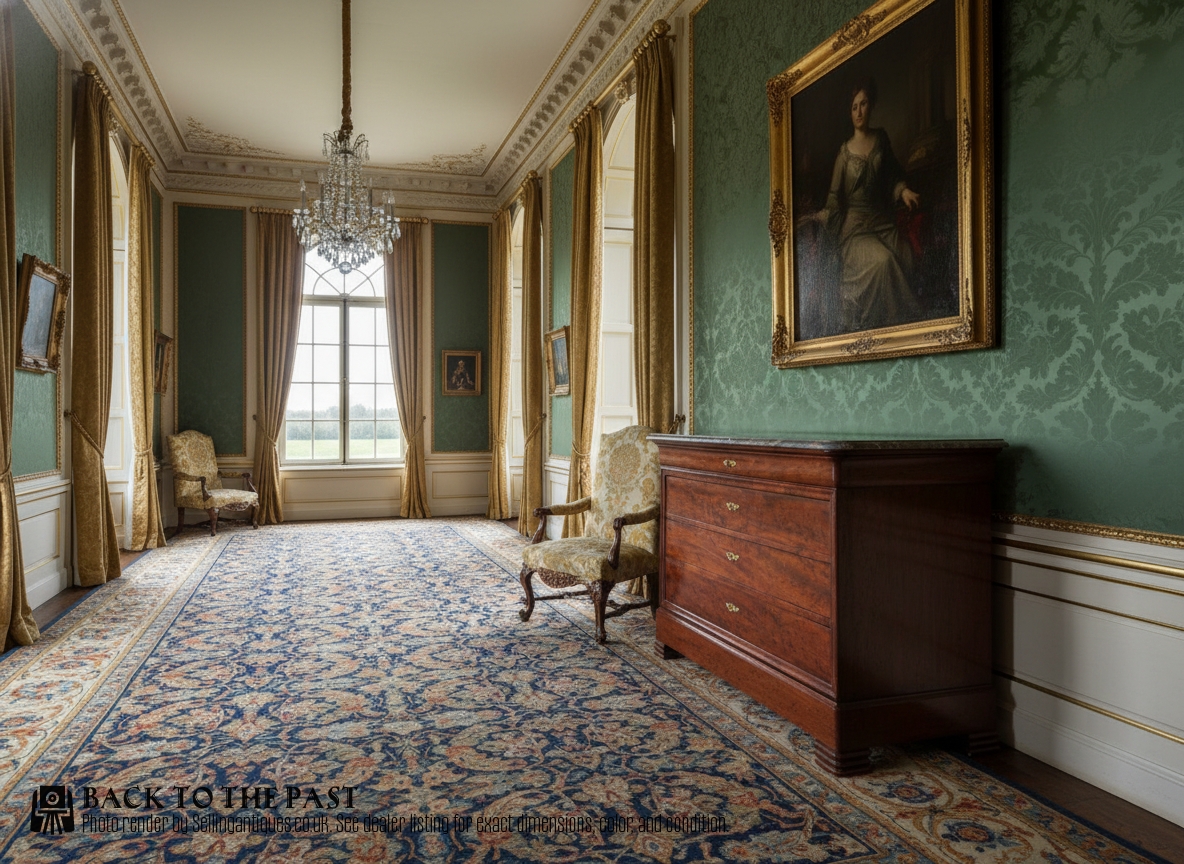
A louis philippe commode is a practical chest of drawers designed with the restrained proportions characteristic of the mid nineteenth century. Most examples found here originate from France and take the form of a substantial timber carcase fitted with a deep frieze drawer above three or four lower drawers.
The walnut and mahogany versions dominate the available selection, often paired with grey marble tops. These pieces served primarily for bedroom storage, combining utility with a quiet decorative presence that avoids the excessive ornamentation of earlier monarchical styles.
How they were made
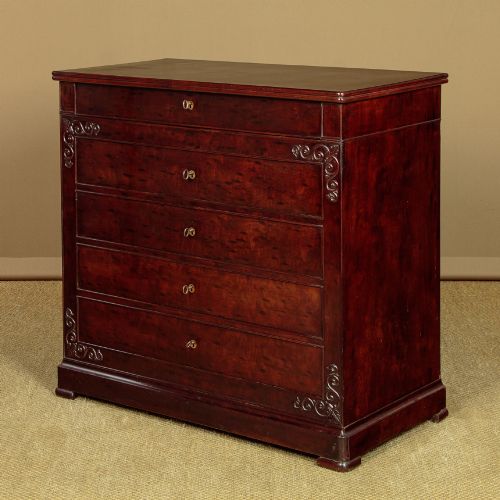
Cabinetmakers constructed these carcases using solid timbers and decorative veneers such as burr walnut, burr ash, and flame mahogany applied to sturdy secondary woods. The striking grain patterns were carefully matched across the drawer fronts to create a cohesive visual rhythm.
Heavy marble slabs, predominantly in shades of grey, were shaped and polished to sit directly on the upper surface of the commode. Brass hardware, including escutcheons and simple pulls, completed the construction without overwhelming the timber surfaces.
Louis Philippe Commode Retail Price Guide 2026
Typical asking prices for louis philippe commode among the pieces listed under this phrase on Sellingantiques today, from the lower quarter to the upper quarter. They describe what is for sale here now, not the wider market.
The archive and current selection span the periods from the eighteenth century through the early twentieth century, with nineteenth-century dates prevailing.
What varies in quality
The grade of the timber veneer defines the visual appeal of an individual louis philippe commode. Highly figured burr walnut or flame mahogany selected with care demonstrates a superior standard of cabinetmaking compared to plain, unfigured boards.
The integration of the marble top and the precision of the drawer construction indicate the original maker's skill. Clean joints, smooth drawer runs, and undamaged stone slabs separate finer examples from more utilitarian workshop output.
The Louis Philippe Commode Glossary
- Commode
- A low chest of drawers, originating in France, typically positioned in a bedroom for storing linens and clothing. This form developed softer, straighter lines during the nineteenth century.
- Frieze drawer
- The uppermost drawer set immediately beneath the top surface of the commode. It is often shallower than the drawers below and sometimes concealed within the moulding.
- Escutcheon
- A protective plate surrounding the keyhole of a drawer. On these pieces, they are frequently cast in brass and occasionally shaped like flowers.
- Veneer
- A thin layer of decorative wood applied over a secondary timber carcase. Burr walnut and flame mahogany are common examples seen on these pieces.
Louis Philippe Commode: Frequently Asked Questions
What is a louis philippe commode?
A louis philippe commode is a nineteenth-century French chest of drawers characterised by its simple rectangular carcase, concealed top drawer, and stone top. These pieces originated during the reign of King Louis Philippe and favour clean surfaces over heavy carving.
Cabinetmakers relied on the natural grain of walnut, mahogany, and ash veneers for decoration. They remain versatile items of bedroom and hallway furniture today.
How do you style a commode?
The flat marble top provides a durable surface for lamps, mirrors, or decorative objects without risking water damage to wood. Placing the chest against a bedroom or landing wall allows the figured timber grain to act as a focal point.
The deep lower drawers accommodate folded clothing or bedlinen, keeping domestic storage functional and orderly.
Are the marble tops original?
Most grey marble tops found on these chests are original to the pieces, cut and polished to fit the specific dimensions of the carcase. The stone added weight and a cool, practical surface suited to daily bedroom use.
Slight variations in the shade and veining of the marble reflect the natural stone quarried during the nineteenth century.
How do I identify the wood?
Walnut and mahogany dominate this selection, frequently finished as burr or figured variations that display swirling patterns across the drawer fronts. Ash also appears in lighter golden tones with distinctive mottled figuring.
Examining the grain closely under good light reveals whether the surface uses a solid timber or a decorative veneer applied over a stable carcase.