


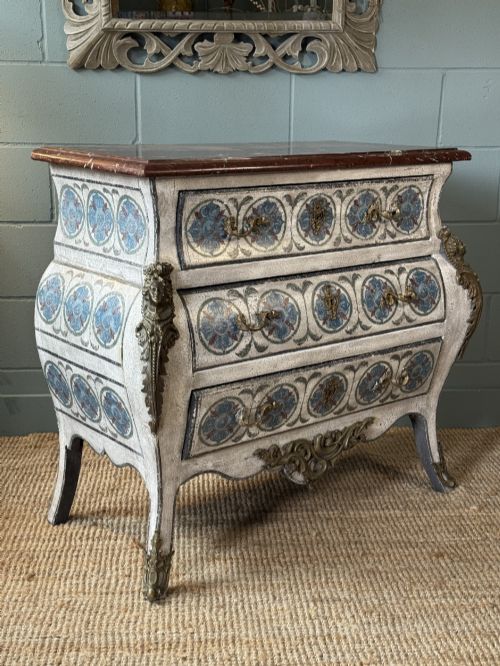
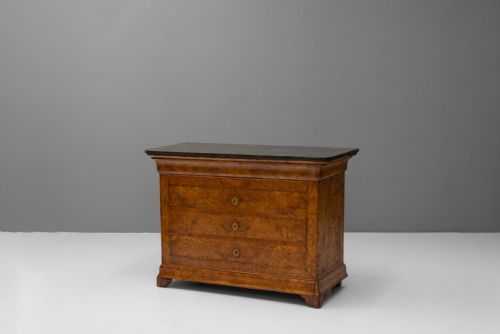


Grey Marble Commode
A grey marble commode brings substance and quiet elegance to a room, offering generous storage topped with cool, heavy stone.
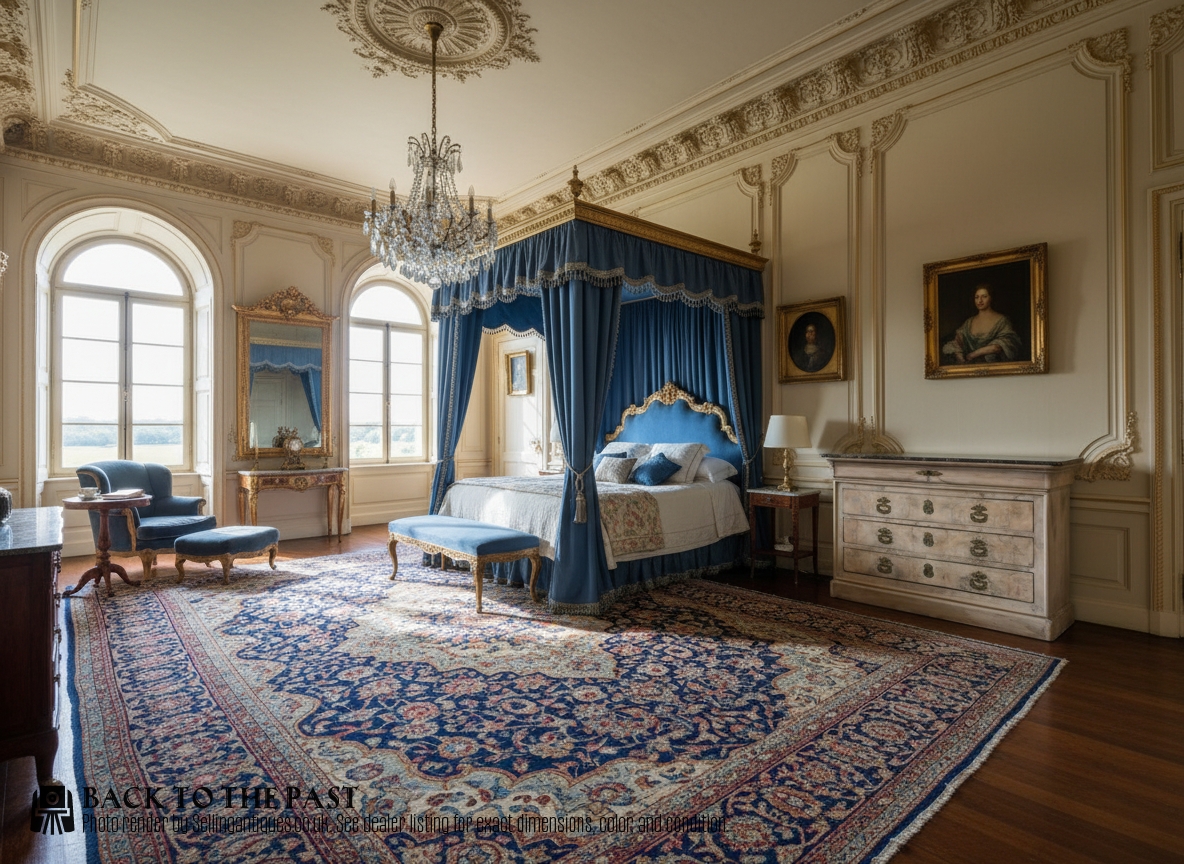
Grey Marble Commode
When you search for a grey marble commode, you encounter substantial European case furniture designed primarily for storage, frequently originating from French workshops across the eighteenth and nineteenth centuries. These pieces function as low chests of drawers, offering deep storage capacity combined with a durable stone surface that served practical purposes in bedrooms and salons.
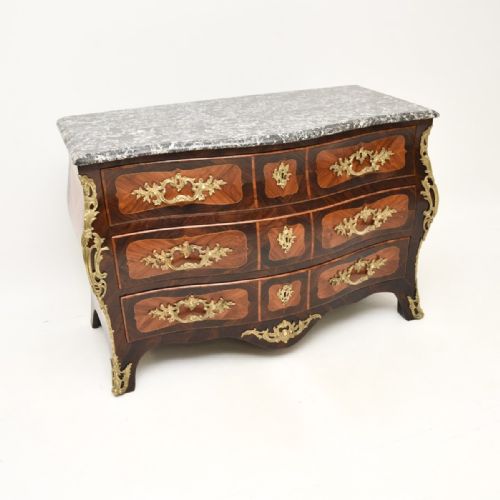
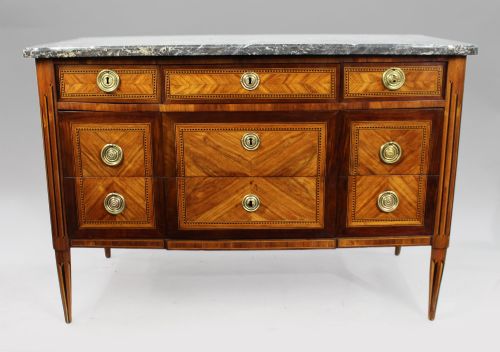
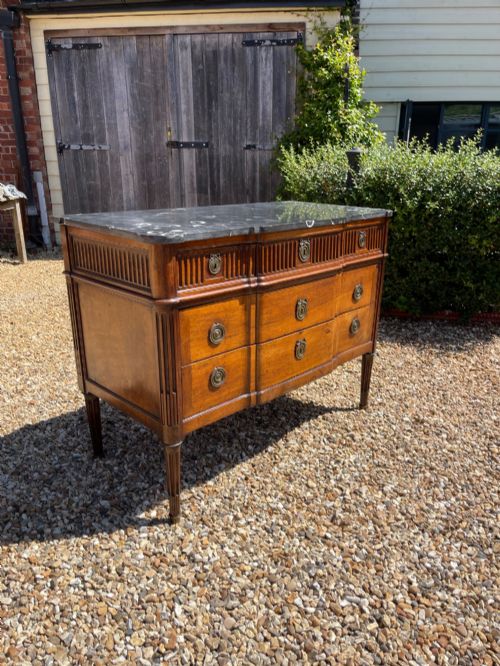
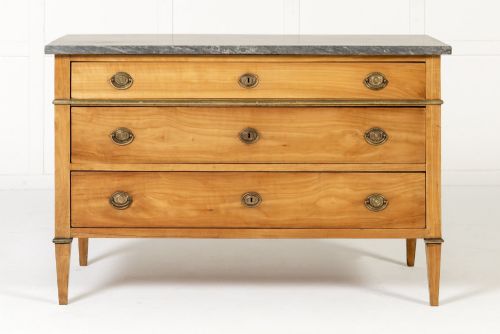
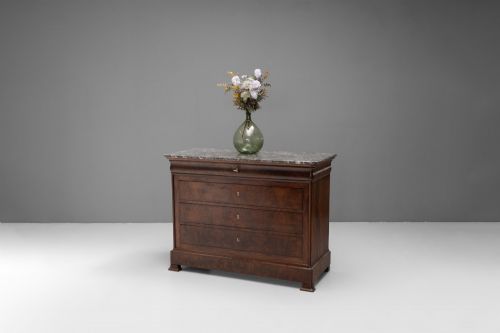
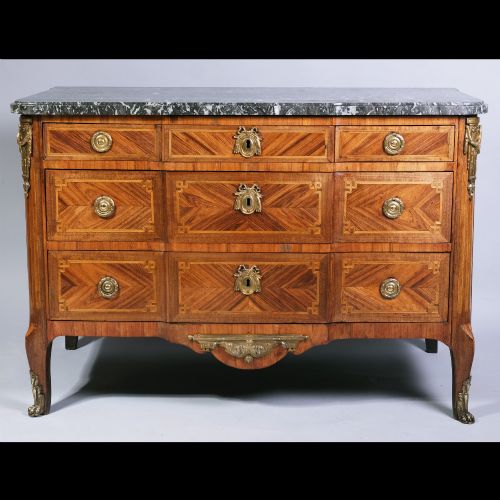
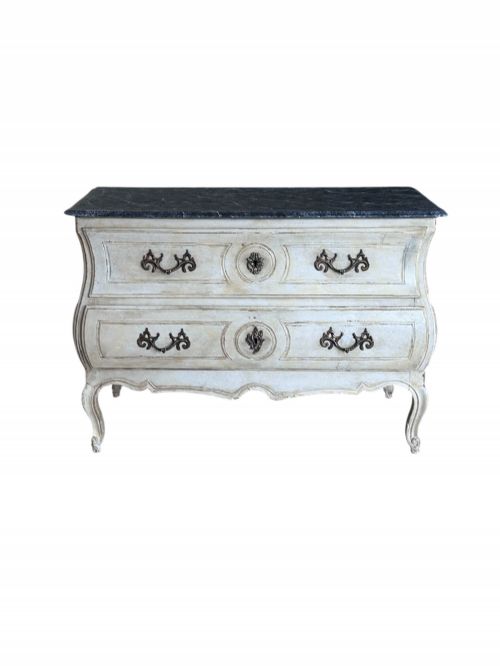
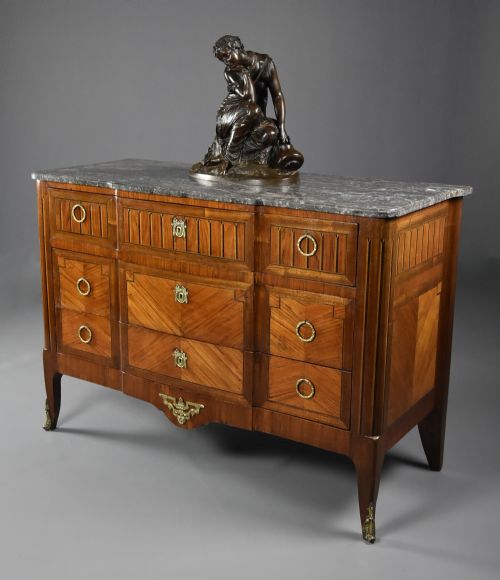
The specimens you meet on this page range from restrained Louis Philippe walnut and mahogany designs to ornate Louis XV bombe shapes and neoclassical Louis XVI parquetry pieces. Walnut, cherrywood, and mahogany form the carcasses, while the characteristic grey marble provides a solid, cooling contrast to the figured timber below.
Regional variations appear frequently, spanning French provincial items in painted wood or elm to grander Continental examples featuring intricate inlay. Alongside standard chests of drawers, the selection includes bedside cabinets and sideboards, uniting domestic utility with classical proportion.
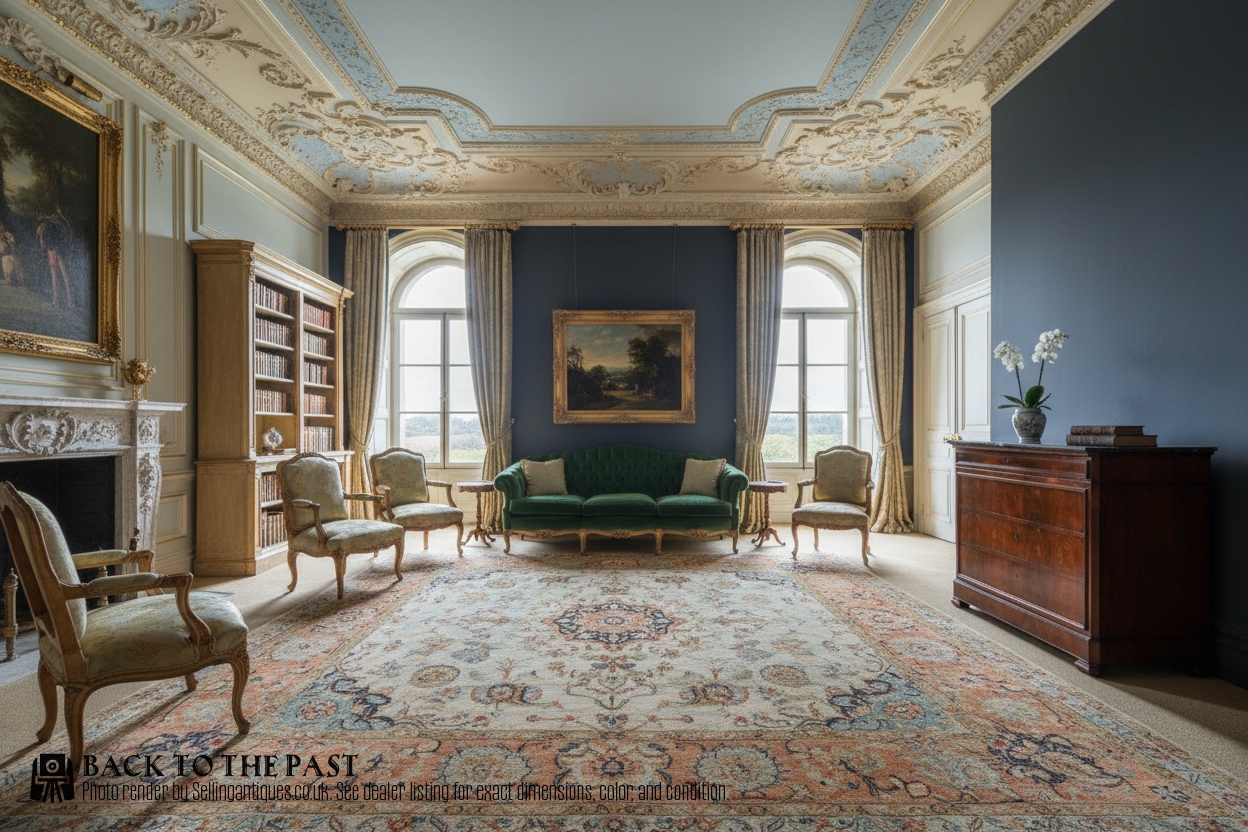
Materials and construction
Cabinetmakers constructed these frames using dense hardwoods like walnut, mahogany, and cherrywood, often over secondary woods, ensuring structural rigidity for heavy stone tops. Drawer boxes utilised traditional dovetail joints, while decorative surfaces employed fine veneers such as tulipwood or geometric parquetry patterns.
The defining feature rests heavily upon the top: thick slabs of grey marble, frequently shaped to follow the contour of the commode beneath, whether straight, bow fronted, or curved in bombe profiles. Mounts and handles cast in brass or ormolu complete the construction, secured to the timber frame to accent the architectural lines.
Grey Marble Commode Retail Price Guide 2026
Typical asking prices for grey marble commode among the pieces listed under this phrase on Sellingantiques today, from the lower quarter to the upper quarter. They describe what is for sale here now, not the wider market.
Listings feature grey marble commodes spanning the eighteenth to the twentieth centuries, built in walnut, mahogany, and cherrywood.
Evaluating craftsmanship
Quality reveals itself in the harmony between the timber carcase and the stone slab above, where superior examples feature marble custom-fitted to the exact profile of the commode. The selection of wood grain, particularly in figured walnut or flame mahogany, dictates the visual impact of the facade.
Refinement in carving and parquetry separates standard utility pieces from exceptional salon furniture. Crisp casting on brass or ormolu mounts and smooth drawer action without timber binding demonstrate superior workshop execution.
Jacques Bircklé
The Grey Marble Commode Glossary
- Commode
- A low chest of drawers, originating in France, designed to stand against a wall and provide both storage and a display surface. They often feature stone tops.
- Bombe
- A swollen or bulging serpentine shape characteristic of rococo case furniture, swelling outward from the feet toward the centre.
- Parquetry
- Geometric wood inlay work forming patterned surfaces on drawer fronts and tabletops using contrasting timbers.
- Ormolu
- Gilded bronze used for decorative mounts, handles, and escutcheons on fine furniture, particularly during the eighteenth and nineteenth centuries.
- Directoire
- A transitional French style bridging Louis XVI and Empire periods, defined by cleaner neoclassical lines and restrained ornament.
Grey Marble Commode: Frequently Asked Questions
How were these commodes used?
These pieces functioned mainly as bedroom or salon storage, holding linens, clothing, and personal items within deep drawers. The stone top provided a stable, waterproof surface for washing equipment, mirrors, or decorative objects.
Over time, their role shifted from utilitarian chamber furniture to focal points in formal reception rooms. Today, they continue to serve as practical storage units while displaying decorative lamps and ornaments on their marble tops.
How do I date a commode?
Dating relies on examining the structural timber, hardware, and stylistic details of the carcase. Eighteenth-century examples often feature hand-cut dovetails and regional timbers like cherrywood or solid walnut, while nineteenth-century pieces frequently display machine-sawn elements and exotic veneers.
Stylistic markers provide further clues, such as the curved swells of Louis XV or the straight tapered legs of Louis XVI and Directoire designs. Secondary woods inside the drawer construction also help determine the regional origin and approximate age.
Are the marble tops original?
Most surviving commodes retain their heavy stone tops, which were custom-cut to fit the specific contour of the timber base. The marble shows natural variation in grey tones, veining, and thickness appropriate to its period.
Inspect the seating of the stone against the wooden frame to understand its integration. Original tops sit flush and follow the exact moulding profile of the commode beneath.
How do I care for grey marble?
Grey marble requires gentle cleaning with mild, pH-neutral soap and warm water to protect the polished surface from etching. Acidic substances like citrus juice or wine should be wiped away immediately to prevent permanent staining on the porous stone.
Applying a specialist stone sealer periodically helps guard against moisture and everyday wear. Avoid harsh chemical cleaners or abrasive scouring pads that dull the natural polish.