
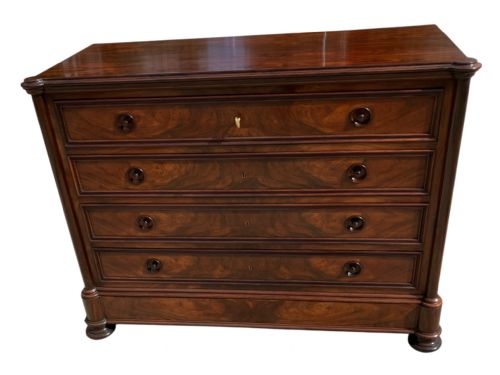
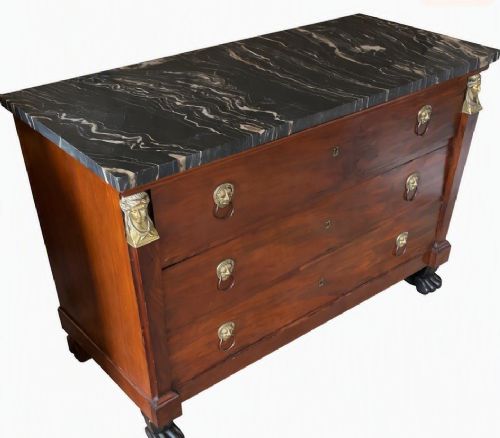
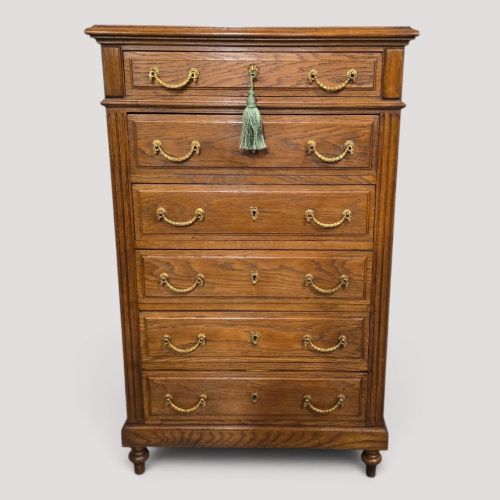
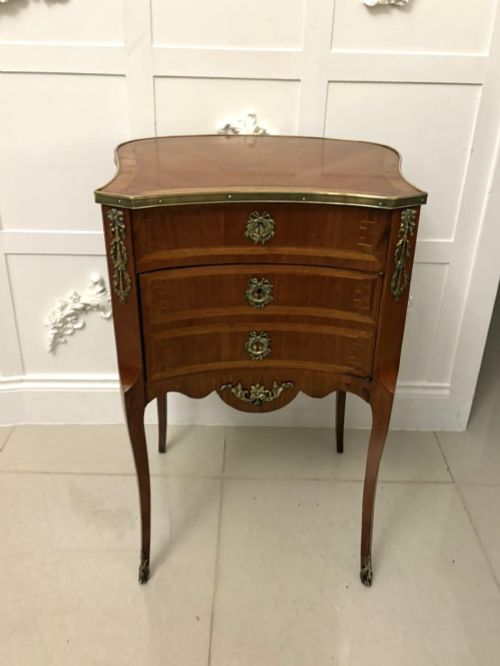

French Commode Drawers
When searching for french commode drawers, a buyer discovers low-slung timber storage built for elegance across centuries of European design.
French Commode Drawers
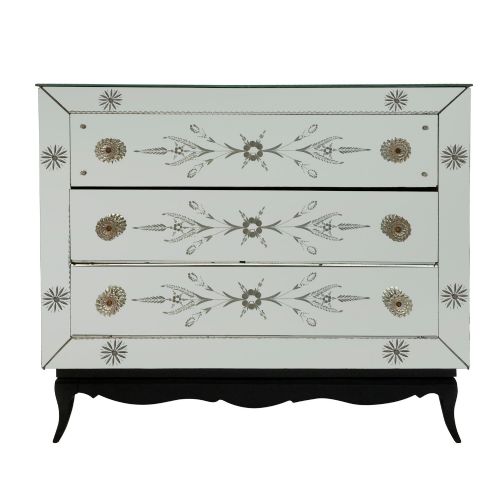
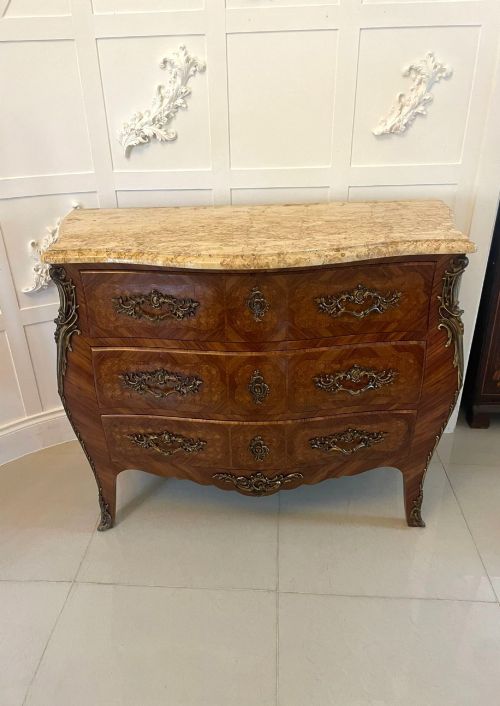
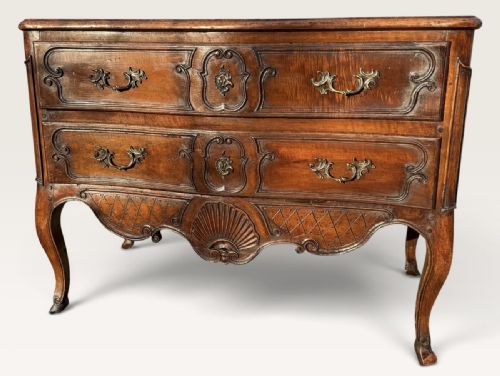
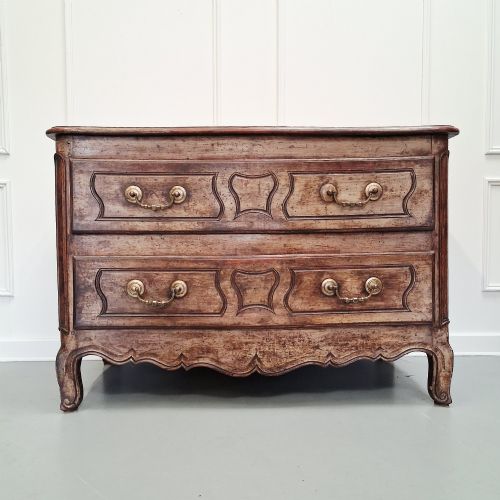
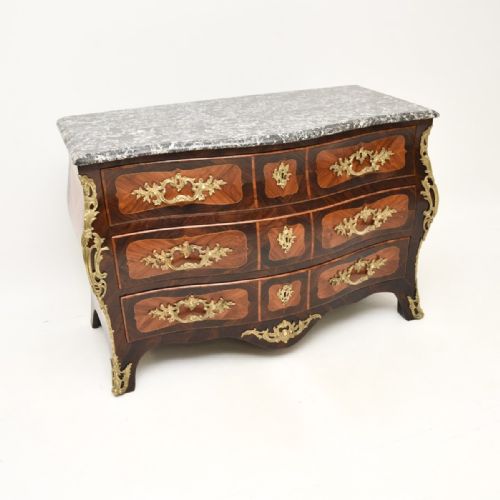
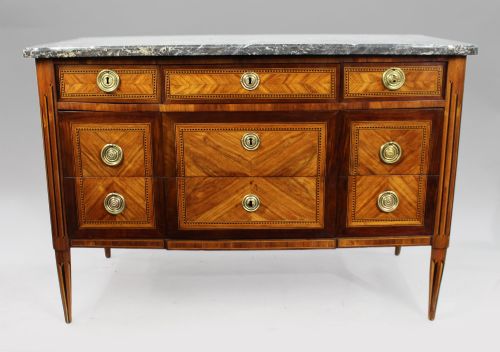
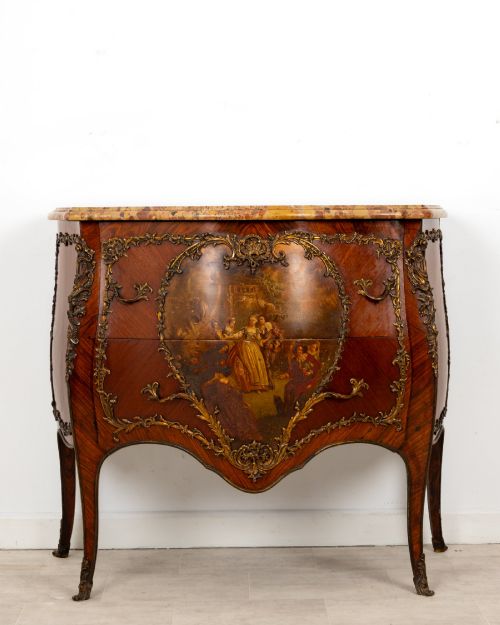
The inventory ranges from grand Louis XV and Louis XVI style marquetry cabinets with marble tops down to compact bedside lockers and painted provincial chests. Regional variations span from formal Parisian pieces to rustic French Provincial designs.
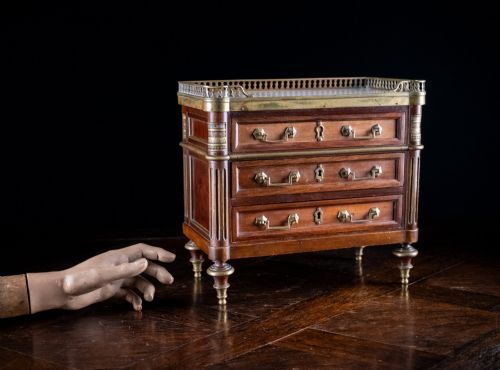
Object types include full-sized chests, miniature cabinets, and bedside tables, accommodating various domestic spaces while maintaining distinct continental proportions.
How they were made
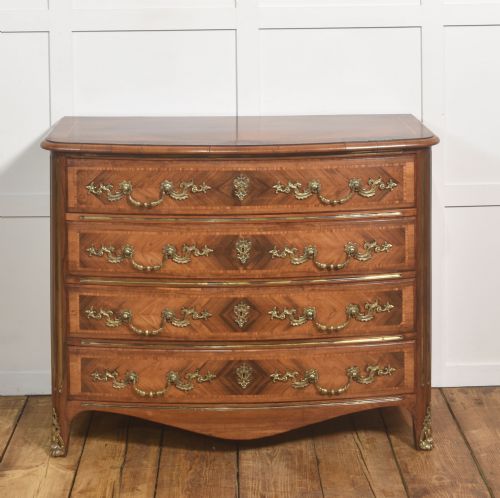
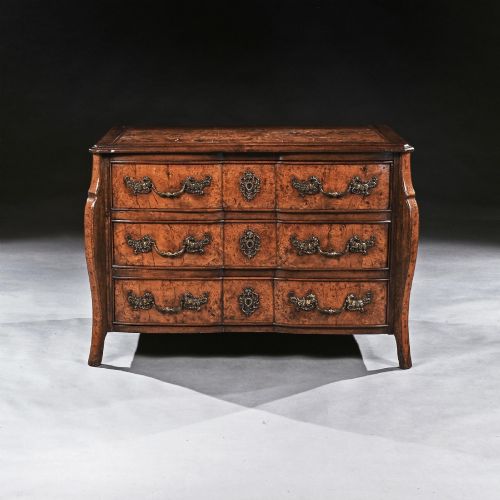
Cabinetmakers constructed carcass frames in oak, pine, or mahogany, applying decorativeveneers such as kingwood, walnut, and burr elm. Parquetry and marquetry patterns required precise hand-cutting of diverse timber species to form geometric or pictorial surface designs.
Mounts in ormolu and gilt bronze provide structural edge protection and ornamental contrast against the timber. Heavy marble slabs in shades of grey, white, and rouge sit atop many carcases, requiring skilled stonemasonry to match the serpentine contours of the wood.
Listings feature 18th-century, 19th-century, and 20th-century periods, utilising materials including marble, ormolu, kingwood, and mahogany.
What varies in quality
The refinement of the surface decoration sets apart the upper tier of pieces, seen in the intricacy of floral marquetry and the crispness of gilt-bronze mounts. Superior examples exhibit seamless timber matching across drawer fronts and harmonious integration between the marble top and the wooden frame beneath.
Construction methods reveal the hand of the maker through closely dovetailed drawer boxes and substantial framing timbers. Lesser pieces rely on simpler applied mouldings and standard veneers, whereas the finest items utilise figured mahogany, burr walnut, or carefully cut parquetry.
Jacques Bircklé
The French Commode Drawers Glossary
- Ormolu
- Gilt bronze mounted onto furniture as decorative handles, feet, and escutcheons. The technique involves applying a gold-mercury amalgam to cast bronze.
- Marquetry
- Inlaid wood veneers arranged in pictorial or decorative patterns. Artisans fit contrasting tinted woods together within the surface veneer.
- Bombe
- A swelling, outward-curved contour found on the front and sides of furniture. This curved form requires advanced timber-bending and shaping skills.
- Parquetry
- Geometric wood inlay forming patterns such as cubes or chevrons. It differs from marquetry by using strictly geometric tile arrangements.
French Commode Drawers: Frequently Asked Questions
What is a French commode?
A French commode is a low chest of drawers originating in France, traditionally designed for domestic storage in bedrooms and reception rooms. These pieces often feature decorative veneer work, marble tops, and cast metal mounts.
Unlike standard tall chests of drawers, commodes emphasise proportion and decorative presence, sitting lower to the ground with substantial surface area on top.
How do I identify a Louis XV style commode?
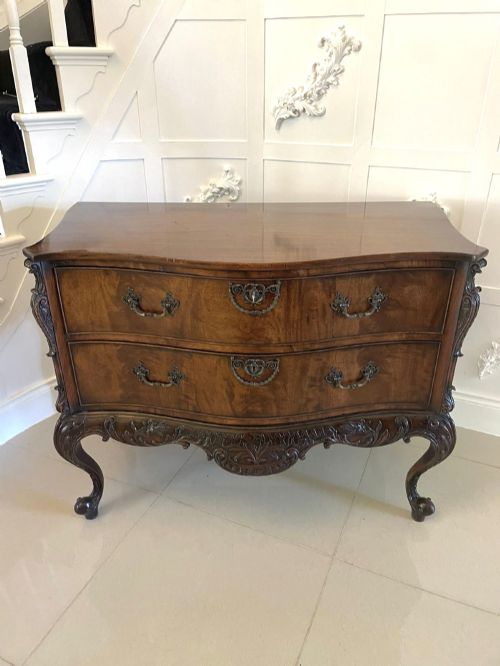
Louis XV style commodes display characteristic asymmetrical curves, cabriole legs, and flowing rococo ornamentation. Look for serpentine fronts and floral marquetry.
Many examples date to the 19th-century revival periods rather than the 18th century, employing similar techniques and woods like kingwood and walnut.
What woods were used in these commodes?
Cabinetmakers utilised a foundation of oak, pine, or mahogany, overlaid with decorative face veneers. Common woods include walnut, kingwood, cherrywood, and burr elm.
Exotic timbers and native European hardwoods were selected for their grain pattern and colour, often highlighted through French polishing or parquetry arrangements.