


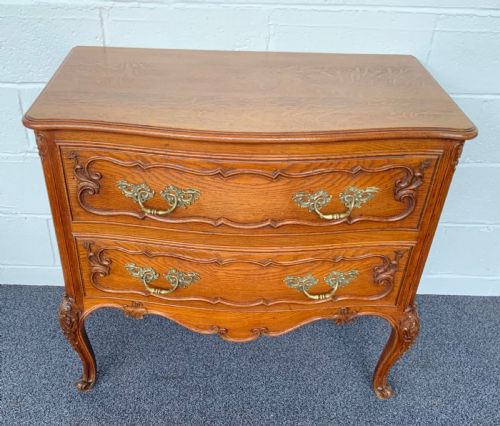


Serpentine Oak Chest
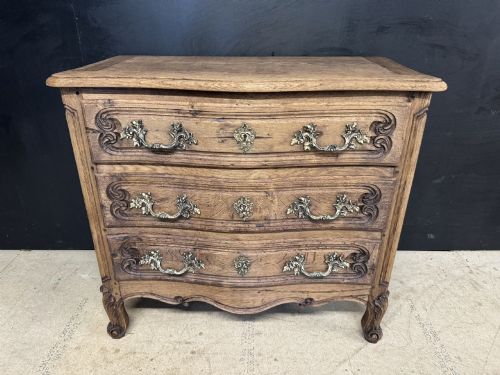
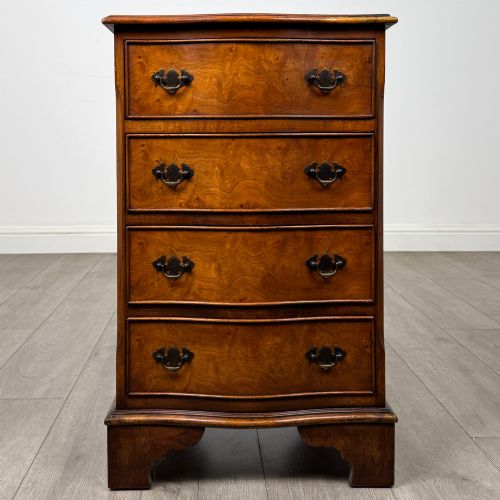
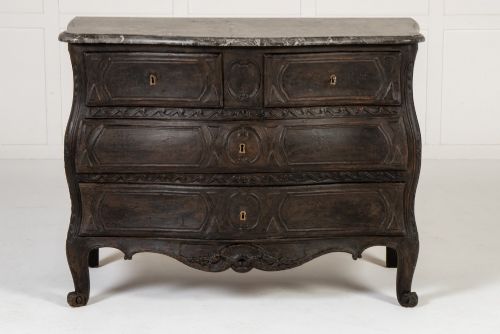
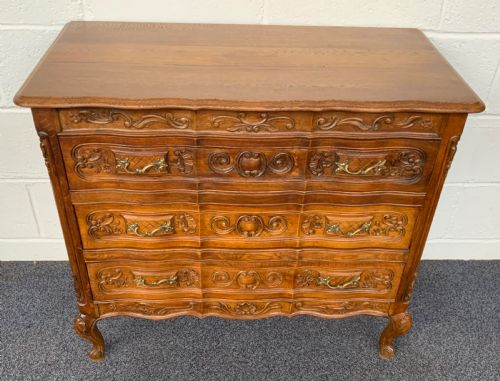
A serpentine oak chest brings flowing, undulating lines and robust timber grain together in a substantial storage piece.
Serpentine Oak Chest
A serpentine oak chest is a storage piece defined by its undulating, S-shaped front profile, combining the utility of drawers with sophisticated continental design. When you search for a serpentine oak chest, you encounter sturdy timber drawer units constructed across several centuries, primarily originating from French and Dutch workshops.
The versions most commonly met on this page span the eighteenth and nineteenth centuries, alongside twentieth-century interpretations, frequently rendered in solid oak or bleached oak. These items appear under various designations including commodes, French chests of drawers, and bombe forms, uniting practical storage with curved silhouettes.
Makers often introduced secondary timbers and decorative details such as walnut, fruitwood, marble, and brass hardware to complement the main oak structure. Pieces range from austere provincial items to elaborate creations featuring marquetry inlay and carved panels.
How they were made
Makers built these chests using solid oak and walnut, often employing secondary timbers like fruitwood for internal framing and drawer linings. Carved elements, marquetry inlay, and painted finishes decorated the exterior surfaces of the better examples.
The distinctive curved fronts required skilled timber shaping, where cabinetmakers joined and sculpted thick sections of wood to achieve the flowing lines. Brass hardware such as handles and escutcheons were fitted to complete the drawers.
Listings span from the mid-eighteenth century through the Victorian era up to 1920, predominantly featuring French and Dutch origins.
What varies in quality
The standard of timber selection and the precision of the curved drawer fronts set superior examples apart from simpler items. Robust construction of the internal carcass and drawers indicates a higher grade of cabinetmaking.
Refined surface treatments, such as detailed carving, marquetry inlay, or sympathetic bleaching, elevate the visual appeal of the chest. The integration of quality brass fittings and supplementary materials like marble tops also distinguishes the finer pieces.
The Serpentine Oak Chest Glossary
- Serpentine
- A front profile shaped with a convex centre flanked by concave curves, creating an S-curve. This silhouette requires considerable skill from the cabinetmaker to execute cleanly in solid timber.
- Bombe
- A heavily curved or bulging chest design where the sides and front swell outward. This form is frequently seen in continental pieces from the eighteenth and nineteenth centuries.
- Commode
- A low chest of drawers or cabinet originating in France. The term often describes decorative serpentine and bombe drawer units.
- Marquetry
- Decorative veneer work forming pictures or geometric patterns using various coloured woods. It is often applied to drawer fronts and top panels to enhance visual richness.
- Bleached oak
- Oak timber treated to lighten its natural colour. This finish appears on several continental pieces listed on the page.
Serpentine Oak Chest: Frequently Asked Questions
Where were these chests made?
The pieces originate primarily from French and Dutch workshops, with examples also hailing from Austrian regions. Provincial and urban makers alike produced these curved designs across various centuries.
Continental styling heavily influences the selection, ranging from French provincial forms to elaborate Dutch baroque and rococo revivals.
How do I care for an oak chest?
Keep the timber away from direct heat sources and drastic humidity changes to prevent wood movement and splitting. Regular dusting with a dry cloth maintains the finish without needing heavy polishes.
Wax can be applied sparingly to nourish the solid oak surfaces when they appear dry. Avoid harsh chemical cleaners that might strip historical finishes.
What is the difference between a commode and a chest of drawers?
A commode is traditionally a continental term for a low chest of drawers, often featuring decorative curved fronts and luxurious mounts. British pieces are more commonly referred to simply as chests of drawers.
In the context of these listings, commodes typically exhibit French or Dutch styling with pronounced serpentine or bombe shapes.
How do I date an antique oak chest?
Dating relies on examining construction techniques, timber species, hardware, and stylistic traits associated with specific periods like the eighteenth or nineteenth century. Hand-cut dovetails, tool marks, and the type of secondary wood used inside the drawers provide reliable clues.
Stylistic shifts, such as the transition from austere provincial forms to elaborate rococo carvings, also help narrow down the era of manufacture.