
Louis XV Chest of Drawers
When you search for a louis xv chest of drawers, you step into a world of sinuous curves, rich veneers and classical French cabinet-making.
Louis XV Chest of Drawers
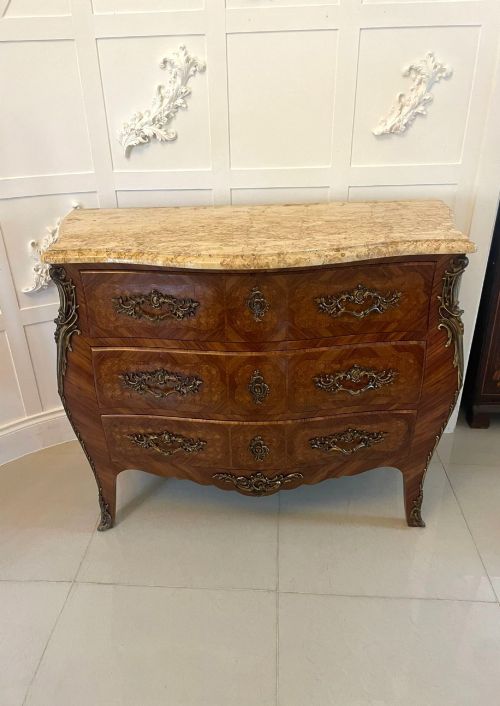
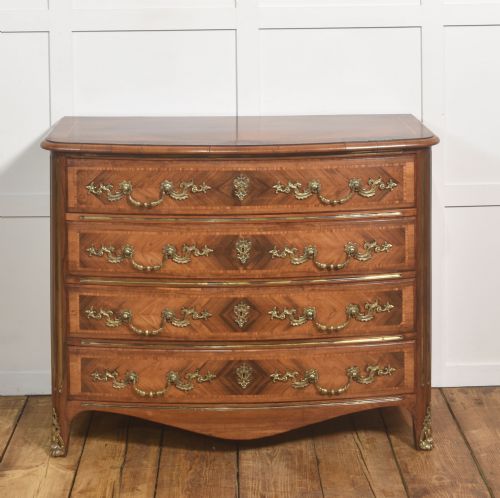
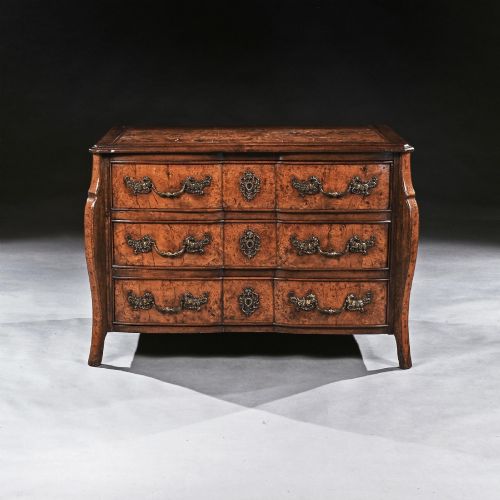
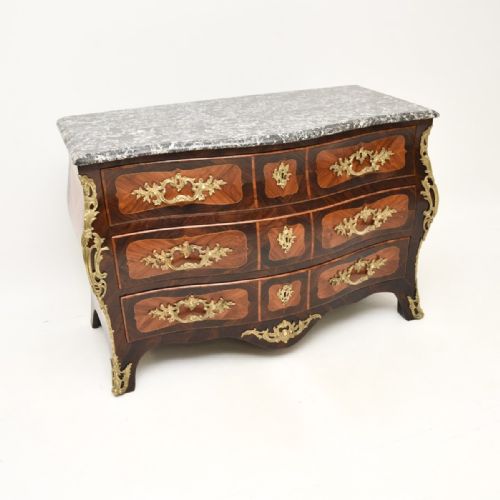
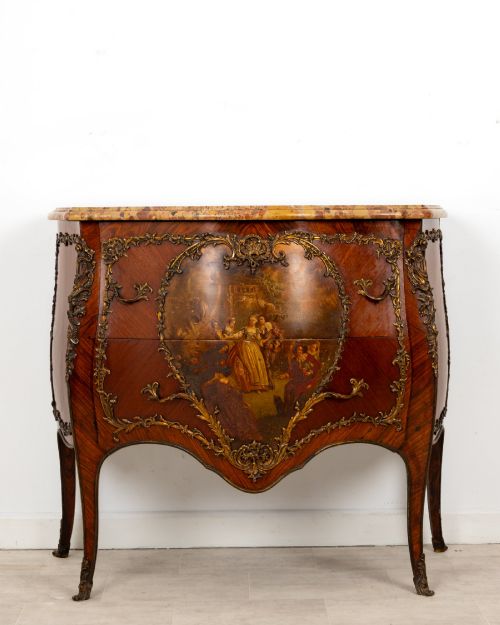
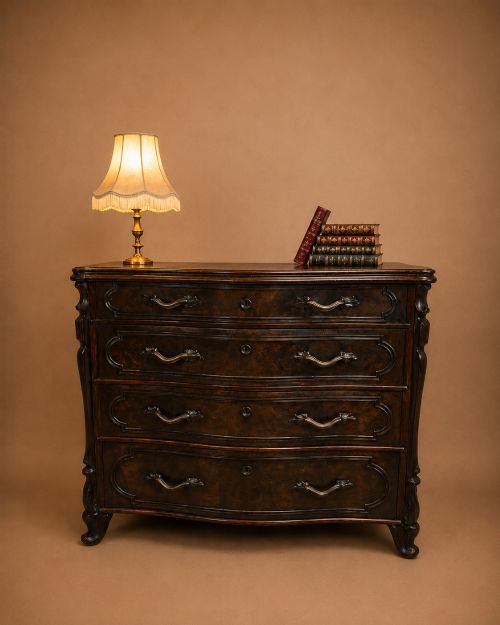
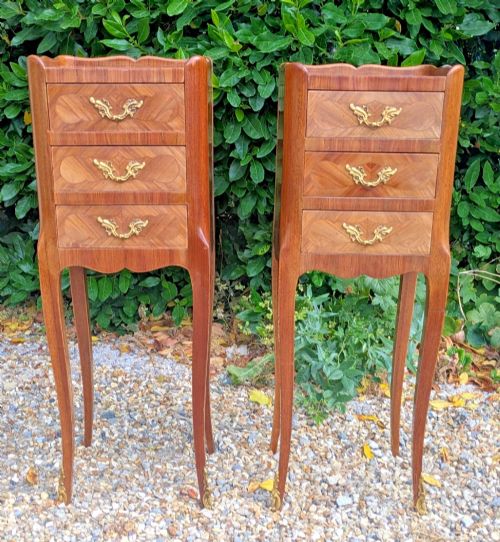
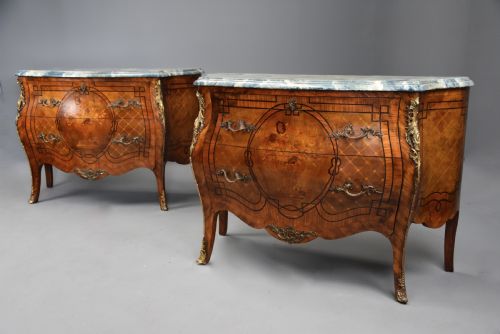
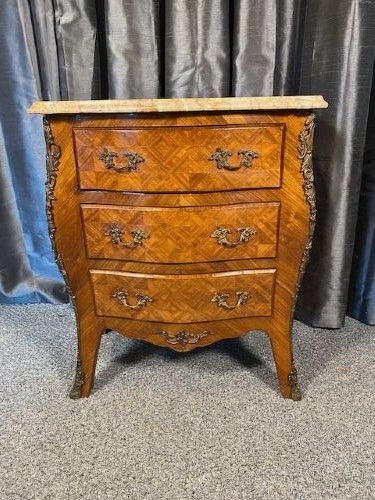
A louis xv chest of drawers, frequently designated as a commode, presents a distinctive serpentine or bombe silhouette shaped by flowing, asymmetric lines. Buyers examining this category encounter authentic eighteenth-century examples alongside later revival pieces produced during the nineteenth and twentieth centuries.
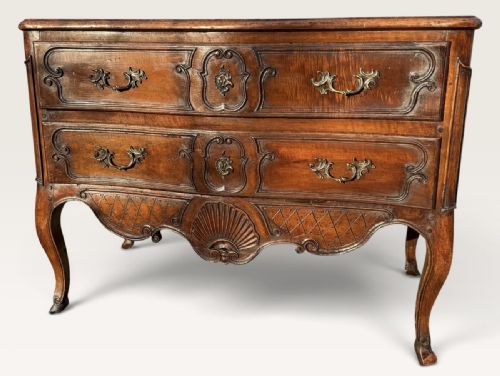
Originating predominantly from French workshops, these chests reflect the stylistic shifts from ornate rococo designs to provincial interpretations. Most pieces on offer represent either period originals or revival works that emulate the distinctive proportions of the mid-eighteenth century.
How they were made
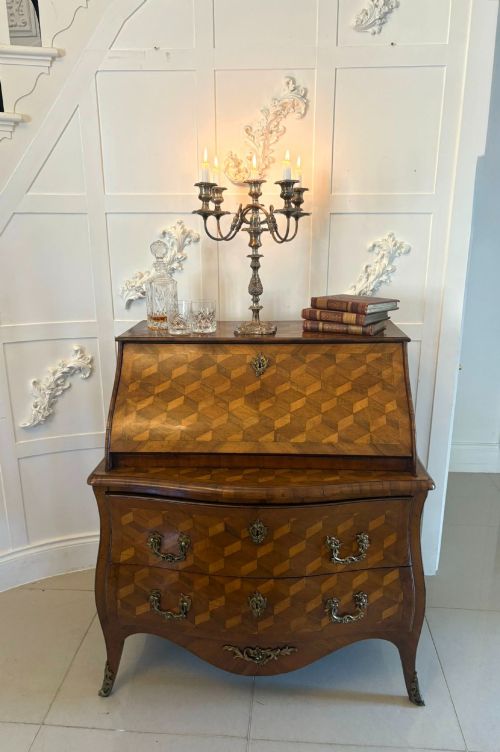
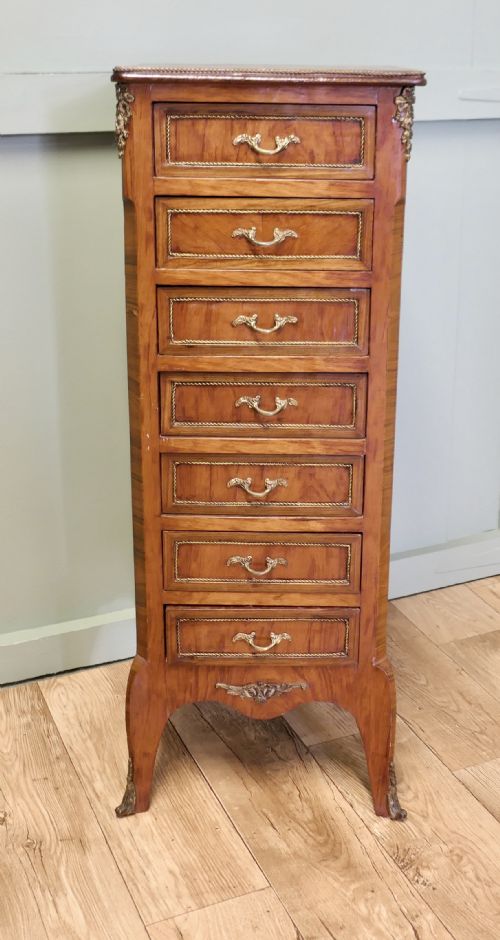
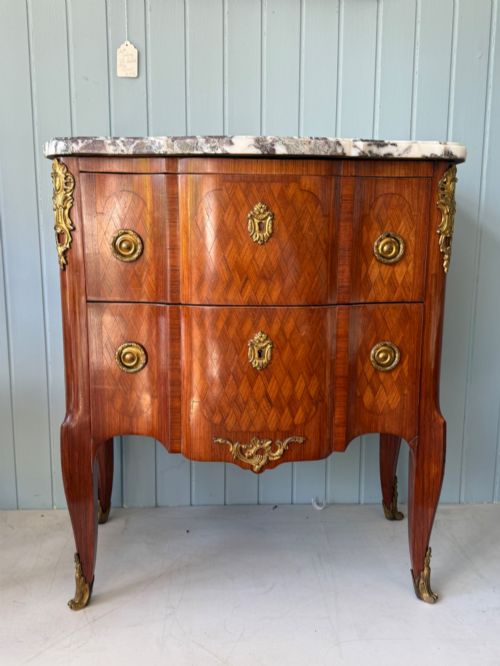
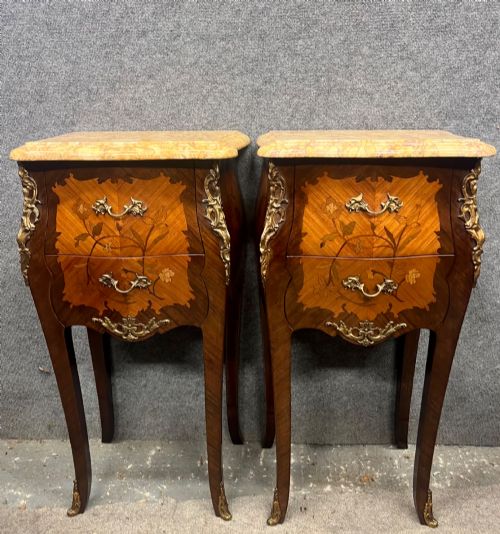
Cabinet-makers constructed carcass frames from solid woods such as oak or walnut, applying complex decorative veneers including kingwood, burr elm, and mahogany across the exterior surfaces. Marquetry and parquetry techniques introduced intricate geometric or floral patterns utilising contrasting timber grains.
Metal mounts cast in brass, bronze, or gilt-bronze adorned the corners, handles, and aprons, accentuating the undulating contours of the drawers. Marble tops, selected for their colour and veining, were precision-cut to follow the exact serpentine sweep of the wooden structure below.
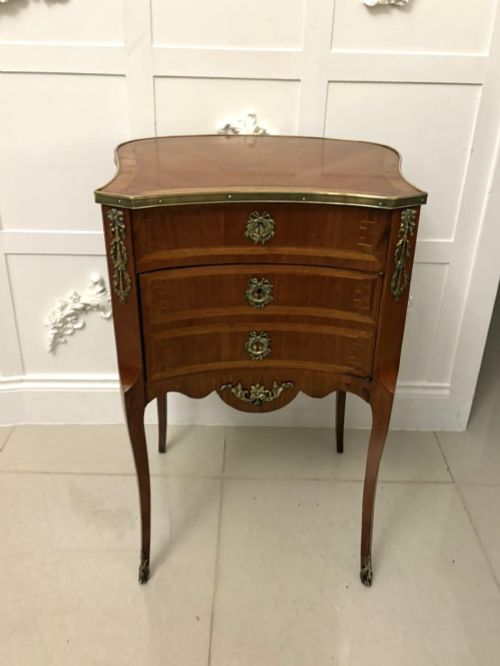
Several compact bedside chests arrive with proportions so neat they appear ready to tiptoe across the floor.
What varies in quality
The standard of execution depends heavily on the precision of the veneer work and the fluidity of the carved or shaped carcass. Superior examples display seamless alignment in complex parquetry panels and hand-chased metal mounts that integrate harmoniously with the timber.
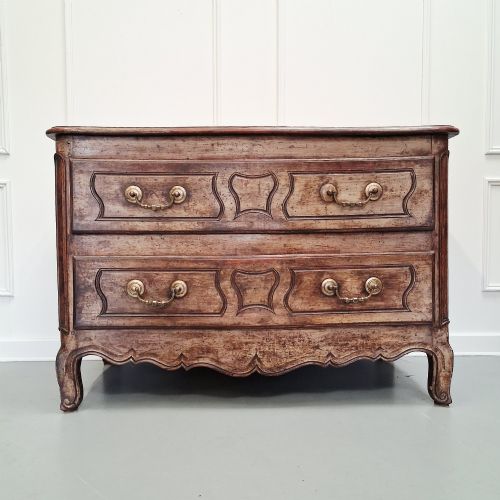
Provincial pieces often exhibit simpler construction methods and local timbers, contrasting with Parisian workshop productions that employed exotic woods and sophisticated locking mechanisms. The integration of the marble top and the crispness of the secondary wood drawer linings further distinguish baseline examples from masterworks.
Jacques Bircklé·TORREZ
The Louis XV Chest of Drawers Glossary
- Commode
- A low chest of drawers or cabinet developed in France during the seventeenth century. The term applies broadly to decorative drawer units designed for principal chambers.
- Bombe
- A swelling, outward-curved commode profile that bulges on the front and sides. This exuberant contour defines much of the rococo aesthetic.
- Marquetry
- The art of applying small pieces of veneer to a structure to form decorative patterns or pictorial scenes. Craftsmen utilised various coloured woods to achieve tonal depth.
- Ormolu
- Gilt-bronze decorative mountings applied to furniture surfaces. The technique involves treating brass or bronze with a finely ground gold-mercury amalgam.
- Serpentine
- A line or surface that curves alternately inward and outward. This undulating shape prevents visual rigidity in case furniture.
- Parquetry
- Geometric mosaic woodwork used for flooring and furniture decoration. Artisans arranged small wood blocks to create repeating angular motifs.
Louis XV Chest of Drawers: Frequently Asked Questions
Where did people put a commode?
Historically, these chests served in principal bedchambers and reception rooms to store clothing and linens. Their decorative presence made them suitable for prominent placement against panelled walls.
Today, collectors utilise them similarly in bedrooms, hallways, or living spaces as focal furniture items that provide functional surface area.
How do I distinguish eighteenth-century pieces?
Examination of the internal construction, hand-cut dovetails, and secondary woods offers primary clues to age. Tool marks and timber shrinkage patterns reflect historical workshop practices.
Stylistic subtleties, such as the naturalistic flow of rococo mounts and the oxidation of old veneers, also help separate period originals from later revivals.
Are marble tops original?
Many commodes retain their original shaped marble slabs, which were quarried to fit the exact contours of the individual carcass. Replacement marble sometimes appears on pieces that suffered heavy use.
Matching the thickness, edge profile, and stone type to the era of the cabinet helps determine whether the top belongs to the original build.
How should I clean veneer?
Maintenance requires gentle dusting with a soft, dry cloth to prevent abrasive particles from scratching the polished surface. Liquid cleaners and excessive moisture risk damaging fragile historical finishes.
Occasional application of appropriate wax feeds the timber and preserves the natural lustre of the underlying wood grain.