


Brown Elm Chest of Drawers
These brown elm chest of drawers examples combine domestic utility with striking grain patterns, offering characterful storage that grounds a room.
Brown Elm Chest of Drawers
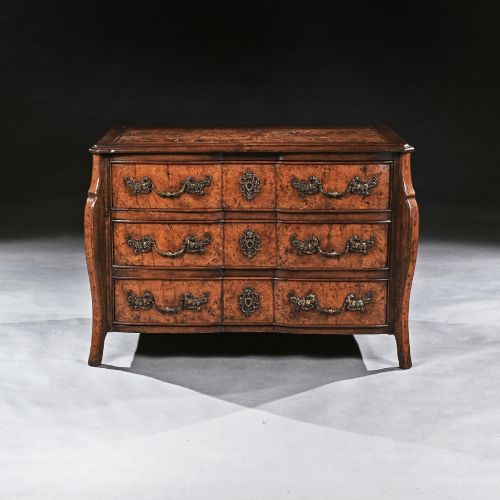
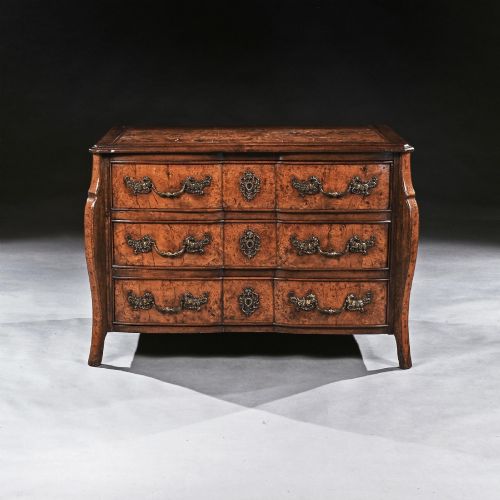
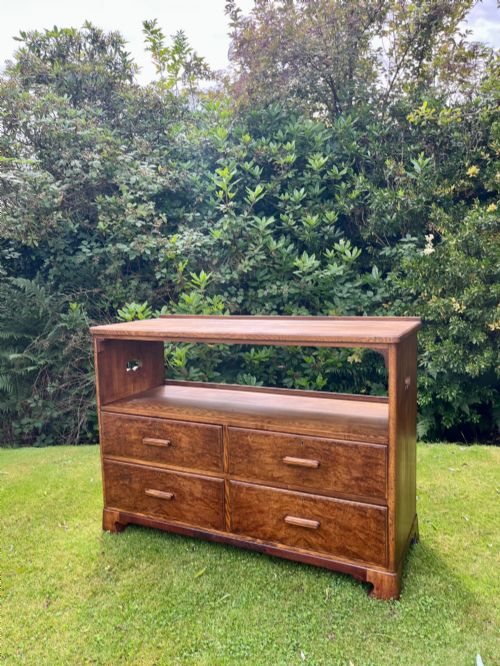
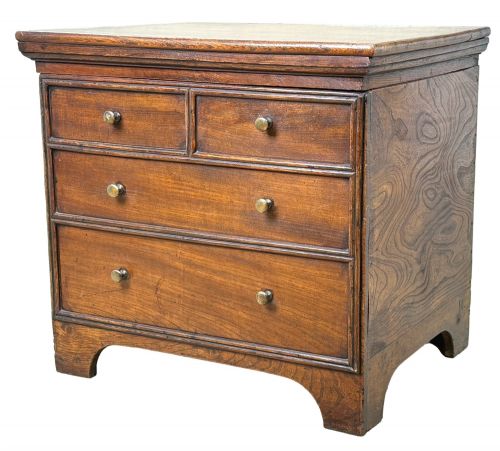
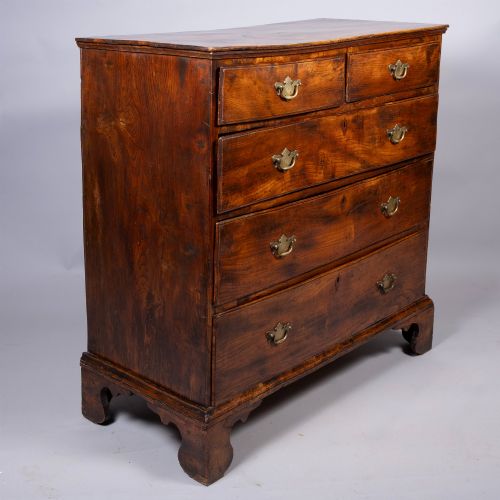
A brown elm chest of drawers provides robust storage using a native timber known for its twisting grain and rich warm colour. These pieces range from simple country furniture to more elaborate continental commodes and regional variations.
Georgian and eighteenth-century items sit alongside later nineteenth-century pieces and twentieth-century interpretations, showing how makers adapted the timber over generations. Regional styles including Dutch baroque and Louis XV provincial appear alongside Asian tansu chests.
Materials and construction methods
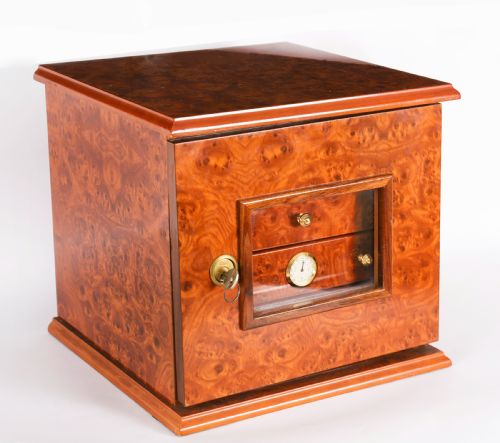
Elm timber forms the primary structure of these chests, selected for its tough interlocking fibres which resist splitting. Cabinet makers often utilised burr elm veneers on drawer fronts to create intricate patterning and visual depth.
Secondary woods such as oak appear in internal drawer linings and framing, providing structural stability. Brass and iron hardware, including drop handles and escutcheons, complete the construction of the period pieces.
Listings feature elm furniture alongside related regional forms including Chinese tansu chests and Dutch baroque commodes.
Assessing quality in elm furniture
Quality rests heavily on the selection and matching of the timber grain, particularly where burr elm veneers create symmetrical patterns across drawer fronts. Superior examples display careful timber preparation that restrains the natural tendency of elm to warp.
The integrity of the original hardware, dovetailed drawer construction, and surface patination distinguish finer pieces from simpler utilitarian objects. Subtle details like shaped drawer fronts and moulded cornices elevate the craftsmanship of provincial and regional items.
Whytock and Reid
The Brown Elm Chest of Drawers Glossary
- Commode
- A low chest of drawers or cabinet originating in France, often featuring decorative mounts or shaped fronts. The term frequently applies to eighteenth-century continental pieces.
- Mule chest
- A traditional storage chest featuring one or more drawers at the base beneath a hinged lid compartment. These hybrid pieces bridge the transition between standard chests and drawer units.
- Patina
- The surface sheen and mellowing developed by wood over centuries of handling and exposure to light. This quality indicates age and authenticity in antique furniture.
- Dovetail
- A traditional interlocking joint used to secure drawer corners together securely without metal fasteners. Hand-cut variations help indicate the period and skill of the maker.
Brown Elm Chest of Drawers: Frequently Asked Questions
How do I care for antique elm furniture?
Keep elm furniture away from direct heat sources and dramatic humidity changes to prevent the timber from splitting or warping. Apply a traditional beeswax polish occasionally to nourish the wood and maintain its natural lustre.
Avoid synthetic sprays or silicone-based products, which can build up on the surface and dull the antique finish. Gentle dusting with a soft, dry cloth is sufficient for routine maintenance.
Why does elm wood warp?
Elm possesses a notoriously interlocking grain structure that creates internal tension within the plank as moisture levels change. This characteristic makes the timber prone to movement if exposed to unstable environments.
Master cabinet makers understood this behaviour and employed specific joinery techniques to restrain the wood while allowing for natural expansion and contraction over time.
How can I tell an 18th-century elm chest from a later copy?
Examine the internal construction methods, including the hand-cut dovetails on the drawers and the tooling marks left by traditional saws and planes. Older pieces often show timber shrinkage and shrinkage cracks consistent with centuries of age.
Look closely at the secondary woods used inside the carcass and drawer linings, as these should match the regional practices of the stated period rather than modern manufacturing standards.
What is burr elm?
Burr elm comes from a woody outgrowth on the tree trunk where bud growth has become clustered and distorted. This anomaly creates a dense mosaic of tiny knots and swirls across the timber face.
Because of its striking appearance and difficult working properties, craftsmen typically sliced it into thin veneers to ornament the most prominent parts of high-status furniture.