
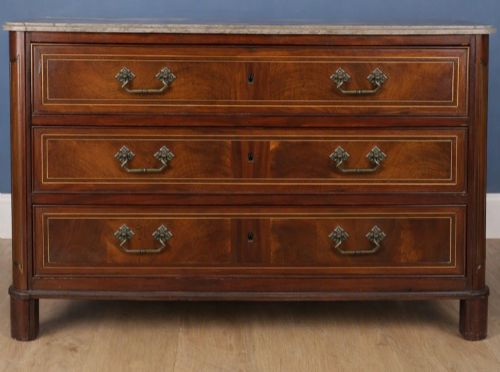
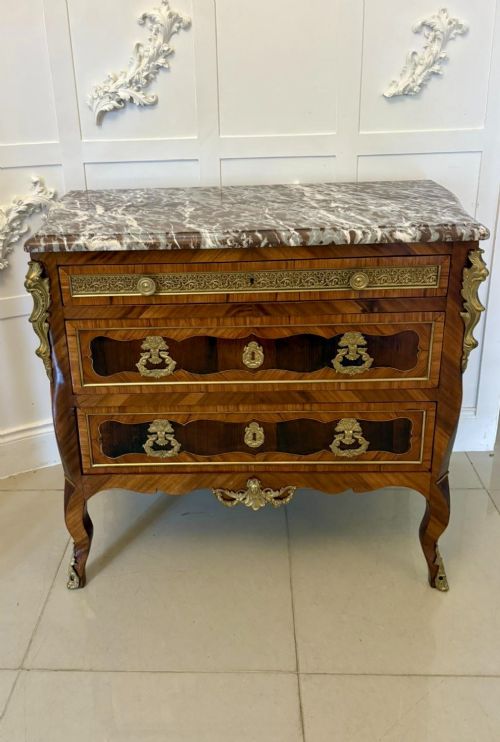
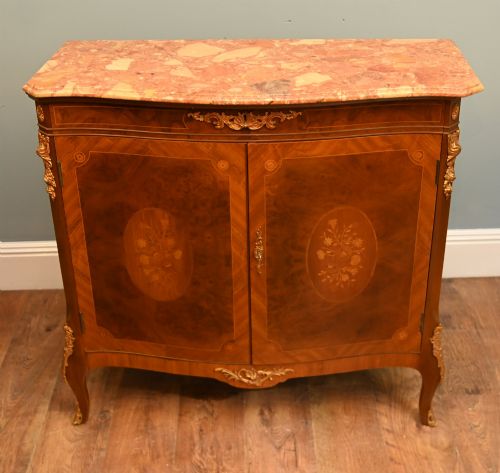
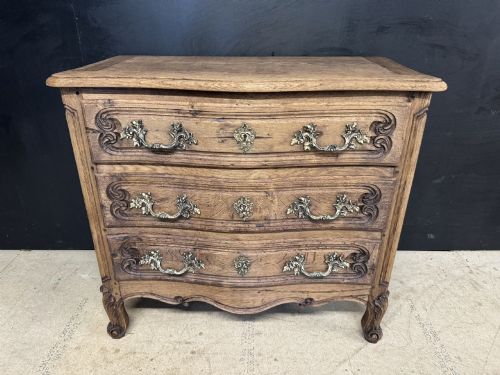
French Commodes
French commodes are substantial decorative storage chests combining timber carcasses with marble tops and metal mounts, prized for domestic utility and formal presence.
French Commodes
When buyers search for french commodes, they encounter low storage furniture originating from continental workshops across several centuries. These pieces function primarily as bedroom or salon chests of drawers and side cabinets.
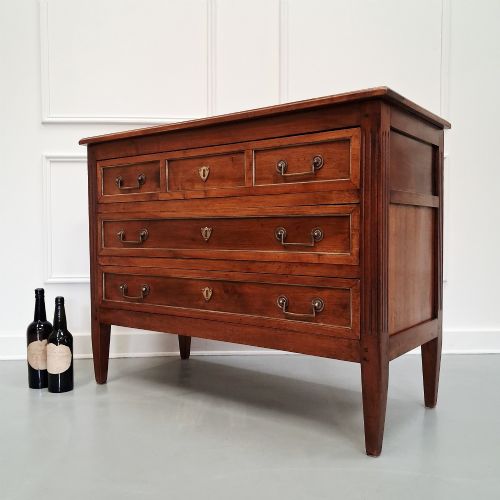
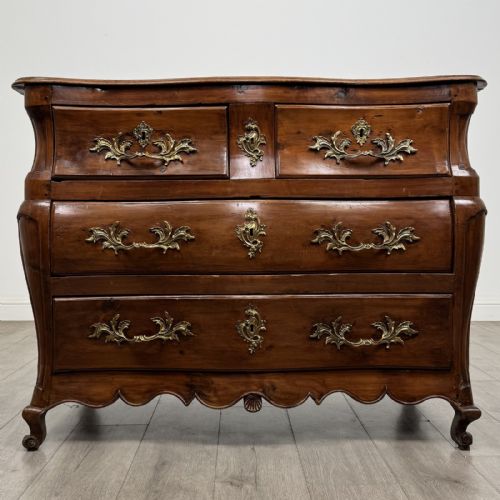
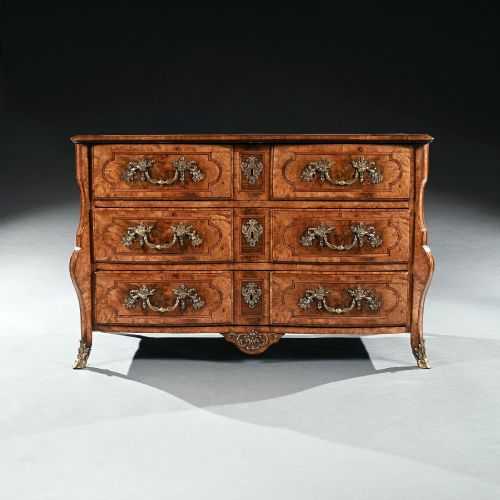
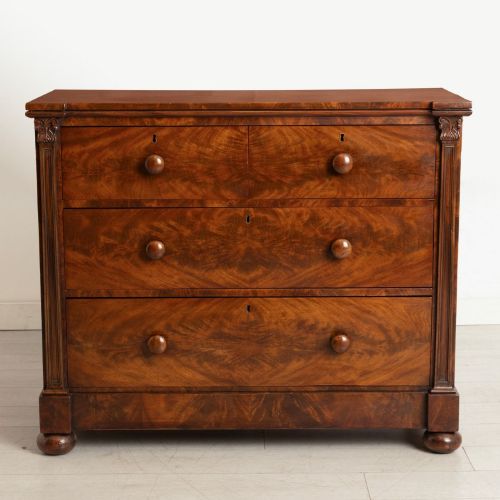
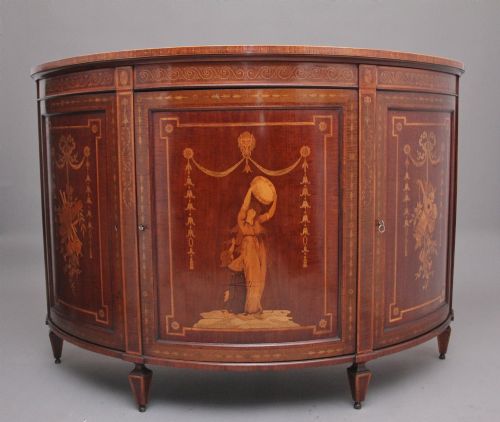
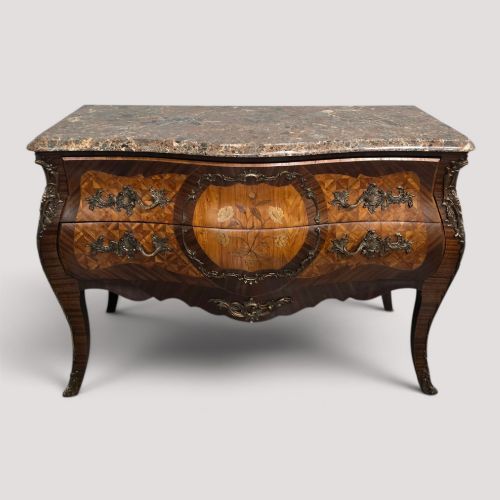
The selection ranges from early provincial elm and walnut examples to ornate revived styles in kingwood, mahogany, and rosewood. Formats include serpentine shapes, bombe silhouettes, and standard rectilinear chests.
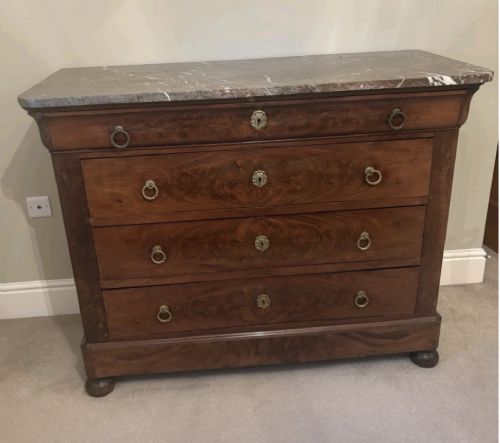
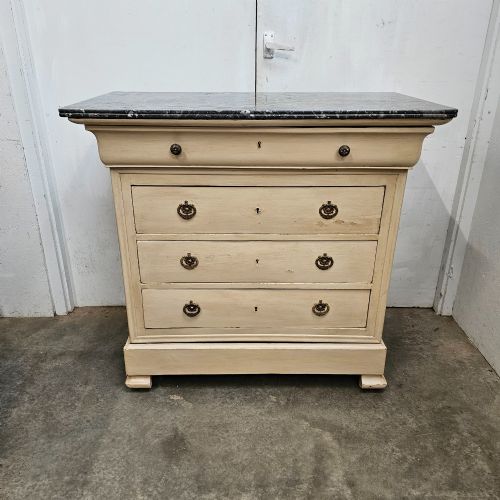
Dated works stretch from the eighteenth century through nineteenth-century revivals into twentieth-century interpretations. Marble tops appear frequently across these variations, paired with brass or gilt bronze hardware.
Construction and materials
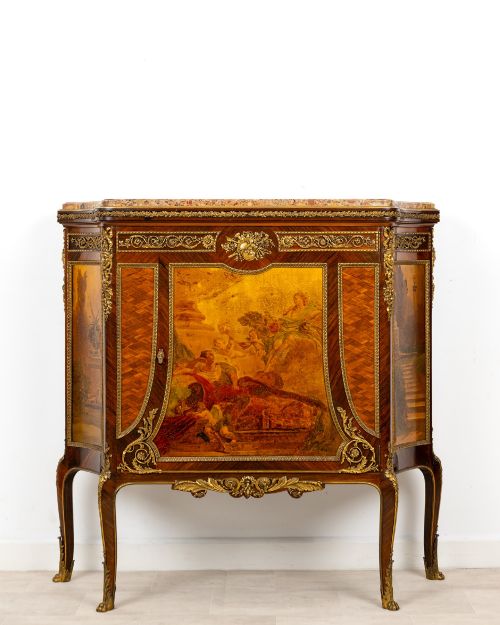
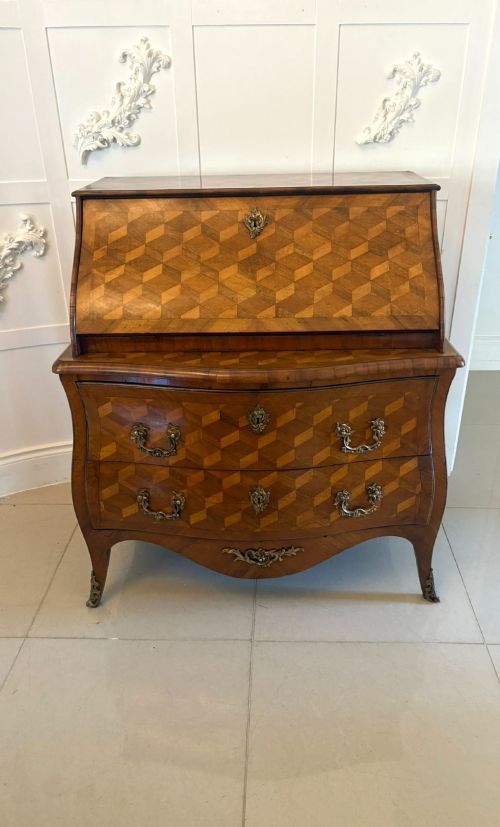
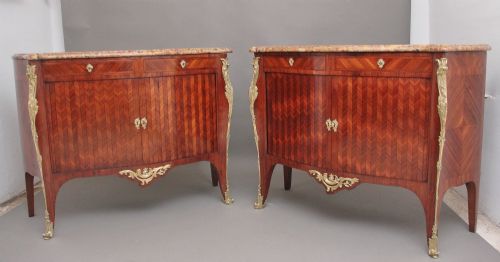
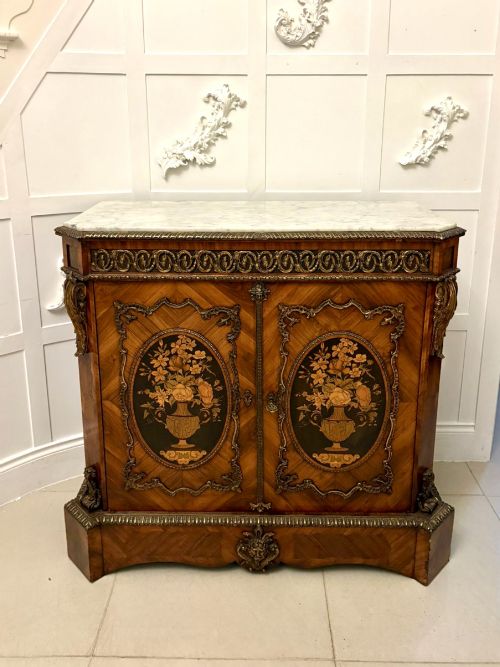
Cabinetmakers constructed the underlying carcass using native hardwoods such as oak, walnut, or fruitwood, then applied decorative veneers including kingwood, mahogany, and burr maple. Marquetry and parquetry patterns created geometric or floral surface designs across the drawer fronts and sides.
Heavy slabs of marble formed the top surface of many examples, resting directly upon the wooden framing. Metal elements such as brass and ormolu provided keyhole escutcheons, drawer pulls, and corner mounts.
Some provincial makers incorporated secret drawers hidden behind carved moulding friezes to store family currency.
Judging execution and finish
Quality rests upon the precision of the veneer work and the integration of secondary timbers within the drawers. Finer items display continuous grain alignment and intricate parquetry without gaps in the timber inlay.
The weight and detail of the cast ormolu mounts differentiate workshop tiers. Hand-chased bronze mounts demonstrate sharper definition than standard brass pressings found on commercial iterations.
Thomas Hache of Grenoble·Jacques Birckle·Epstein
The French Commodes Glossary
- Bombe
- A swelling, outward-curved contour found on the front and sides of certain eighteenth-century and revived chests. This bulging profile requires skilled veneer shaping.
- Marquetry
- The art of applying decorative veneer pieces to a structure to form picture designs. Craftsmen utilised various coloured woods to achieve tonal depth.
- Ormolu
- Gilt bronze hardware applied to furniture for decorative enrichment. The process involves coating bronze mounts with finely ground gold amalgam.
- Parquetry
- Geometric wood inlay patterns forming checkerboard or mosaic designs across drawer fronts and tops. It demonstrates precise carpentry joining techniques.
- Serpentine
- A wave-like curved outline featuring a convex centre flanked by concave ends. This contour appears frequently on eighteenth and nineteenth-century commode facades.
French Commodes: Frequently Asked Questions
How do I identify a period French commode?
Examination of construction methods, timber species, and mount techniques reveals the period of manufacture. Eighteenth-century pieces utilise hand-cut dovetails and native secondary woods suited to their region.
Revival pieces from the nineteenth and twentieth centuries often employ machine-assisted joints or standardised hardware behind superficial stylistic details.
What timber types appear on these chests?
Cabinetmakers utilised walnut, oak, and fruitwood for structural carcasses and provincial designs. Exotic timbers like kingwood, mahogany, and rosewood served as decorative surface veneers.
Burr maple and elm provided highly figured grain patterns utilised in specific regional workshops.
Are marble tops original to these cabinets?
Many commodes feature heavy marble slabs designed to protect the timber surface and provide a stable display area. These tops range from plain white stone to veined rouge marble.
Replacements occur frequently due to accidental breakage over centuries of domestic use.
How should I care for a veneered commode?
Maintain stable relative humidity levels within the room to prevent timber shrinkage and veneer lifting. Direct sunlight causes fading in sensitive woods like mahogany and kingwood.
Apply microcrystalline wax sparingly to nourish the polished surface without building up residue.