

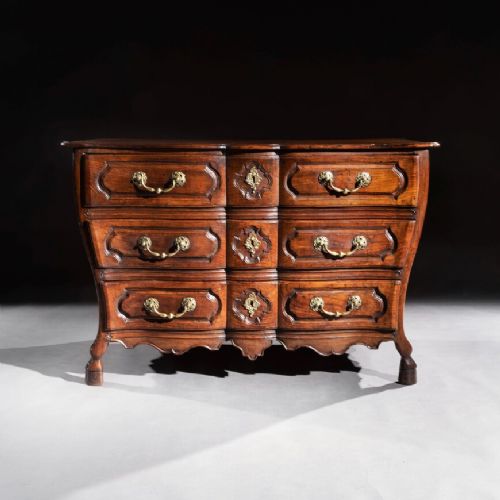
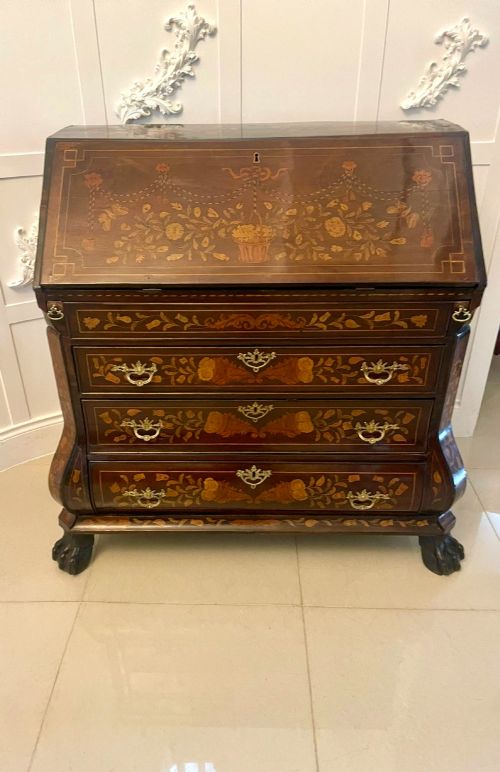
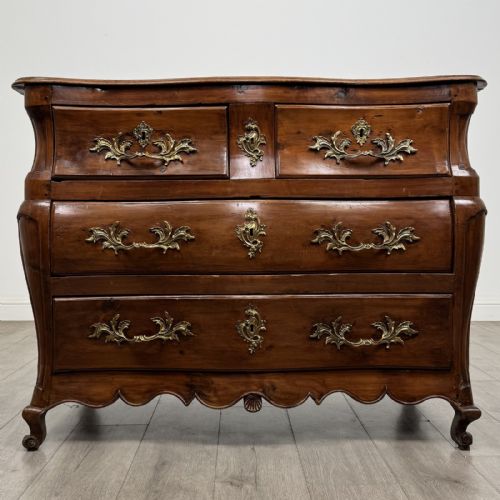
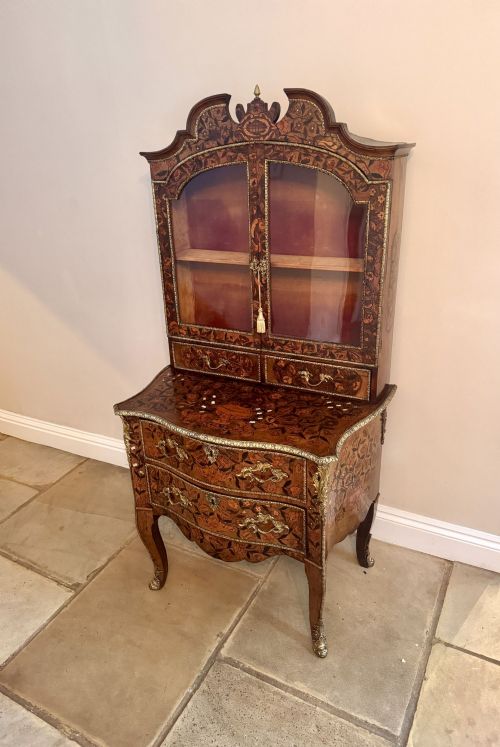
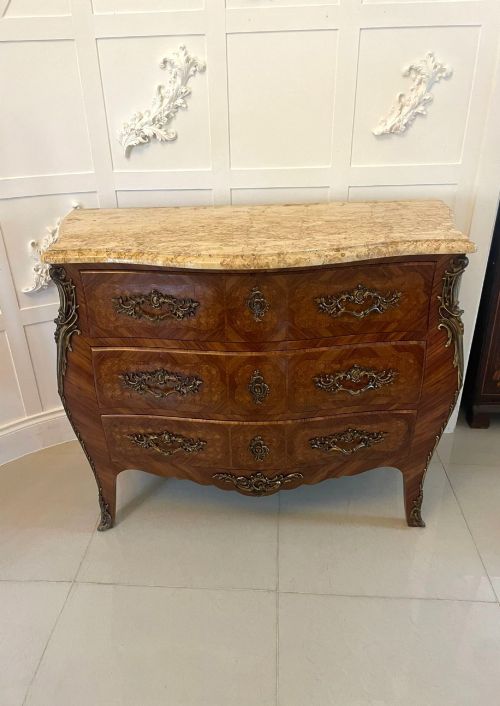
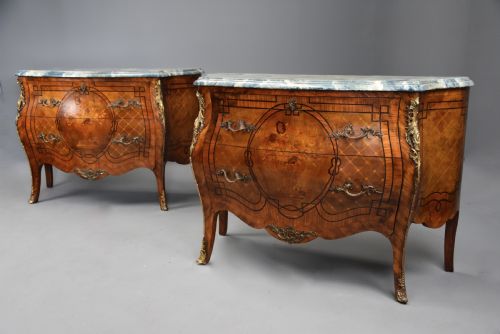
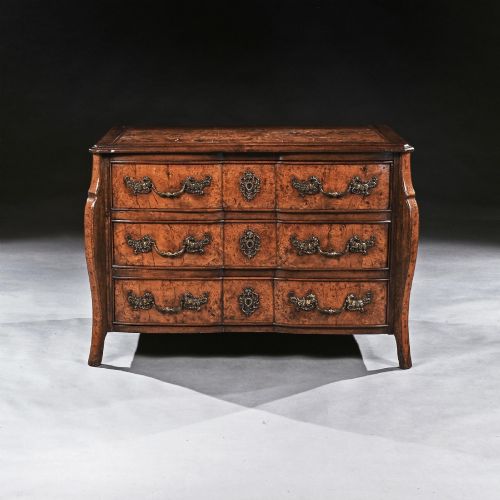
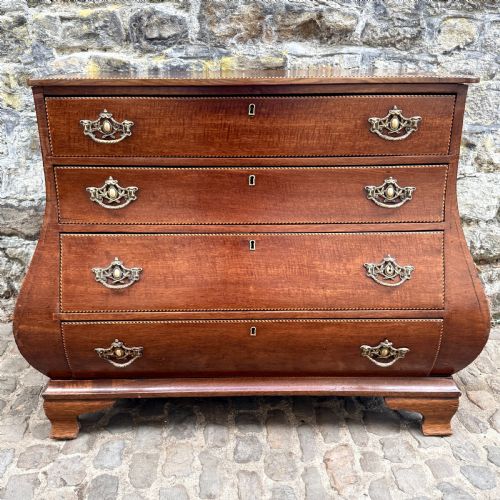
Bombe Drawer Chest
A bombe drawer chest brings sculptural swell and rich timber grain to a room, offering practical storage disguised as art.
Bombe Drawer Chest
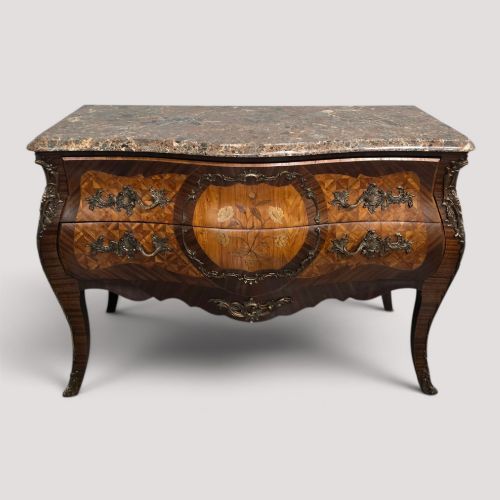
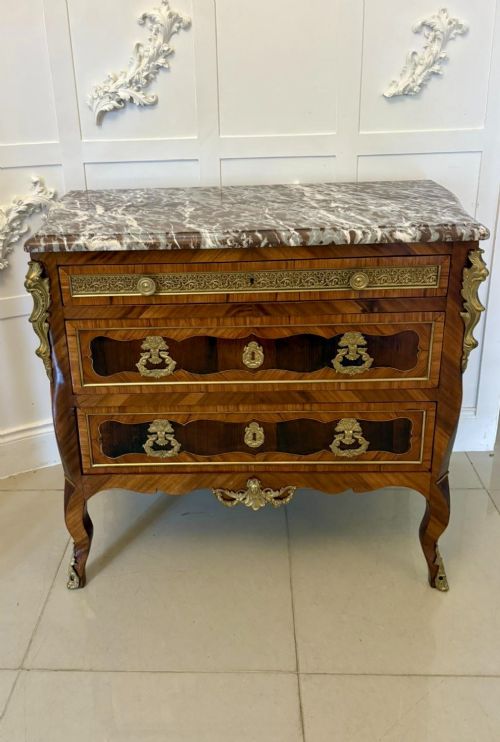
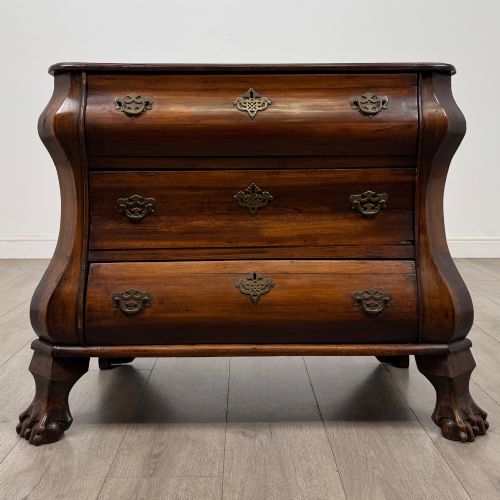
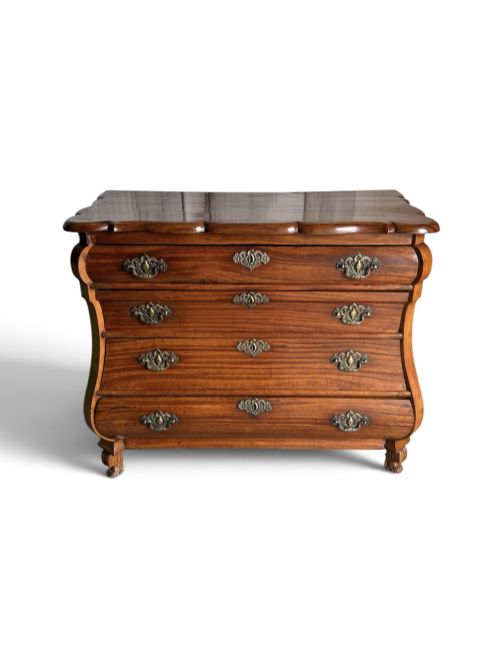
A bombe drawer chest presents a swelling, convex front and sides that depart from straight architectural lines. When you search for a bombe drawer chest, you encounter pieces spanning from the eighteenth century into the twentieth century, with strong representation from French and Dutch origins.
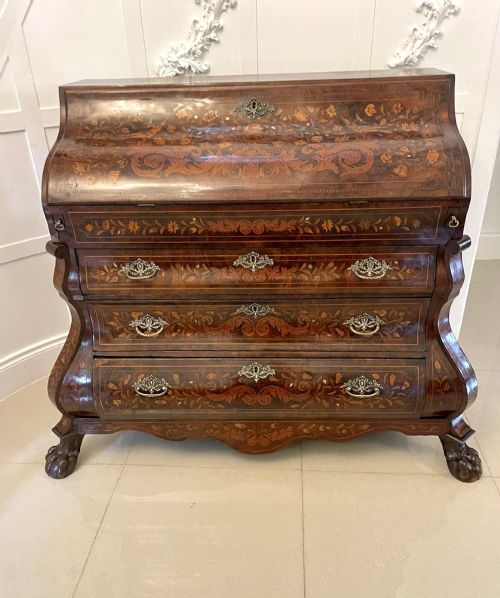
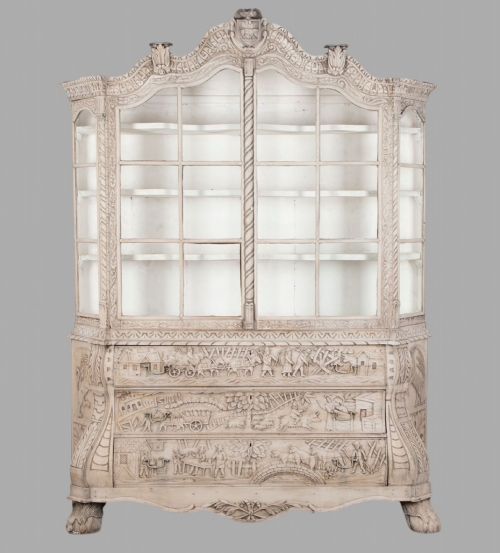
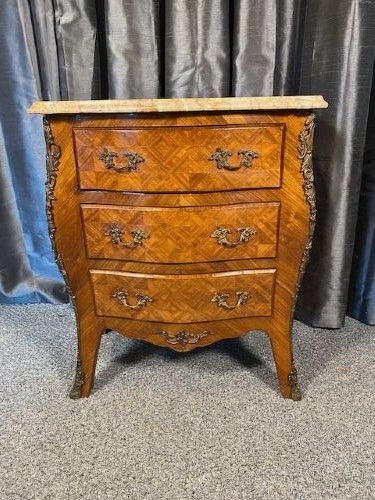
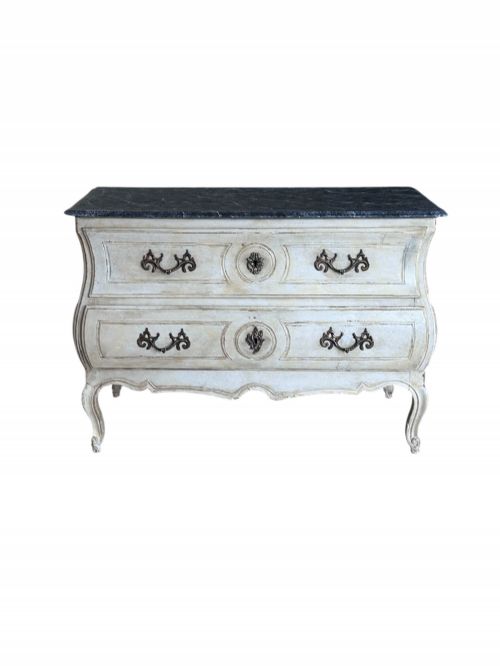
The forms vary from grand commodes and display cabinets on chests to compact bedside cabinets and bureau desks. The eighteenth-century examples lean towards walnut, marquetry, and burr elm, while later nineteenth- and twentieth-century interpretations introduce painted finishes, marble tops, and kingwood veneers.
Most items on this page combine functional drawer space with expressive silhouettes rooted in Baroque and Rococo design. They serve as focal points in a room, designed to command attention through their curved profiles rather than blend quietly against a wall.
How they were made
Cabinet makers built these pieces using supportive carcases of oak, walnut, or chestnut, onto which they laid intricate veneers of kingwood, burr walnut, and mahogany. Achieving the distinctive bulging profile required shaping internal framing timbers before applying the outer skin of wood.
Marquetry and parquetry panels involved hand-cutting fine botanical or geometric segments of timber and setting them into the surface, often enhanced with floral motifs. Mounts of cast ormolu and handles of polished brass were fitted to accentuate the sweeping contours of the drawer fronts.
Many iterations feature polished marble slabs fitted precisely to the upper surface, adding weight and a cool tactile contrast to the warm timber below. Paint finishes, gilding, and japanned lacquer were also applied to achieve Chinoiserie and Venetian decorative schemes.
Bombe Drawer Chest Retail Price Guide 2026
Typical asking prices for bombe drawer chest among the pieces listed under this phrase on Sellingantiques today, from the lower quarter to the upper quarter. They describe what is for sale here now, not the wider market.
Some nineteenth-century makers built curves so ambitious that drawers had to be carved from solid blocks rather than bent.
What varies in quality
The standard of a bombe drawer chest rests primarily on the ambition of its timber selection and the precision of its veneers. Pieces featuring dense burr walnut or meticulously matched floral marquetry demand a higher level of joiner skill than plain painted surfaces.
The fluidity of the bombé shape itself dictates much of the visual success, where gentle, swelling curves show greater mastery than stiff or abrupt angles. Finer examples integrate cast ormolu mounts that follow the organic contours of the carcase without gaps or awkward overhangs.
The structural integrity of the curved drawer sides and the smoothness of their movement within the bowed frame separate accomplished cabinet work from standard production. Original hardware and undisturbed marble tops further elevate the integrity of surviving examples.
Edwards & Roberts
The Bombe Drawer Chest Glossary
- Bombe
- A swelling or convex silhouette where the sides and front curve outward. This profile defines the dramatic visual weight of the furniture.
- Marquetry
- Decorative patterns formed by inserting thin pieces of wood, ivory, or shell into a wooden veneer base. Floral and landscape designs frequently appear on eighteenth-century surfaces.
- Ormolu
- Gilt-bronze mounts and decorative hardware applied to furniture. It provides a bright metallic contrast against dark timbers like walnut and mahogany.
- Parquetry
- Geometric wood-mosaic work used for floors and furniture surfaces. It creates orderly repeating patterns such as cubes or chevrons.
- Commode
- A low chest of drawers originating in France. These pieces typically stand on short legs and often feature marble tops.
Bombe Drawer Chest: Frequently Asked Questions
Where should I place a bombe drawer chest?
These pieces demand space to breathe so their curved profiles remain visible from multiple angles. They suit hallways, living rooms, or bedrooms where a statement furniture item anchors the surrounding decor.
Because of their decorative presence, they function well against plain walls that allow the timber grain or painted surface to stand out without visual competition.
How do I care for marble-topped commodes?
Marble surfaces benefit from regular dusting with a soft cloth and prompt wiping of any liquid spills to prevent staining. Avoid acidic cleaners that etch the polished stone finish.
Applying a neutral stone wax occasionally helps protect the surface and maintains its subtle sheen over years of daily use.
Are these drawers suitable for everyday storage?
The curved interiors of the drawers can reduce usable rectangular space compared to straight-fronted chests. However, they offer generous depth for clothing, linens, or paperwork.
Drawers glide on traditional wooden runners, so maintaining a balanced load helps them operate smoothly within their bowed housings.
How can I tell eighteenth-century pieces apart from later revivals?
Eighteenth-century examples often display hand-cut dovetails, older timber shrinkage patterns, and organic wear consistent with age. They rely on regional craftsmanship traditions specific to Dutch or French workshops.
Nineteenth- and twentieth-century revival pieces tend to show more standardised construction methods while still employing traditional marquetry and veneering techniques.