
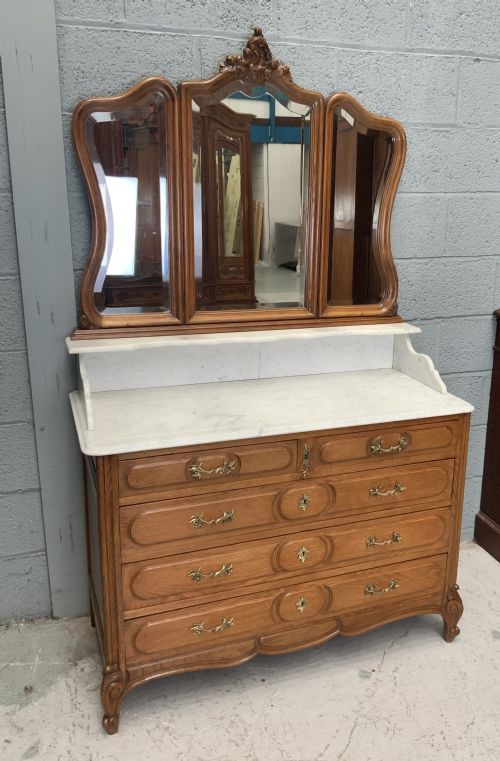
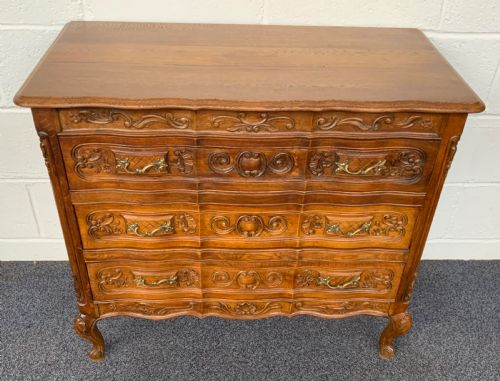


French Oak Commode
A French oak commode brings robust provincial utility and quiet dignity to a room, offering deep storage beneath a handsome timber or stone surface.
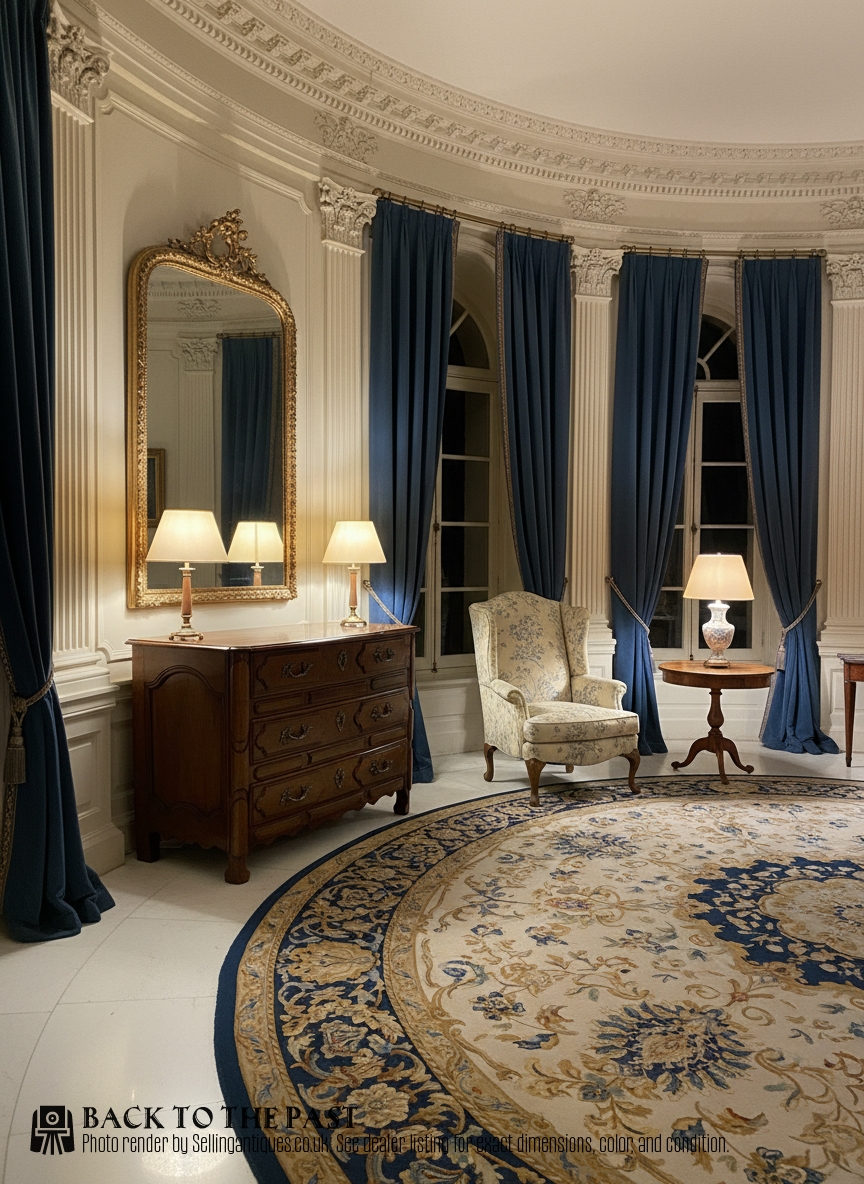
Identifying the French oak commode
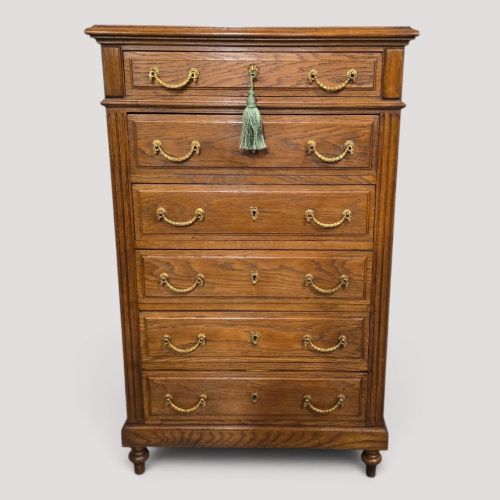
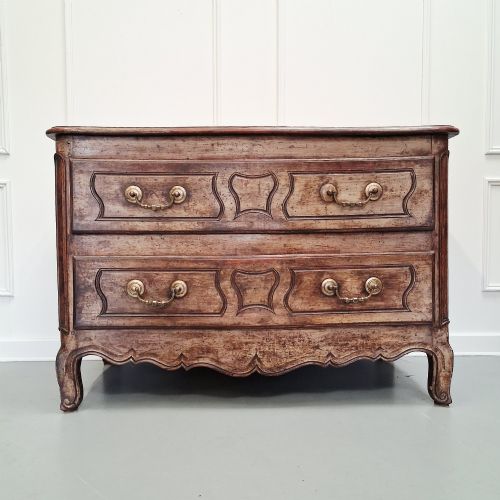
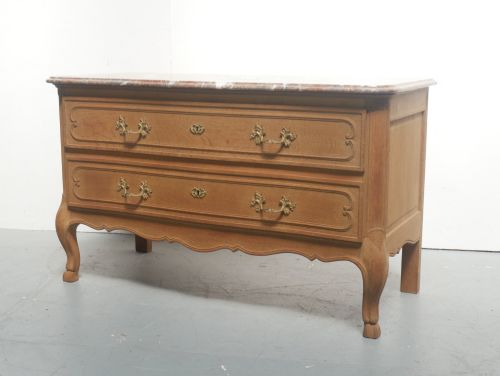
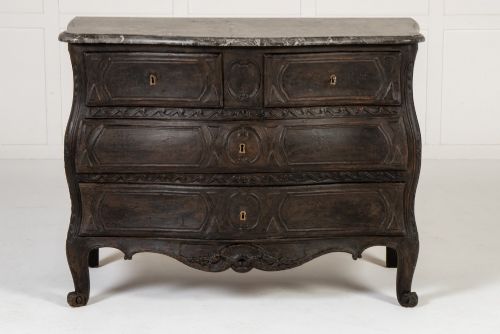
A French oak commode is a substantial chest of drawers originating from French provincial workshops, designed to provide generous domestic storage. When searching for a french oak commode, buyers encounter pieces ranging from simple multi-drawer chests to ornate serpentine fronts with marble tops.
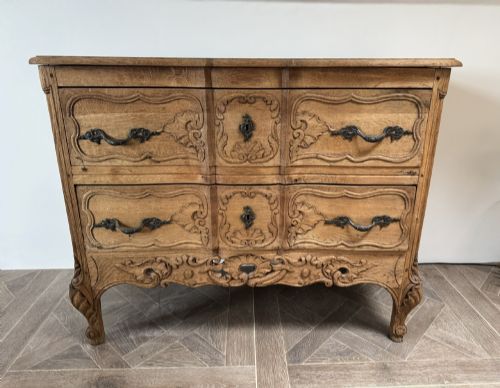
The inventory spans several centuries, touching the eighteenth century through the nineteenth and early twentieth century. Simpler vernacular forms sit alongside revival pieces and provincial iterations featuring carved flowers.
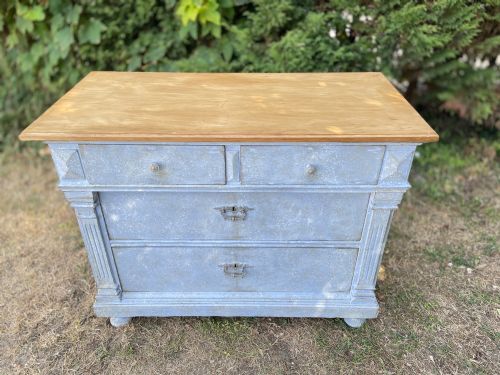
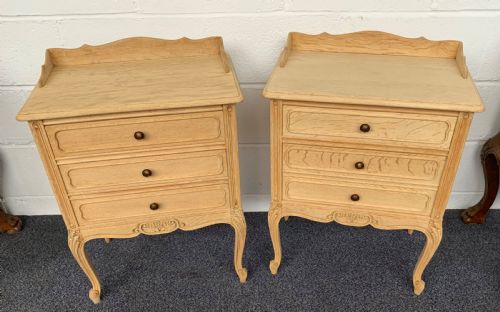
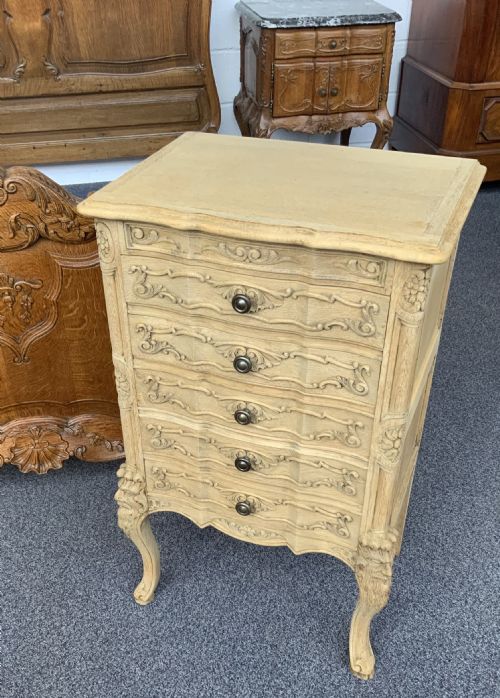
Surface treatments vary significantly across the pieces gathered here. Many examples appear in bleached or washed oak finishes, while others show painted surfaces or the natural warmth of unadorned timber.
Assessing quality and craftsmanship
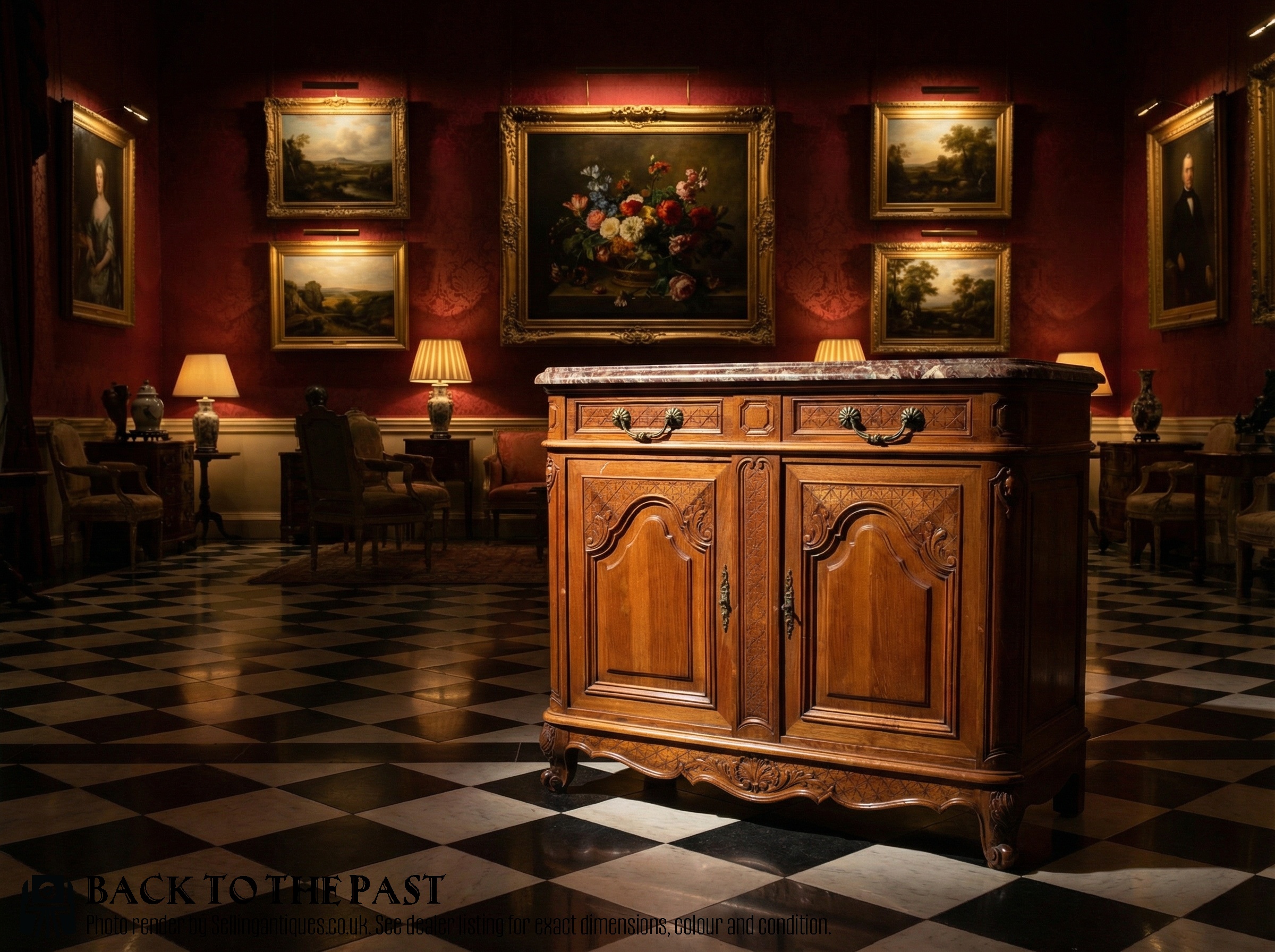
Quality in these chests rests upon the ambition of the silhouette and the handling of the timber. Straight-front vernacular chests offer honest utility, whereas serpentine fronts demand advanced carpentry to shape the timber along sweeping, curved lines.
The integration of materials also defines the tier of the piece. A heavy, fitted marble slab or finely carved floral motifs elevate a simple chest into a work of greater sculptural presence.
Retail Price Guide 2026
Typical UK retail prices for french oak commode, calculated from the Sellingantiques database of over a million retail prices indexed since 2003. This retail price guide relies exclusively on Sellingantiques data; no external sources or auction records are used, so the figures do not describe the wider market.
Periods represented span from the eighteenth century through the nineteenth century and into the early twentieth century.
The French Oak Commode Glossary
- Commode
- A low chest of drawers, typically standing at waist height and originating in France. It served primarily for storage in domestic chambers.
- Serpentine
- A furniture front characterised by a wavy outline, curving outward in the centre and inward at the sides. This shape requires considerable skill in the woodworker.
- Bleached oak
- Timber treated to lighten its natural tone, a finish frequently found on provincial French furniture to soften the visual weight of the wood.
- Fruitwood
- Dense timber harvested from fruit-bearing trees such as pear or cherry, sometimes utilised alongside oak in regional cabinetmaking.
Frequently Asked Questions
How do I date a French oak commode?
Dating relies on structural clues, hardware styles, and the contour of the timber carcase. Eighteenth-century examples often display hand-cut joinery and subtle provincial carving.
Later pieces from the nineteenth and early twentieth centuries adopt more standardised construction methods while occasionally imitating earlier revival styles.
What is the difference between a commode and a chest of drawers?
In British and continental usage, a commode specifically denotes a low, decorative chest of drawers designed in the French taste. Standard chests of drawers may follow taller, more utilitarian British forms.
French commodes frequently feature distinctive serpentine fronts, marble surfaces, and characteristic provincial proportions.
Are marble tops original to these commodes?
Many French commodes were built to receive heavy stone tops, particularly those originating from provincial workshops where stone provided a durable, practical surface. Original marble slabs typically show signs of age and match the exact dimensions of the timber carcase below.
Later replacements or adaptations do occur, making the fit and edge profile important indicators of originality.
How do I care for a bleached oak surface?
Bleached and washed oak finishes require gentle maintenance using dry cloths or soft-bristled brushes to remove dust without disturbing the grain. Avoid harsh chemical cleaners or excessive moisture, which can penetrate the unsealed timber pores.
Wax can be applied sparingly if nourishment is needed, though many prefer to leave the dry, pale finish untouched.