
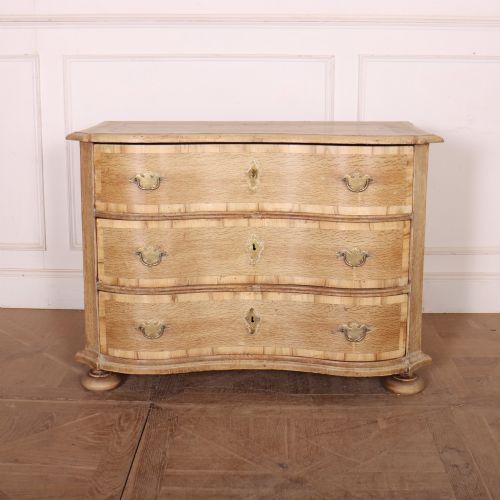
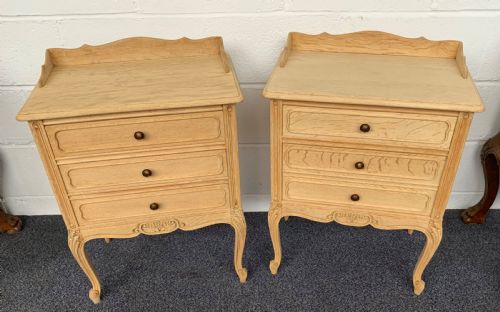
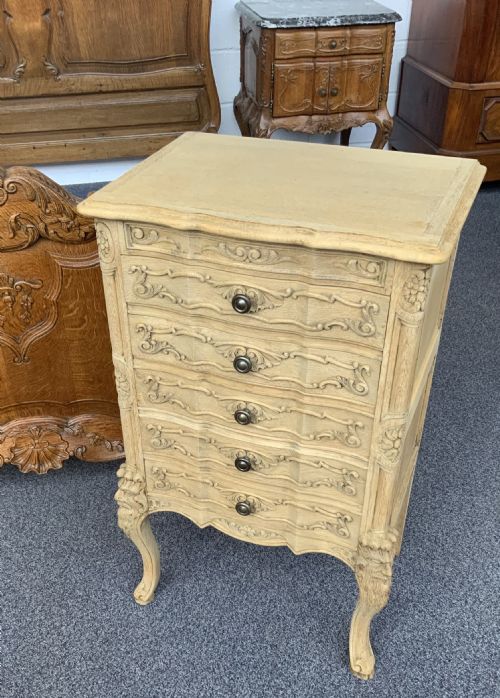
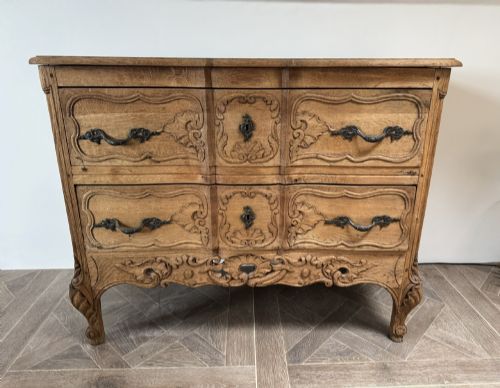


Bleached Oak Commode
A bleached oak commode brings light timber and generous drawer space to a room, offering both practical storage and continental style.
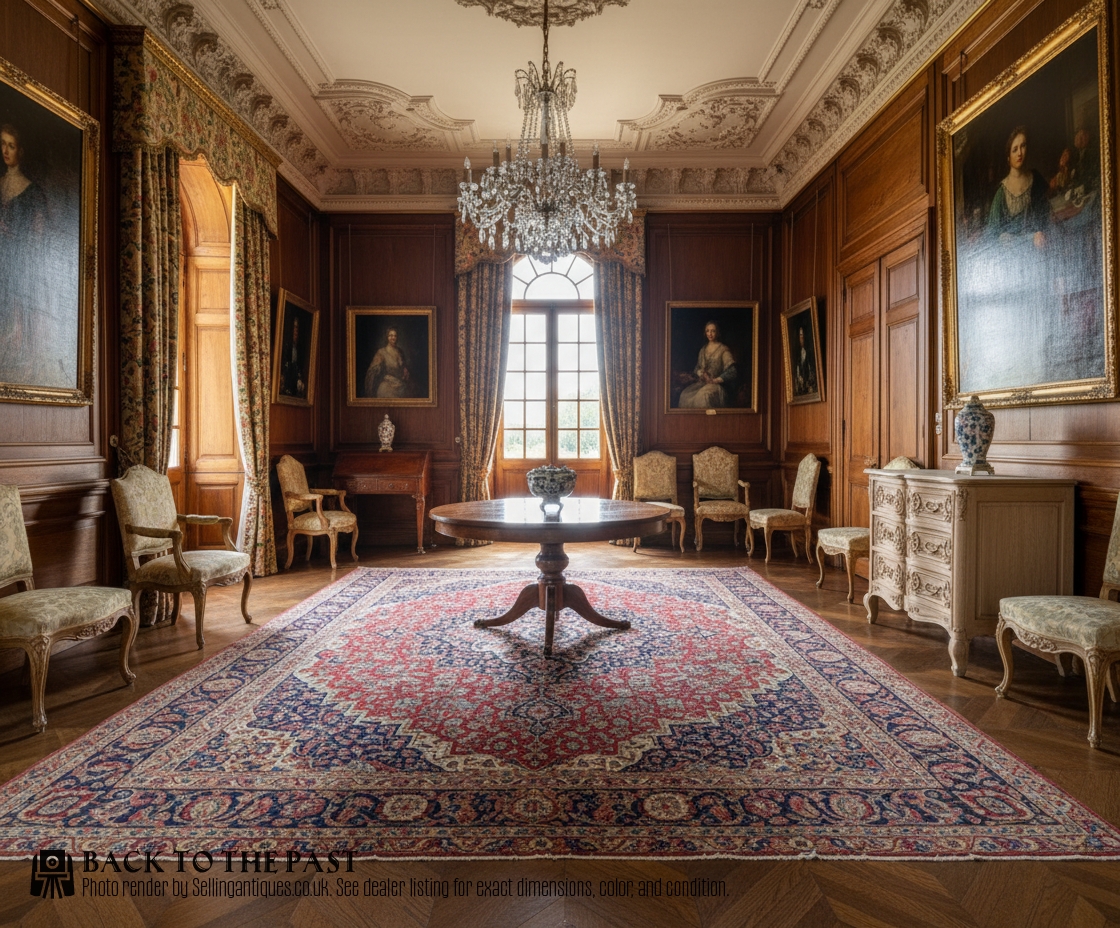
What a bleached oak commode is
When you search for a bleached oak commode, you are looking at substantial case furniture designed with wide drawers, most frequently originating from French workshops or provinces. These pieces appear in forms ranging from straightforward rectilinear chests to serpentine shapes and bombe profiles, often constructed during the eighteenth and nineteenth centuries alongside later twentieth-century interpretations.
The aesthetic relies on the pale, weathered finish of the wood rather than dark, polished grains, softening the traditional presence of heavy timber furniture. Regional variations include Austrian rococo and Dutch rococo designs, as well as classical French proportions featuring carved flowers or marble tops.
You will encounter pieces described interchangeably as chests of drawers or commodes, though the latter term usually denotes continental European provenance and distinct decorative shaping. The surviving examples demonstrate how cabinetmakers adapted standard storage forms to suit lighter domestic interiors across different European regions.
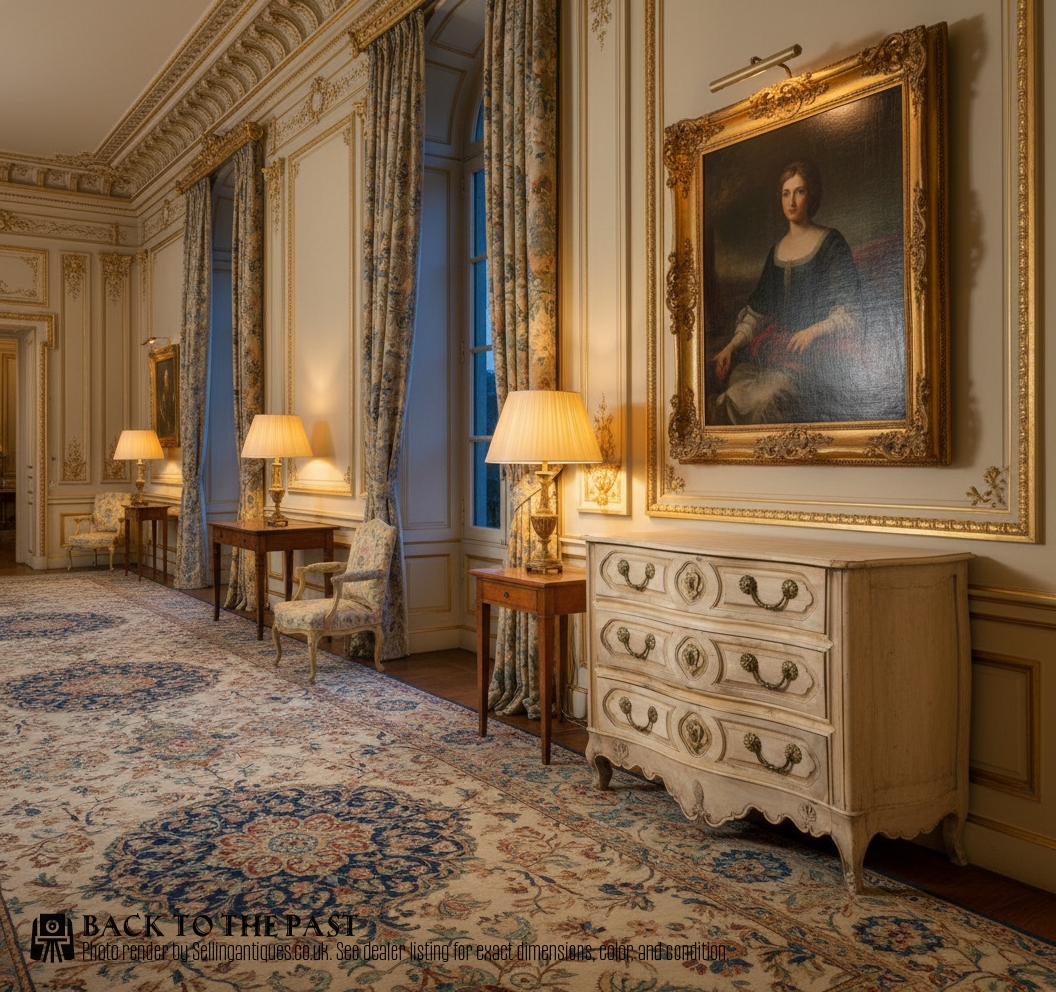
What varies in quality
The distinction between standard examples and finer pieces lies in the fluidity of the carved details and the complexity of the cabinetwork. Pieces featuring pronounced serpentine lines or bombe shaping demand greater skill from the maker than straight-fronted chests.
The integration of materials also defines the tier of a piece, particularly where fitted marble tops or cast brass mounts accompany the bleached timber. The depth and evenness of the pale oak finish further separate basic alterations from masterwork treatments.
Retail Price Guide 2026
Typical UK retail prices for bleached oak commode, calculated from the Sellingantiques database of over a million retail prices indexed since 2003. This retail price guide relies exclusively on Sellingantiques data; no external sources or auction records are used, so the figures do not describe the wider market.
The documented periods span the eighteenth century, the nineteenth century, eighteen-sixty, and nineteen-twenty.
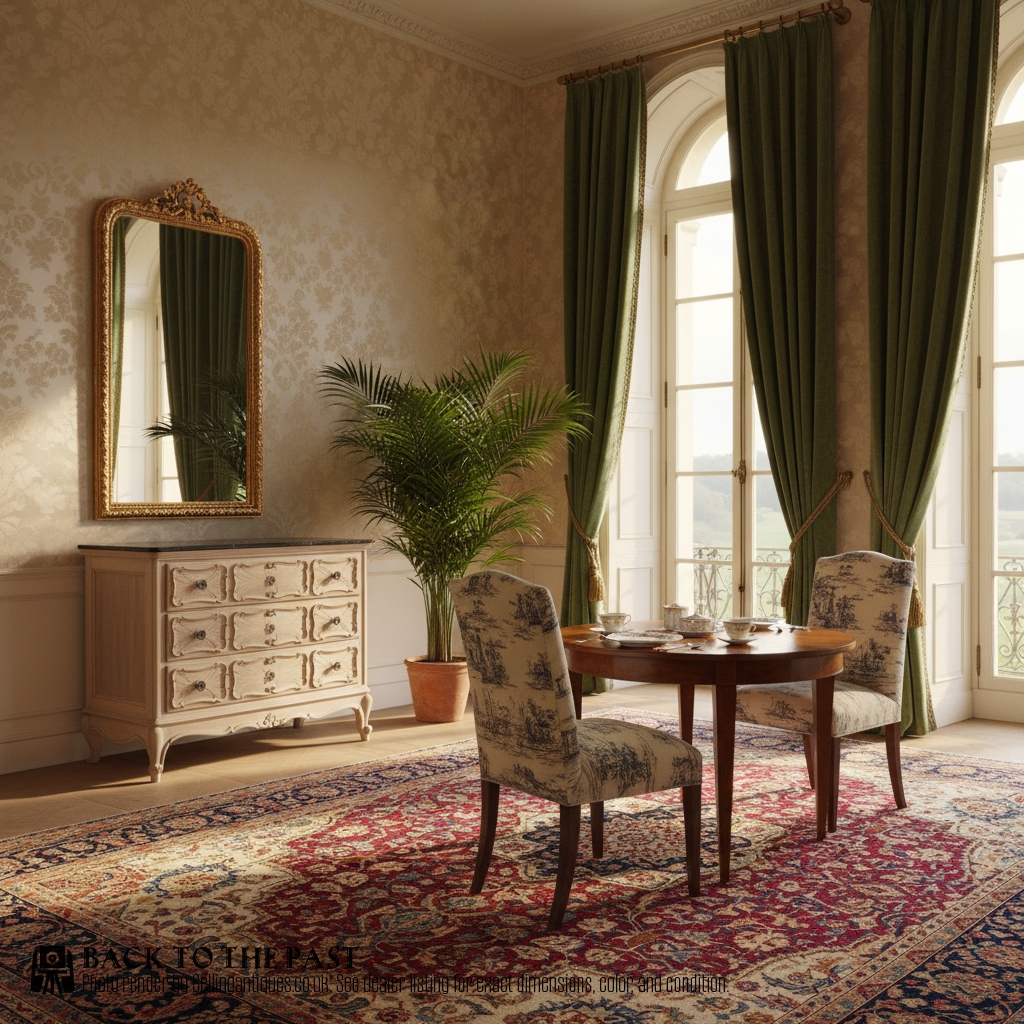
The Bleached Oak Commode Glossary
- Commode
- A low chest of drawers or cabinet originating in France. It typically provides deep storage capacity and sits on short legs or feet.
- Serpentine
- A furniture front or top shaped with a central concave curve flanked by two convex curves. This undulating line adds visual movement to heavy timber.
- Bombe
- A swelling, bulging contour found on the sides and front of certain continental furniture pieces. It requires advanced shaping techniques to construct from solid wood.
- Limed oak
- Timber treated with a specialised paste or chemical process that leaves a whitish pigment in the open pores of the grain. This highlights the natural texture of the wood.
- Rococo
- An ornate artistic style characterised by asymmetrical curves, scrollwork, and naturalistic motifs such as carved flowers. It heavily influences eighteenth-century continental cabinetmaking.
Frequently Asked Questions
How do I use a commode in a modern interior?
A bleached oak commode functions well in a bedroom or hallway as a primary storage chest for clothing or linens. The pale finish allows the piece to integrate easily with contemporary neutral walls and lighter colour schemes.
Place a simple mirror or lamp on the flat top surface to complete the arrangement. The wide drawers offer practical organisation without dominating the floor space.
What is the difference between a commode and a chest of drawers?
In historical terms, a commode specifically denotes a continental European low chest of drawers, often featuring decorative shaping or finer mountings. A standard chest of drawers can refer to broader, less regionally specific British or American utilitarian furniture.
French and Dutch examples frequently display curved serpentine or bombe fronts rather than simple box shapes. Both serve the same primary storage function within domestic rooms.
Are these commodes made of solid oak?
The pieces listed across these records utilise oak as the primary structural material, sometimes combined with brass hardware and marble slab tops. Cabinetmakers built the carcasses and drawer fronts from solid timber to support the weight of the drawers.
Bleaching treatments penetrate this natural wood grain to lighten the overall tone. The presence of original brass handles or marble surfaces adds to the material composition.
How do I identify a French provincial commode?
French provincial pieces typically show regional interpretations of high-style furniture, constructed with simpler carved floral motifs and softer structural lines. They often feature local oak timbers that have been bleached or limed over generations.
The proportions tend to be robust yet graceful, reflecting the domestic requirements of provincial households. Examination of the drawer construction and hardware reveals the continental origins.