


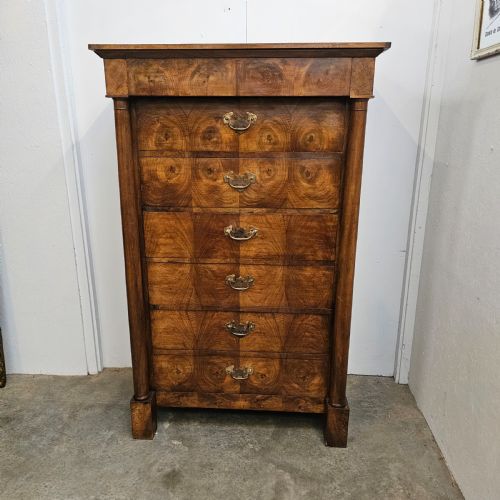


French Empire Semainier
A French Empire semainier is a tall, seven-drawer chest built for daily service, offering immense presence and storage in a compact footprint.
French Empire Semainier
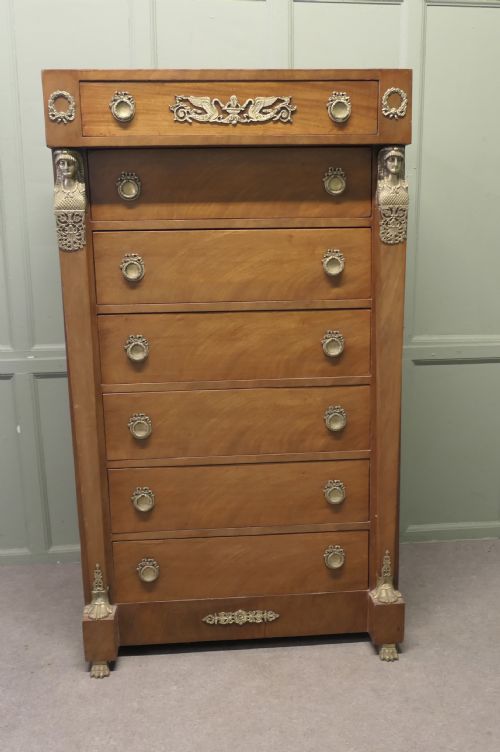
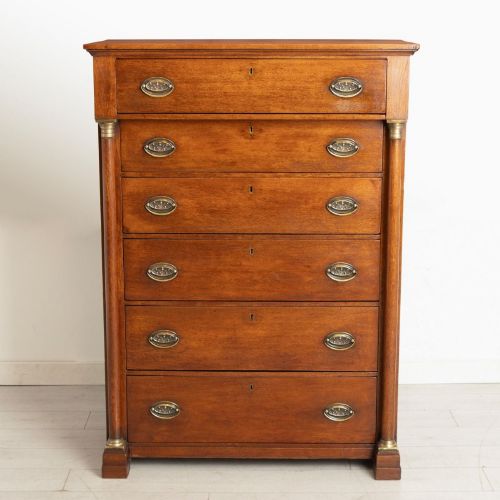
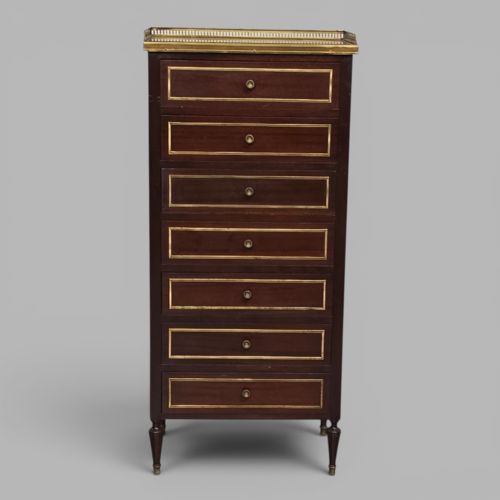
The French Empire semainier is a tall chest of drawers designed traditionally with seven tiers, one for each day of the week, functioning as a practical tallboy or cabinet. Pieces matching this search appear across the nineteenth century, including examples from eighteen hundred, eighteen fifty, eighteen eighty, and nineteen twenty, alongside Regency and Louis Philippe stylistic influences.
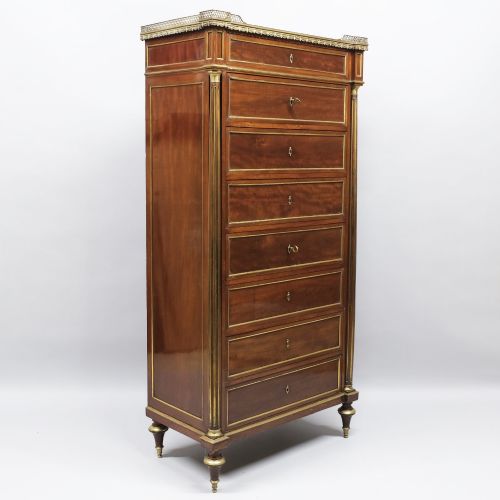
Most examples take the form of tall chests or banks of drawers, occasionally featuring a secretaire or marble top alongside variations like cartonnier chests. The construction ranges from strict French Empire and neo-classical designs to oak, cherry, walnut, burr walnut, and mahogany iterations.
Originating firmly within French cabinetmaking traditions, these tall chests surface in various woods such as walnut veneer and inlaid mahogany. Buyers seeking this form encounter configurations that prioritize vertical capacity while maintaining classical proportions.
How they were made
Decoration incorporates cast brass, gilt bronze, and ormolu mounts fixed to the exterior, accentuating the architectural lines of the neo-classical style. Marble tops provide a durable and contrasting upper surface on specific architectural variants.
Having seven drawers means one is perpetually designated for Tuesday, leaving six others to sort out the rest of the week.
What varies in quality
Quality rests upon the selection and matching of timber veneers, where bookmatched grain displays deliberate planning by the maker. The crispness of cast ormolu and gilt bronze mounts separates standard production from finer cabinetwork.
Structural integrity reveals itself in the smooth running of the seven drawers and the retention of original brass or gilt metal hardware. The integration of marble tops and the precision of inlaid details further define the upper tiers of craftsmanship.
The French Empire Semainier Glossary
- Semainier
- A tall seven-drawer chest traditionally associated with the days of the week. This form provides vertical storage with a small floor footprint.
- Ormolu
- Gilded bronze mounts applied to furniture for decorative contrast. It defines the enriched surface aesthetic of the period.
- Bookmatched
- Veneers sliced and opened like a book to mirror grain patterns across a surface. Cabinetmakers utilised this technique on drawer fronts.
- Cartonnier
- A specialised tall chest originally designed for organising papers and documents. These pieces share the vertical proportions of the semainier.
- Neo-Classical
- A style drawing inspiration from classical antiquity, characterised by symmetrical restraint and architectural mounts. It influences the proportions of these tall chests.
French Empire Semainier: Frequently Asked Questions
What is a semainier used for?
A semainier provides high-capacity vertical storage through its signature tier of seven drawers. Historically, each drawer held garments or linens designated for a specific day of the week.
Today, the form suits bedrooms, hallways, or studies where floor space is limited yet storage volume remains essential. The top surface frequently accommodates decorative objects or lamps.
How do you date a French Empire chest?
Dating relies on secondary timber usage, construction methods, and the specific application of brass, ormolu, or gilt bronze mounts. Earlier pieces from the foundational nineteenth-century period exhibit distinct neo-classical architectural restraint.
Later nineteenth-century and nineteen-twenty examples often incorporate broader stylistic revivals like Louis Philippe or regional interpretations in oak and cherry. Comparing hardware fixing methods and veneer thickness helps clarify the timeline of production.
How do you place a tall chest in a room?
The vertical proportions of a semainier allow it to occupy narrow wall spaces where wide furniture fails to fit. Pairing the height of the chest with complementary vertical artwork balances the room's composition.
Ensuring adequate clearance for the upper drawers guarantees smooth daily operation in tighter domestic layouts. Marble-topped variants benefit from placement away from high-traffic zones to protect the stone edge.