



Louis XV Semainier
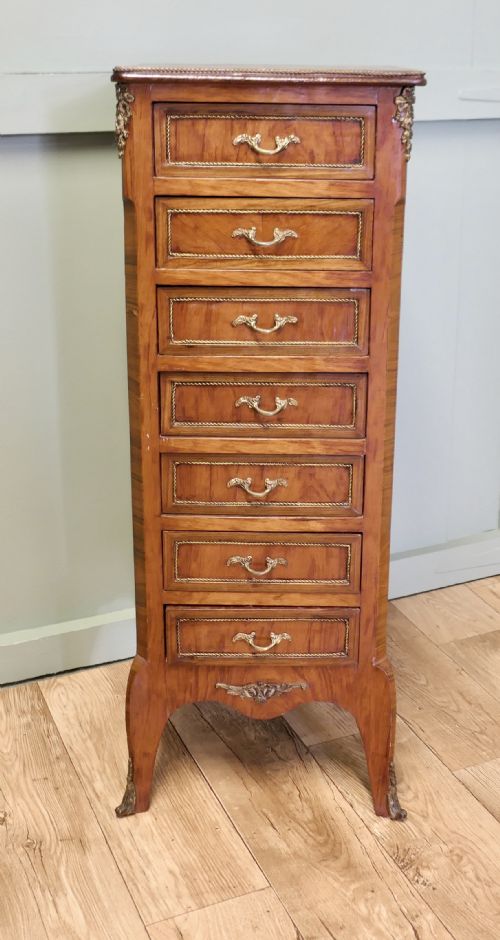
These louis xv semainier chests are tall seven-drawer storage pieces brought home for their elegant proportions and refined French surface work.
Louis XV Semainier
When you search for a louis xv semainier, you are looking at tall case furniture designed with seven drawers, one for each day of the week. The pieces on this page span the eighteenth century through to the early decades of the twentieth century, taking in revival periods up to nineteen thirty.
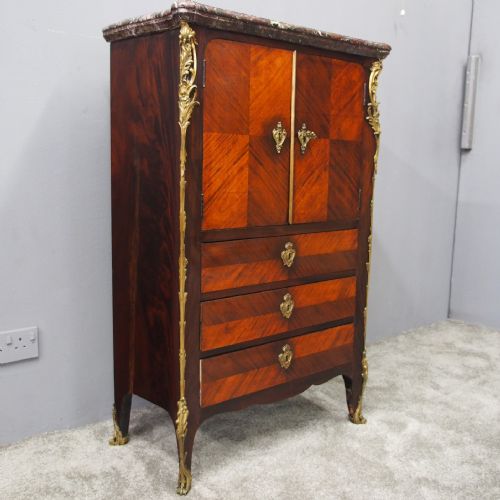
The primary forms appearing here include tall chests of drawers, bedside cabinets, and secretaire abattant desks featuring drop-down writing surfaces. You will encounter descriptions referencing Louis XV style, French provincial, and French transition designs.
Originating predominantly from France, these items range from eighteenth-century masterwork cabinets down to later nineteenth-century revival interpretations. The dominant configuration is a slender upright chest topped with stone or marble.
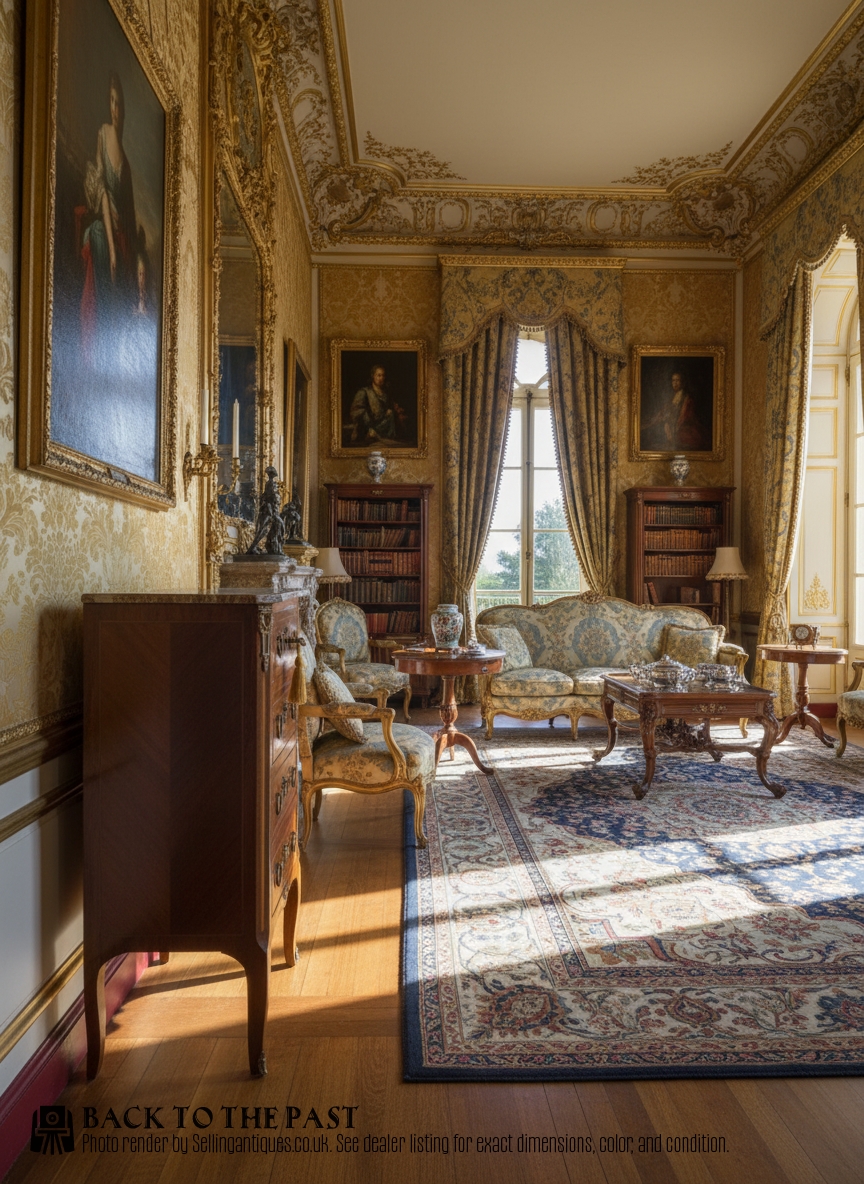
How they were made
Cabinetmakers built the carcase structures using foundational timbers like oak, applying decorative surface veneers of rosewood, kingwood, walnut, and tulipwood. Marquetry patterns and inlaid details are frequently worked directly into these precious cabinet timbers.
Mounts in ormolu, gilt bronze, and brass accent the corners, handles, and apron profiles of the pieces. Tops are finished with heavy slabs of shaped marble.
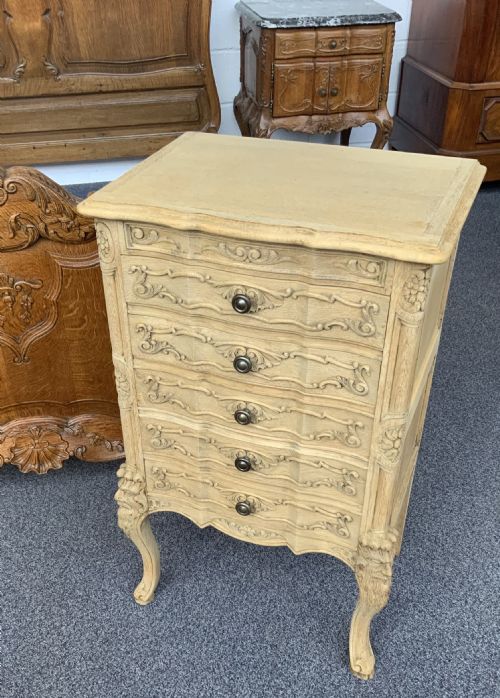
Solid oak construction also appears in provincial interpretations, often carved directly rather than veneered and sometimes given a bleached finish.
Louis XV Semainier Retail Price Guide 2026
Typical asking prices for louis xv semainier among the pieces listed under this phrase on Sellingantiques today, from the lower quarter to the upper quarter. They describe what is for sale here now, not the wider market.
Listings feature pieces spanning the eighteenth to the twentieth centuries, employing oak, rosewood, kingwood, walnut, and marble.
What varies in quality
The distinction between ordinary and exceptional examples rests in the crispness of the bronze mounts and the precision of the wood veneers. Finer pieces demonstrate seamless marquetry and heavy, well-chased ormolu fixtures that integrate cleanly with the carcase.
Structural integrity of the seven-drawer arrangement dictates day-to-day usability, as tall chests require careful joinery to keep tall frames square. The quality of the fitted marble top and the depth of the cabinetmaker's timber selection further separate standard revival items from high-grade period work.
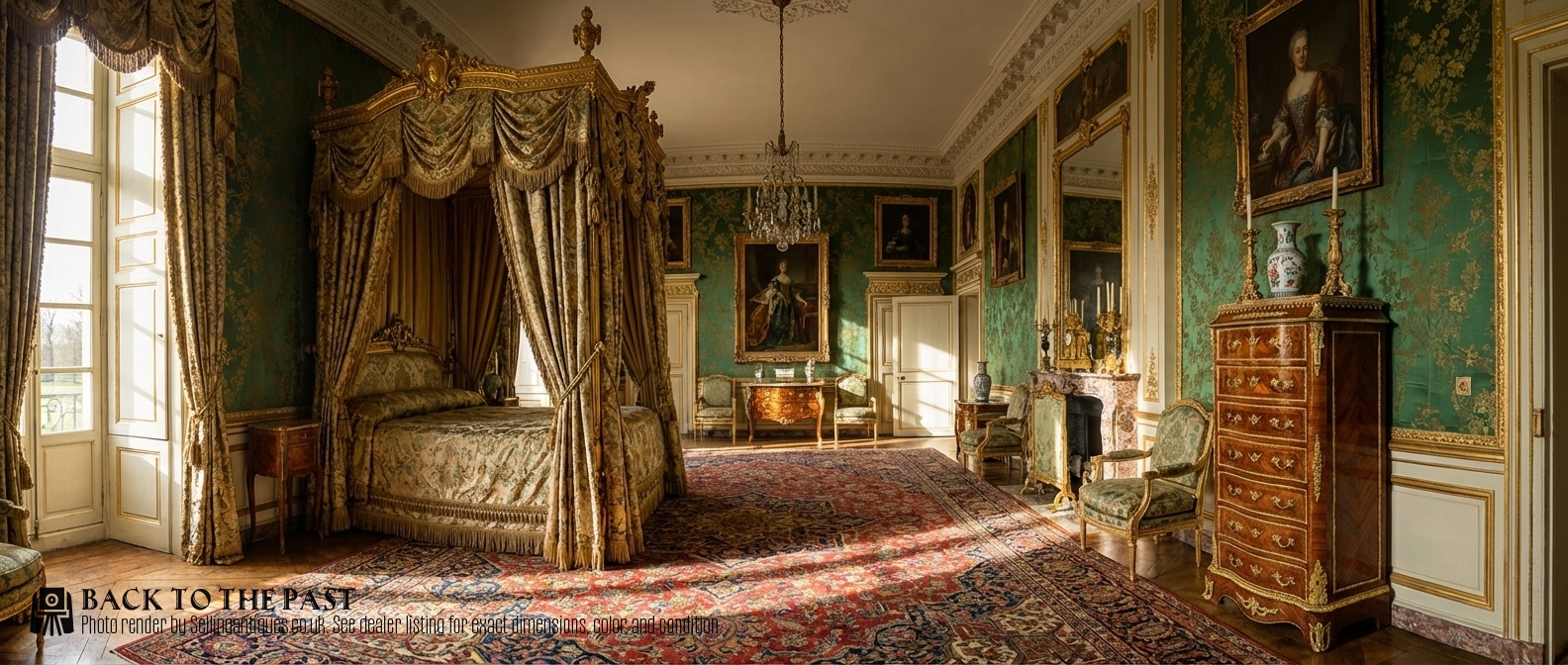
Leonard Boudin
The Louis XV Semainier Glossary
- Semainier
- A tall chest traditionally containing seven drawers, created to hold a week's supply of linen or personal items. The term derives from the French word for week.
- Ormolu
- Gilded bronze mounts applied to furniture edges and corners for decoration and protection. This technique involves fusing gold to a bronze base.
- Kingwood
- A dense, richly figured exotic timber utilised extensively in eighteenth-century and revival French cabinetmaking. It displays dark contrasting grain patterns.
- Secretaire abattant
- A tall cabinet featuring a hinged fall-front writing panel that conceals small interior compartments and drawers. It combines desk functionality with upright storage.
- Marquetry
- The art of applying small pieces of veneer to a structure to form decorative patterns and pictures. Craftsmen use varied woods to achieve naturalistic tones.
Louis XV Semainier: Frequently Asked Questions
What is a semainier used for?
A semainier provides vertical storage designed originally to hold seven days of clothing or linen inside its seven stacked drawers. Its tall, narrow footprint makes it practical for rooms with limited floor space.
Today these pieces serve equally well in bedrooms or living areas for organising smaller personal items while adding a distinct decorative presence.
How do I identify a Louis XV style semainier?
Look for characteristic design elements such as cabriole legs, subtle serpentine curves along the front edges, and delicate floral or foliate bronze mounts. The proportions remain tall and slender rather than wide.
Many examples feature distinct veneered marquetry patterns or inlaid panels across the drawer fronts framed by contrasting woods.
Are marble tops original to these chests?
Marble tops are common on French case furniture of this period and were typically fitted by the maker to provide a durable, decorative surface. They range from plain white marble to heavily veined coloured stone.
Replacement marble tops do occur due to damage over the centuries, so checking the fit against the wooden carcase helps indicate originality.
How do I care for antique wood and ormolu?
Keep wooden surfaces clean with a soft dry cloth and apply occasional natural wax to nourish the grain of rosewood, walnut, or kingwood veneers. Avoid placement near direct heat sources or strong sunlight.
Clean gilt bronze and brass mounts gently without abrasive polishes to preserve the patination built up over decades of handling.