

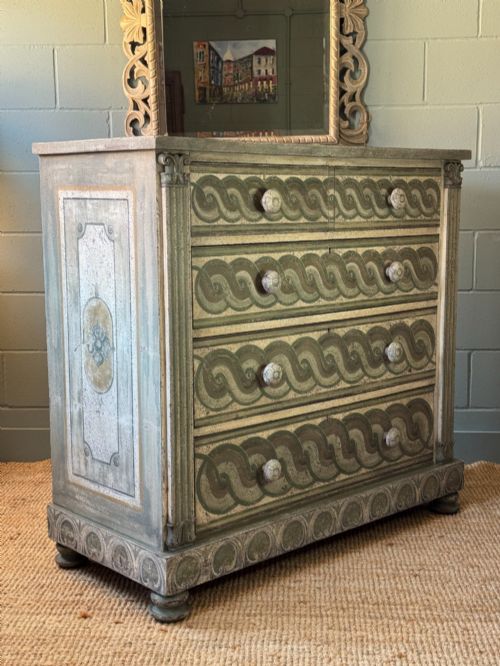


French Empire Chest
A French empire chest provides formal neoclassical presence and disciplined storage through substantial mahogany timbers and classical metal mounts.
French Empire Chest
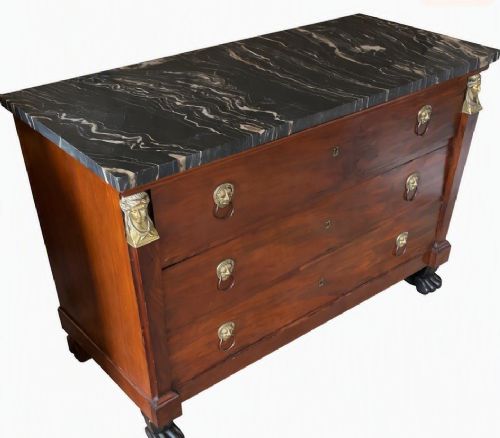
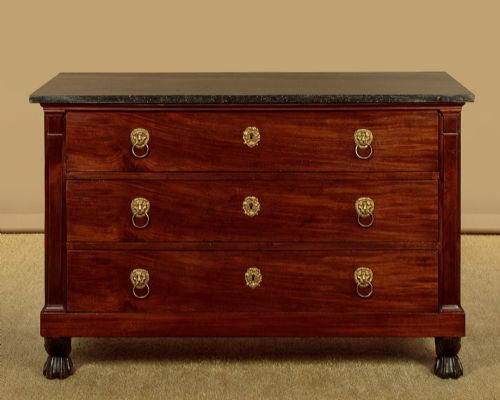
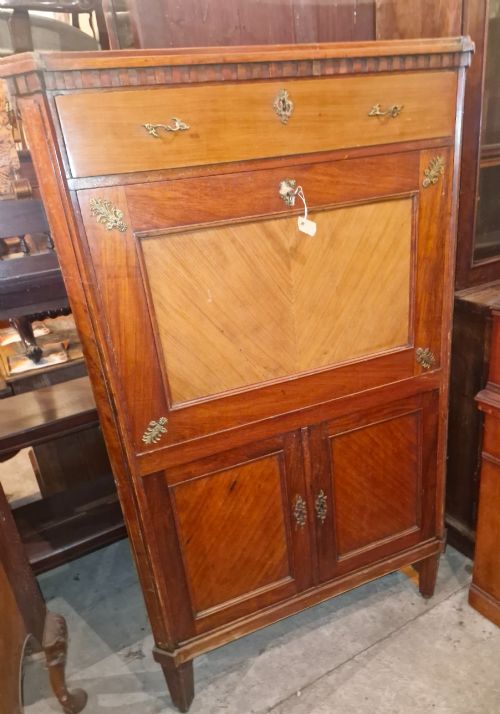
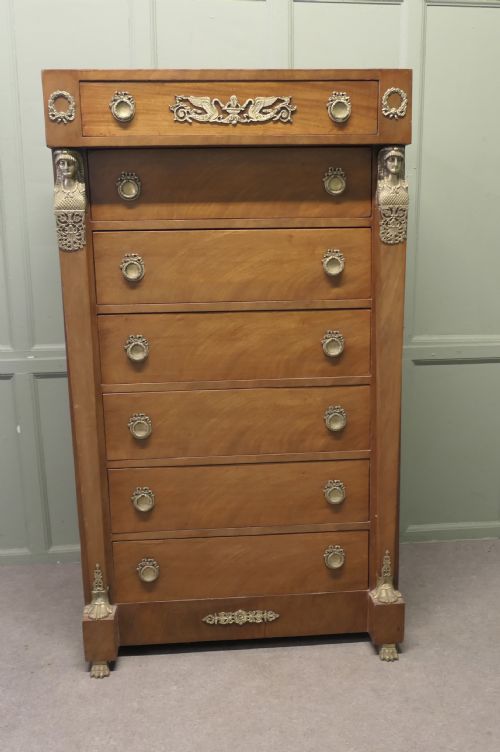
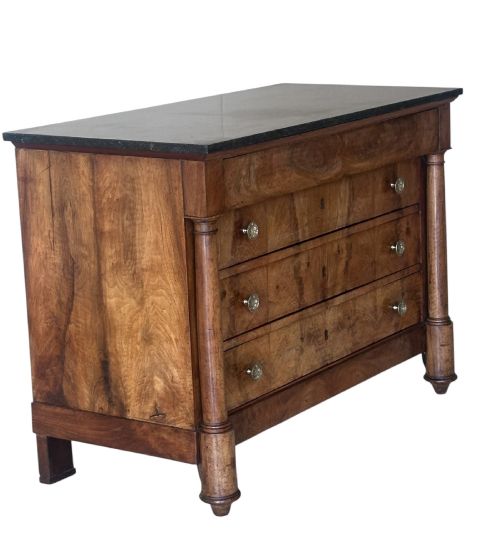
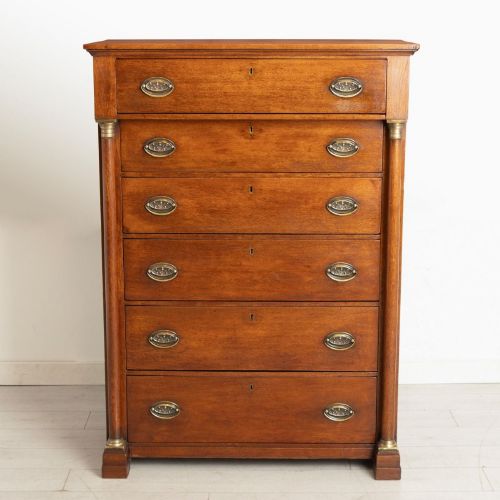
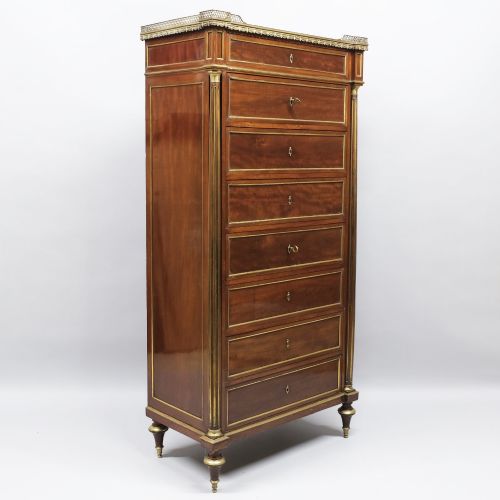
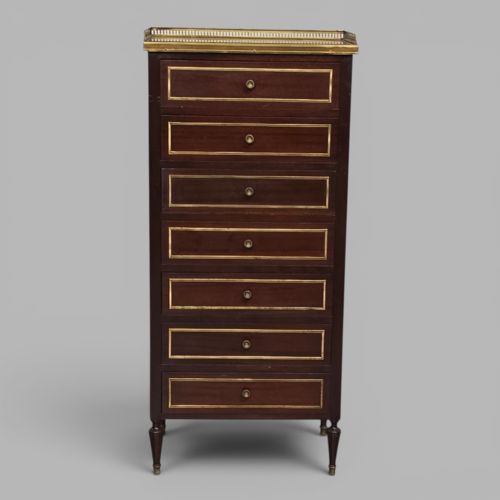
A french empire chest typically presents as a low commode, a tall semainier, or a bedside cabinet rooted in nineteenth-century French design. These case pieces serve primary roles as functional bedroom storage while maintaining a strong architectural silhouette through heavy rectangular proportions.
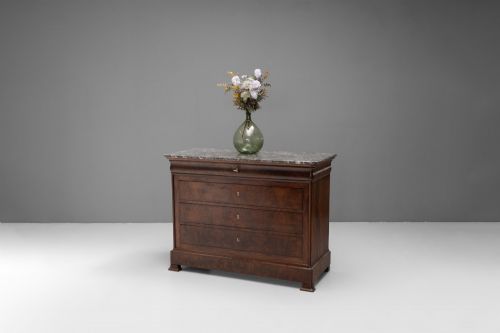
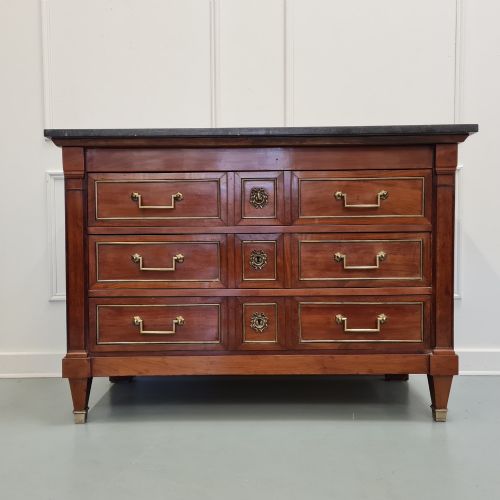
The version most frequently met on this page is the mahogany commode fitted with a contrasting marble top and restrained brass or ormolu mounts. Alongside these standard low chests, buyers encounter walnut variants, tall six-drawer pieces, and smaller bedside pairs originating from the broader nineteenth century and later revival periods.
Materials and Construction
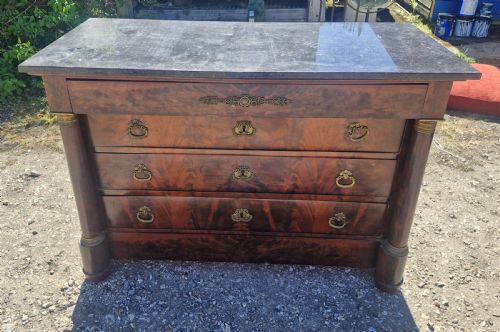
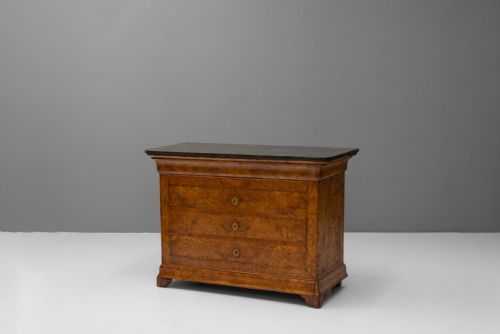
Makers built these pieces primarily using solid or veneered timber carcasses in mahogany, walnut, and cherry, often highlighting bookmatched grains and flame figures across the drawer fronts. Oak and elm also appear as structural or secondary woods within the drawer linings and internal framing.
Surfaces frequently integrate heavy slabs of marble in white or fossil grey, while cast ormolu, brass, and gilt bronze provide structural hardware and decorative escutcheons. Ebonised finishes and black lacquer also surface on specific regional or revival examples.
The inventory spans low commodes, tall semainiers, bedside tables, and specialised drinks cabinets.
Craftsmanship and Proportion
Quality separates along the precision of the timber matching and the crispness of the cast metal mounts applied to the carcase. Finer examples display continuous grain alignment across multiple drawer fronts and heavier, more deeply chased ormolu details.
The structural integrity of the drawer construction and the integration of the heavy marble top further distinguish finer pieces. Superior execution is evident in tight dovetailing, smooth drawer action, and the harmonious balance of classical proportions.
Tahan of Paris
The French Empire Chest Glossary
- Commode
- A low French chest of drawers, typically featuring multiple deep drawers and standing on short feet. They often support heavy marble slabs on their upper surfaces.
- Semainier
- A tall, slender chest of seven drawers, traditionally designed to hold a week of linen or garments. These vertical cases maximise storage while occupying a minimal floor footprint.
- Ormolu
- Gilded bronze used for decorative mounts and hardware on furniture. The technique involves applying a gold amalgam to bronze before firing.
- Bookmatched
- A woodworking technique where adjacent veneer leaves are opened like a page to mirror each other's grain patterns. This creates symmetrical decorative designs across drawer fronts.
- Escutcheon
- A protective plate surrounding a keyhole. On these pieces, they often take classical geometric or figural cast metal forms.
French Empire Chest: Frequently Asked Questions
What is a semainier?
A semainier is a tall seven-drawer chest designed to hold a week of clothing. It offers vertical storage while keeping a narrow footprint.
These pieces suit tighter bedroom spaces where a wide commode will not fit. Their height draws the eye upward, adding vertical balance to a room.
How do I care for marble tops?
Marble tops require simple dusting and immediate wiping of liquid spills to prevent staining. Acidic substances can etch the polished stone surface over time.
Avoid placing abrasive objects directly on the marble. Gentle soap and water suffice for routine cleaning without harsh chemical treatments.
Are these chests heavy?
These chests carry significant weight due to dense hardwood timbers and thick marble slabs. Moving them typically requires two people to prevent structural strain.
The marble tops usually lift off independently from the wooden base to make relocation safer and more manageable.
Where do I place a commode?
A commode serves well against a primary bedroom wall or within a formal hallway. Its flat marble surface provides an ideal display area for lamps or decorative objects.
Low proportions also allow these pieces to function beneath large wall mirrors or framed artwork without crowding the room.