
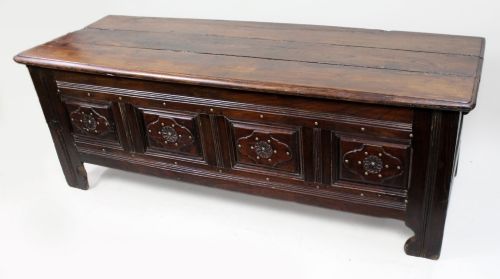

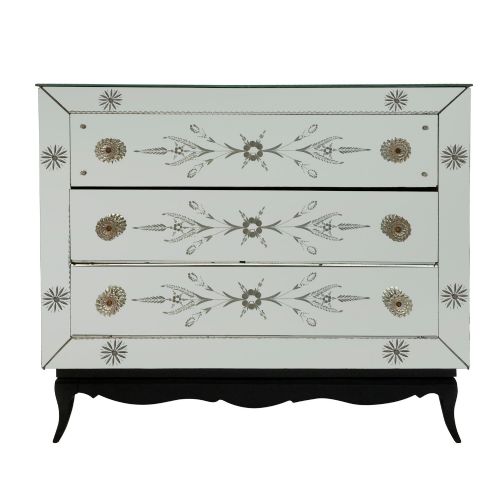
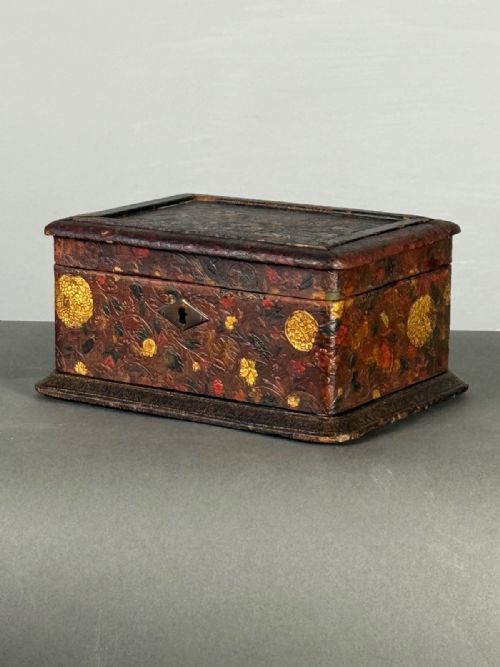


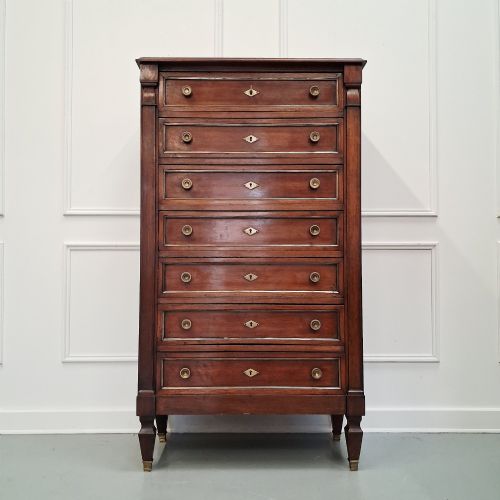
French Chest
A french antique chest brings continental storage and character to a room, offering practical utility alongside classical proportions and fine timber work.
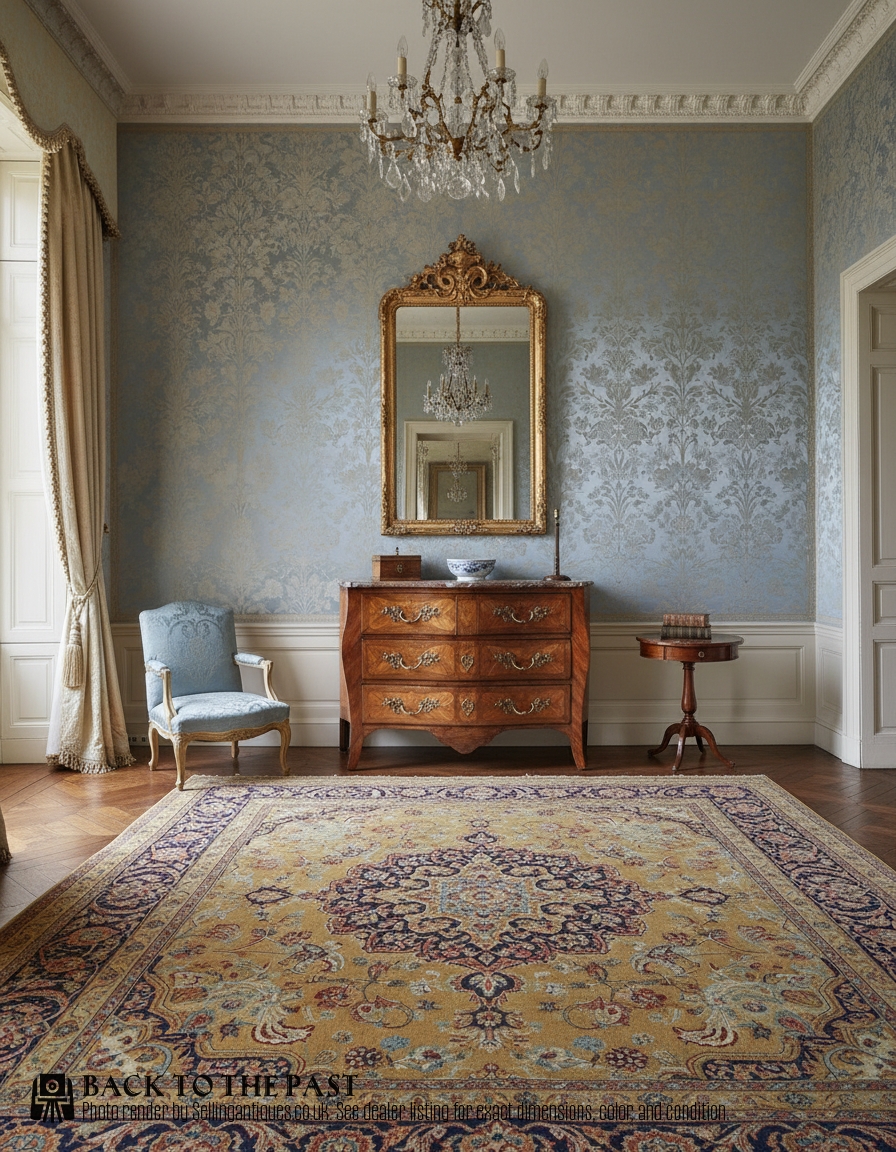
What they are
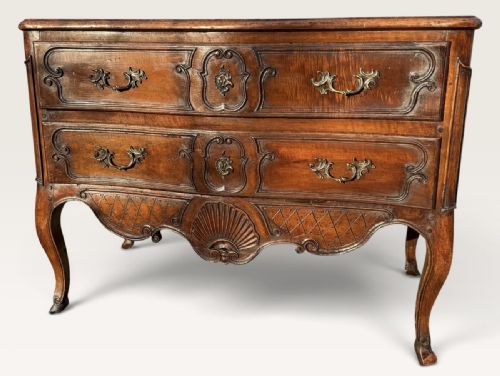
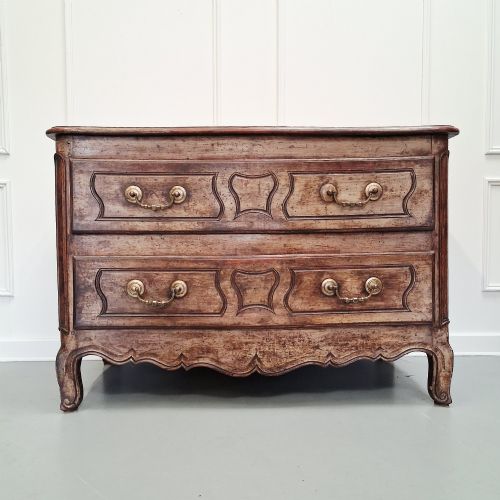
The selection spans periods from the eighteenth century through to the early twentieth century, incorporating regional styles such as Provençal designs alongside formal court aesthetics like Louis XVI and Empire. Formats range from narrow semainiers to low bedside chests with stone slabs.
Most examples function as drawer chests for clothing or bedside tables, utilising native and exotic hardwoods fitted with functional compartments. Their varied scale allows them to fit into both compact spaces and larger reception rooms.

How they were made
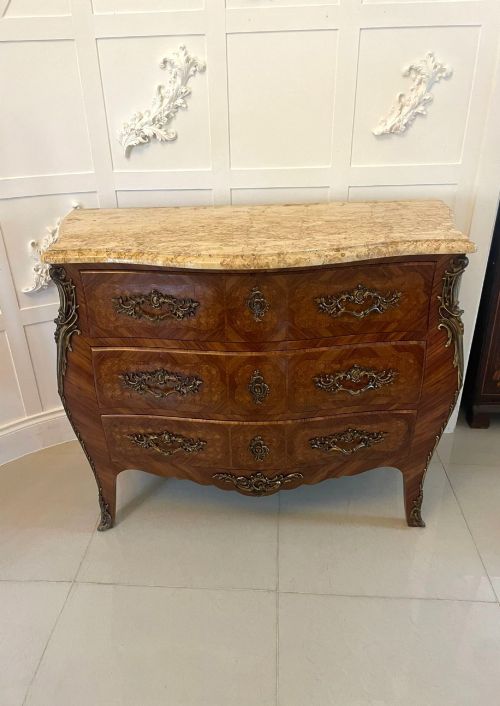
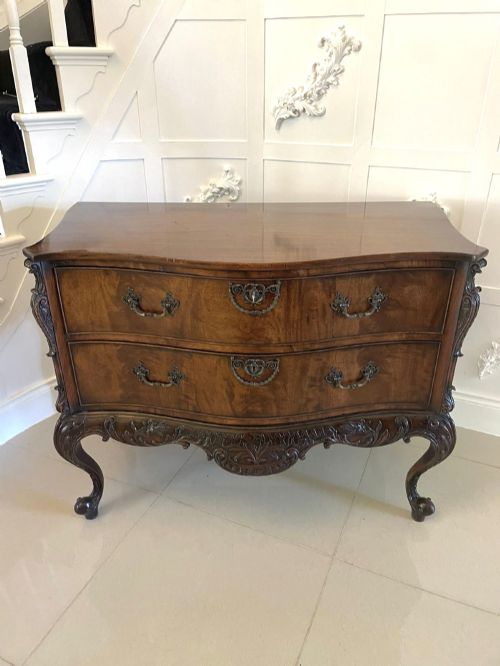
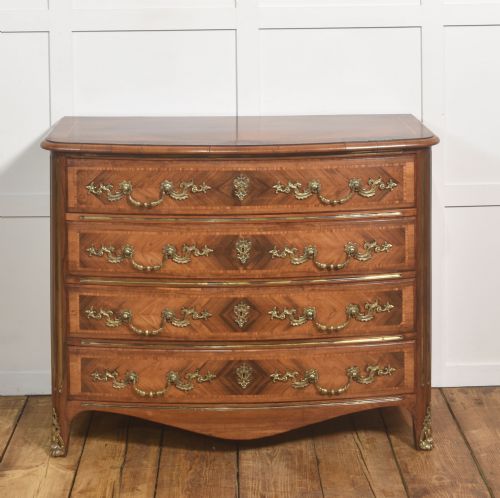
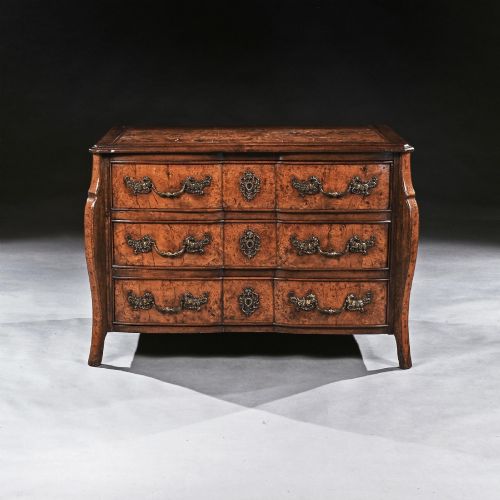
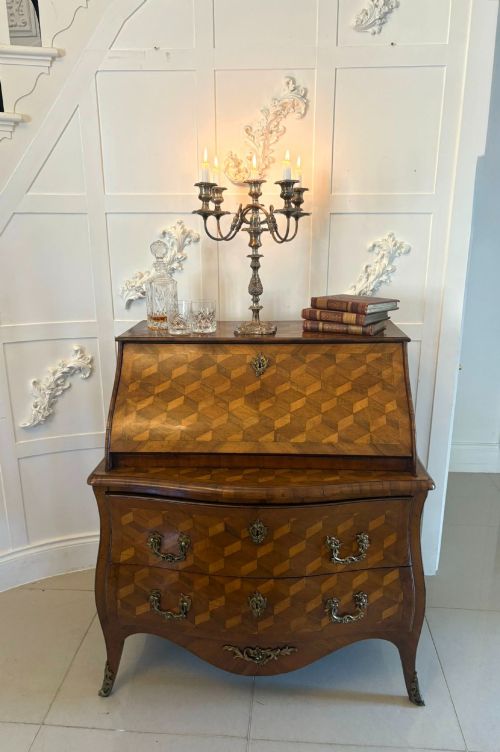
Cabinet makers constructed these pieces using solid timbers like walnut, mahogany, fruitwood, and chestnut for structural carcases, often applying decorative veneers such as kingwood, rosewood, and burr walnut to visible surfaces. Marquetry and parquetry patterns add geometric or floral ornamentation across the drawer fronts and sides.
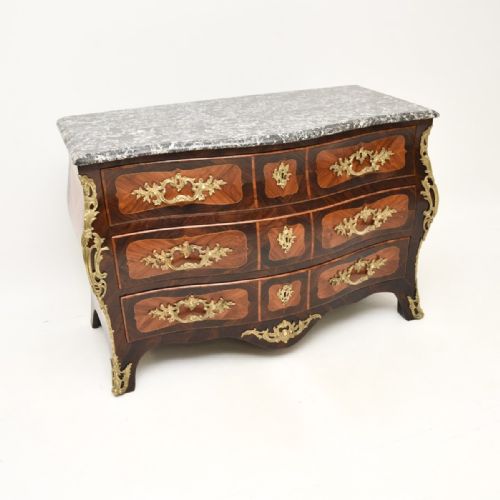
Many examples incorporate fitted marble slabs in white, grey, or green tones on the upper surface, resting directly on the wooden framing. Metal elements including brass handles, escutcheons, and cast gilt bronze mounts accent the corners and drawers.
Retail Price Guide 2026
Typical UK retail prices for french chest, calculated from the Sellingantiques database of over a million retail prices indexed since 2003. This retail price guide relies exclusively on Sellingantiques data; no external sources or auction records are used, so the figures do not describe the wider market.
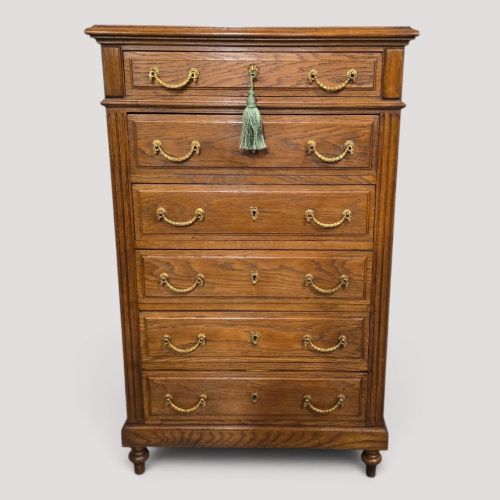
Some tall chests arrived with seven drawers so an owner could store exactly one fresh set of linen for each day of the week.
What varies in quality
The refinement of the timber selection and the complexity of the veneer work dictate the visual distinction between standard pieces and finer examples. Elaborate marquetry layouts and carefully matched grain patterns require high skill in cutting and laying the wood.
The crispness of cast bronze mounts and the integration of carved wooden details separate workshop production levels. Superior execution is evident where the hardware, stone tops, and timber construction align precisely with the designated stylistic period.
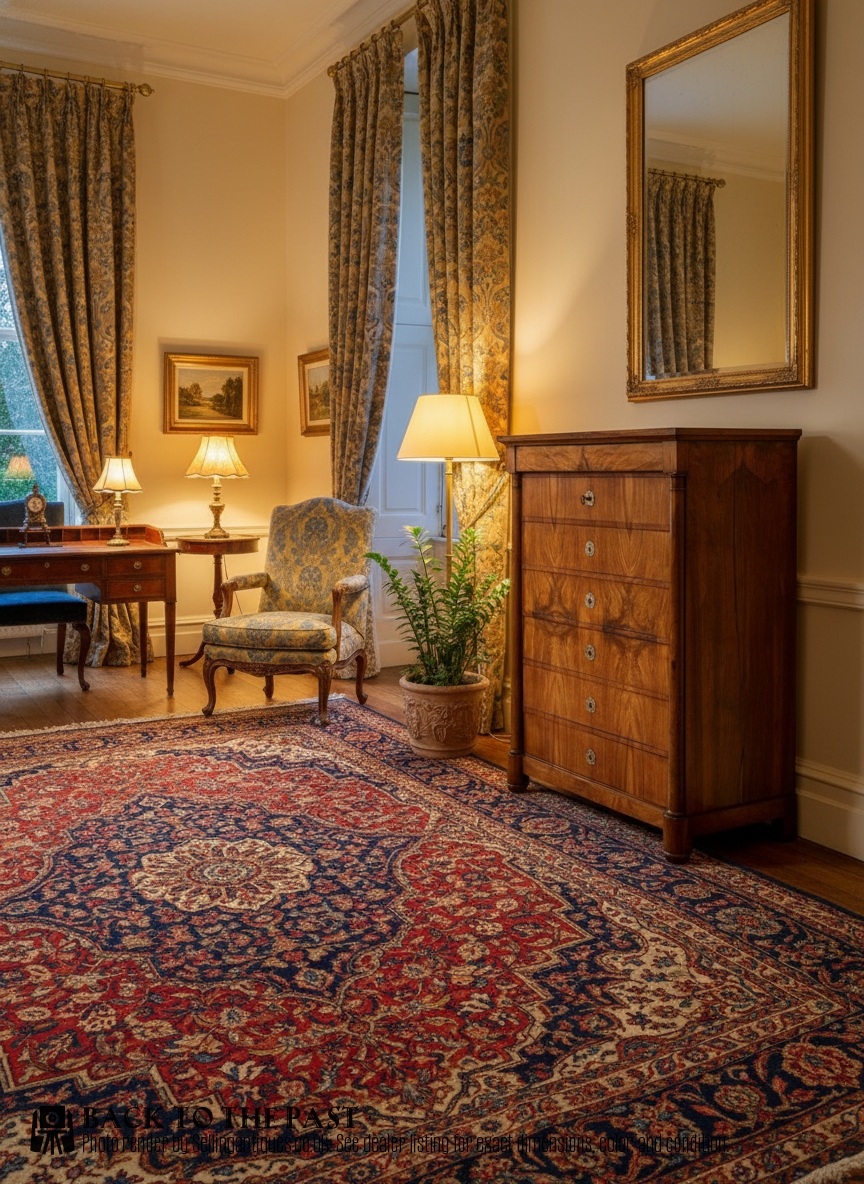
Bruneau
The French Chest Glossary
- Commode
- A low French chest of drawers, typically standing on relatively short legs and often topped with marble.
- Semainier
- A tall, narrow chest traditionally featuring seven drawers, one for each day of the week.
- Bombe
- A swollen or convex bulging shape characteristic of certain eighteenth-century furniture designs.
- Marquetry
- Decorative veneer work formed by fitting together small pieces of different coloured woods to create pictorial or geometric patterns.
- Parquetry
- Geometric mosaic woodwork used for surfaces, formed by laying small veneer blocks in repeating patterns.
- Gilt bronze
- Copper alloy metal given a gold finish through fire gilding or electroplating, utilised for decorative mounts and handles.
Frequently Asked Questions
What is a French commode?
A commode is a low chest of drawers originating in France, traditionally featuring multiple drawer tiers and frequently fitted with a marble top.
These pieces served as principal storage furniture in bedrooms and reception rooms, combining decorative presence with daily utility.
How do I identify a semainier?
A semainier is recognised by its tall, slender profile and its distinct configuration of seven drawers stacked vertically.
This specific vertical format was designed to hold a week's worth of personal linens in compact floor space.
What woods were used?
Cabinet makers utilised a mixture of structural timbers such as walnut, mahogany, chestnut, and fruitwood for the main frames.
Exotic decorative veneers including kingwood, rosewood, and burr walnut were applied to the exterior surfaces for visual contrast.
Are marble tops original?
Many eighteenth and nineteenth-century commodes and bedside chests were designed and constructed to feature fitted marble surfaces in various shades.
These stone slabs provided a durable, decorative top that protected the timber underneath from daily use.