
French Serpentine Commode
These eighteenth- and nineteenth-century pieces bring sweeping curves and substantial storage to a room.
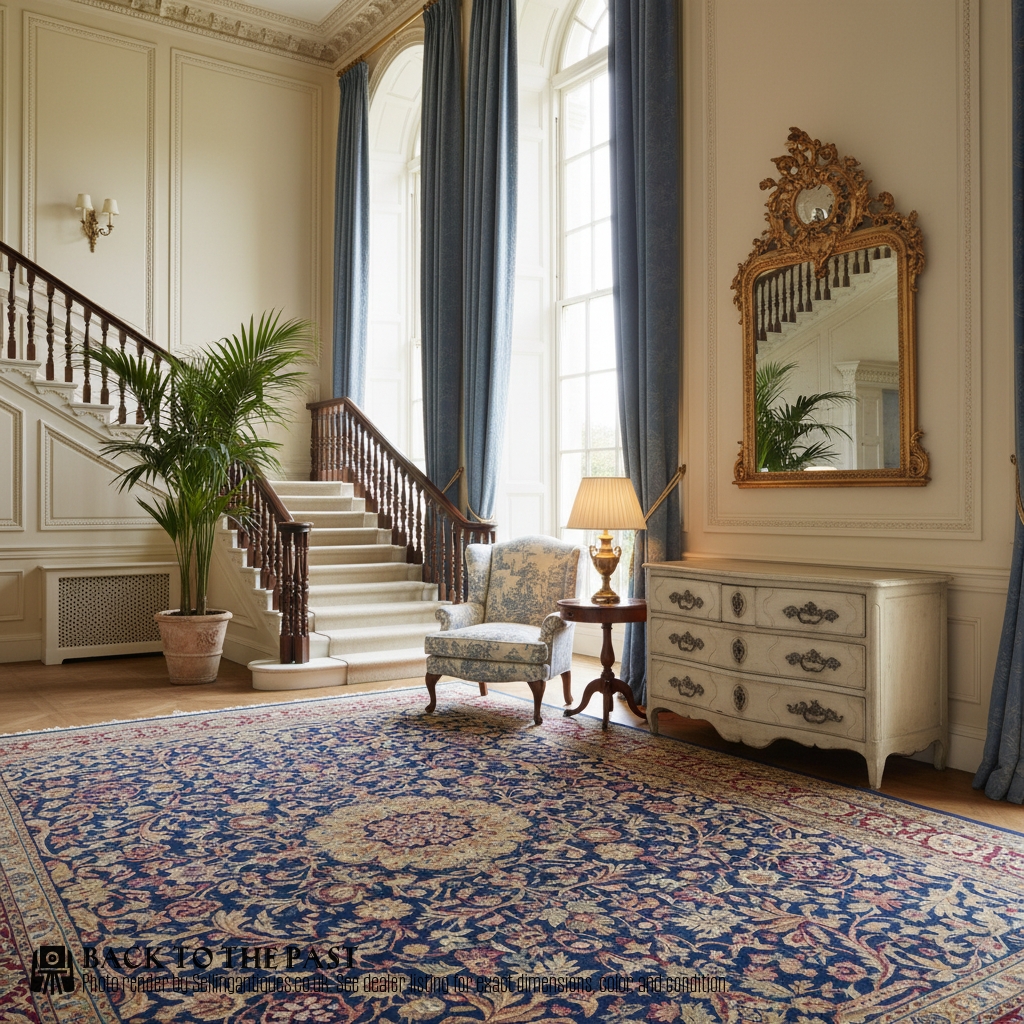
What the French serpentine commode is
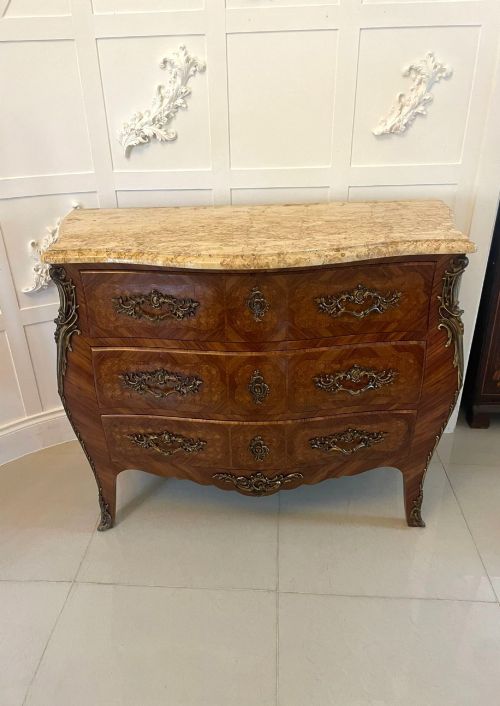
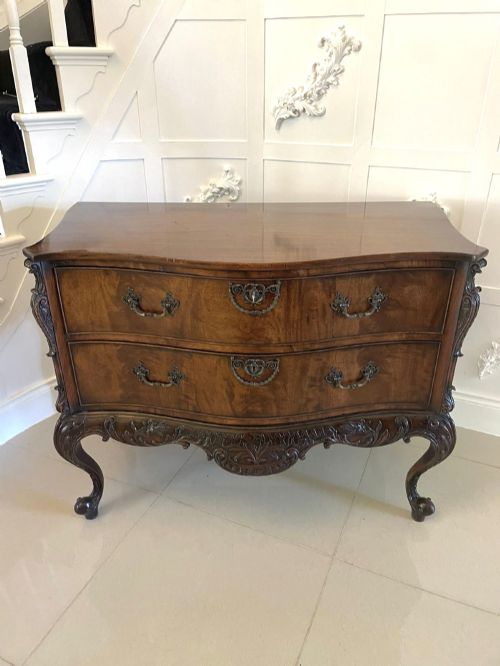
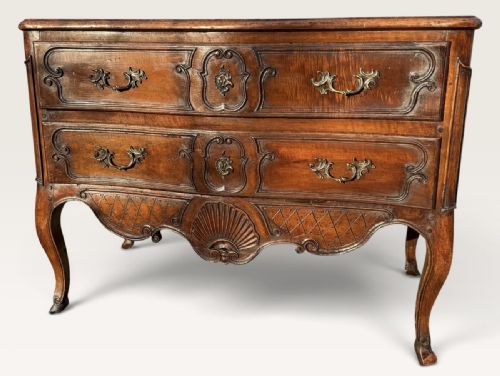
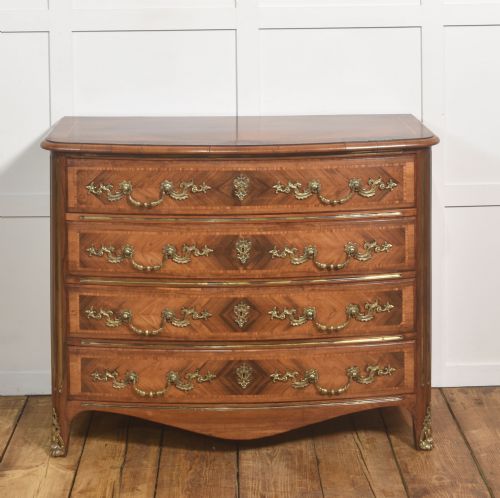
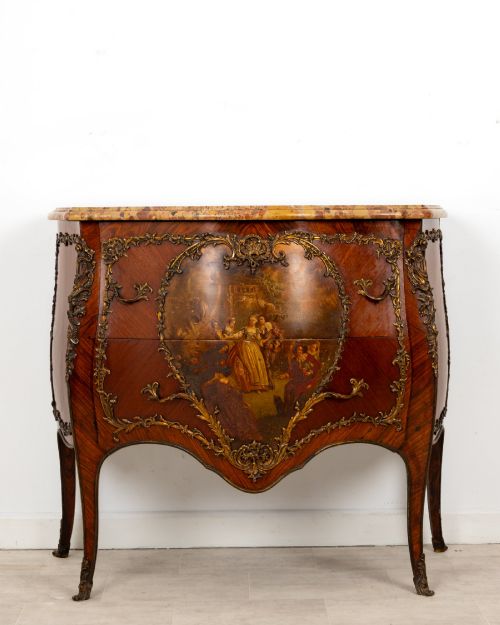
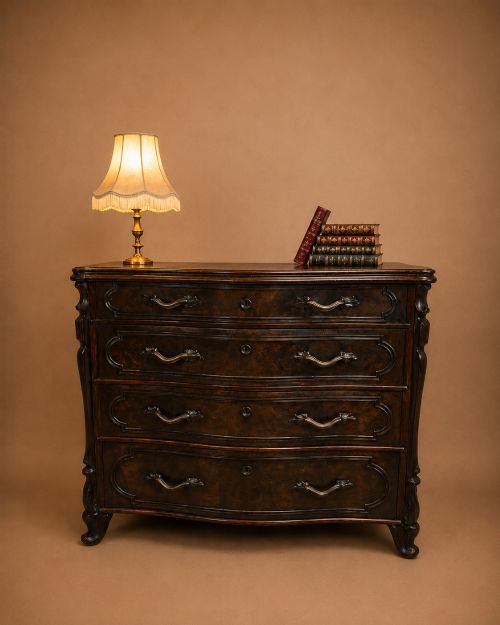
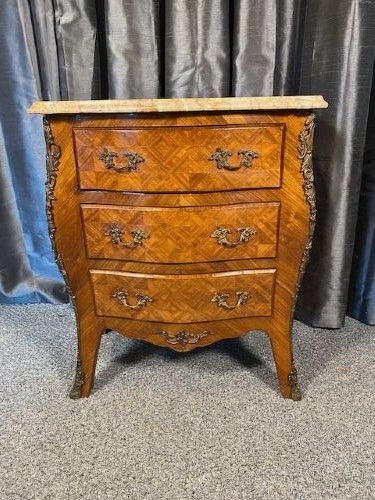
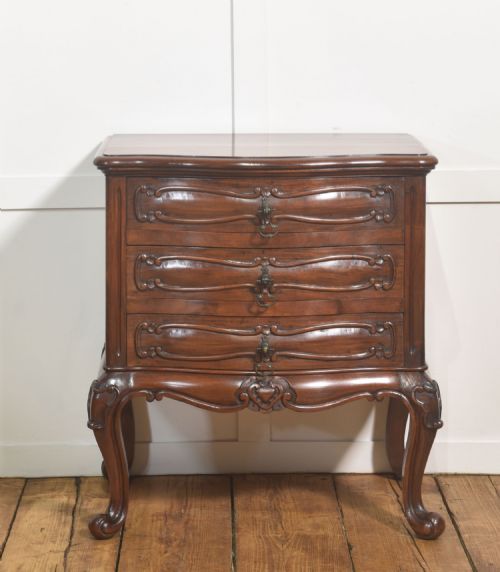
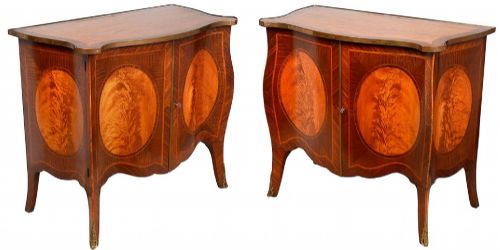
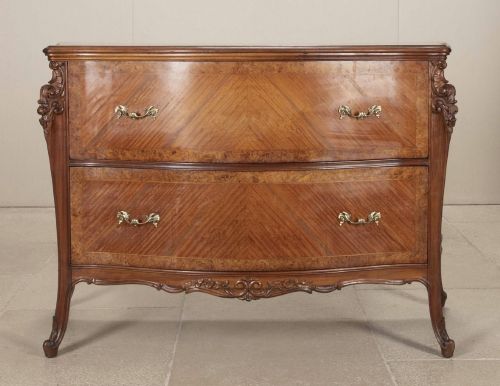
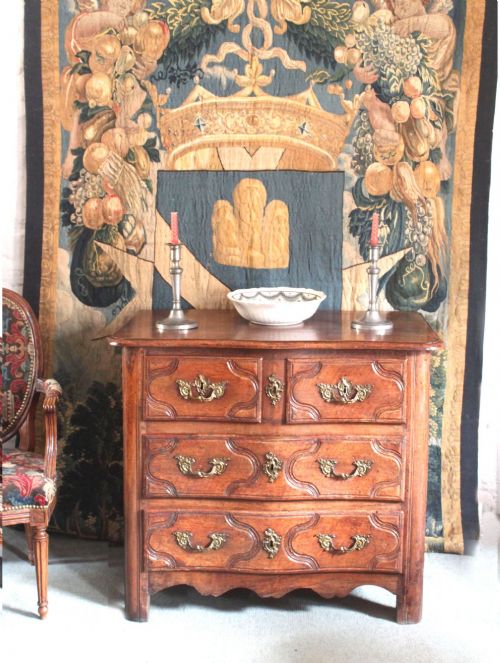
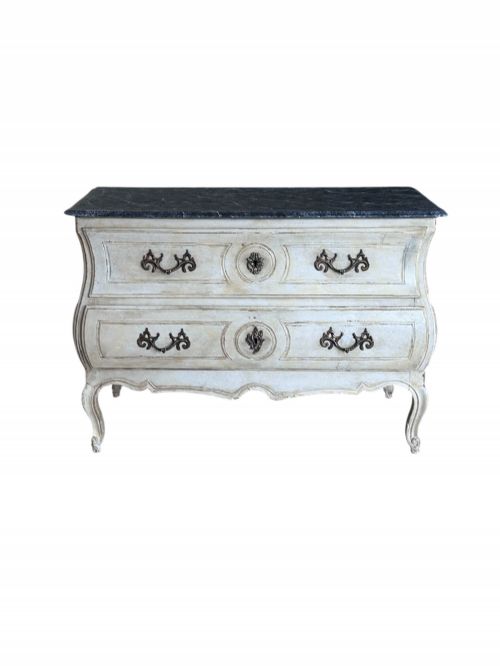
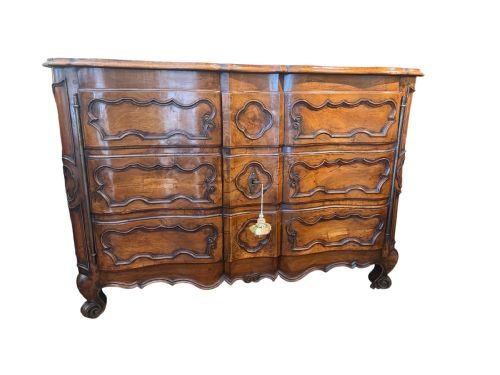
A French serpentine commode presents a distinctive undulating front that curves inward and outward, combining decorative elegance with practical drawer storage. The form appears across the eighteenth and nineteenth centuries, spanning regional provincial workshops and elaborate revival designs.
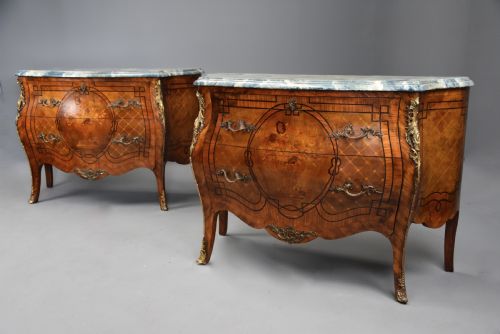
Buyers meet pieces fashioned from walnut, kingwood, oak, and painted finishes, often topped with marble or scagliola. Forms range from restrained provincial chests to bombe profiles and pieces influenced by makers such as Charles Cressant.
The inventory demonstrates a strong representation of walnut and oak examples from the eighteenth century, alongside later kingwood pieces from the twentieth century featuring lift tops or concealed compartments.
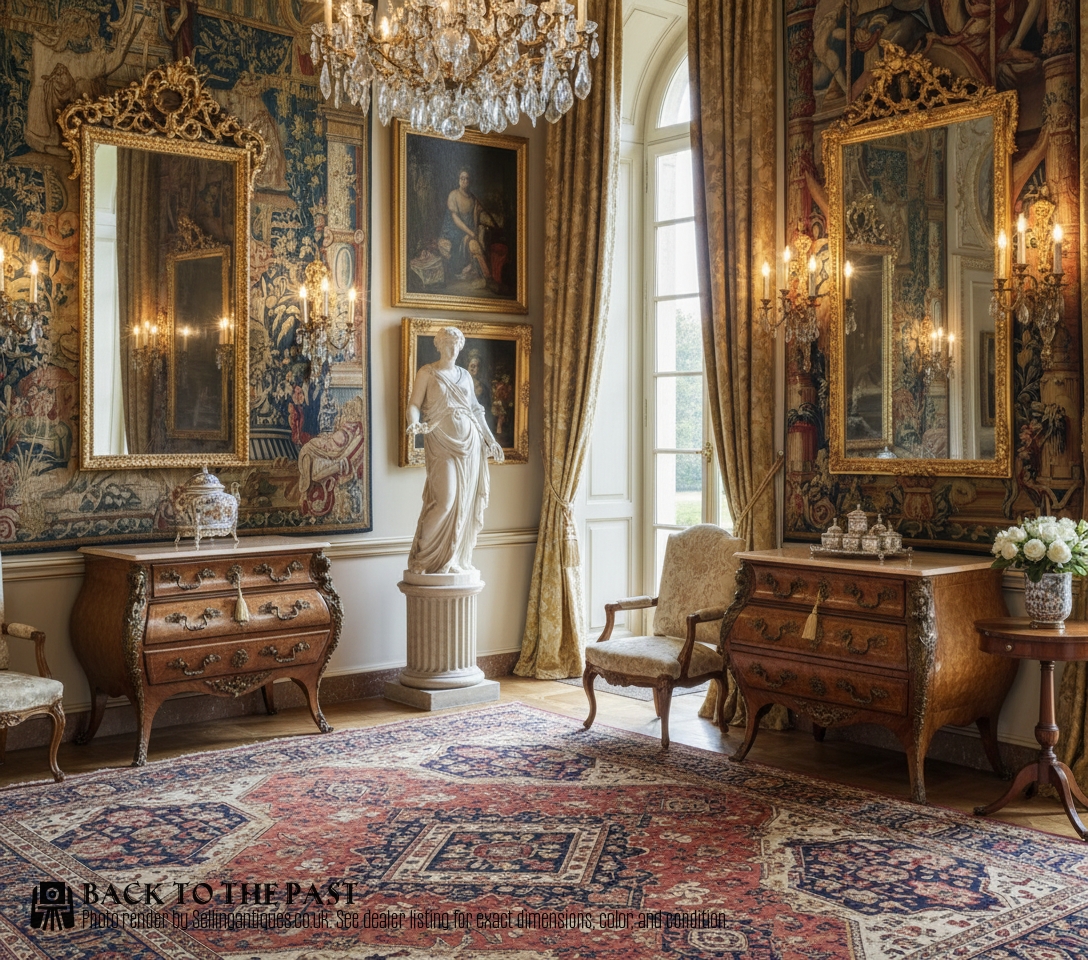
How they were made
Cabinetmakers constructed these chests using solid and veneered timbers including walnut, kingwood, oak, and mahogany. Skilled hands shaped the characteristic serpentine and bombe profiles through careful carpentry and timber bending.
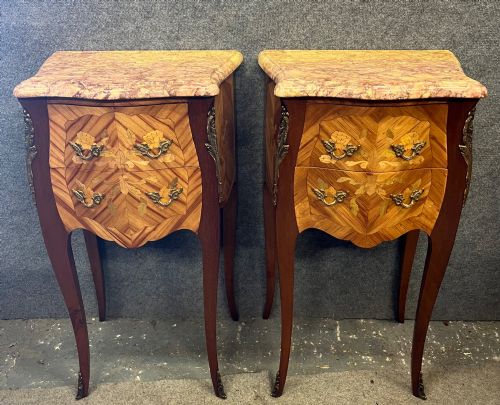
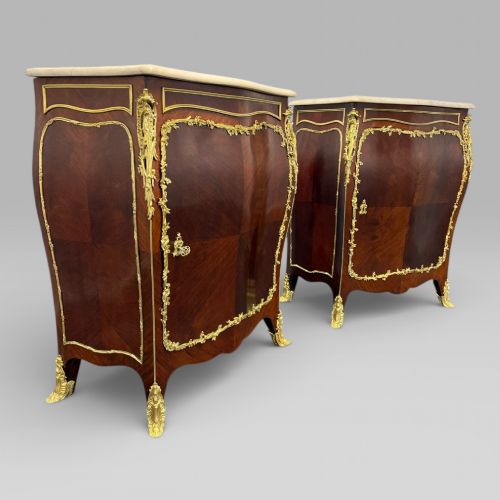
Surface decoration involved floral marquetry, parquetry patterns, and painted finishes. Artisans mounted brass and ormolu hardware, framing the drawers and corners to accentuate the flowing lines.
Tops frequently incorporated marble or scagliola stone, fitted precisely to follow the complex curves of the wooden carcase beneath.
Retail Price Guide 2026
Typical UK retail prices for french serpentine commode, calculated from the Sellingantiques database of over a million retail prices indexed since 2003. This retail price guide relies exclusively on Sellingantiques data; no external sources or auction records are used, so the figures do not describe the wider market.
Some commodes hide secrets within, offering lift tops and concealed mahogany compartments for unexpected treasures.
What varies in quality
The sophistication of the timber work and veneer selection defines the hierarchy of these chests. Elaborate floral marquetry and matched kingwood veneers distinguish high-status examples from simpler provincial oak and walnut pieces.
Mounting hardware contributes significantly to the overall distinction of a commode. Cast ormolu handles and escutcheons display varying degrees of chasing depth and crispness.
The integration of the stone top with the wooden carcase reveals the maker's precision. A well-fitted marble or scagliola top follows every contour of the serpentine sweep without awkward overhangs.

Charles Cressant
The French Serpentine Commode Glossary
- Serpentine
- A shape featuring a curved front with a convex centre flanked by concave sides, creating an undulating line. This contour defines the primary aesthetic of the commode.
- Bombe
- A swelling, bulging profile characteristic of certain continental case furniture. The sides and front curve outward in a pronounced convex form.
- Ormolu
- Gilded bronze used for decorative mounts and furniture hardware. The technique involves applying a gold amalgam to bronze before firing.
- Scagliola
- A composite material made from selenite, glue, and pigments, mimicking marble and other stones. Artisans inlay and polish the mixture to create decorative table tops.
- Marquetry
- The art of applying pieces of veneer to a structure to form decorative patterns and pictures. Craftsmen utilise various coloured woods to achieve floral and geometric designs.
Frequently Asked Questions
What is a serpentine commode?
A serpentine commode is a drawer chest featuring a front edge that curves inward and outward in a continuous wave. These pieces originated in France and served as decorative storage furniture.
Craftsmen built them in various woods and fitted them with stone tops, combining utility with distinct continental styling.
How do I date a French commode?
Dating relies on examining the timber species, construction methods, and hardware styles. Eighteenth-century pieces often utilise solid walnut or oak with hand-cut joints.
Twentieth-century revivals and later interpretations frequently employ kingwood veneers, marquetry, and specific machinery marks on internal framing elements.
Where were these chests used?
These commodes functioned primarily as principal storage furniture within domestic reception rooms and bedchambers. Their decorative fronts suited prominent placement against interior walls.
The addition of marble or scagliola tops provided a durable surface for displaying decorative objects and lighting.
How do I care for marble tops?
Marble and scagliola tops require cleaning with mild, pH-neutral soap and warm water. Avoid acidic substances and harsh chemical cleaners that etch the polished stone surface.
Applying a specialised stone wax helps protect the surface from moisture and staining over time.