
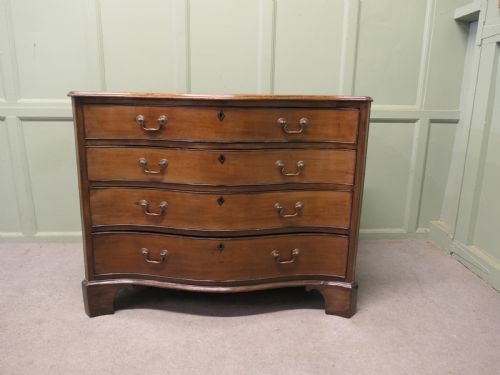


Eighteenth Century Commode
An eighteenth century commode brings architectural dignity and deep timber grain to a room, offering generous storage disguised as sculpture.
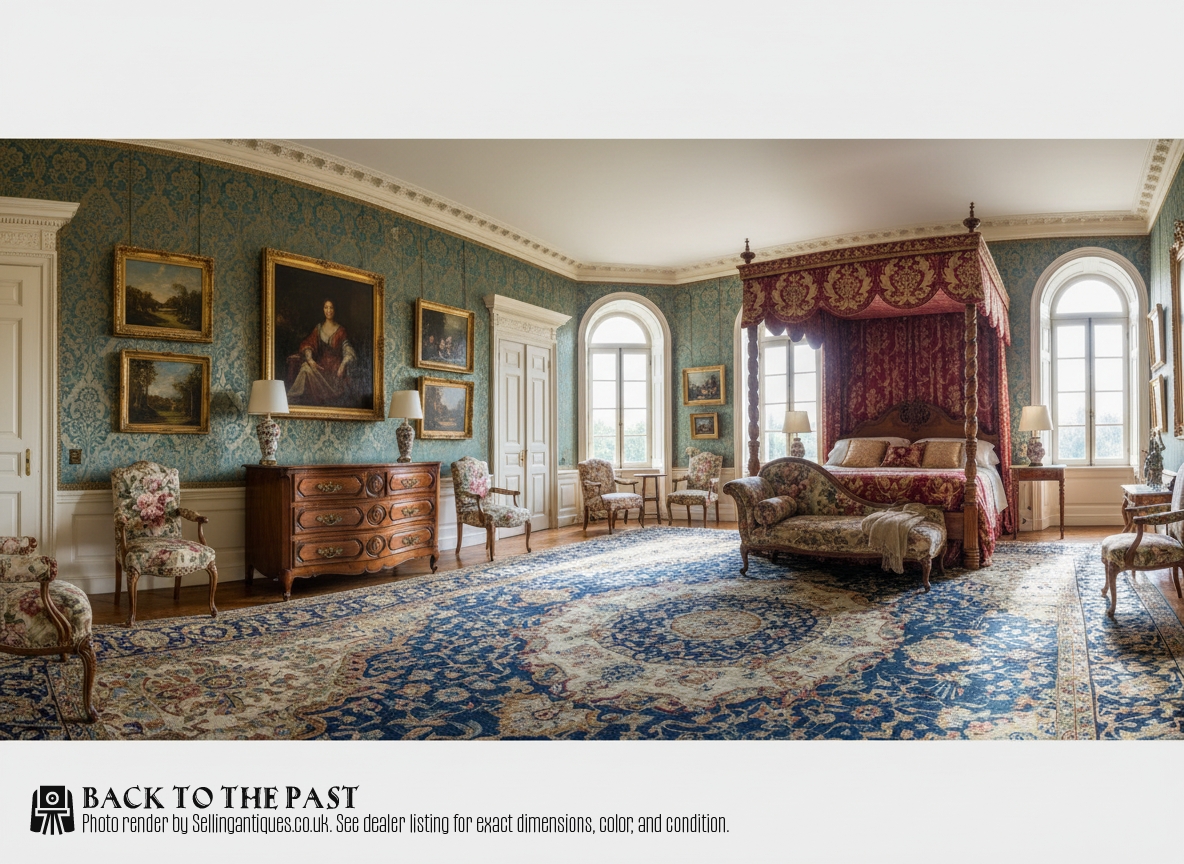
Eighteenth Century Commode
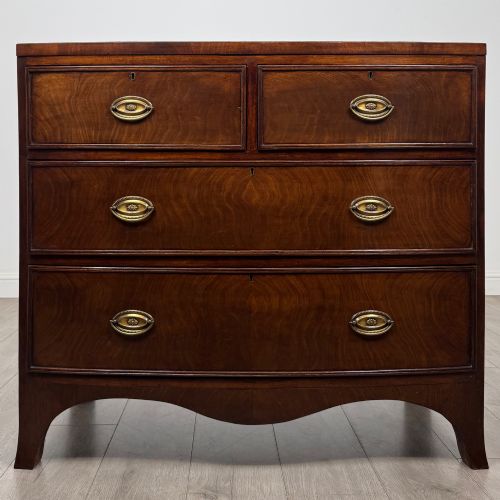
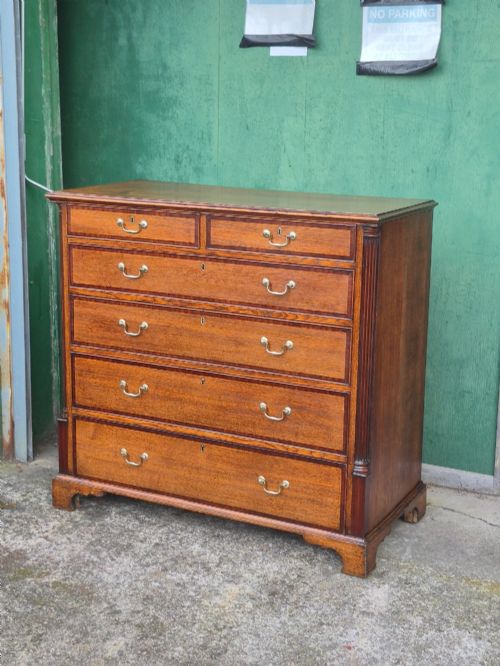
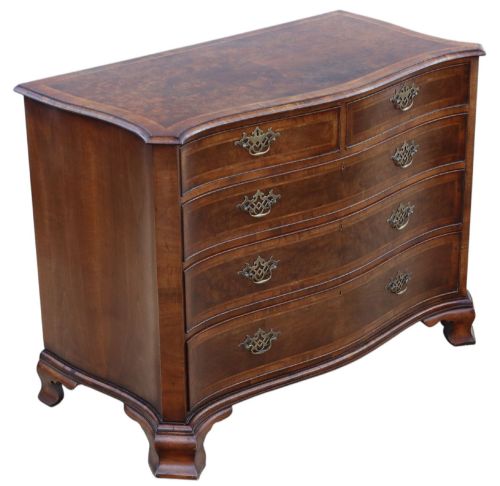
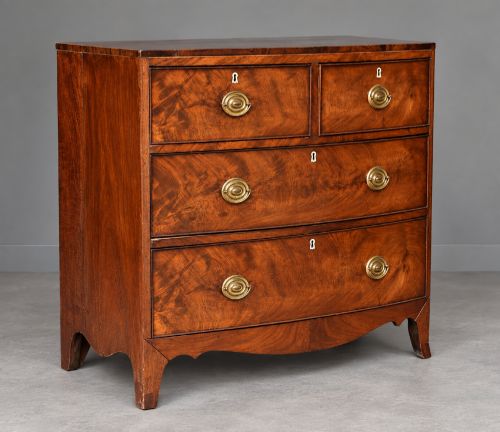
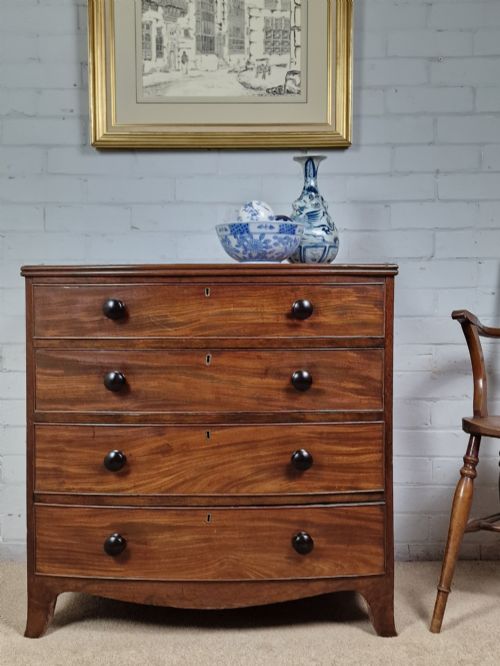
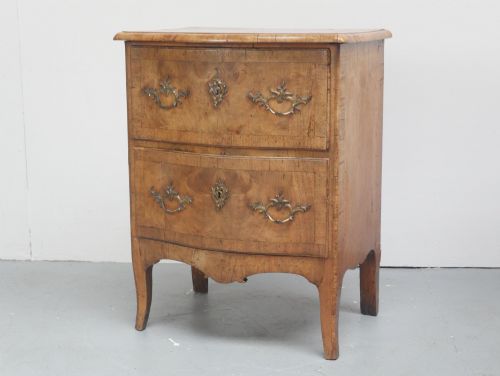
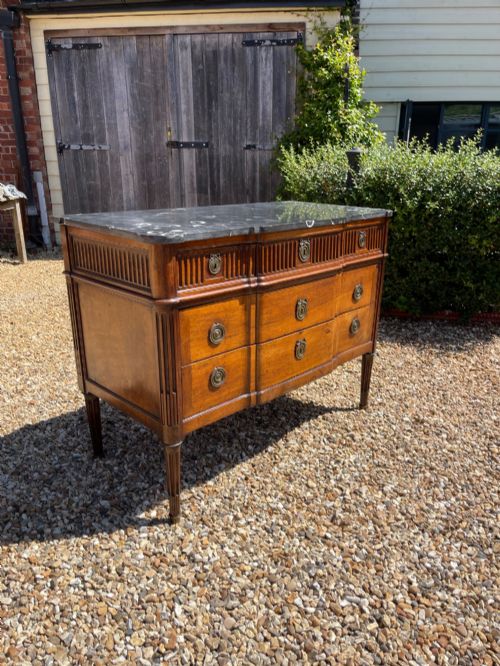
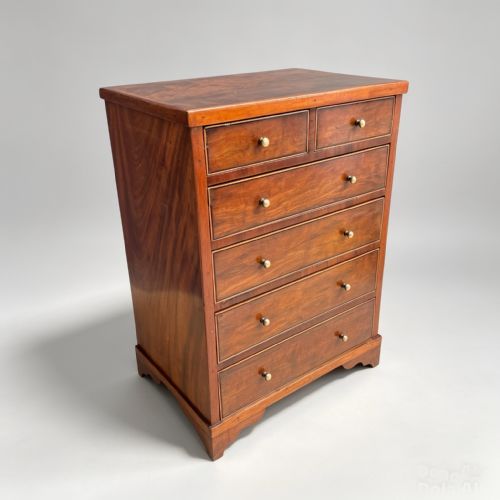
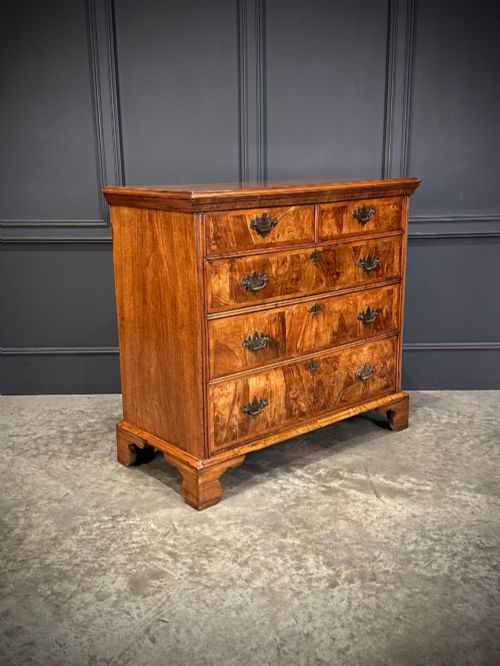
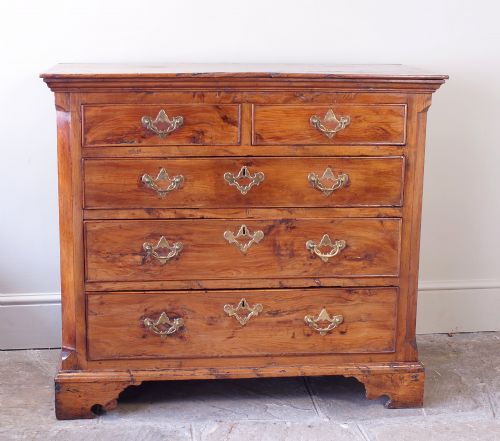
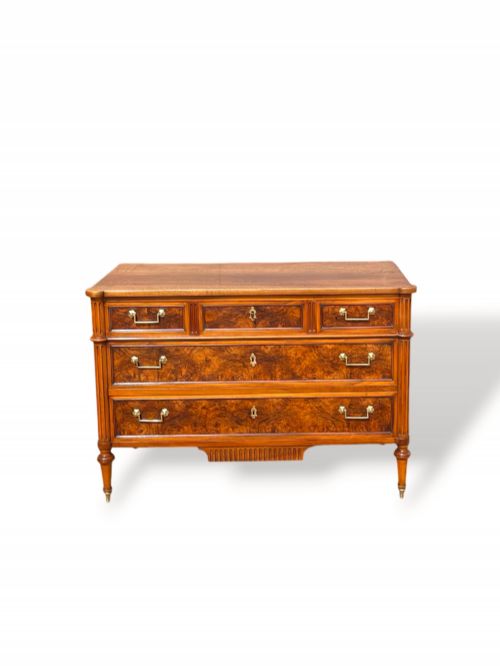
When you search for an eighteenth century commode, you are looking at substantial case furniture designed for domestic storage, most frequently taking the form of a chest of drawers or a dedicated commode. These pieces emerge predominantly from Georgian Britain and continental Europe, spanning styles from austere provincial designs to elaborate serpentine shapes.
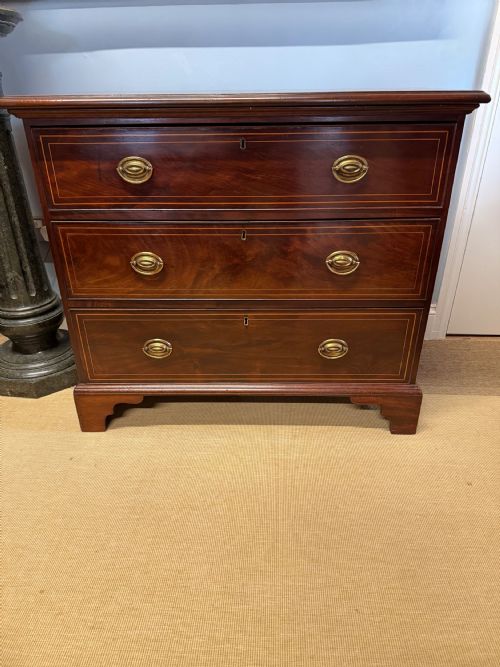
On this page, you are most likely to meet mahogany and walnut chests of drawers originating from the Georgian period or the broader eighteenth century. Many examples feature bow fronts or serpentine profiles, constructed with varying drawer configurations from compact four-drawer formats to larger bedside or hall pieces.

How they were made
Cabinetmakers relied heavily on dense hardwoods such as mahogany, walnut, and oak, often applying figured veneers and crossbanding to flat and curved surfaces alike. Drawer linings and secondary frames typically utilise pine or oak, joined with traditional techniques suited to the movement of timber over centuries.
Hardware consists of cast brass handles and escutcheons, whilst continental and provincial pieces frequently incorporate painted finishes or applied ornamentation. Surfaces are traditionally finished with wax or polish to reveal the natural grain and colour of the wood.
Eighteenth Century Commode Retail Price Guide 2026
Typical asking prices for eighteenth century commode among the pieces listed under this phrase on Sellingantiques today, from the lower quarter to the upper quarter. They describe what is for sale here now, not the wider market.
Several chests still conceal original locking mechanisms, requiring tiny brass keys to secure personal belongings away from prying eyes.
What varies in quality
The distinction between ordinary and exceptional pieces rests primarily on the handling of timber and the ambition of the silhouette. Straight-front chests in standard woods sit at the accessible end of the scale, whilst serpentine fronts, book-matched veneers, and intricate inlay demand superior carpentry.
Proportion and the crispness of moulded edges dictate visual success. Pieces that retain their original brassware, smooth-sliding drawers, and untouched patination command greater appreciation among collectors than heavily altered examples.

The Eighteenth Century Commode Glossary
- Serpentine
- A front contour that curves outward in the centre and inward at the sides, creating a fluid, undulating profile.
- Bow front
- A convex, outwardly curved front facade that softens the rectangular geometry of a case piece.
- Crossbanding
- A border veneer applied around the edges of a drawer or top, with the wood grain running perpendicular to the central panel.
- Brushing slide
- A pull-out shelf positioned above the top drawers, historically used for folding clothes or writing.
- Escutcheon
- A protective brass plate surrounding a keyhole, often shaped to match the period style of the furniture.
Eighteenth Century Commode: Frequently Asked Questions
How do I clean an old commode?
Dust the surfaces regularly with a soft, dry cloth to prevent dirt accumulation. Apply a quality beeswax periodically to nourish the timber and maintain a soft sheen.
Avoid modern liquid polishes containing silicone, which can penetrate the grain and damage historic finishes. Keep the wood away from direct heat sources and strong sunlight to prevent warping and fading.
What is the difference between a chest and a commode?
In British usage, a chest of drawers generally refers to a tall or low rectangular case piece with multiple horizontal drawers. A commode historically denotes a lower, more decorative cabinet or drawer unit, often of French or continental derivation.
Over time, the terms have overlapped significantly in the antiques trade, particularly when describing serpentine or bombe forms from the eighteenth century.
Can I use an antique commode in a modern bedroom?
These pieces integrate easily into contemporary interiors, providing practical bedside or clothing storage with distinct architectural character. Their rich timber tones and varied drawer depths suit modern living spaces remarkably well.
Ensure you measure floor space and ceiling heights carefully, as older furniture can have deeper footprints than standard modern equivalents.
How do I recognise a Georgian piece?
Georgian furniture is characterised by balanced proportions, restrained classical ornamentation, and the extensive use of mahogany or walnut. Look for hand-cut dovetails on the drawer sides and traditional timber framing.
Regional variations and changing monarchs during the period introduced shifts from heavy walnut forms to lighter, inlaid satinwood and mahogany designs.