
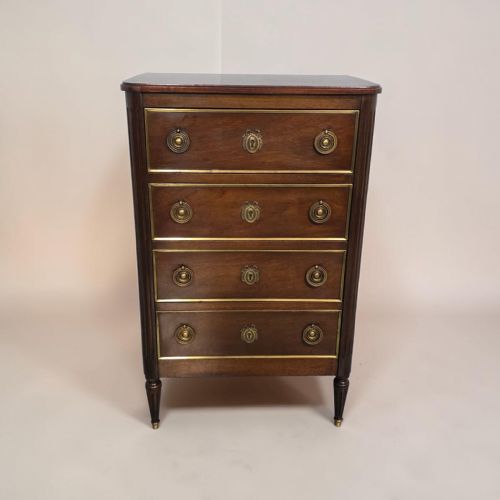
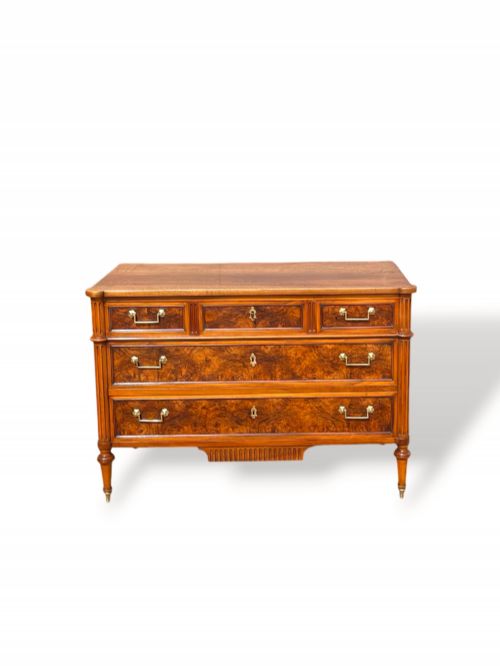
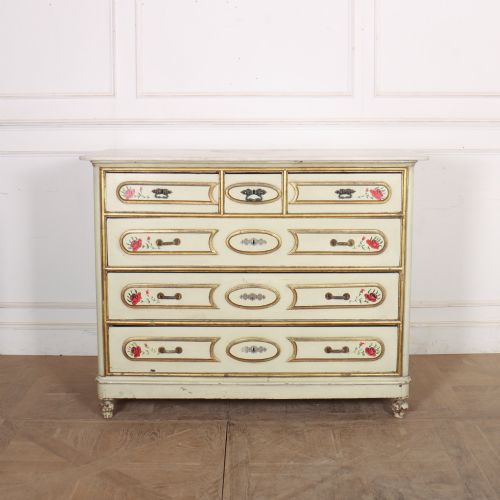
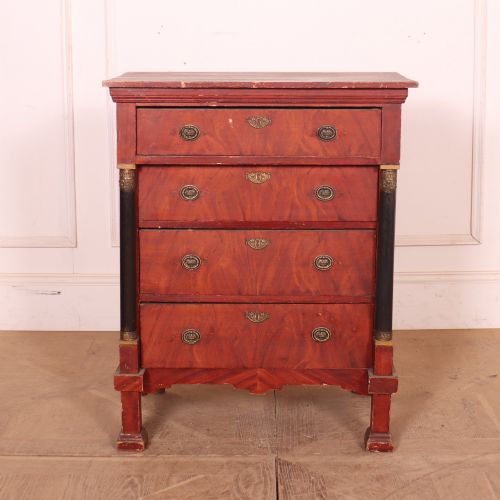



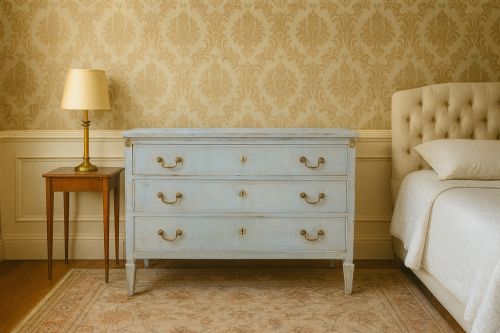
Neoclassical Commode Chest
A neoclassical commode chest brings balanced form and disciplined ornament into a room, offering practical storage through formal restraint.

Materials and construction methods
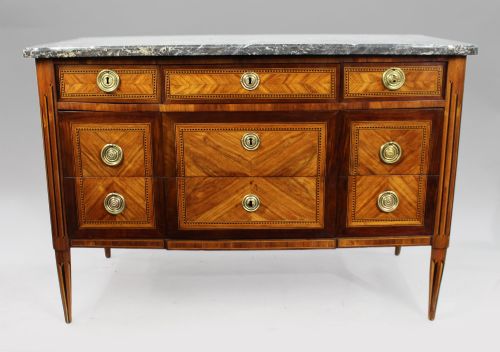
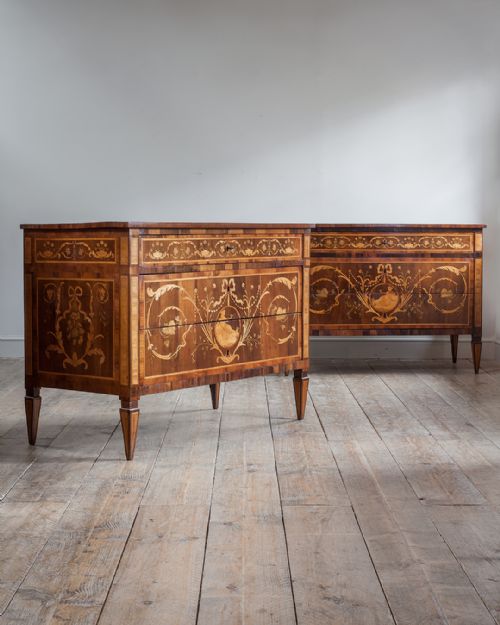
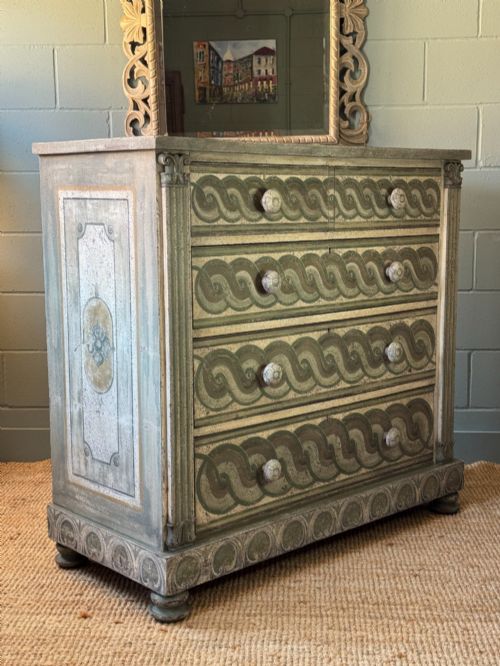
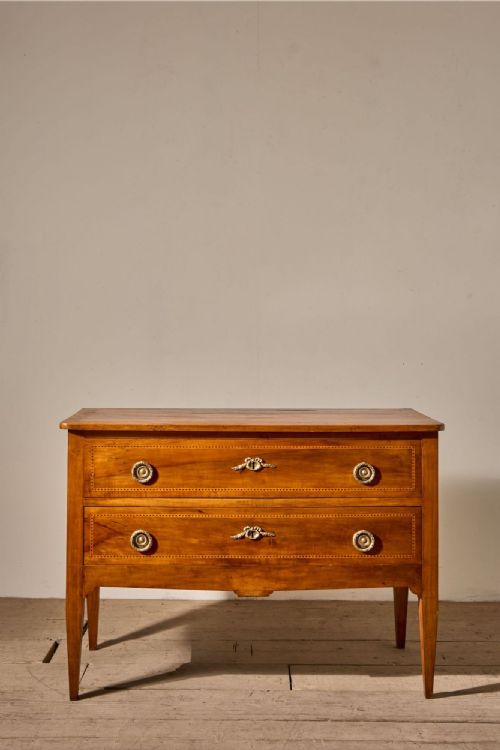
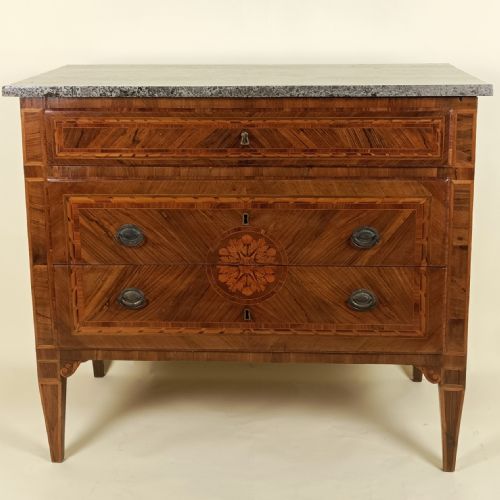
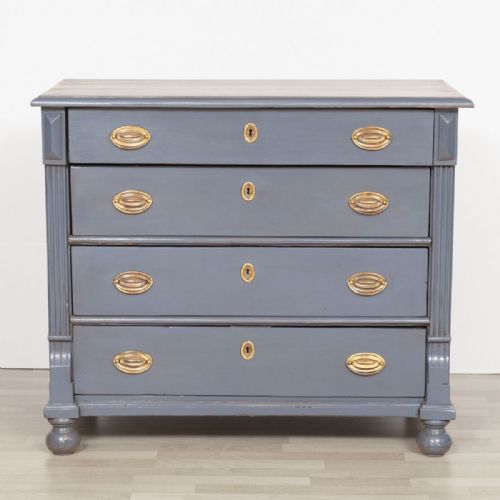
Cabinetmakers constructed these carcases from native and exotic timbers including walnut, mahogany, cherrywood, satinwood, and pine, often applying elaborate veneers of kingwood and birch. Surface decoration relied heavily on marquetry and parquetry patterns, alongside hand-painted finishes found particularly on Swedish Gustavian and Italian pieces.
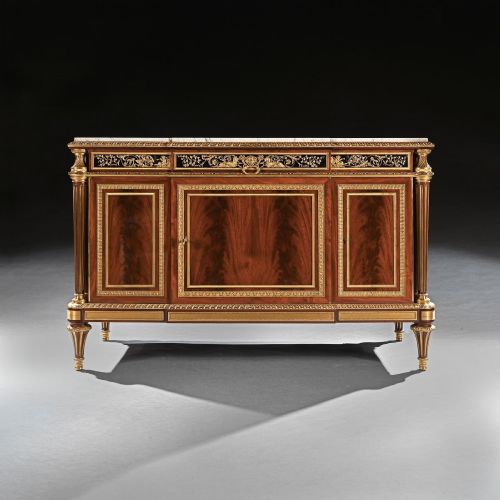
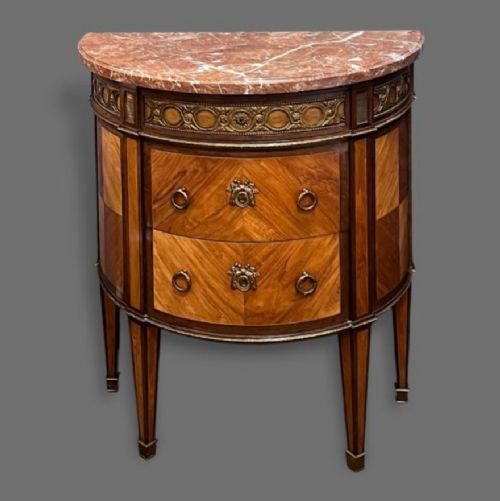
Marble slabs, finished with straight or serpentine edges, form the upper surfaces of many French and Italian examples. Cast brass and ormolu mounts, keyplates, and handles accentuate the structural lines of the drawers and corners.
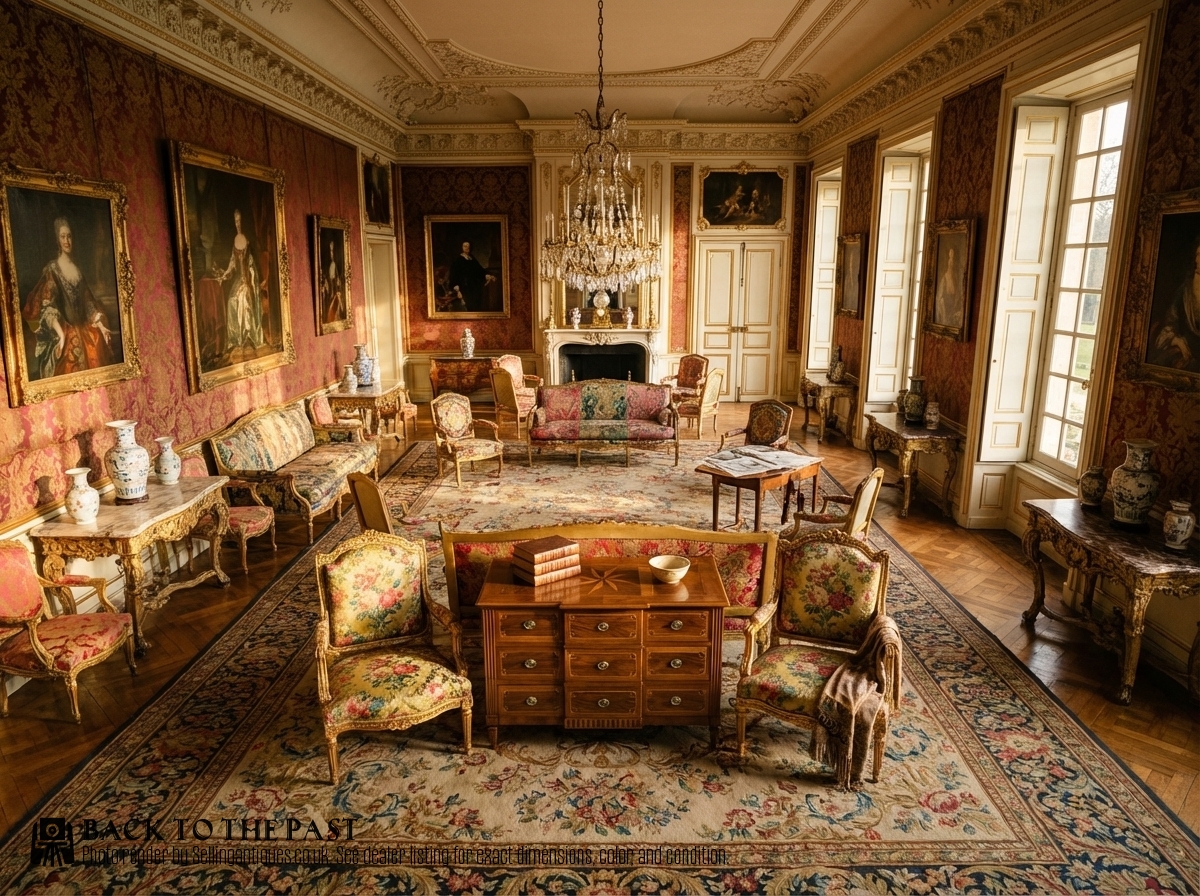
Distinctions in execution and design
The sophistication of the marquetry inlay and the precision of the parquetry geometric patterns separate standard production from exceptional workshop output. Finer pieces employ complex timber selections like kingwood and satinwood arranged with exact symmetry across the drawer fronts.
The integration of heavy marble tops and chased ormolu mounts indicates higher manufacturing tiers. Superior joinery is evident in shaped serpentine or breakfront carcases that maintain structural integrity alongside decorative presence.
Listings feature 18th-century and 19th-century examples utilising walnut, mahogany, marble, brass, and painted wood.
Henry Dasson·Mon Krieger·Weisweiler
The Neoclassical Commode Chest Glossary
- Commode
- A low chest of drawers, typically standing on relatively tall legs, developed in France during the 18th century. It serves as both a storage piece and a decorative console.
- Marquetry
- Decorative veneer work forming pictorial or geometric patterns using various coloured woods, shells, or ivories. Craftsmen cut these elements to fit precisely into a prepared background.
- Parquetry
- Geometric mosaic woodwork used for floors and furniture surfaces, creating patterns such as cubes or chevrons. It utilises contrasting wood grains to catch the light.
- Demi-lune
- A half-moon shape applied to the front and top of furniture, creating a curved surface that sits flat against a wall. This profile appears frequently on 18th-century and 19th-century commodes.
- Ormolu
- Gilt bronze mounts applied to furniture for decorative effect, highly popular in French neoclassical design. The technique involves coating bronze with a mercury-gold amalgam.
Neoclassical Commode Chest: Frequently Asked Questions
Where should a neoclassical commode chest go?
These pieces suit reception rooms, hallways, and bedrooms where surface display space and drawer storage are both required. Their finished backs and refined fronts allow them to anchor focal walls effectively.
Position them away from direct heat sources to protect historic veneers and polished marble surfaces from thermal shock and cracking.
How do I identify a Gustavian commode?
Swedish Gustavian examples typically feature pale hand-painted finishes, muted grey or white paint layers, and restrained neoclassical carvings derived from French models. They often incorporate birch or pine carcases with simplified fluting.
The regional interpretation favors lighter palettes and subtle proportions compared to heavier continental styles.
What is a secretaire chest?
A secretaire chest incorporates a fitted writing drawer that pulls down to reveal small compartments and a leather or wood writing surface. It conceals a desk within the upper drawer tier of a standard commode.
This dual function provided writing accommodation in domestic chambers without requiring a separate free-standing desk.
How do I care for antique marble tops?
Wipe marble surfaces with a damp cloth and mild neutral soap, avoiding acidic cleaners that etch the polished stone. Use protective felt pads beneath objects placed on the top to prevent scratching.
Waxing is generally unnecessary for polished marble, though specialised stone sealers can protect porous varieties from staining.