

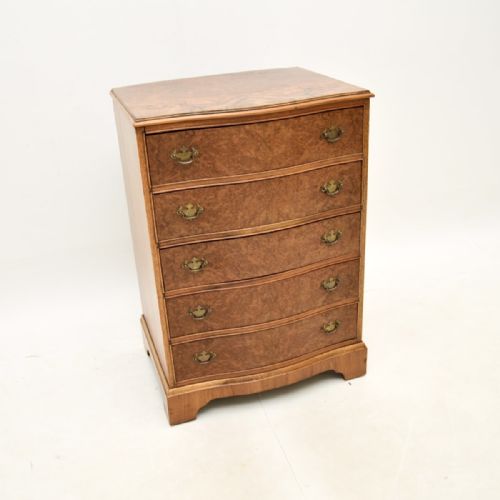
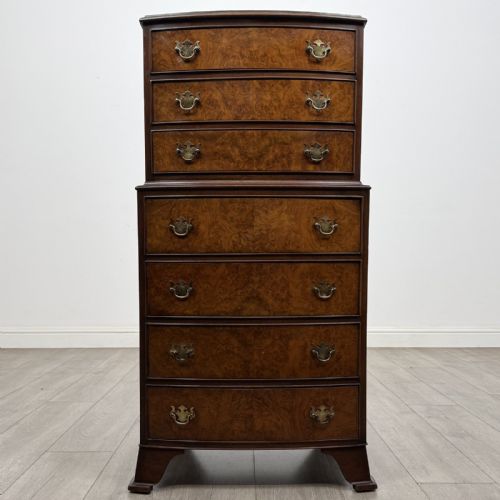
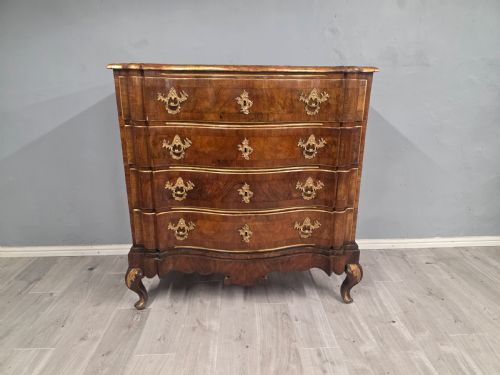
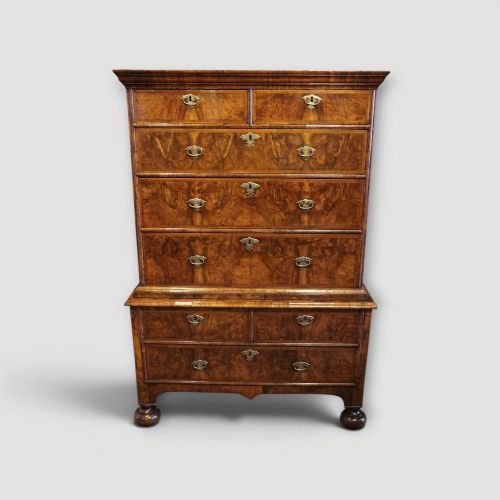
Georgian Walnut Chest Drawers
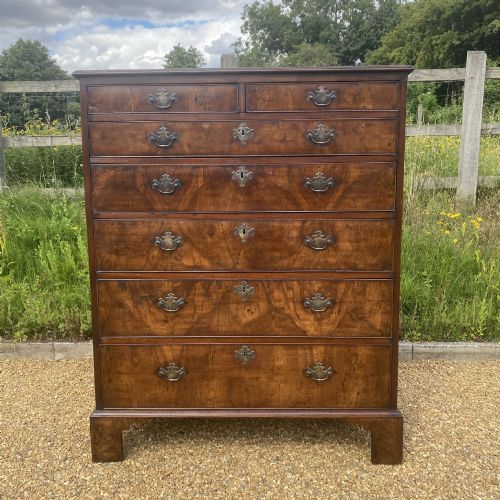
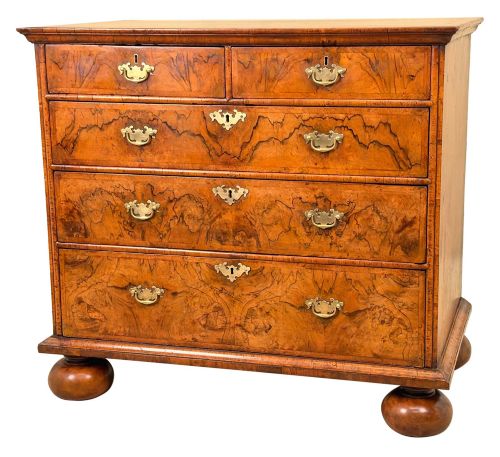
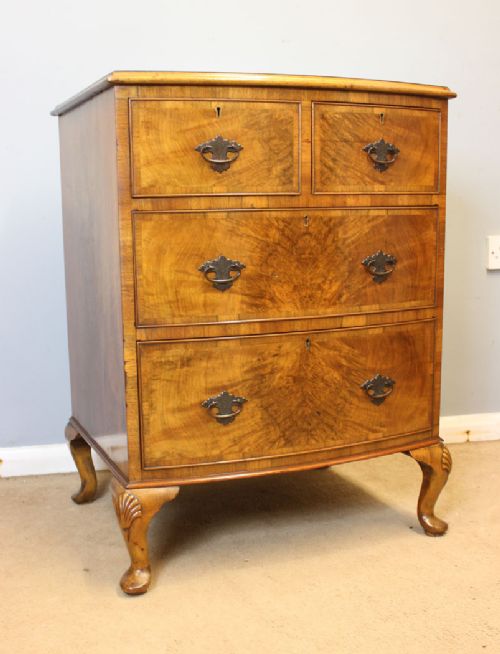
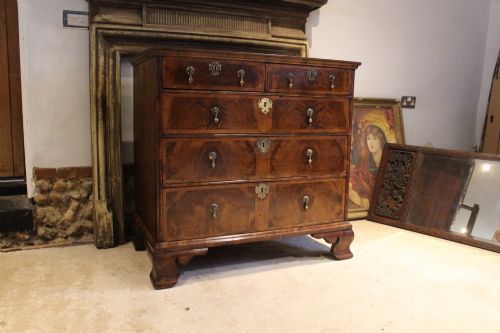
When you trace the lineage of a georgian walnut chest drawers, you encounter timber with a rich grain and deep colour that defines classic period proportion.
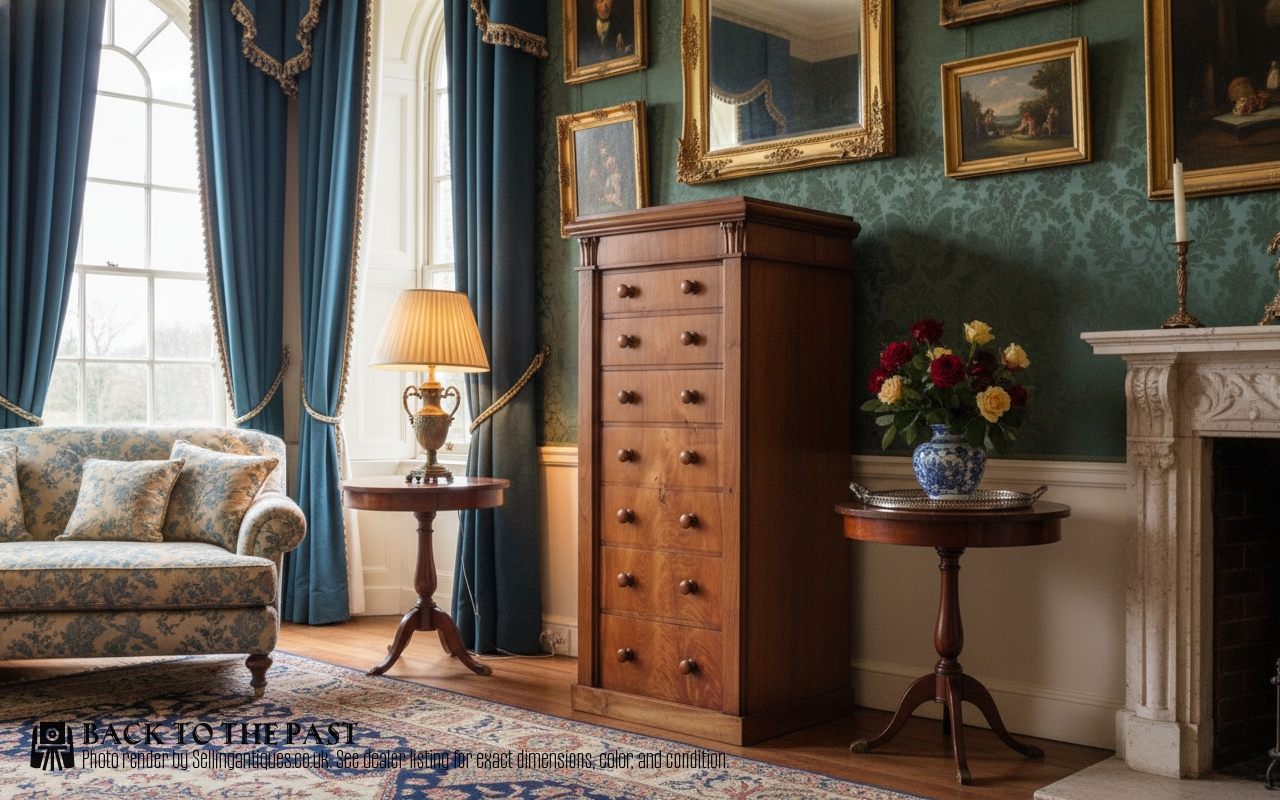
Georgian Walnut Chest Drawers
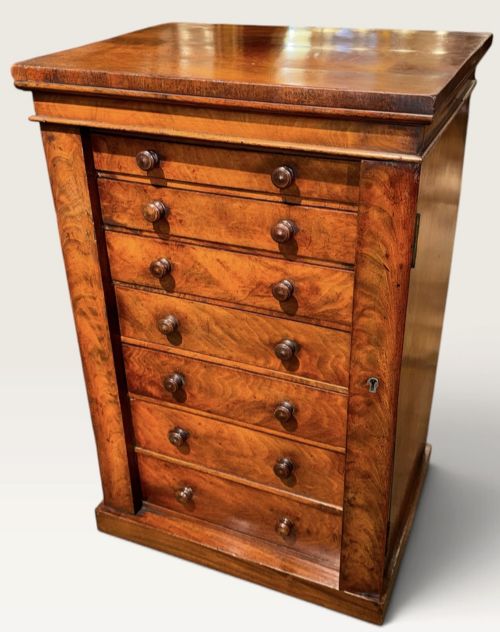
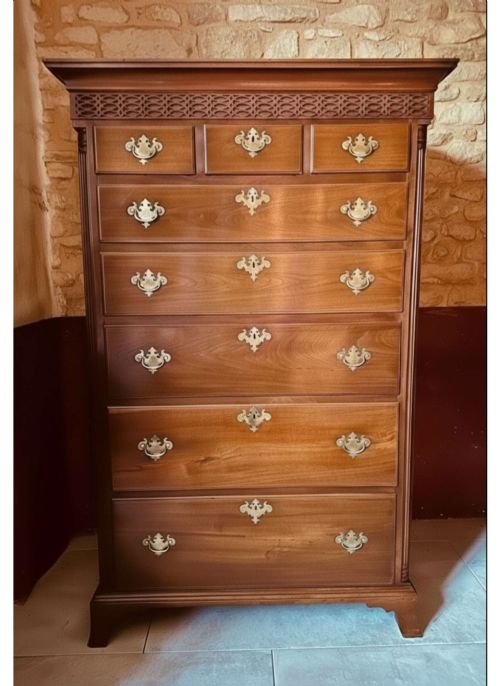
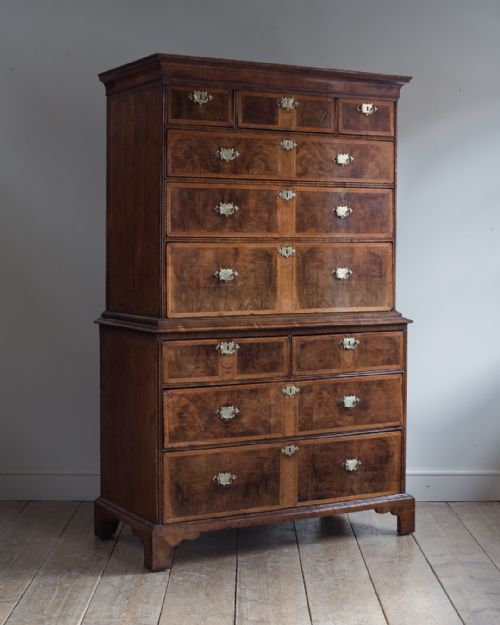
A georgian walnut chest drawers brings together centuries of cabinet making, appearing in forms from compact bachelor chests to towering tallboys and pieces raised on stands. Buyers search for these items to introduce rich timber tones and practical storage rooted in history into a room.
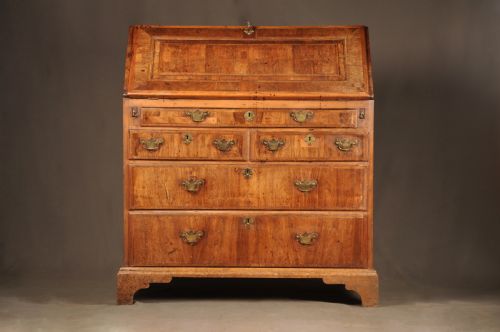
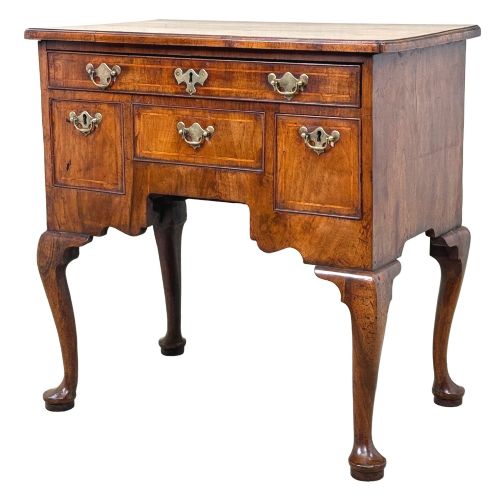
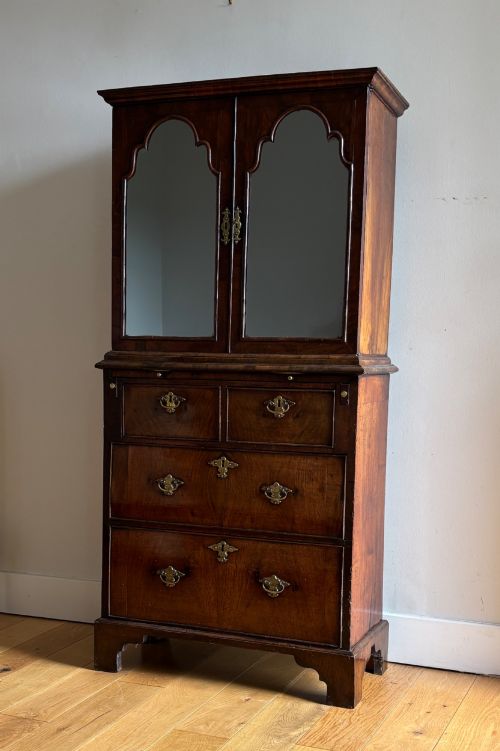
Beyond the standard chest, related forms appear frequently in walnut, including writing bureaus, kneehole desks, dressing tables, and smaller apprentice pieces. These variations provide options for different interior spaces while maintaining the characteristic dark timber aesthetic.
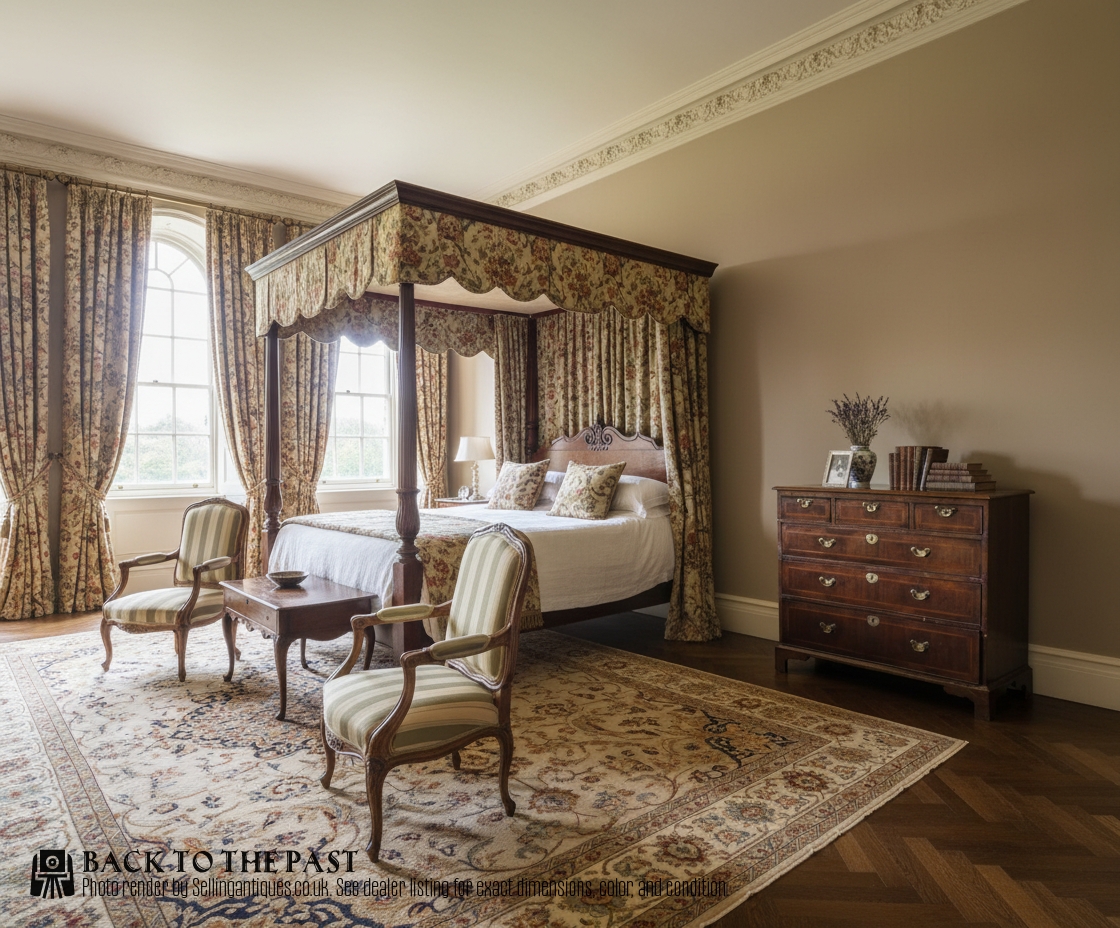
Materials and Technique
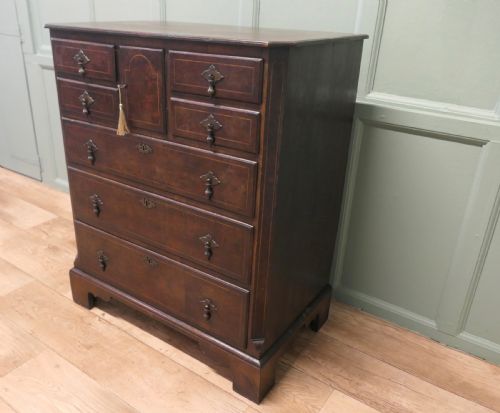
Cabinet makers built these carcasses primarily using solid oak or pine as a stable structural foundation, applying figured walnut or burr walnut veneers to the external surfaces. Crossbanding and herringbone inlay work often frame the drawer fronts, requiring immense precision from the artisan.
Brass hardware, including escutcheons and drop handles, punctuate the dark timber surfaces alongside occasional secondary materials like bone or leather writing inserts. Surface treatments rely on traditional polishing methods that enhance the natural figuring of the wood without masking its depth.
Georgian Walnut Chest Drawers Retail Price Guide 2026
Typical asking prices for georgian walnut chest drawers among the pieces listed under this phrase on Sellingantiques today, from the lower quarter to the upper quarter. They describe what is for sale here now, not the wider market.
Listings feature walnut alongside oak, pine, and brass across pieces spanning the 1700s to the 1930s.
Assessing Quality
Quality rests heavily on the choice of timber and the dexterity shown in matching the burr or figured walnut veneers across the drawer fronts. Pieces where the grain patterns mirror symmetrically demonstrate a higher level of initial craftsmanship than those with haphazard timber selection.
The integrity of the construction, the subtlety of inlay details such as herringbone banding, and the preservation of original brass handles distinguish superior examples. Later revival pieces vary according to how closely they adhere to the proportions and timber selection of the 18th-century originals.
The Georgian Walnut Chest Drawers Glossary
- Burr walnut
- A specialised timber cut from growths on walnut trees, yielding highly swirled and mottled grain patterns prized for decorative veneer.
- Crossbanding
- A narrow strip of veneer laid perpendicular to the surrounding grain along the borders of drawer fronts or tabletops.
- Tallboy
- A tall chest of drawers, often constructed in two distinct sections with a smaller chest sitting atop a larger base.
- Herringbone banding
- Fine inlaid strips of veneer arranged in a V-shaped pattern resembling the skeleton of a fish.
- Escutcheon
- A protective plate surrounding the keyhole of a drawer or cabinet door, frequently cast in brass.
Georgian Walnut Chest Drawers: Frequently Asked Questions
How do I date a walnut chest?
Dating relies on examining the secondary woods used in the drawer linings, such as oak or pine, alongside construction techniques like hand-cut dovetails. Hardware styles and the presence of walnut veneer rather than solid timber also point toward specific decades.
Later 20th-century revivals often mimic earlier George I or Queen Anne proportions but utilise modern manufacturing signatures. Comparing the secondary timbers and the wear patterns on the drawer runners helps clarify the age.
What is a bachelor chest?
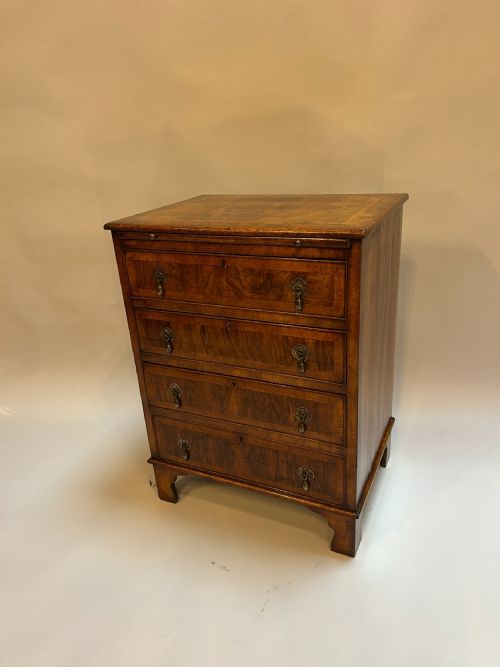
A bachelor chest is a compact form featuring a pull-out brushing slide above the primary drawers, designed for writing or grooming. These pieces originate predominantly from the early 18th century.
They served versatile functions in smaller chambers where a full desk was impractical. The folding top or sliding board distinguishes them from standard drawer configurations.
How should I care for walnut veneer?
Walnut veneer requires protection from direct sunlight and rapid humidity fluctuations to prevent the timber from drying out or lifting. Maintaining a stable indoor environment preserves the stability of the glued surfaces.
Occasional application of appropriate wax polish feeds the wood and maintains the lustre. Avoid excessive moisture and abrasive cleaners on the historic polished finish.
Are revival pieces well made?
Revival pieces from the 1920s and 1930s often exhibit exceptional cabinet making standards, utilising quality burr walnut veneers and solid secondary timbers. These items replicate earlier Georgian aesthetics while offering sturdy construction.
Many buyers appreciate these later interpretations for their combination of period style and reliable structural integrity. They provide an accessible alternative to 18th-century originals.