

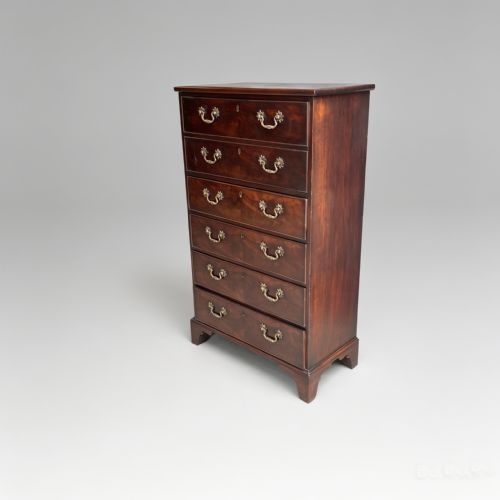
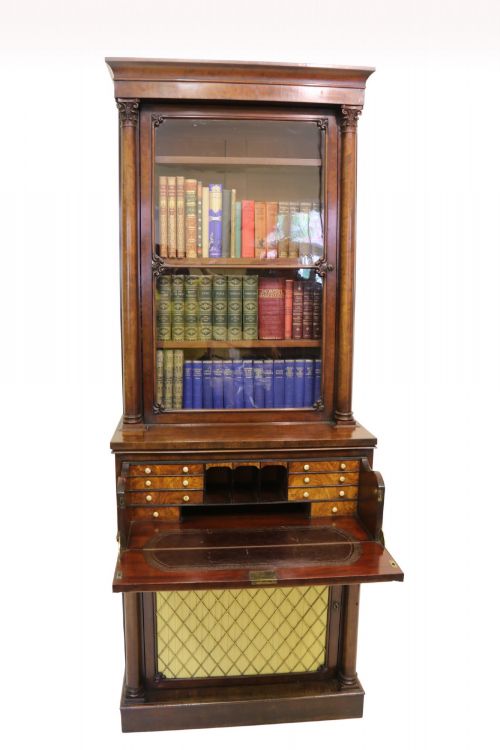
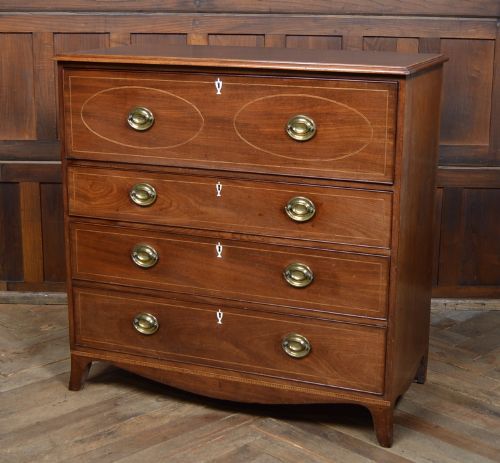


Georgian Secretaire Tallboy
A georgian secretaire tallboy combines towering storage with a fitted writing drawer, offering grand presence and clever function for any room.
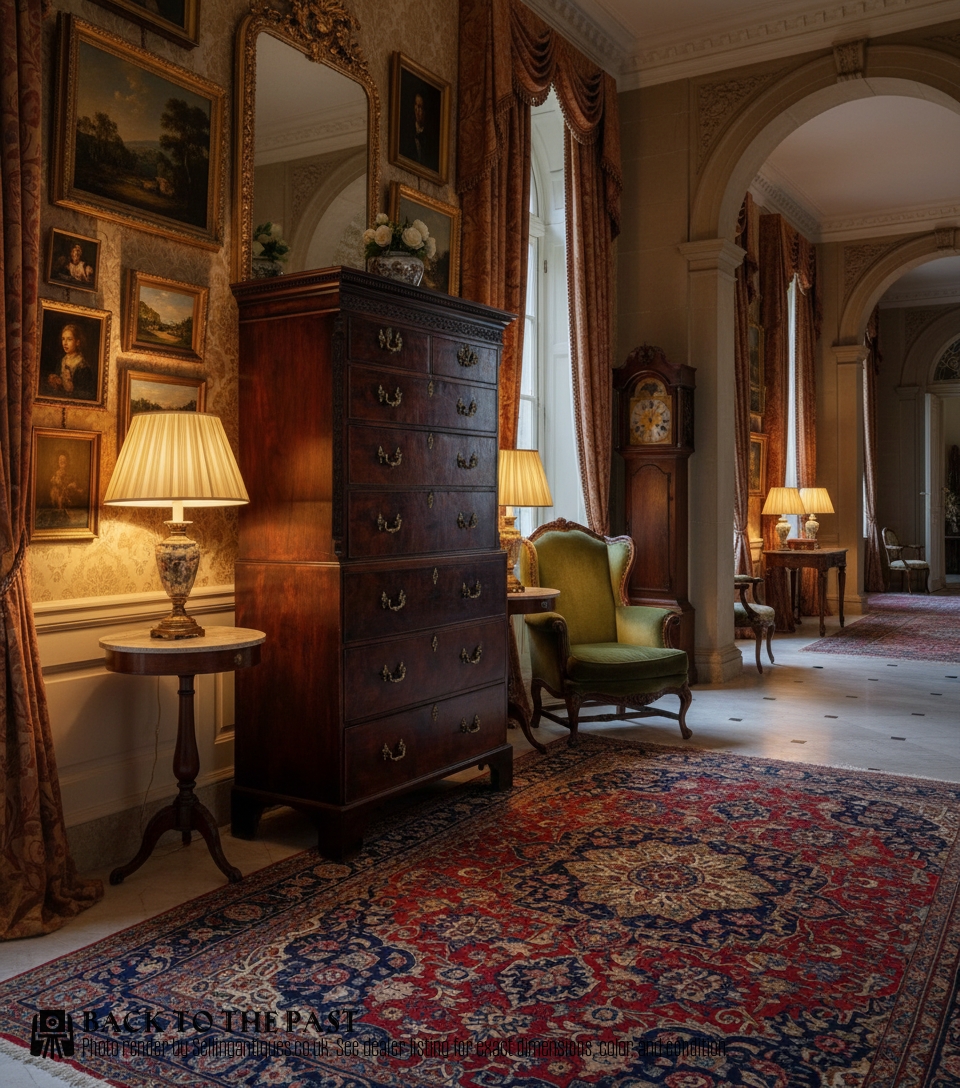
What these pieces are
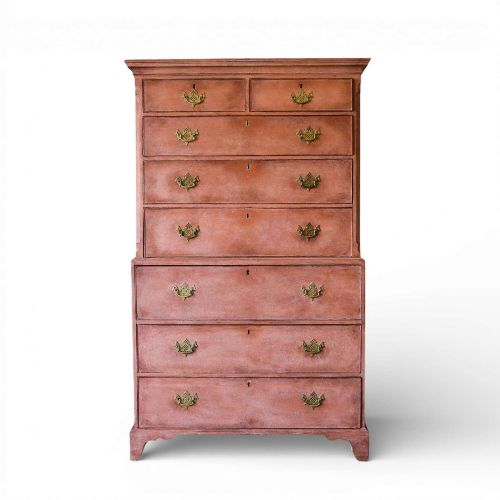
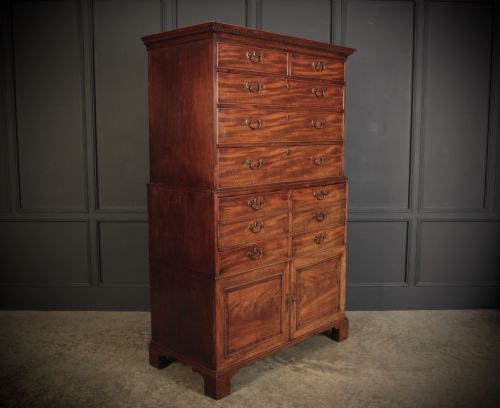
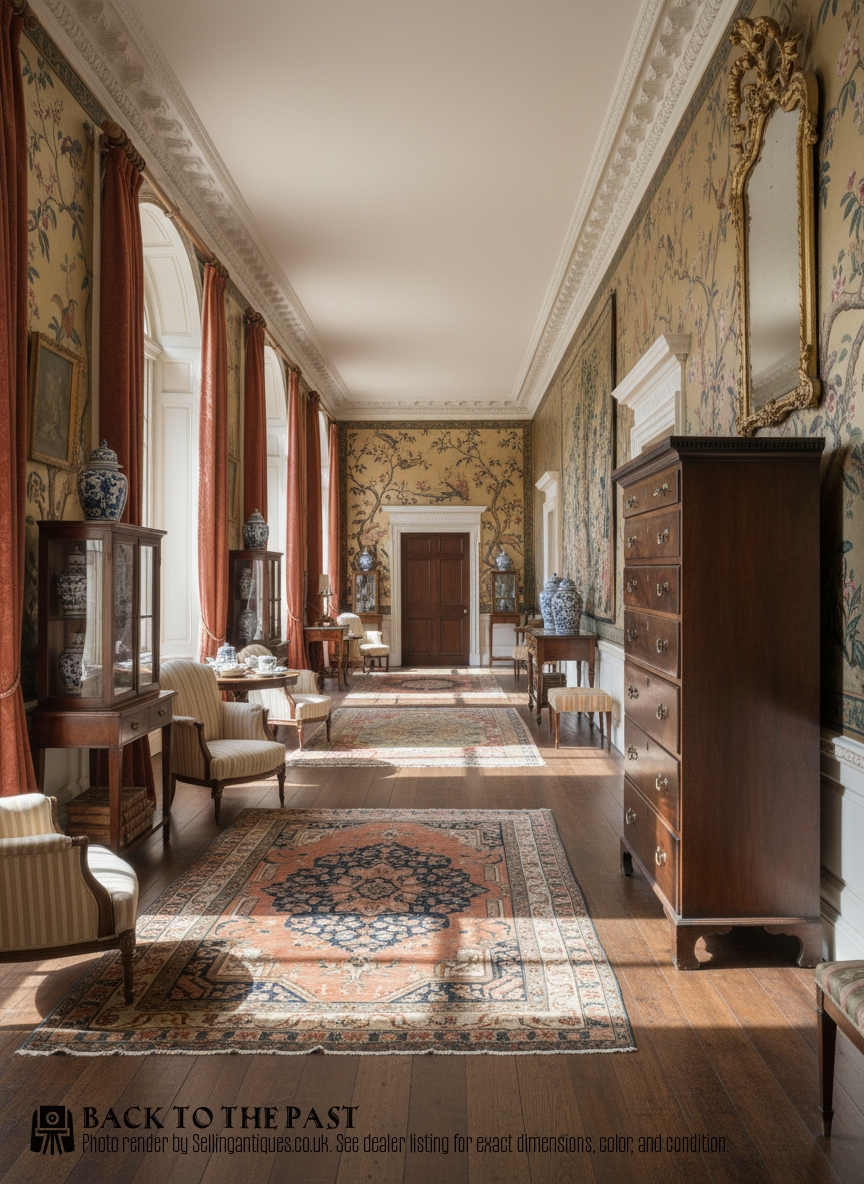
A georgian secretaire tallboy stands as a substantial chest on chest form, stacking one large case upon another to maximise vertical capacity. These pieces date from the eighteenth and nineteenth centuries, spanning Georgian, George III, and Irish Georgian styles.
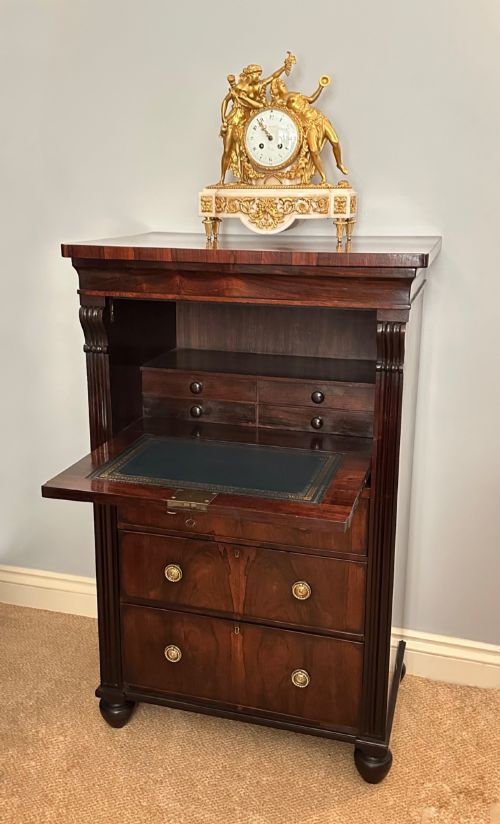
The defining feature is the central writing drawer, which pulls out and drops down to reveal a fitted interior of small compartments and pigeonholes. This clever mechanism transforms the top of the lower chest into a compact writing desk.
Makers built these imposing items in regional workshops and city hubs, utilising timbers such as mahogany and oak. They serve today as commanding focal points that provide considerable linen or clothing storage alongside a concealed bureau.
How they were made
Cabinet makers constructed these tall pieces using dense primary timbers like mahogany and oak, often reinforced with secondary woods for drawer linings. They selected figured grain for the drawer fronts to create subtle visual depth across the stacked case construction.
Joiners integrated brass hardware, including drop handles and escutcheons, alongside leather or baize surfaces inside the drop down writing compartments. Painted finishes also appear on select eighteenth century examples, altering the natural timber aesthetic.
Retail Price Guide 2026
Typical UK retail prices for georgian secretaire tallboy, calculated from the Sellingantiques database of over a million retail prices indexed since 2003. This retail price guide relies exclusively on Sellingantiques data; no external sources or auction records are used, so the figures do not describe the wider market.
Secret compartments inside the drop down writing drawer often hide behind false fronts, designed for stashing private letters and tiny trinkets.
What varies in quality
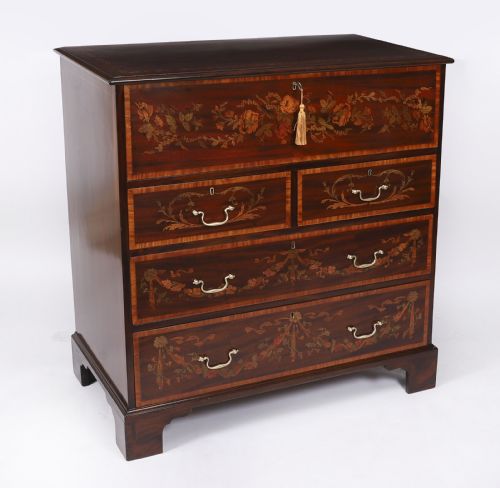
Quality rests in the choice of timber and the precision of the cabinet work, particularly how seamlessly the secretaire drawer integrates into the upper chest facade. Finer examples display carefully matched mahogany veneers and sophisticated internal configurations within the writing section.
Proportion and regional detail distinguish standard production from exceptional Irish Georgian or Chippendale period work. The integrity of the original brasses, drawers, and secondary timbers dictates the overall standing of each piece.
The Georgian Secretaire Tallboy Glossary
- Tallboy
- A tall chest of drawers made in two sections, where a smaller upper chest sits atop a deeper lower chest. This form first gained popularity in the early eighteenth century.
- Secretaire
- A cabinet or chest featuring a pull out drawer with a drop front, revealing small drawers and pigeonholes for writing letters. It combines storage with a compact writing surface.
- Chest on chest
- An alternative term for a tallboy, describing the stacked construction of two distinct cabinetry carcasses. The upper section is traditionally slightly narrower than the base.
- Chippendale
- A style of eighteenth century English furniture characterised by carved details, sturdy proportions, and classical motifs. It draws inspiration from the published designs of Thomas Chippendale.
- Baize
- A coarse woolen material resembling felt, frequently used to line writing surfaces and gaming tables. It provides a soft, durable texture for daily use.
Frequently Asked Questions
How do I date a tallboy?
Dating relies on examining the timber species, construction methods, and stylistic cues such as bracket feet or cornice details. Eighteenth century pieces often show hand cut dovetails and native oak linings.
Comparing the hardware fixings and secondary woods helps narrow the period down between Georgian eras and the early nineteenth century.
Are tallboys stable?
Tallboys are inherently heavy and stable due to their stacked solid timber construction, though their height requires sensible placement. The bottom chest provides a wide, weighted base that supports the upper section.
Placing them on level flooring ensures the tall frame remains secure and the stacked carcasses align correctly.
How do I care for mahogany?
Maintaining mahogany involves keeping the timber away from direct sunlight and extreme temperature shifts to prevent warping. Regular dusting with a dry cloth preserves the polished surface.
Applying occasional appropriate wax feeds the grain and maintains the natural lustre of the aged wood.