





Victorian Miniature Chest
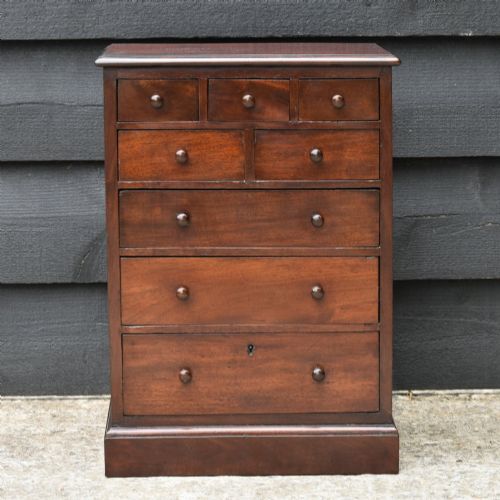
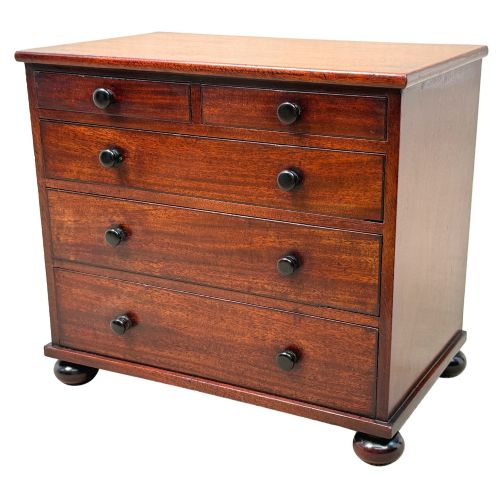
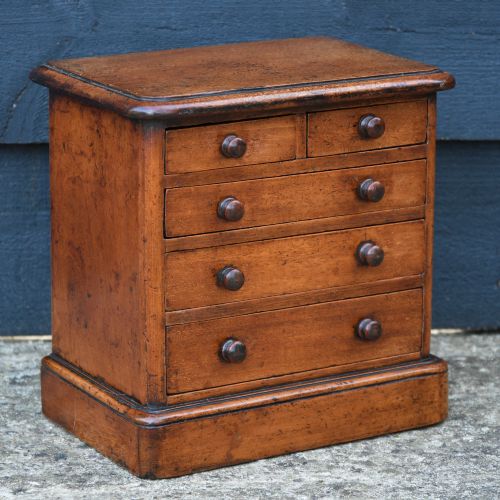
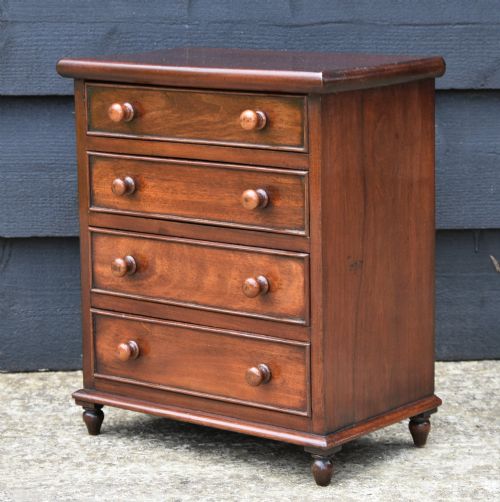
When you search for a victorian miniature chest, you uncover small scale cabinetry made for demonstration, travel, or tabletop storage.
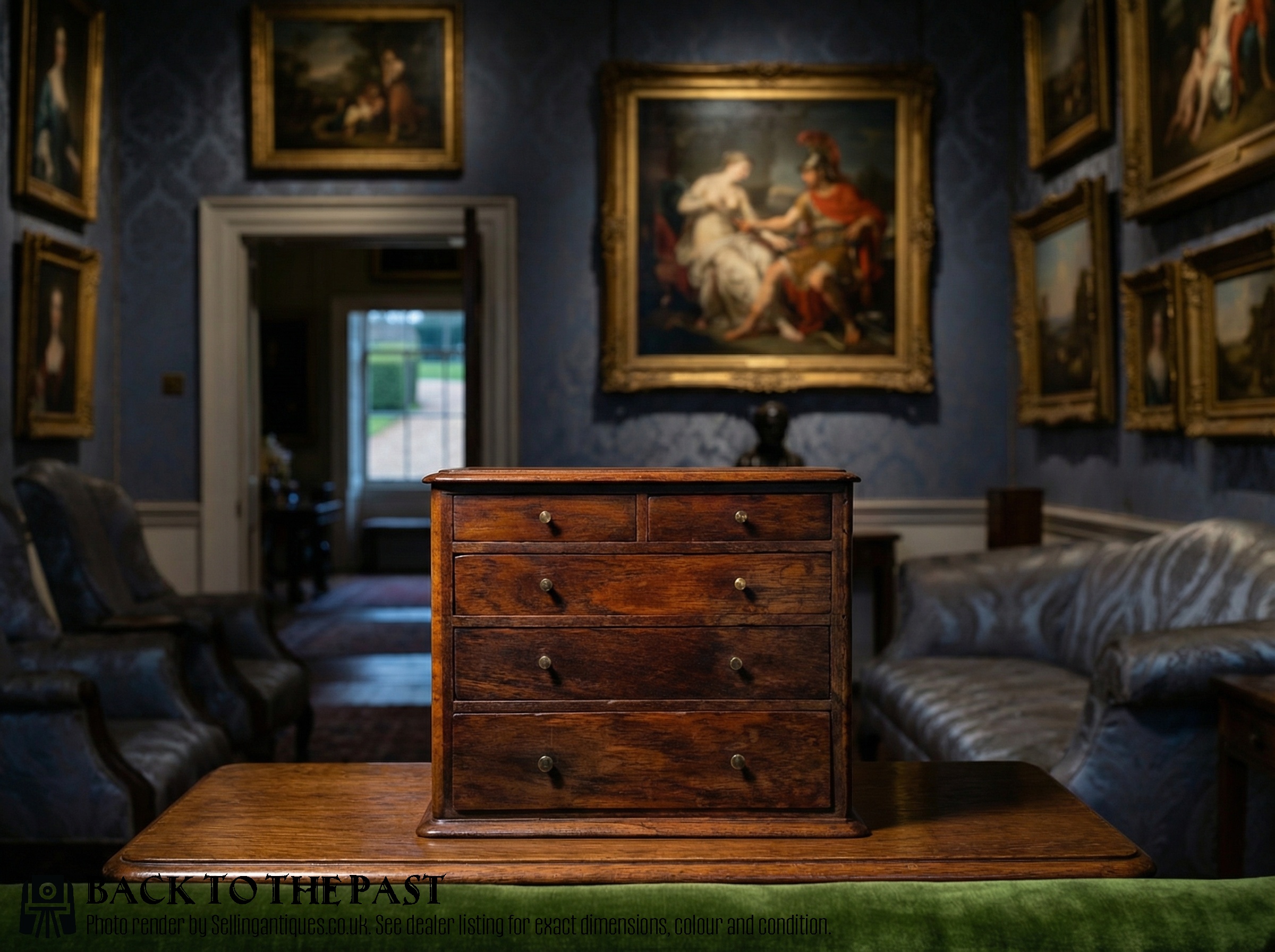
Victorian Miniature Chest
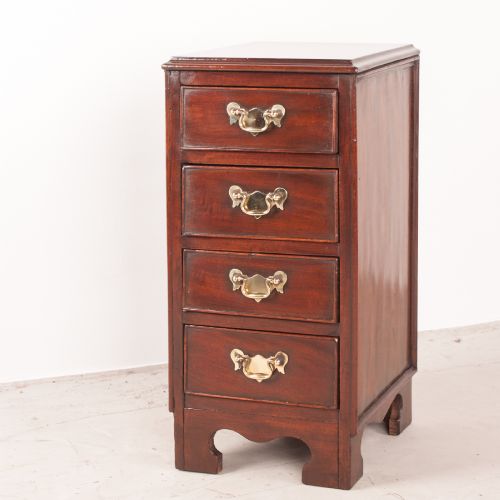
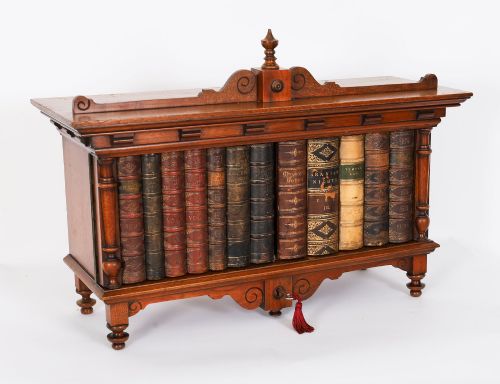
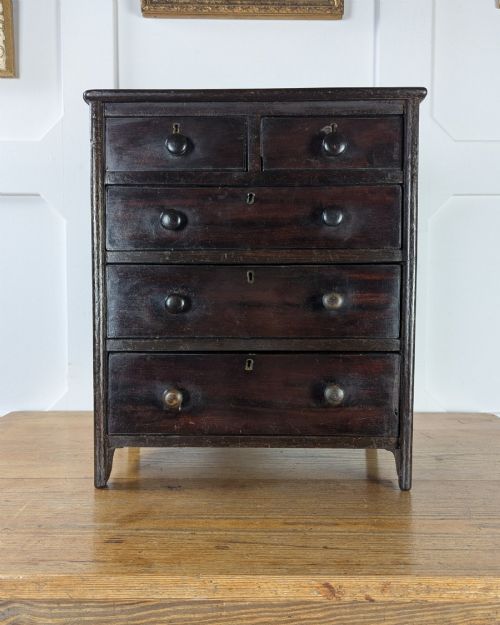
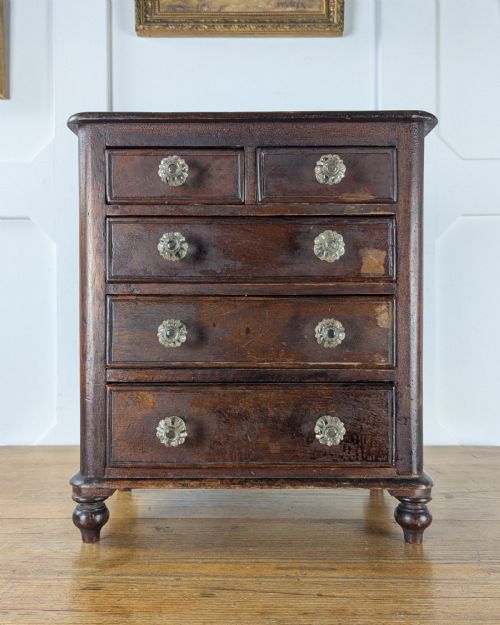
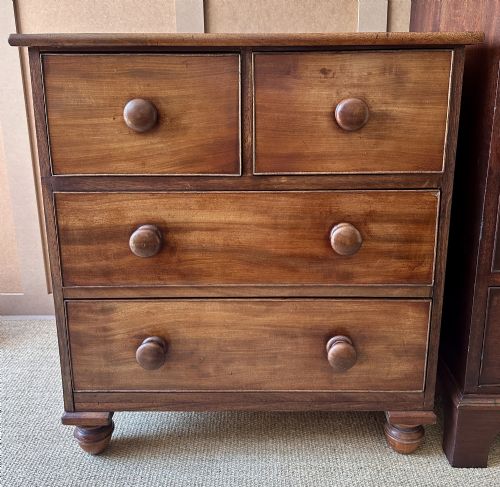
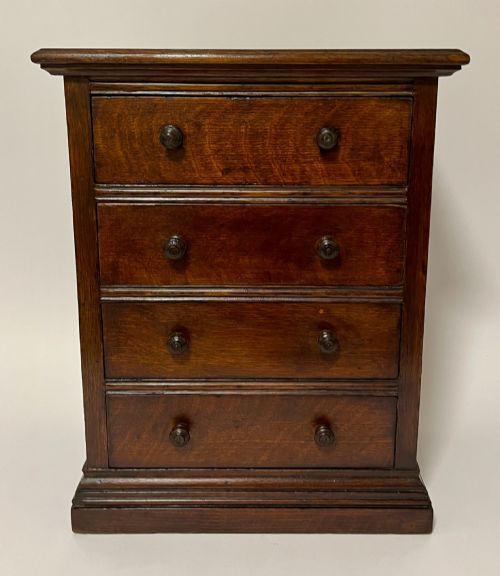
A victorian miniature chest typically takes the form of a scaled-down chest of drawers, a collector cabinet, or an apprentice piece created to demonstrate cabinetmaking skill.
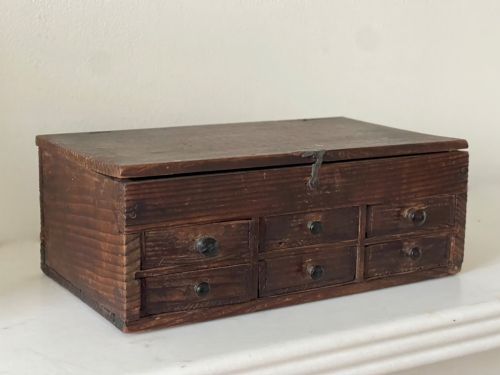
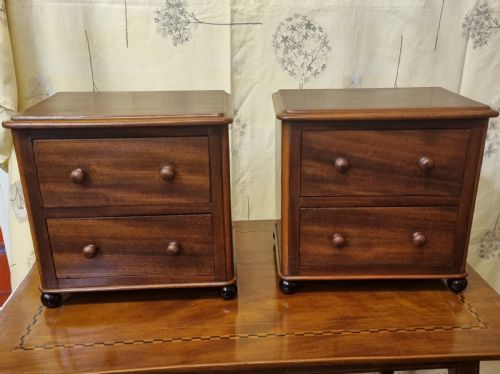
The varieties met on this page include mahogany bowfronts, walnut Wellington chests, pine spice drawers, and occasional folk art models carved in slate.
Originating primarily in the nineteenth century, these objects served practical roles as jewellery boxes, specimen cabinets, or desktop storage.

Materials and Construction
Cabinetmakers utilised dense timbers such as mahogany, walnut, oak, and pine, frequently selecting burr veneers for decorative effect on drawer fronts.
Construction details mirror full-scale furniture, incorporating dovetailed drawer construction, turned feet, brass pulls, and occasionally secret drawers or locking mechanisms.
Victorian Miniature Chest Retail Price Guide 2026
Typical asking prices for victorian miniature chest among the pieces listed under this phrase on Sellingantiques today, from the lower quarter to the upper quarter. They describe what is for sale here now, not the wider market.
Listings feature woods such as mahogany, walnut, oak, pine, fruitwood, and rosewood alongside alternative materials like brass, glass, bone, and slate.
Distinctions in Execution
The distinction between standard workshop output and exceptional cabinetwork rests in the precision of the joinery, the choice of figured timber veneers, and the restraint of the proportions.
Superior examples display careful attention to secondary woods, finely turned feet or pulls, and integrated locking mechanisms that operate smoothly despite the diminutive scale.
Saunders & Shepherd·Nathan & Hayes
The Victorian Miniature Chest Glossary
- Apprentice piece
- A small item of furniture constructed by a trainee cabinetmaker to demonstrate proficiency to a guild or master. These objects frequently replicate the full-scale furniture styles of the period.
- Wellington chest
- A tall, slender chest of drawers featuring a hinged locking stile on one side that secures all the drawers simultaneously. This form appears frequently in miniature walnut iterations.
- Specimen cabinet
- A small multi-drawer cabinet utilised by naturalists or collectors to organise geological, botanical, or entomological samples. Microscope slide cabinets represent an elaborate variation of this form.
- Bowfront
- A furniture front that curves outward in a convex arc. This treatment appears on mahogany miniature chests from the nineteenth century.
Victorian Miniature Chest: Frequently Asked Questions
What were miniature chests used for?
These small chests served diverse domestic and professional purposes, functioning as desktop storage for trinkets, jewellery boxes, or desktop campaign chests for travel. Many were utilised as specimen cabinets for natural history collections or as salesman samples.
Cabinetmakers also created them as demonstration pieces to exhibit technical skill to potential clients or guild masters. Their compact dimensions allowed them to sit easily on tabletops, dressers, or sideboards.
What timbers were used?
Cabinetmakers relied heavily on dense hardwoods such as mahogany and walnut, frequently selecting figured burr veneers for decorative drawer fronts. Secondary timbers often included pine and oak for drawer linings and internal framing.
Alternative materials appearing in the record include fruitwood, rosewood, pitch pine, and carved slate for folk art models.
How should I care for a miniature chest?
Keep wooden surfaces away from direct sunlight and steady heat sources to prevent timber shrinkage and veneer lifting. Dust gently with a dry, soft cloth and avoid chemical polishes that can damage historic finishes.
Ensure that small brass pulls and locking mechanisms are handled with care to preserve their original fittings.