

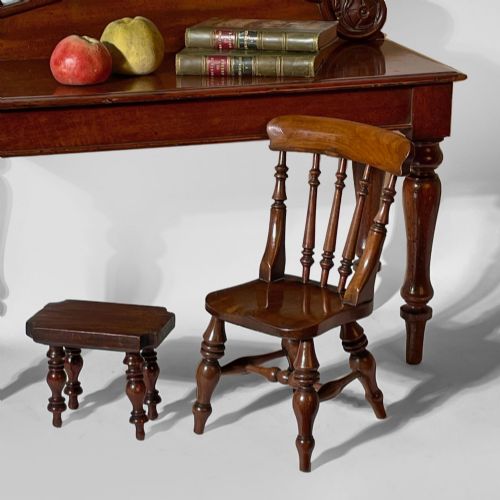
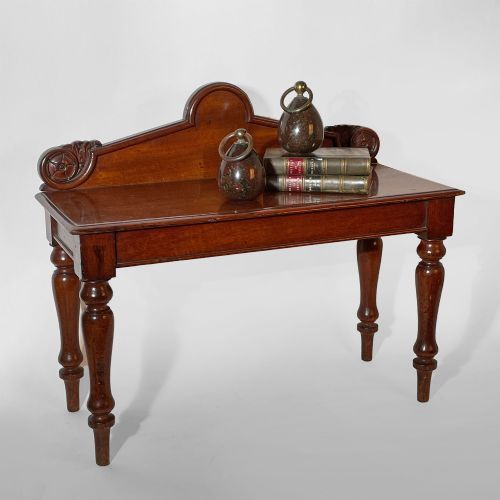
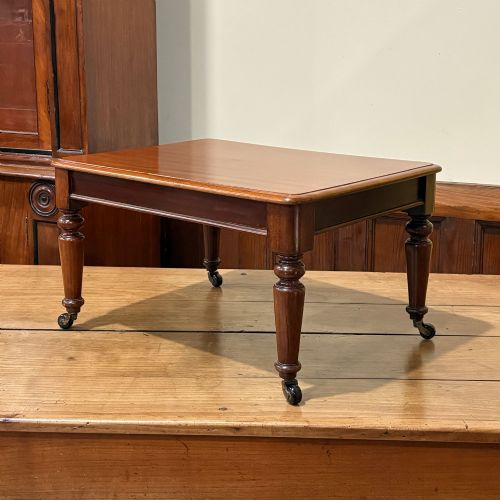
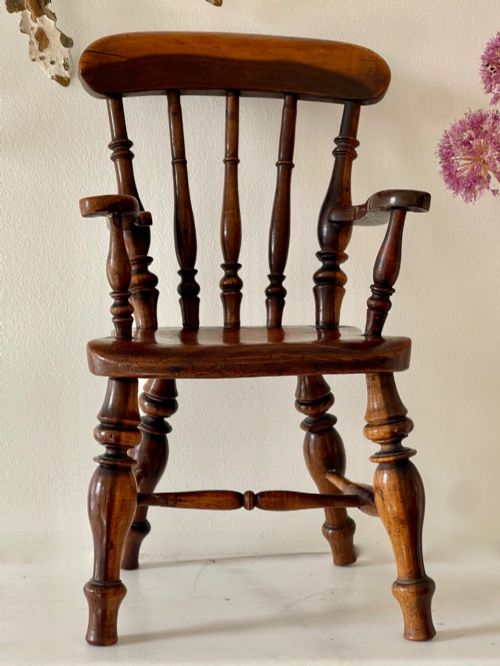

Salesman Sample Furniture
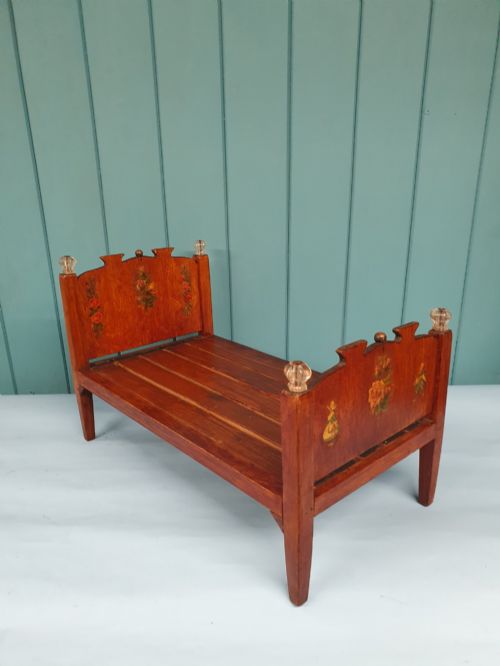
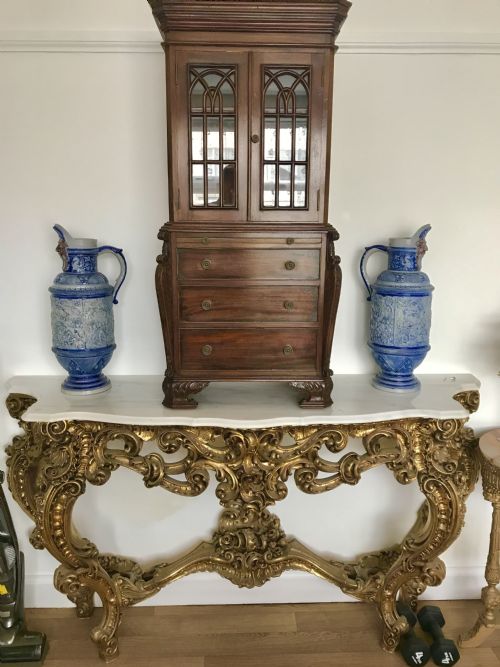
Salesman sample furniture comprises small-scale cabinetwork and seating created to demonstrate full-size designs to clients.
Salesman Sample Furniture
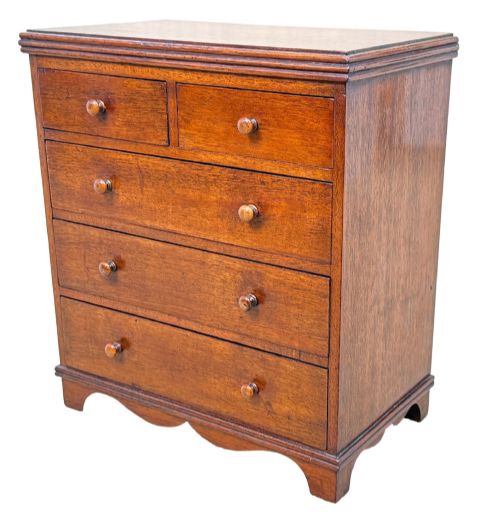
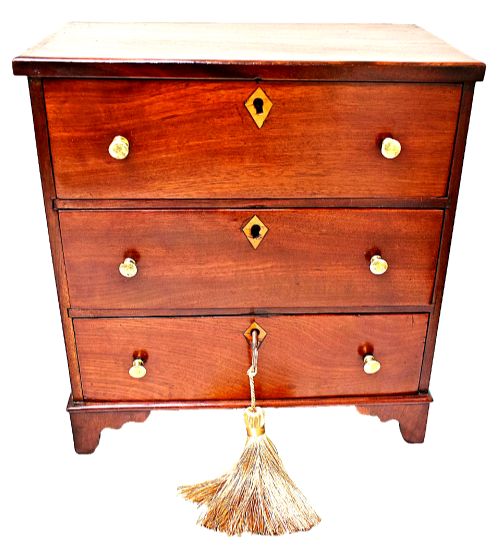
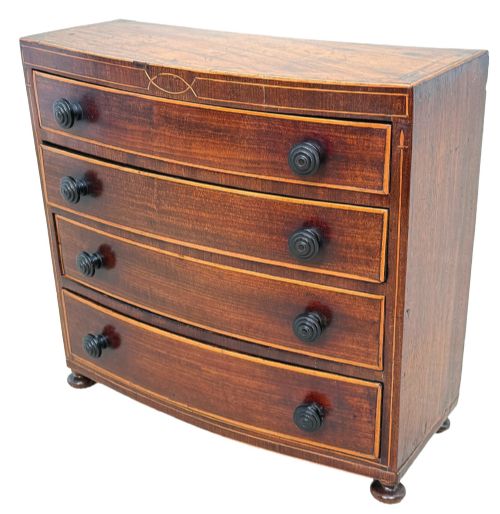
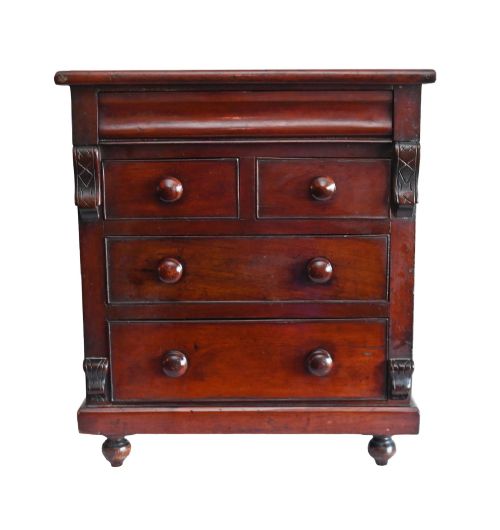
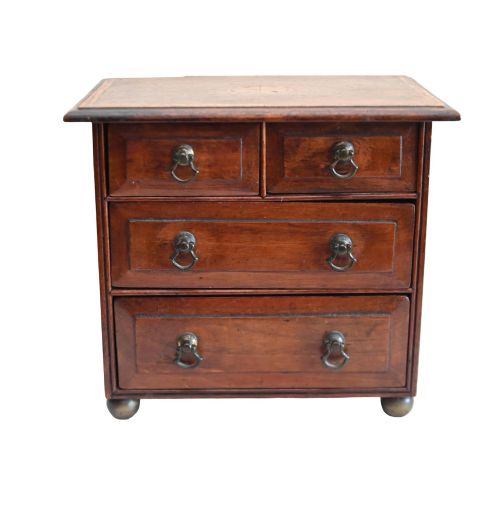
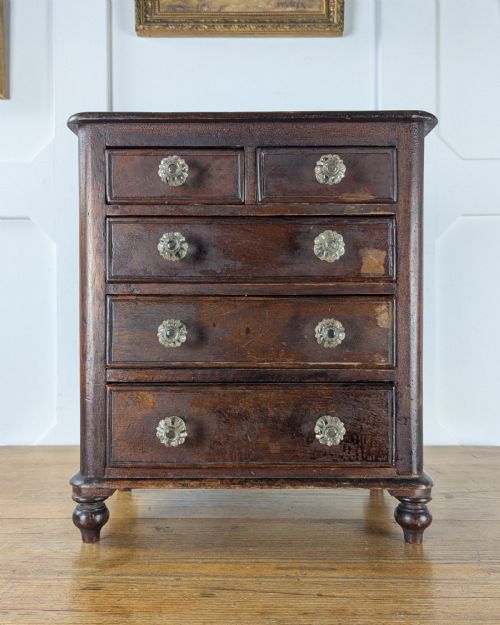
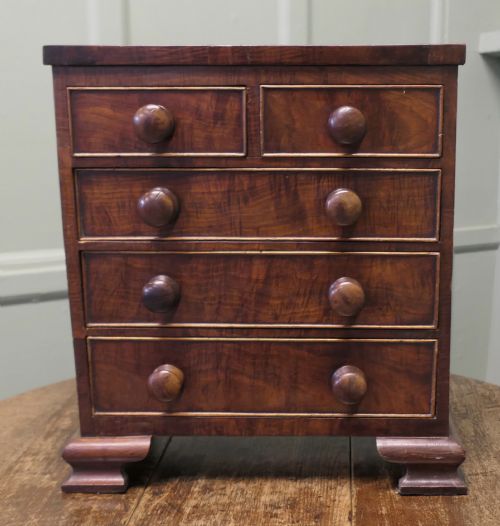
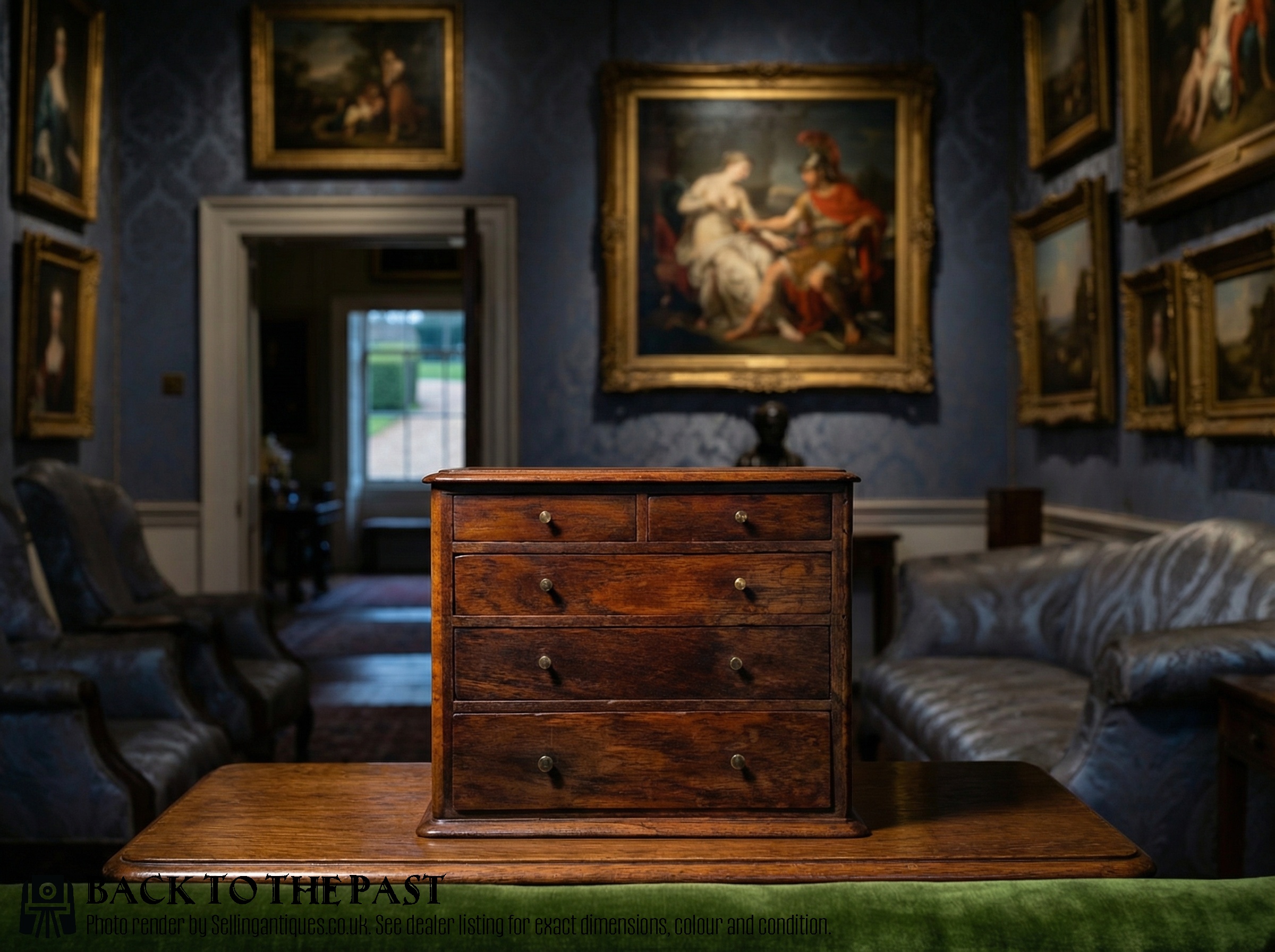
When you search for salesman sample furniture, you encounter miniature chests of drawers, tables, and cabinets designed as portable salesman examples or apprentice pieces. These items mirror the joinery and proportions of domestic household pieces scaled down for travel or training.
The selections span the eighteenth, nineteenth, and early twentieth centuries, encompassing Victorian, Georgian, Regency, and Edwardian styles. Mahogany forms the predominant wood, accompanied by walnut, oak, burr yew, and pine.
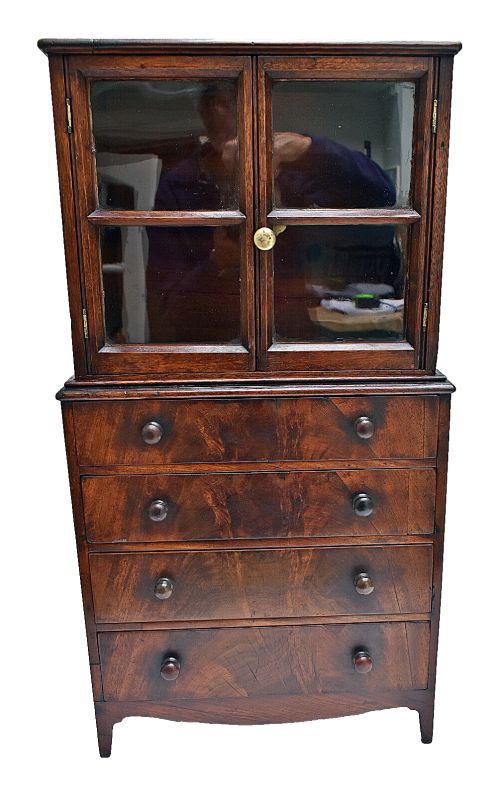
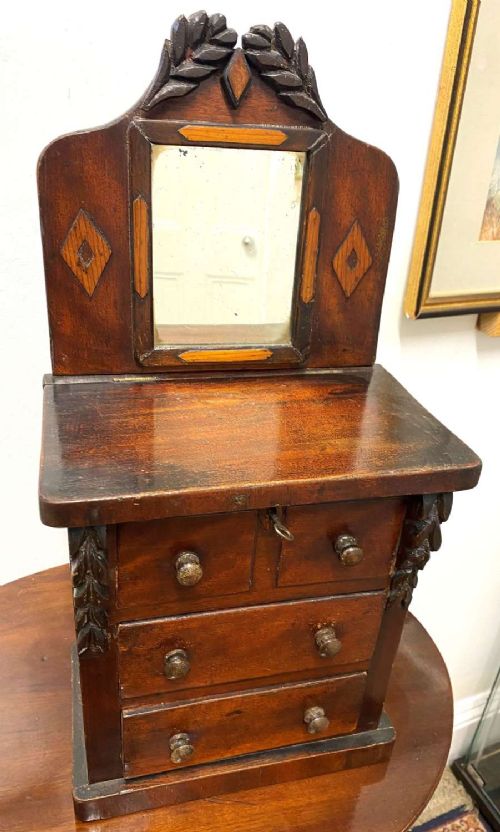
Chest of drawers variations dominate the available examples, alongside occasional bureau bookcases, dressers, and chaise longues. Regional pieces such as Scottish apprentice chests and Dutch forms also appear.
Materials and construction
Cabinetmakers utilised hardwoods such as mahogany, walnut, and oak, frequently embellished with brass handles, glass elements, and bronze mounts. Surfaces received French polishing or oil finishes to highlight the timber grain.
Construction mirrors full-size furniture through dovetail joints on drawers, turned feet, and applied mouldings. Woods like burr yew and pitch pine provided decorative figure and contrasting textures.
Salesman Sample Furniture Retail Price Guide 2026
Typical asking prices for salesman sample furniture among the pieces listed under this phrase on Sellingantiques today, from the lower quarter to the upper quarter. They describe what is for sale here now, not the wider market.
Materials recorded across the inventory include bone, glass, brass, and diverse hardwoods such as yew and mahogany.
Judging the execution
Quality rests upon the fidelity of the proportions and the precision of the miniature joinery. Finer examples display meticulous dovetailing, well-matched timber veneers, and intact original hardware.
Lesser items show simpler secondary woods and coarser assembly, while superior specimens incorporate secret drawers, carved details, and sophisticated wood selections like burr walnut.
The Salesman Sample Furniture Glossary
- Apprentice piece
- A project executed by a trainee craftsman to demonstrate mastery of joinery before entering a guild. These objects typically replicate standard domestic furniture in miniature.
- Salesman sample
- A portable scaled-down model carried by merchants to exhibit furniture designs to prospective buyers. They allowed clients to inspect proportions and ornamentation without viewing full-scale stock.
- French polish
- A shellac finish applied with a rubbing pad to produce a high-gloss surface. This technique was widely utilised on nineteenth-century cabinetwork to accentuate wood grain.
- Dovetail joint
- An interlocking wood joint formed by wedge-shaped fingers that resists being pulled apart. It appears frequently at the corners of miniature drawers.
- Bowfronted
- A convex curved cabinet front that projects outward in an arc. This profile occurs on several miniature chests in the listings.
Salesman Sample Furniture: Frequently Asked Questions
What is salesman sample furniture?
These objects are scaled-down models of domestic furnishings produced for commercial demonstration or as proof of an apprentice's skill. They replicate the exact joinery, woods, and styles of full-scale pieces.
Craftsmen built them with the same attention to proportion, allowing merchants to transport designs easily or trainees to test advanced techniques.
How do I date these pieces?
Dating relies on identifying the prevailing style, construction methods, and timber choices relative to documented periods. Regency, Victorian, and Georgian characteristics provide clear chronological markers.
Secondary woods and hardware styles also help narrow the manufacturing decade when primary documentation is absent.
How do I care for antique miniature wood?
Maintenance involves keeping pieces away from direct sunlight and maintaining stable indoor humidity to prevent wood splitting. Gentle dusting with a dry cloth preserves the polished surface.
Avoid liquid cleaners and silicone polishes, which can degrade historic finishes and accumulate in carved mouldings or joints.