





Apprentice Piece Chest
When you handle an apprentice piece chest, you hold miniature furniture that condenses full-scale cabinet-making into a cabinetmaker's trial of skill.
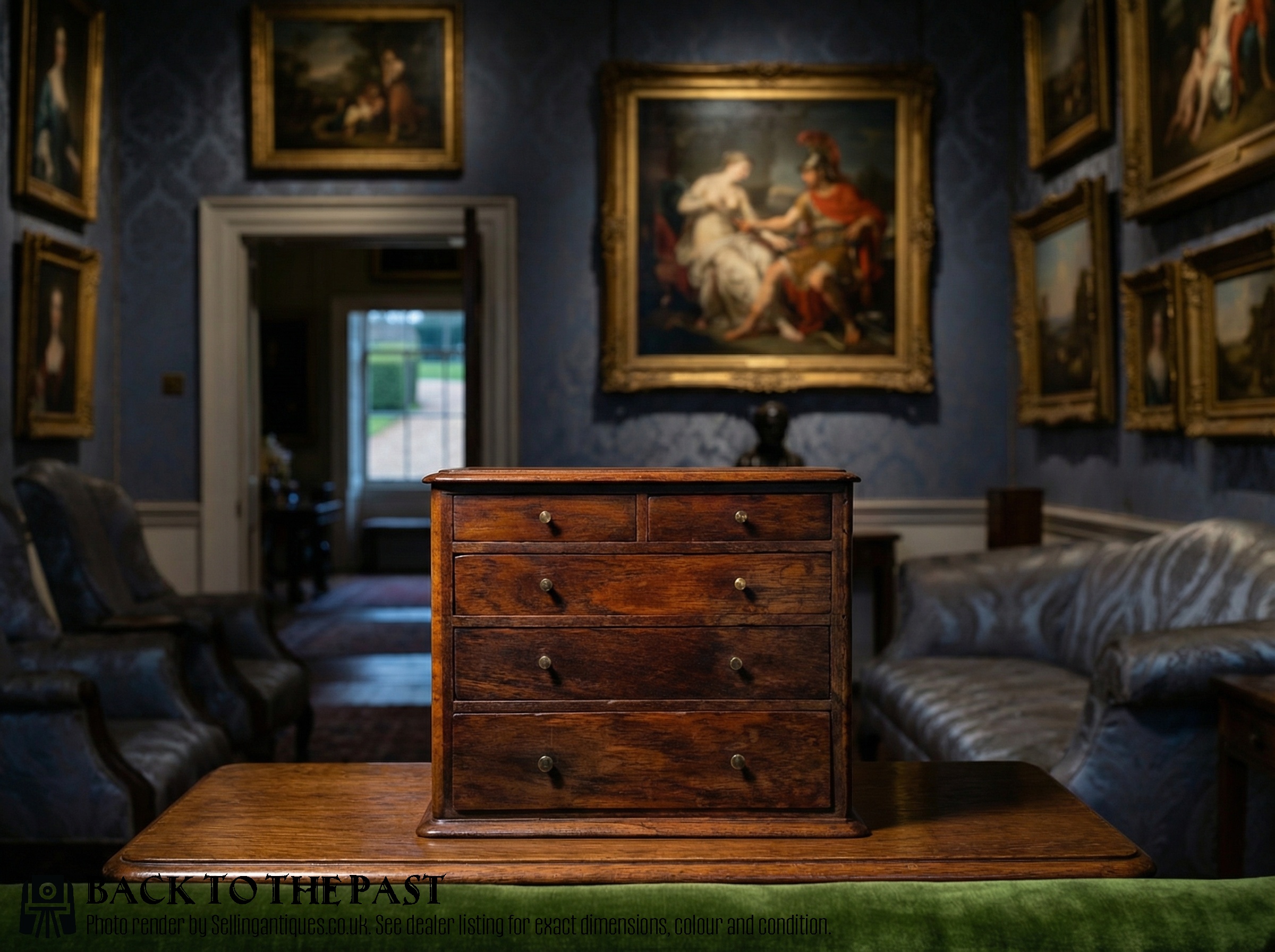
Apprentice Piece Chest
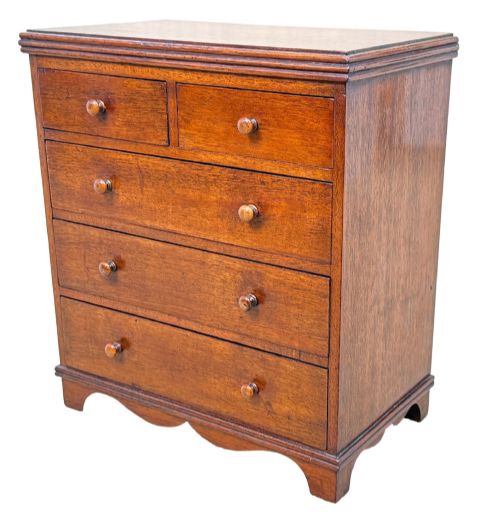
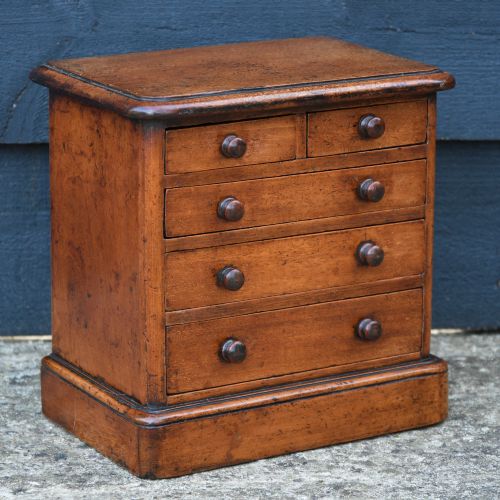
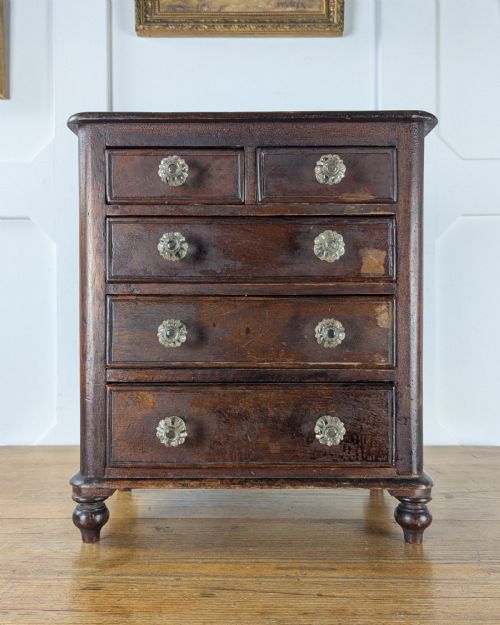
An apprentice piece chest is a scale model of a domestic chest of drawers, built to demonstrate technical proficiency for trade guild admission or as a master's sample. These items span periods from the eighteenth century through the Victorian era, reflecting the prevailing domestic furniture designs of their respective decades.
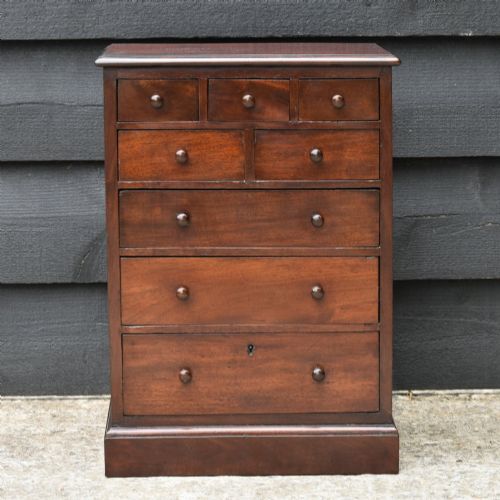
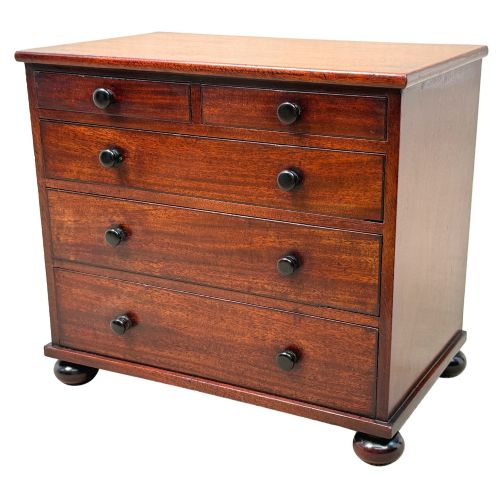
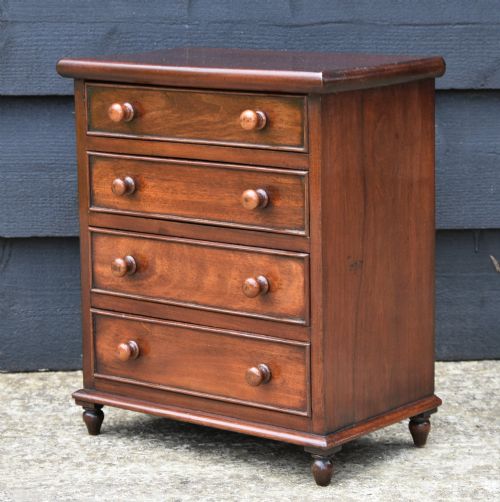
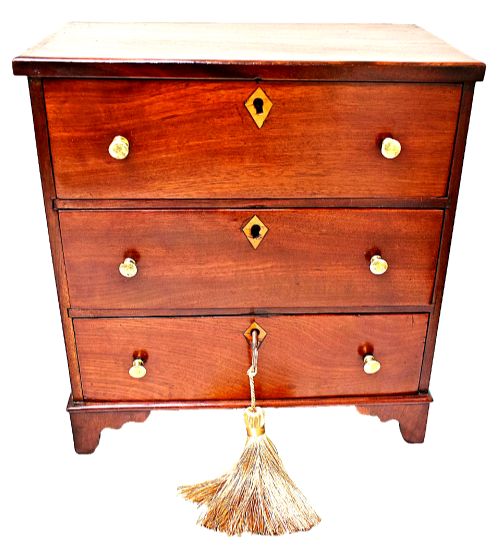
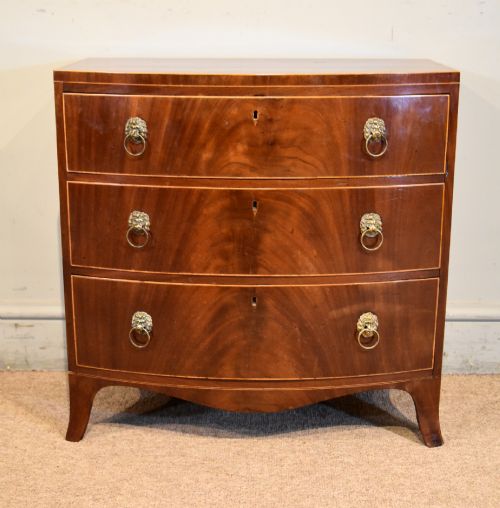
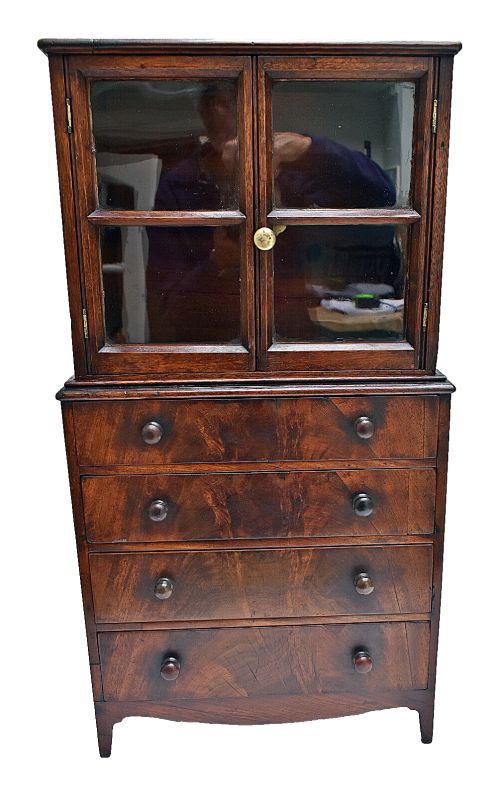
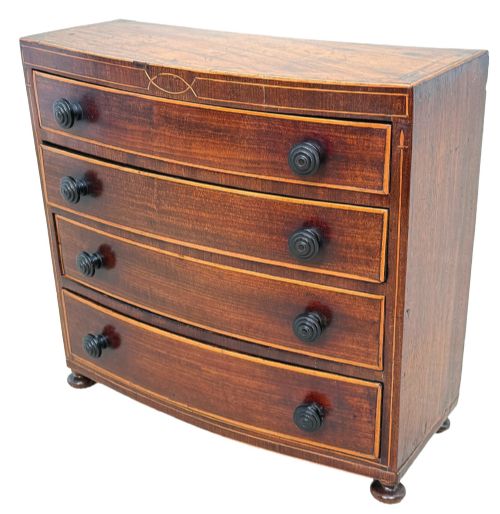
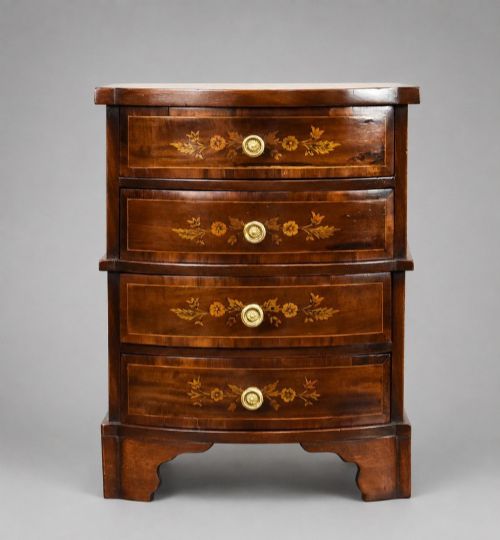
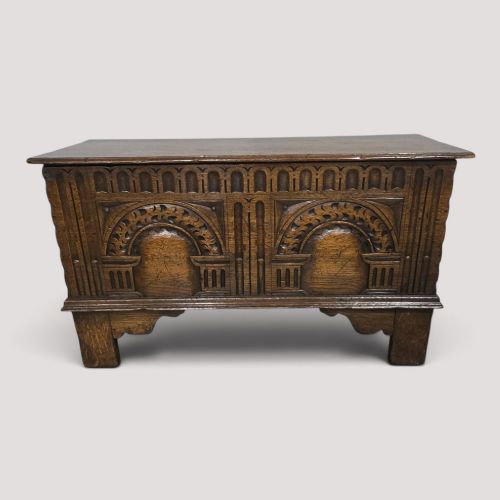
The most common version met on this page is the miniature mahogany chest of drawers, often constructed with turned feet, cockbeaded drawer edges, and working brass pulls. Alongside standard chests, the record includes Scottish chests, bow-fronted examples, mule chests, and specialised variants featuring secret drawers.
Makers utilised various domestic and exotic timbers to exhibit their proficiency with different grain patterns and joints. While traditionally associated with aspiring craftsmen, many surviving models served as high-end tabletop receptacles or jewellery boxes for affluent Victorian households.
Materials and construction methods
Cabinetmakers constructed these miniature chests using dense hardwoods such as mahogany, walnut, and rosewood, alongside secondary softwoods like pine for internal framing. Surfaces frequently display finely figured veneers, burr yew, or intricate marquetry patterns that require absolute precision on a reduced scale.
Joinery techniques mirrored full-sized case furniture precisely, employing hand-cut dovetails for drawer construction and secret compartments concealed within the carcass. Turned wooden feet, brass escutcheons, and bone inlay completed the miniature proportions without sacrificing structural integrity.
Apprentice Piece Chest Retail Price Guide 2026
Typical asking prices for apprentice piece chest among the pieces listed under this phrase on Sellingantiques today, from the lower quarter to the upper quarter. They describe what is for sale here now, not the wider market.
Several miniature chests incorporate secret drawers requiring hidden spring releases, proving that small apprentices still possessed large ambitions for mischief.
Assessing craftsmanship and distinction
Quality in an apprentice piece chest rests upon the fidelity of its scale joinery and the sharpness of its detailing. The finest examples display tight, hand-cut dovetails on every drawer lining and perfectly uniform cockbeading that shows no sign of hesitation from the maker's chisel.
Material selection and decorative restraint separate standard utility pieces from master-level works. Superior pieces utilise beautifully figured timbers like burr yew or highly patterned mahogany, paired with secondary details such as working locks, secret drawers, and finely turned feet that mirror full-size cabinet blueprints.
The Apprentice Piece Chest Glossary
- Cockbeading
- A narrow rounded moulding applied to the edges of drawer openings to frame the drawer fronts. This detail protects the edges of the carcase from chipping during daily use.
- Dovetail
- A joint formed by interlocking wedge-shaped fingers, crucial for binding drawer corners together. Hand-cut variations indicate the age and skill level of the maker.
- Escutcheon
- A protective plate surrounding a keyhole, frequently cast in brass on these miniature pieces. It prevents the wood surrounding the lock from wearing down over time.
- Mule chest
- A traditional chest featuring one or more working drawers beneath a main lifting lid compartment. Miniature versions combine the storage of a coffer with the access of a chest of drawers.
- Marquetry
- The art of applying thin decorative veneers in wood and bone to form intricate geometric or floral patterns. This technique tests the precision of the craftsman across small surfaces.
Apprentice Piece Chest: Frequently Asked Questions
Were these really made by apprentices?
Traditional histories connect these miniature chests to young craftsmen testing their skills before guilds or master craftsmen. Many surviving examples functioned more broadly as high-end salesman samples or bespoke decorative items for wealthy households.
Regardless of their original workshop purpose, they represent the absolute pinnacle of scaled cabinet-making from the Georgian and Victorian periods.
How do I date a miniature chest?
Dating relies heavily on timber choices, construction methods, and the prevailing stylistic cues of the period. Georgian examples often feature straight-grained mahogany and simple bracket feet, while Victorian pieces incorporate figured walnut, bolder turned feet, and applied mouldings.
Internal elements like secondary pine linings and hand-cut dovetails offer further clues to whether a piece originates from the eighteenth or nineteenth century.
What were they used for historically?
While initially built to prove trade credentials, their fine proportions made them highly desirable for domestic tabletop use. Wealthy Victorian owners utilised them as specialised jewellery boxes, tea caddies, or luxury receptacles for letters and trinkets.
Their substantial weight and working locks meant they functioned as secure, miniature strongboxes within the home.
How should I care for antique wood?
Maintain these pieces in stable environmental conditions away from direct sunlight and extreme humidity changes. Gentle dusting with a dry, soft cloth preserves the delicate polish and patina accumulated over centuries.
Avoid modern liquid polishes, utilising traditional beeswax sparingly only when the dry timber requires nourishment.