


Tabletop Jewellery Chest
A tabletop jewellery chest is a diminutive cabinet for precious trinkets, combining cabinetry skill with compact scale for an intimate storage piece.

Tabletop Jewellery Chest
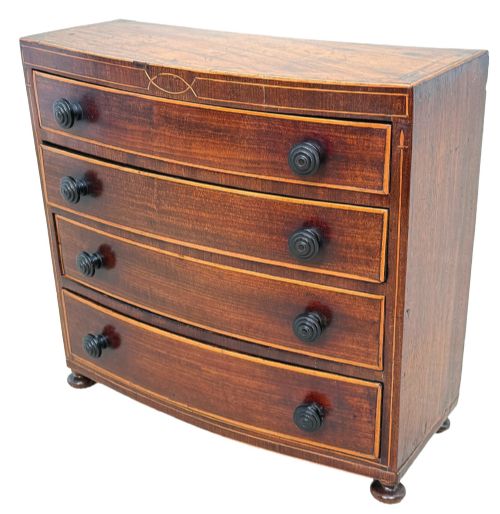
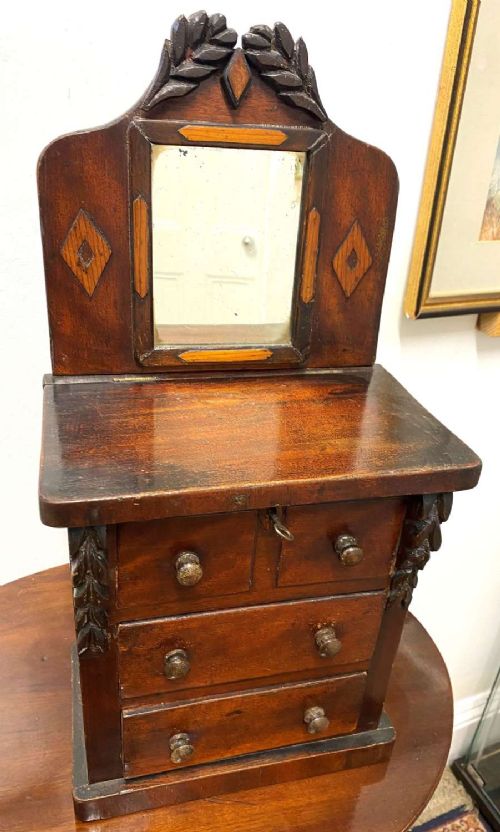
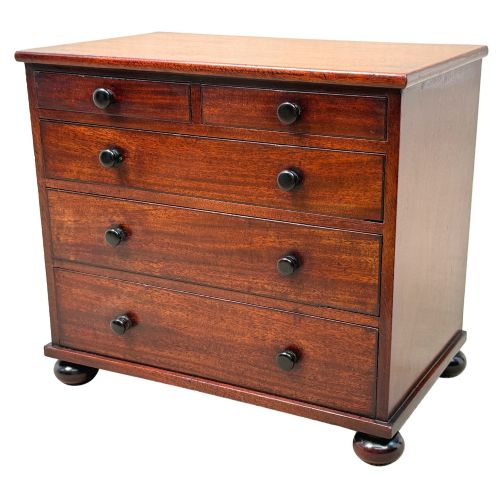
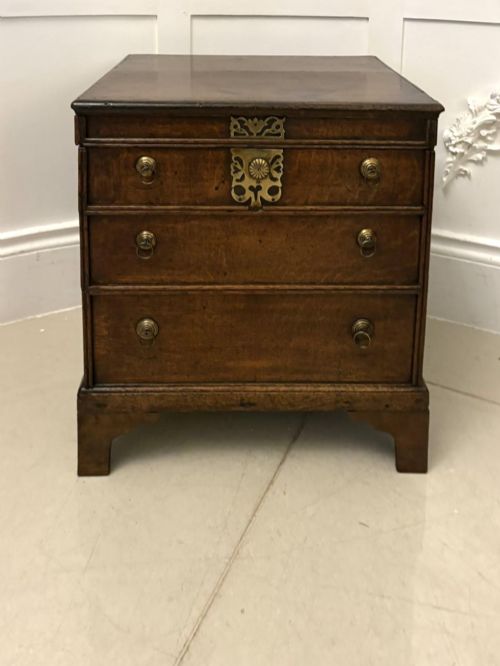
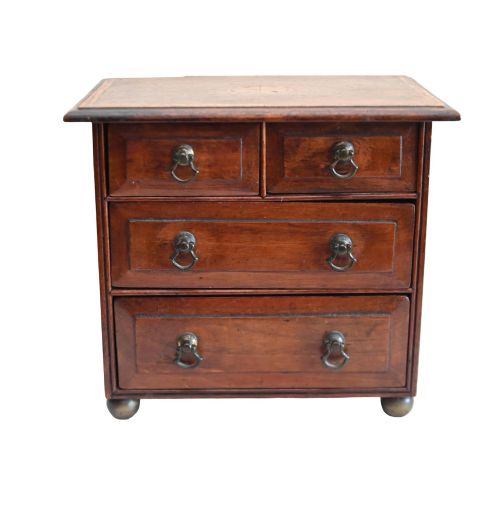
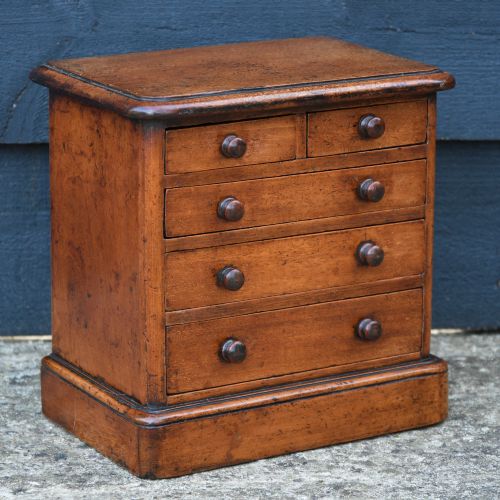
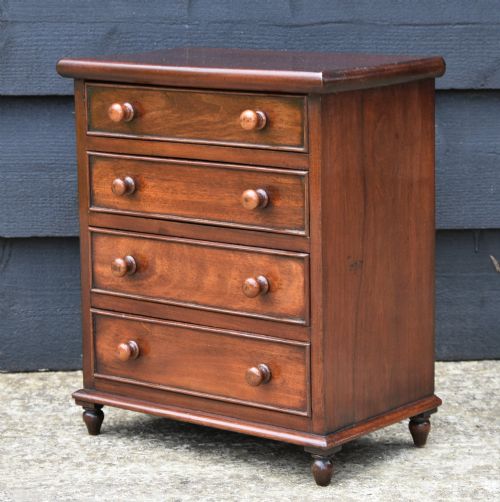
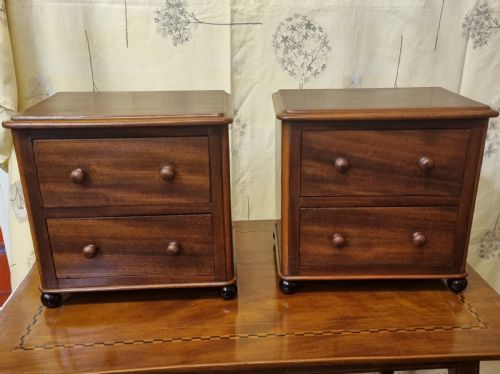
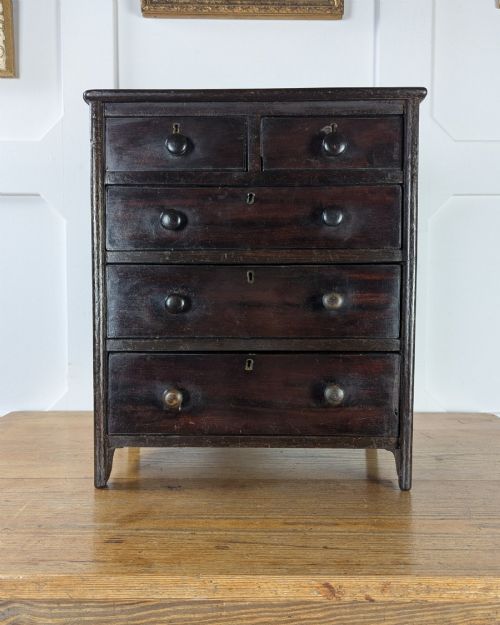
A tabletop jewellery chest serves as a miniature repository for personal valuables, taking the form of small chests of drawers, table cabinets, and collector pieces. When you search for a tabletop jewellery chest, you encounter compact furnishings spanning the Georgian, Victorian, and Edwardian eras, alongside pieces originating from Japanese lacquerwork and Chinese export traditions.
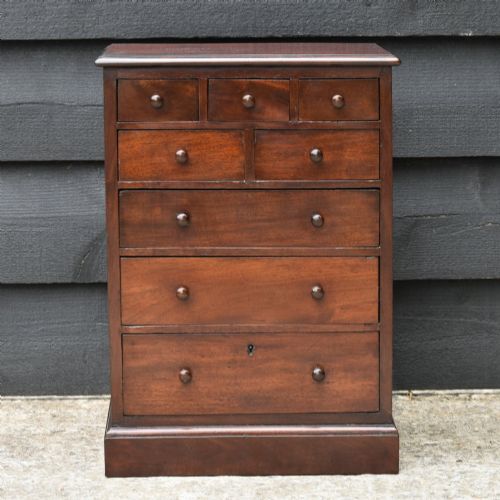
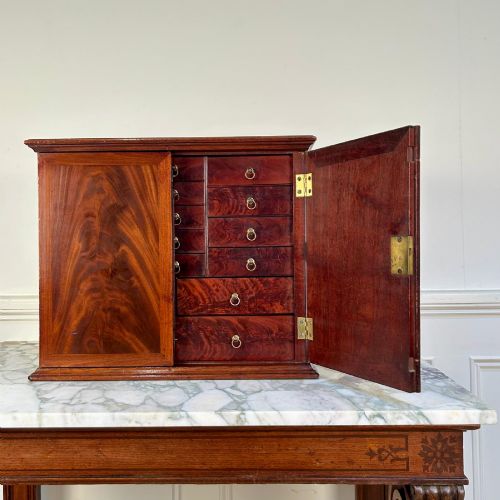
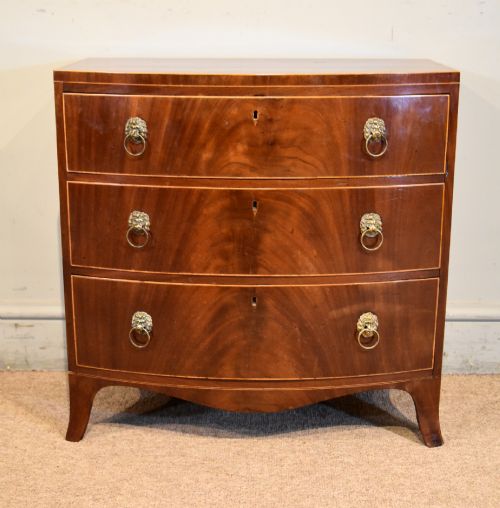
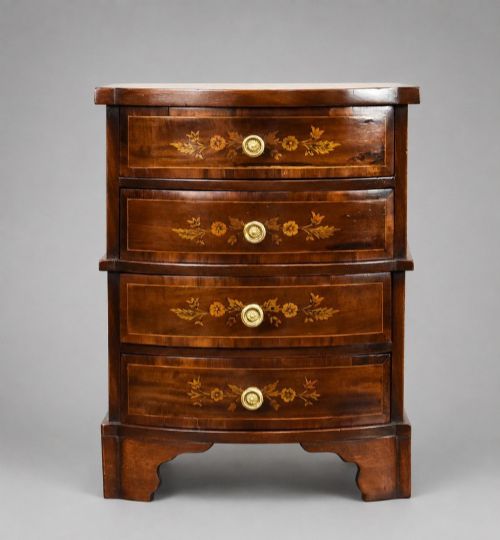
The dominant forms on this page include mahogany and walnut miniature chests of drawers, often styled as apprentice pieces or collector cabinets. These items mimic full-sized case furniture down to small drawers, secret compartments, and fitted interiors.
Beyond British domestic timber work, the selection encompasses continental European pieces such as Louis XVI style commodes and French armoires, alongside Meiji period Japanese black lacquer cabinets and Anglo-Indian hardwood boxes.
Materials and construction methods
Cabinetmakers utilised dense hardwoods including mahogany, walnut, rosewood, oak, and elm for the primary carcases, often applying marquetry, veneers, or inlaid details to enrich the surfaces. Smaller domestic pieces frequently employ classical proportions scaled down from larger furniture types.
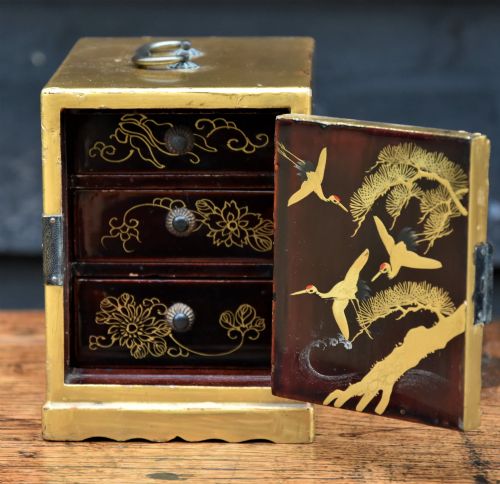
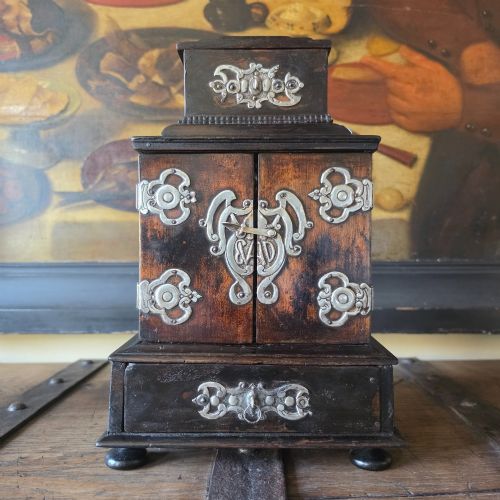
Exotic and decorative treatments define several regional variations, utilising materials such as mother of pearl, tortoise shell, brass hardware, bronze mounts, and marbled panels. Japanese and Chinese examples rely on black lacquer and gilded decoration applied to wood structures.
Interior engineering mirrors full-size case furniture, featuring dovetail joints on drawers, lined compartments for jewellery protection, and occasionally secret drawers or mirrored doors operated by small keys.
Tabletop Jewellery Chest Retail Price Guide 2026
Typical asking prices for tabletop jewellery chest among the pieces listed under this phrase on Sellingantiques today, from the lower quarter to the upper quarter. They describe what is for sale here now, not the wider market.
The selection spans Georgian, Regency, Victorian, Edwardian, and Meiji period origins.
The markers of distinction
Quality rests in the fidelity of the cabinetmaker's scale and the integrity of the timber selection, such as figured walnut or dense mahogany. Superior examples maintain precise proportions and tight joinery that reflect the standards of full-sized furniture.
Surface embellishment creates another tier of distinction, separating plain timber carcases from those enhanced with intricate mother of pearl inlay, tortoise shell panels, or delicate marquetry work. The presence of original hardware, working locks with keys, and undisturbed patination elevate a piece.
The Tabletop Jewellery Chest Glossary
- Apprentice piece
- A small-scale item demonstrating a craftsman's skill before admission to a guild. These miniature chests replicate full-sized furniture designs with exact proportions.
- Collector cabinet
- A specialised small cabinet fitted with multiple shallow drawers for housing natural history specimens, coins, or small valuables. They feature secure doors and refined internal layouts.
- Marquetry
- The art of applying decorative veneer pieces to a structure to form geometric or pictorial designs. This technique decorates the surfaces of many Edwardian and Georgian miniature chests.
- Wellington chest
- A tall, narrow chest of drawers secured by a hinged locking stile on one side. Miniature versions adapt this robust locking mechanism for portable storage.
Tabletop Jewellery Chest: Frequently Asked Questions
What is a tabletop jewellery chest?
A tabletop jewellery chest is a small-scale cabinet designed to sit on a surface and hold personal valuables. These pieces range from miniature mahogany chests of drawers to exotic lacquered table cabinets.
Craftsmen built them to mirror the styles of larger furniture, providing compartmentalised storage in a compact footprint.
Were these miniature chests made by apprentices?
Many nineteenth-century miniature chests of drawers carry the traditional attribution of apprentice pieces. Cabinetmakers created them to demonstrate mastery of woodworking joints and scale.
While some genuinely served this training purpose, others were produced commercially as luxury items for domestic interiors.
What materials are typical for these cabinets?
British and European examples rely heavily on dense hardwoods like mahogany, walnut, rosewood, and oak. Decorative elements often incorporate brass mounts, mother of pearl, and tortoise shell.
Asian export pieces utilise black lacquer and gilded decoration over wood carcases.
How do I style a tabletop jewellery chest at home?
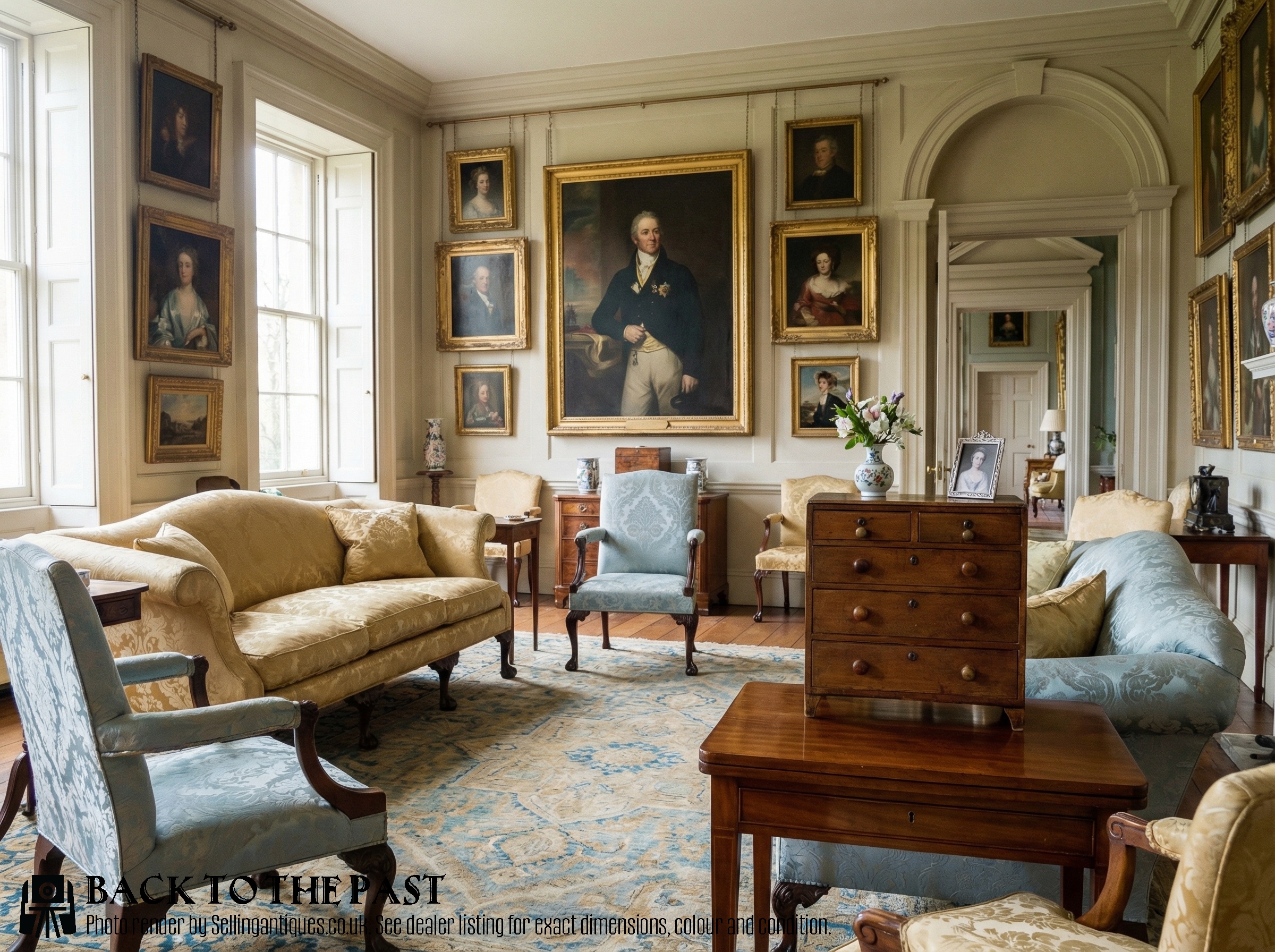
These chests suit placement on top of dressers, sideboards, or writing desks where their detailed woodwork can be appreciated. Their compact size allows them to sit comfortably on narrow surfaces.
They provide practical storage for modern accessories while adding period character to a room.
How do I date a miniature chest of drawers?
Dating relies on identifying timber choices, construction techniques, and stylistic markers associated with periods like the Georgian, Regency, or Victorian eras. Secondary woods inside the drawers often offer clues to age and origin.
Hardware styles and lock mechanisms also help narrow down the decade of production.