



Mahogany Tabletop Chest
A mahogany tabletop chest offers compact drawer storage in rich timber, bringing traditional cabinet-making into a domestic study or bedroom.
Understanding a mahogany tabletop chest
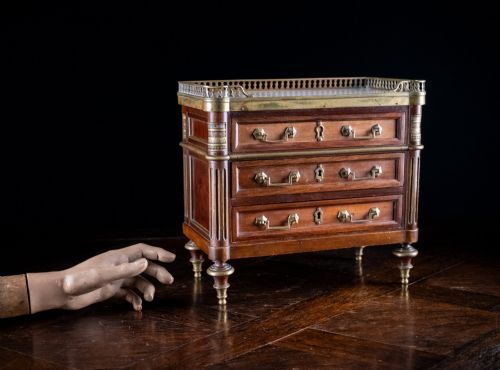
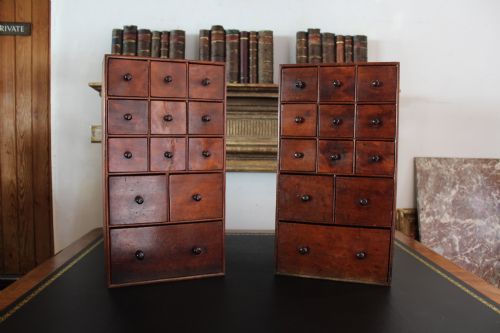
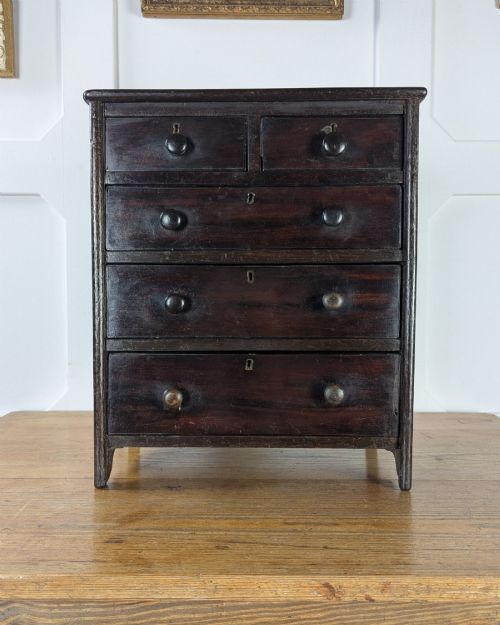
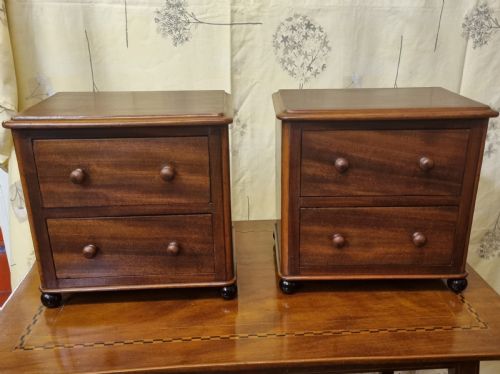
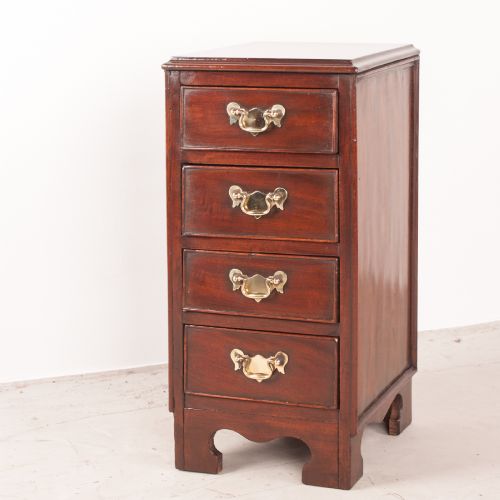
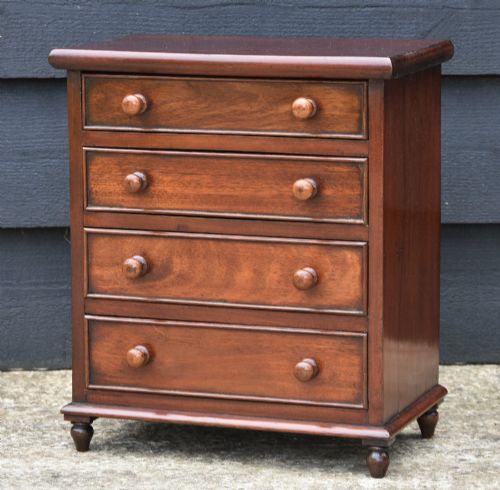
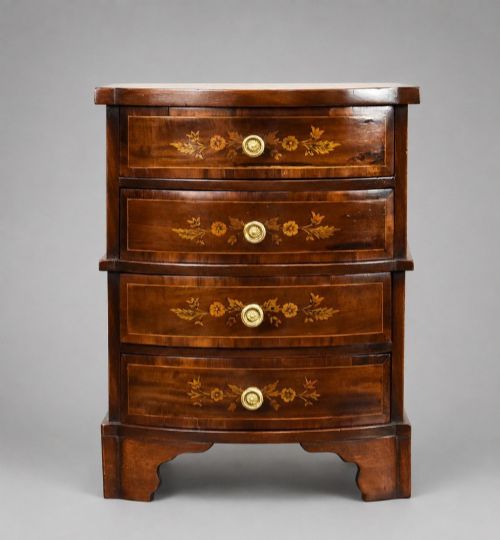
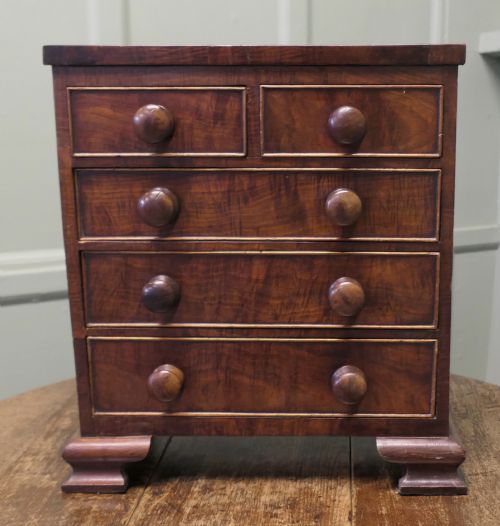
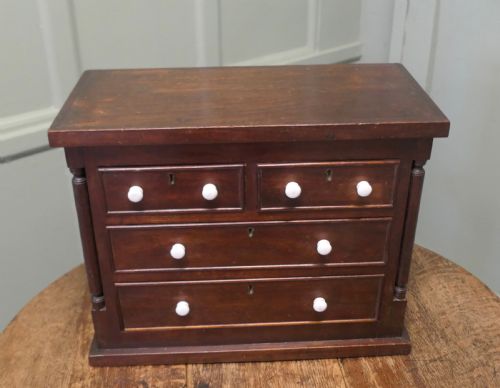
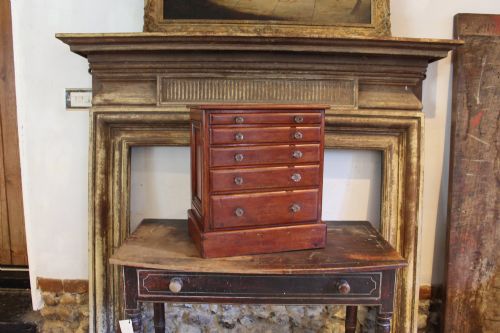
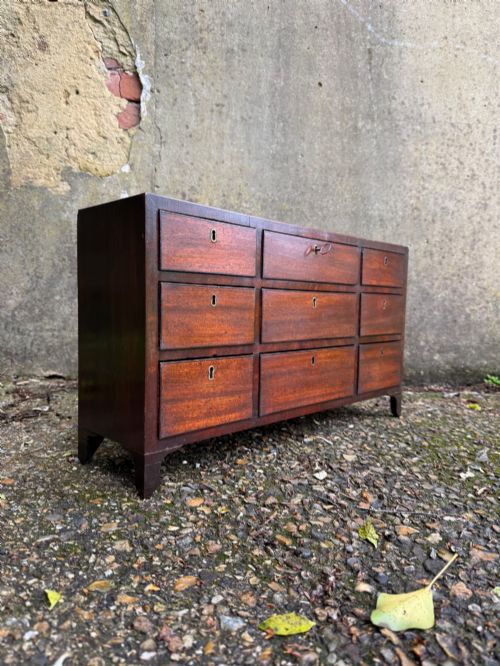
A mahogany tabletop chest provides miniature scale storage with the architectural presence of full-sized case furniture. These pieces appear across several distinct historical eras, including the eighteenth century, the regency period, and the nineteenth century, sometimes taking the form of a miniature chest of drawers or a specialised watchmaker cabinet.
Makers designed these smaller receptacles to sit securely upon larger desks, sideboards, or tables while retaining the proportion and detailing of standard domestic case furniture. The survival of these diminutive pieces demonstrates the persistent demand for portable, lockable storage spaces for small valuables.
Construction and materials
Makers constructed each mahogany tabletop chest using solid mahogany timbers, often enhanced by finely figured veneers selected for drawer fronts and top panels. Cabinet-makers joined the carcase using traditional techniques such as dovetailing for drawer construction, ensuring structural integrity despite the reduced scale.
Metal fittings typically consist of cast brass, providing drop handles, escutcheons, and occasionally locking mechanisms that secure the bank of drawers. These brass elements contrast sharply with the dark reddish-brown grain of the polished mahogany surfaces.
Retail Price Guide 2026
Typical UK retail prices for mahogany tabletop chest, calculated from the Sellingantiques database of over a million retail prices indexed since 2003. This retail price guide relies exclusively on Sellingantiques data; no external sources or auction records are used, so the figures do not describe the wider market.
Listings for a mahogany tabletop chest span the eighteenth century, the nineteenth century, and the Victorian era, utilising solid mahogany and brass.
Judging quality and proportion
Quality in a mahogany tabletop chest rests upon the fidelity of its scaling and the crispness of its joinery, distinguishing serious cabinet-making from simple novelty items. Superior examples maintain correct architectural proportions rather than appearing like clumsy, compressed versions of larger furniture.
The choice of timber grain and the precision of the dovetail joints reveal the maker's hand, where top-tier pieces exhibit carefully matched mahogany veneers across every elevation. Finishes that retain a deep, warm patina without heavy modern intervention separate desirable period items from compromised alternatives.
The Mahogany Tabletop Chest Glossary
- Bowfront
- A curved convex front profile common on Regency period pieces. This convex shape softens the corners of the case furniture.
- Wellington chest
- A tall, narrow chest featuring a locking side stile that secures all internal drawers simultaneously. This specific form appears in Victorian examples.
- Dovetail
- An interlocking joint used at the corners of drawers. Fine, narrow pins indicate skilled cabinet-making.
- Escutcheon
- A small protective plate surrounding a keyhole, usually fashioned from brass. It prevents the surrounding wood from wearing during daily use.
- Miniature furniture
- Scale models or apprentice pieces built to exact domestic proportions. These items served as display pieces or salesman samples.
Frequently Asked Questions
What is a tabletop chest used for?
A mahogany tabletop chest provides secure, compartmentalized storage for small personal valuables, letters, or watchmaking tools.
Historically, owners placed these cabinets on desks or sideboards for easy access while keeping contents locked away safely.
How do I date a mahogany chest?
Dating relies on observing construction methods, timber selection, and stylistic details such as brass handles or curved bowfronts.
Georgian and Regency pieces exhibit different proportions and joinery signatures compared to later Victorian or twentieth-century examples.
Are these chests made of solid wood?
Most examples combine solid mahogany frames and drawer linings with carefully applied mahogany veneers on primary display surfaces.
Veneering allowed cabinet-makers to showcase striking grain patterns across flat surfaces without warping.
What is a Wellington chest?
A Wellington chest is a vertically proportioned storage unit characterised by a hinged locking stile on the right side.
Swinging this locking bar outward releases the entire stack of small drawers at once.