
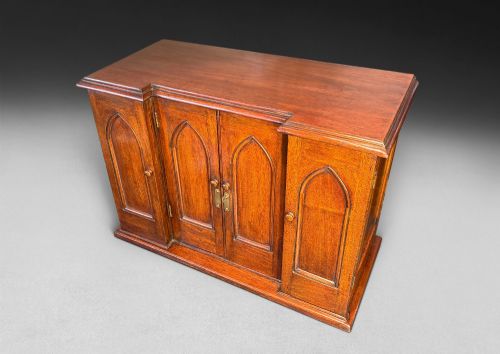
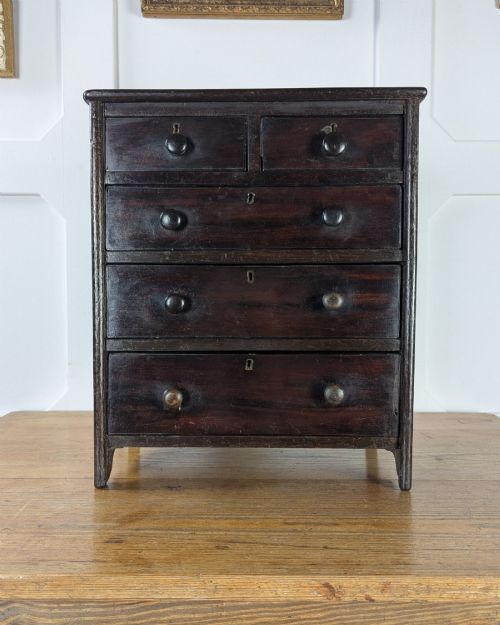
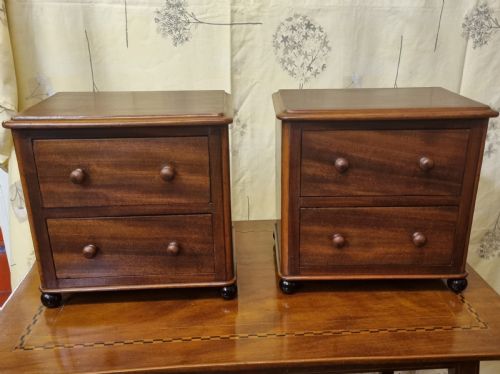
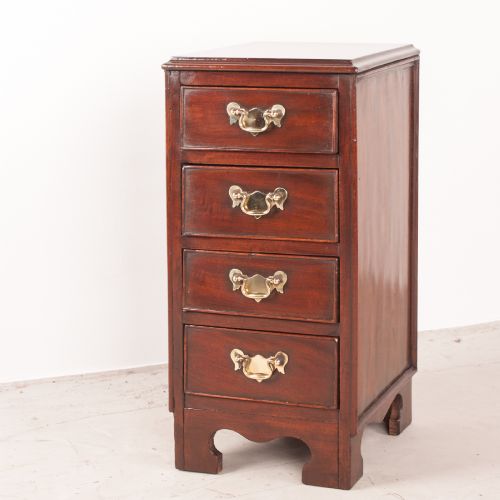

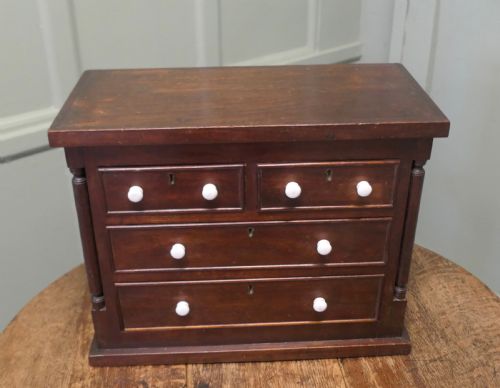
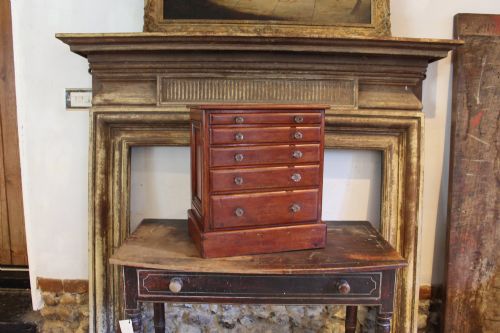
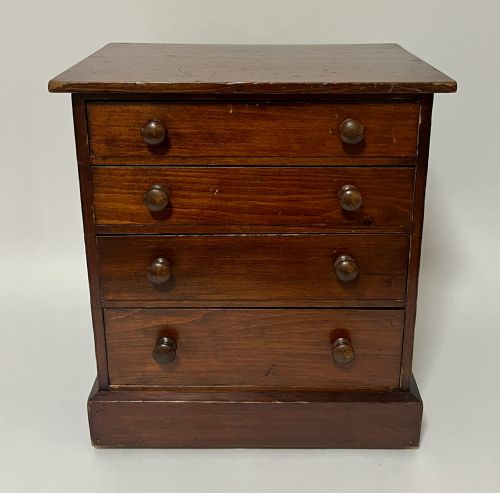
Victorian Tabletop Chest
A victorian tabletop chest brings scale-down craftsmanship to a desk or surface, offering compact storage for small treasures and papers.
Victorian Tabletop Chest
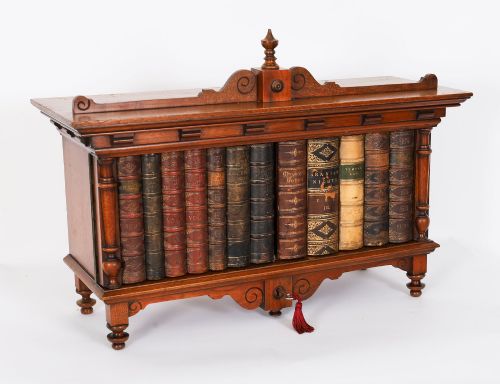
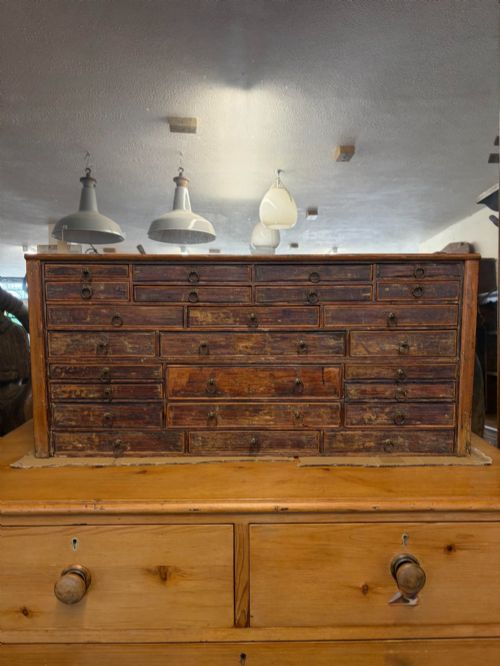
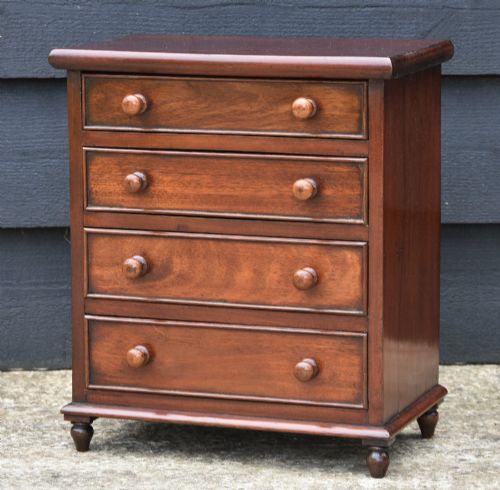
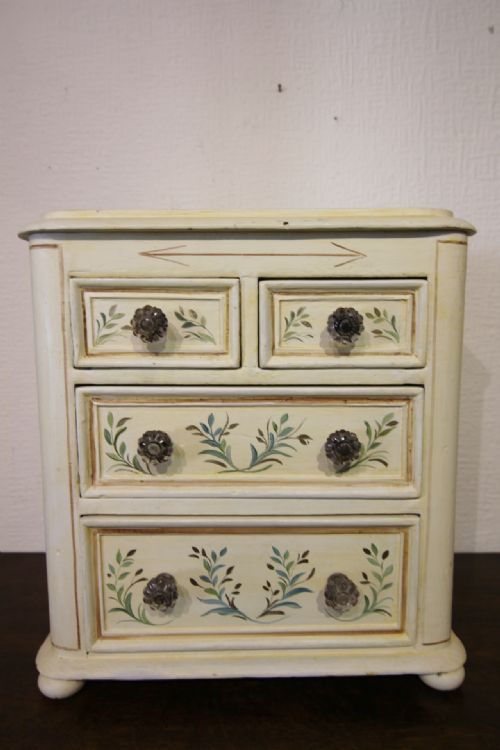
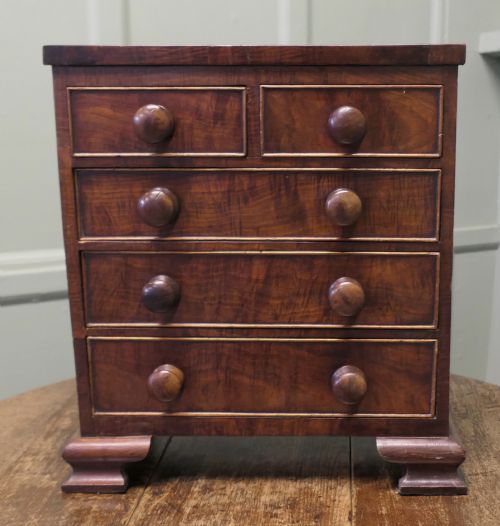
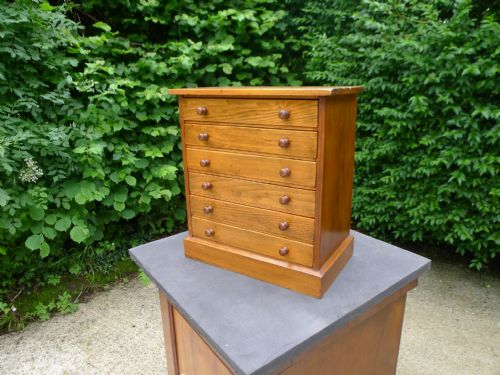
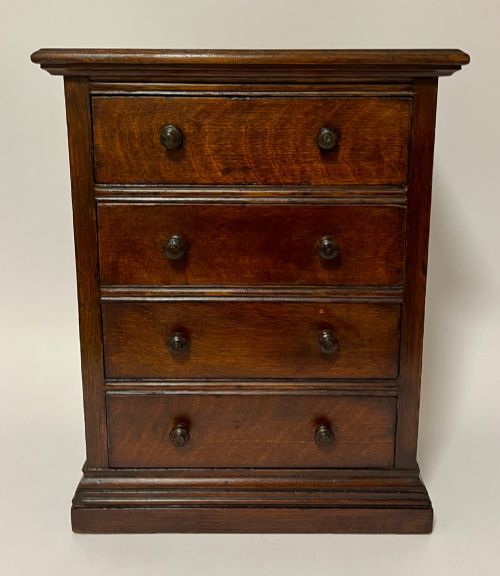
A victorian tabletop chest encompasses miniature chests of drawers, collectors' cabinets, and specimen cases built during the nineteenth century. These pieces mimic the grand proportions of full-sized furniture or serve specific purposes like housing insects, coins, and jewellery.
Mahogany and walnut appear frequently among the listings, alongside pine, oak, and exotic timbers such as rosewood and amboyna. The forms range from simple apprentice pieces to complex drawer banks and lockable cabinets.
Buyers encounter variations including gothic revival details, bowfront shapes, and multi-drawer configurations designed for utilitarian sorting or decorative display.
Materials and construction
Cabinet makers utilised dense hardwoods like mahogany and walnut for structural stability and fine grain finish, often employing veneers of burr walnut or amboyna on primary surfaces. Secondary timbers inside drawers typically include pine or oak.
Brass fittings, escutcheons, and mother of pearl inlay accent the exteriors, while dovetail joints secure the drawer construction. Hand-turned wooden knobs or small brass pulls complete the operating elements.
Victorian Tabletop Chest Retail Price Guide 2026
Typical asking prices for victorian tabletop chest among the pieces listed under this phrase on Sellingantiques today, from the lower quarter to the upper quarter. They describe what is for sale here now, not the wider market.
Several miniature chests conceal secret drawers behind movable mouldings, rewarding close physical inspection with hidden compartments.
Distinctions in quality
The refinement of the internal joinery and the selection of timber figure dictate the standing of a piece. Dense, well-matched mahogany or figured walnut veneers combined with tight dovetailing separate standard utilitarian storage from superior examples.
Hardware originality, such as matching brass locks and escutcheons, influences the integrity of the object. Pieces retaining fitted velvet interiors or working keys show greater care in original manufacture.
Manoah Rhodes and Sons Ltd
The Victorian Tabletop Chest Glossary
- Apprentice piece
- A small-scale item demonstrated to a guild to prove a cabinet maker had mastered their trade. These often replicate full-size chests with exact miniature proportions.
- Specimen cabinet
- A specialised storage unit containing multiple shallow drawers intended for botanical, geological, or entomological collections. The drawers fit tightly to protect delicate contents from dust.
- Wellington chest
- A tall, narrow chest of drawers secured by a hinged locking side stile that fastens over the drawer edges. This specific form appears in miniature tabletop formats.
- Escutcheon
- A protective plate surrounding a keyhole, usually fashioned from brass or bone. It prevents the wood around the lock from wearing down through repeated use.
Victorian Tabletop Chest: Frequently Asked Questions
What is a victorian tabletop chest used for?
These small pieces served various domestic and scientific purposes in the nineteenth century, ranging from organising correspondence to storing jewellery, coins, and specimen slides.
Collectors utilised them on desks or side tables where full-sized furniture would not fit, combining practical utility with decorative display.
How do you identify an apprentice piece?
Apprentice pieces replicate standard domestic furniture forms at a reduced scale, showing the maker's skill in miniature dovetailing, drawer fitting, and turned elements.
While traditional lore often attributes small chests strictly to training exercises, many functioned commercially as high-end travel or tabletop storage.
What woods were commonly used?
Mahogany and walnut form the majority of the structured exteriors, often selected for their stability and rich grain patterns. Pine appears frequently as a secondary timber or in country pieces.
More elaborate examples incorporate exotic veneers like amboyna, rosewood, and burr walnut to catch the eye on a desktop.
How should I clean a wooden tabletop chest?
Dust the surface regularly with a soft, dry cloth to prevent particulate buildup in carved details or around brass hardware. Avoid synthetic polish and water.
Apply microcrystalline wax occasionally to nourish antique wood finishes and maintain the natural lustre without harming old polish.