

Mahogany Tabletop Drawers
Mahogany tabletop drawers offer compact storage and practical surface utility, uniting dense timber with traditional small-scale cabinetmaking.
Mahogany Tabletop Drawers
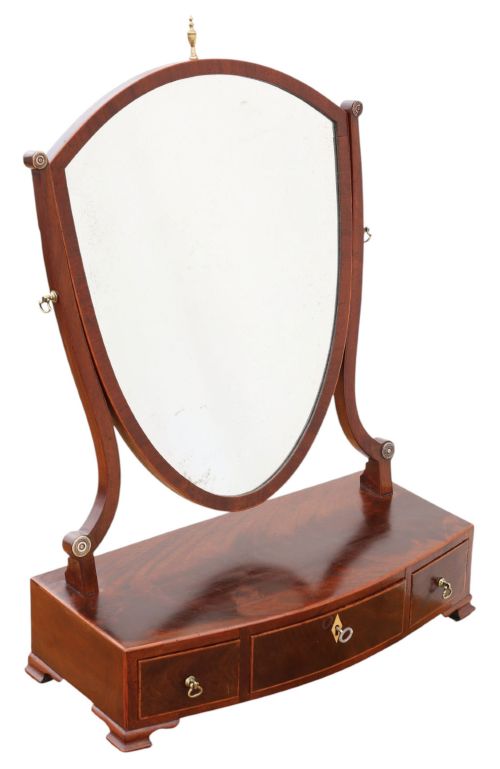
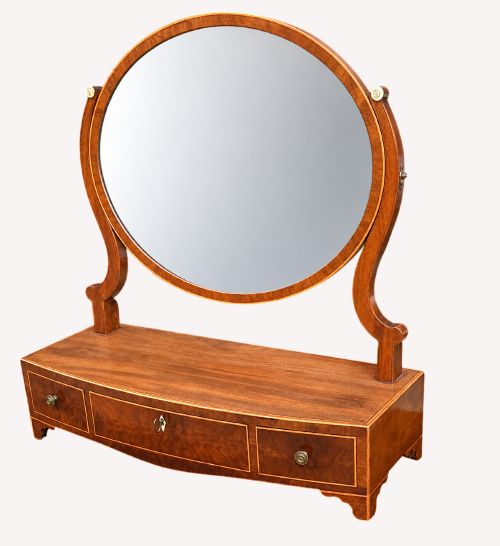
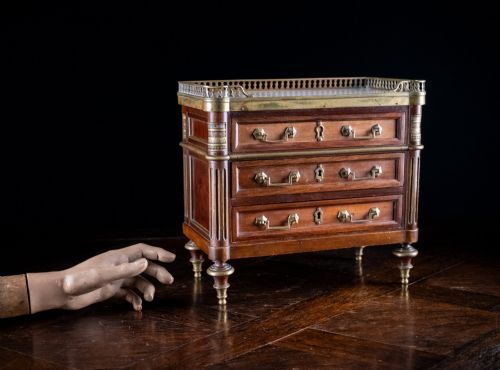
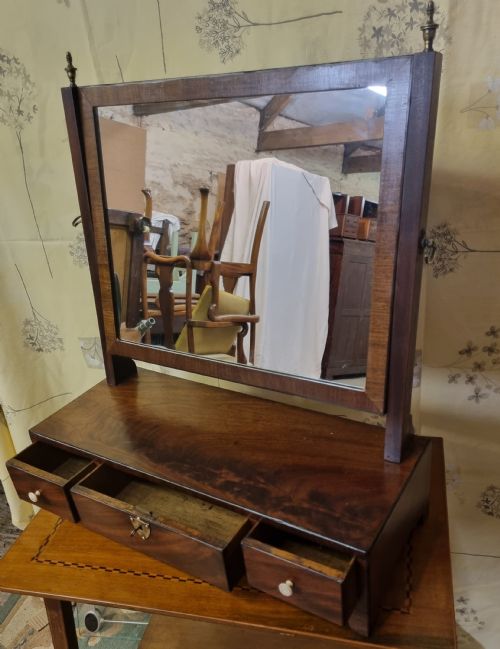
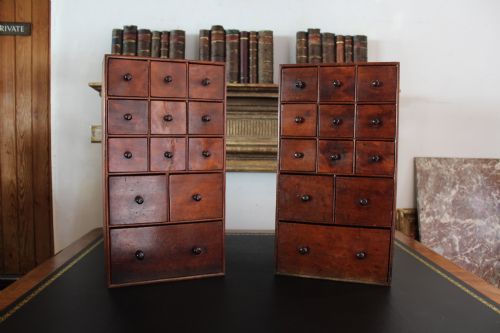
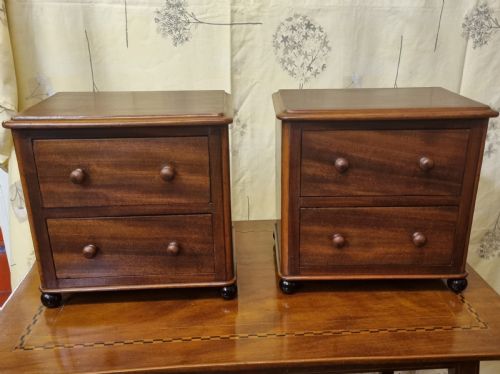
Mahogany tabletop drawers encompass miniature chests, specimen cabinets, and dressing table mirrors fitted with drawer bases, originating principally from the eighteenth and nineteenth centuries.
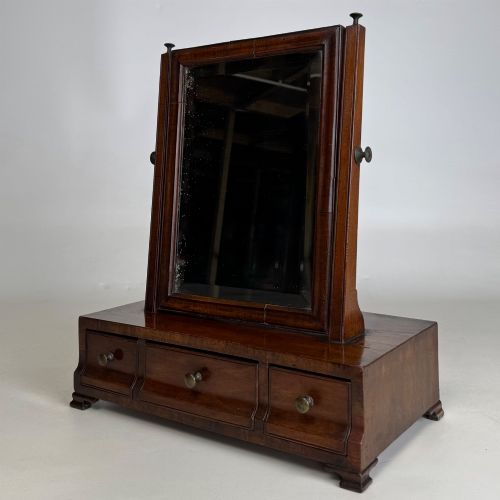
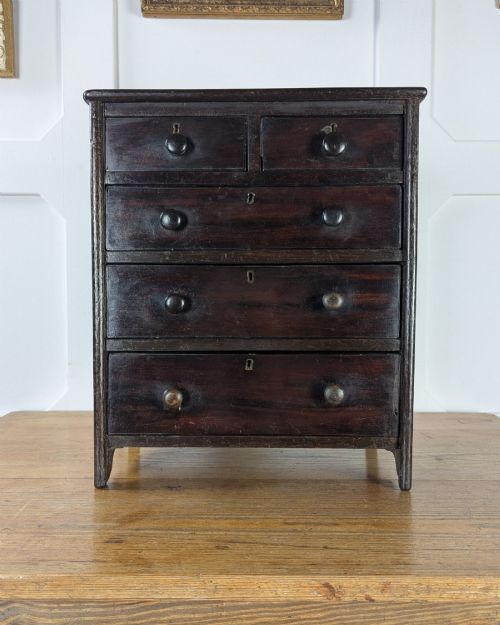
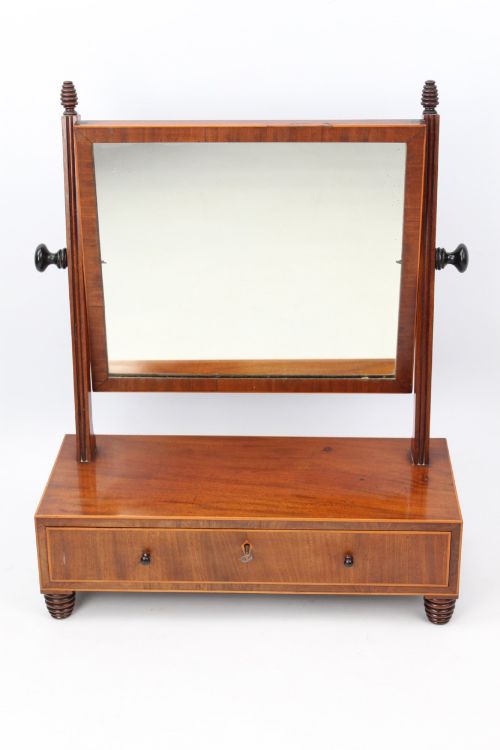
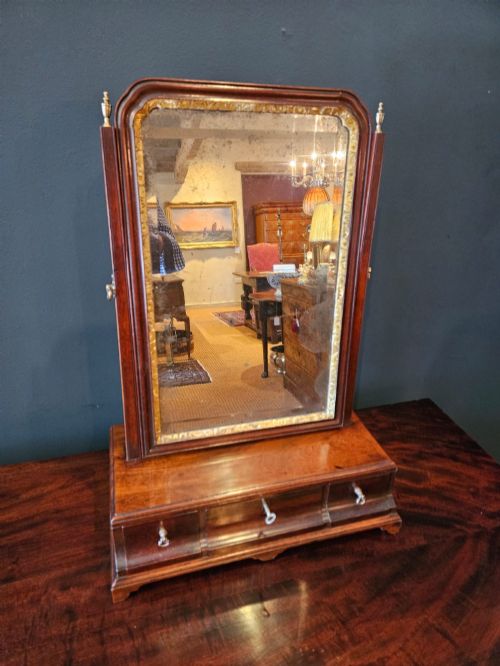
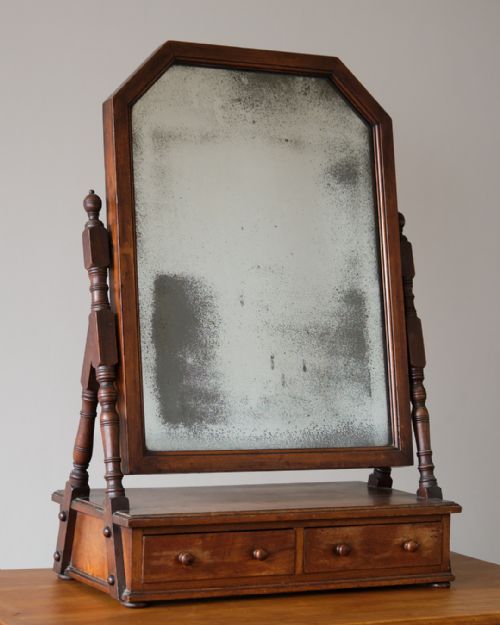
The version a buyer most frequently encounters on this page is the dressing table or toilet mirror, typically resting on a base containing small drawers, alongside occasional miniature chests of drawers.
Pieces span periods from the Georgian and Regency eras through to the Victorian period, utilising styles such as George II, George III, and Louis XVI.
Materials and Construction
Makers utilised solid and veneered mahogany timber, often combined with secondary woods like pine, shaping compact carcases for tabletop placement.
Fittings incorporate brass for handles, escutcheons, and hinges, while glass forms the mirror plates and bone occasionally provides decorative detailing.
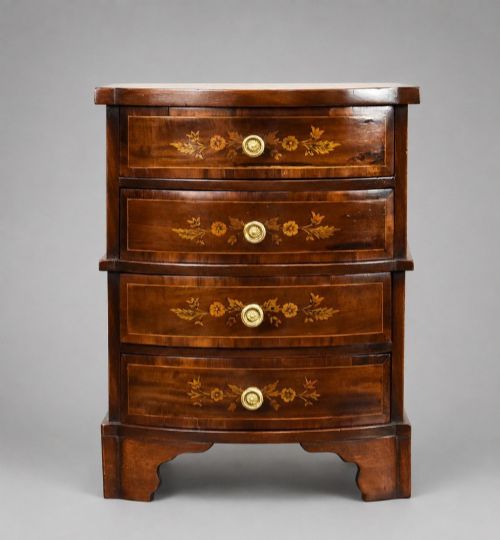
Surface treatments include marquetry inlay, crossbanding, parcel-gilt highlights, and bronze mounts on specific continental or revival pieces.
Apprentice pieces occasionally hid tiny secret drawers behind the main compartments, designed to safely store small keepsakes.
Craftsmanship and Proportion
Quality rests in the precision of the joinery, particularly the cut of the dovetails on the drawer carcases and the integrity of the timber grain.
Superior examples display balanced proportions, refined mouldings such as serpentine or bow fronts, and well-chosen mahogany veneers that retain deep colour.
Heal & Sons·Johnston’s of London
The Mahogany Tabletop Drawers Glossary
- Toilet mirror
- A small mirror designed to stand on a dressing table or chest, frequently mounted on a swinging frame above a box base fitted with small drawers.
- Apprentice piece
- A small-scale item demonstrating advanced woodworking skills, traditionally created by a trainee to prove proficiency to a guild.
- Crossbanding
- A strip of veneer applied across the grain of the primary timber to create a contrasting border around drawer fronts or table edges.
- Shield mirror
- A dressing glass shaped in the form of an heraldic shield, popular during the eighteenth century.
- Specimen cabinet
- A small chest designed for storing natural history samples, coins, or small collectables in shallow drawers.
Mahogany Tabletop Drawers: Frequently Asked Questions
What is the difference between a toilet mirror and a dressing mirror?
A toilet mirror generally describes a smaller glass mounted on a box base containing one or more small drawers for toiletries and personal items. These pieces sat upon tables in bedrooms or dressing rooms.
A dressing mirror often refers to a larger, sometimes freestanding swing glass or a comparable tabletop form dating from the Georgian or Victorian periods. Both served identical grooming purposes in period interiors.
Were miniature chests actually used by apprentices?
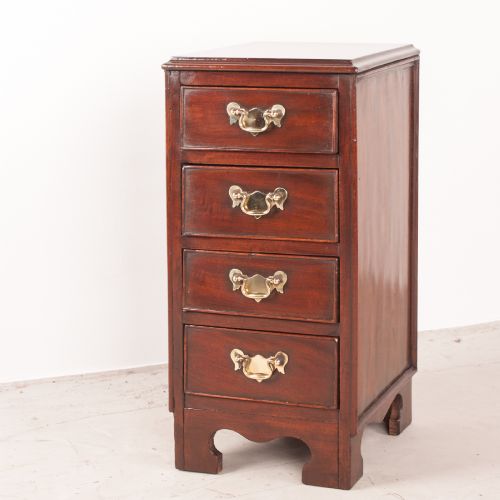
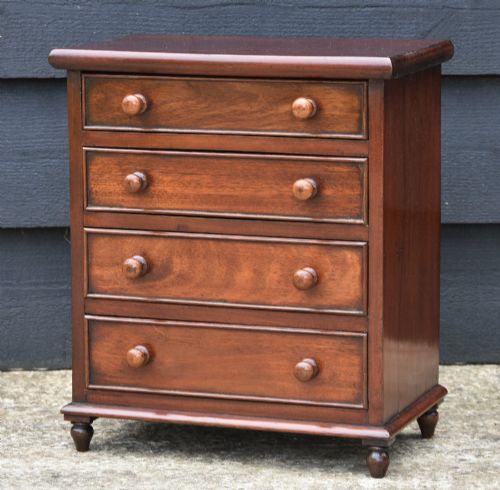
Miniature chests of drawers are frequently termed apprentice pieces by trade tradition, representing portable examples of a cabinetmaker's skill. Many were also produced as children's furniture or high-quality trinket chests for adults.
Determining exact workshop use relies on examining the refinement of the dovetails and the scale of the construction relative to full-size furniture.
How do I date a mahogany tabletop chest?
Dating relies on stylistic markers, construction methods, and the handling of the mahogany timber. Georgian examples often feature cockbeading around drawer edges and bracket feet, whereas Victorian pieces display heavier proportions or pine secondary woods.
Secondary materials such as brass handle types and mirror plate bevelling also assist in establishing the period of manufacture.
Where should I place these drawers in a modern home?
Tabletop drawers and small mirrors function effectively on top of sideboards, chests of drawers, or desks to provide organised storage for small items. Dressing mirrors sit naturally on dressing tables or low chests where their swing frames remain fully accessible.
Their compact scale allows them to fit into hallways or studies without overwhelming the surrounding room.