
Miniature Cabinet Drawers
Miniature cabinet drawers compress full-scale furniture and cabinetry into tabletop proportions, offering practical storage for small treasures.
Miniature Cabinet Drawers
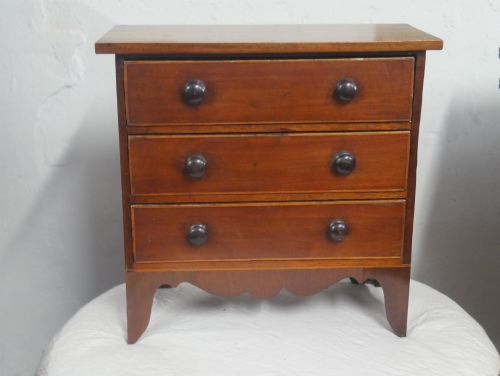
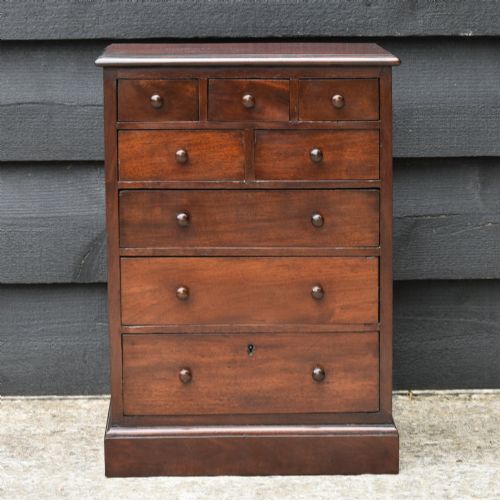
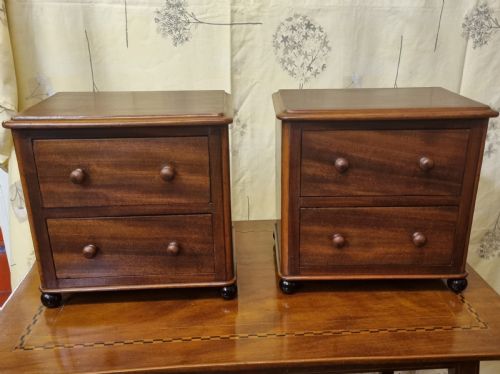
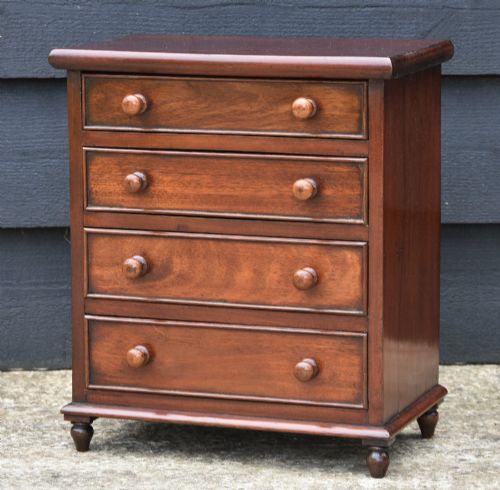
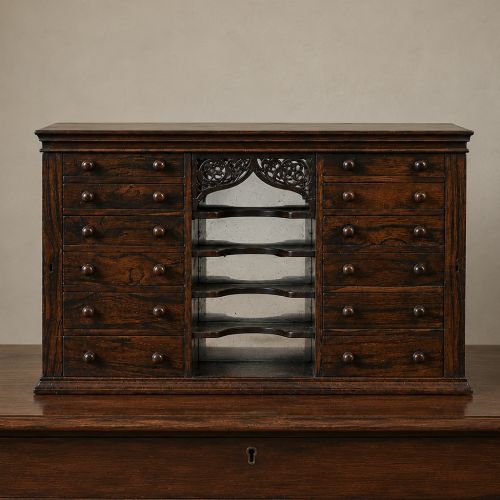
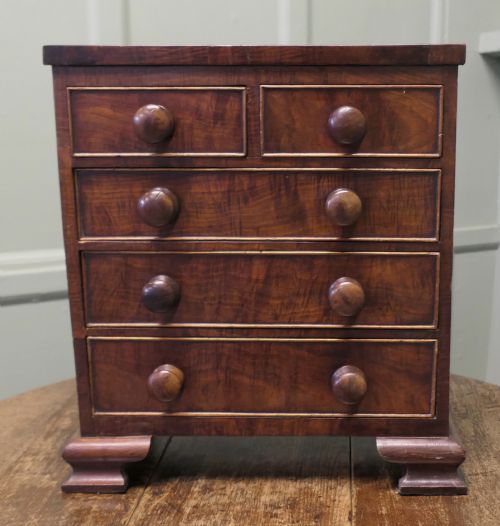
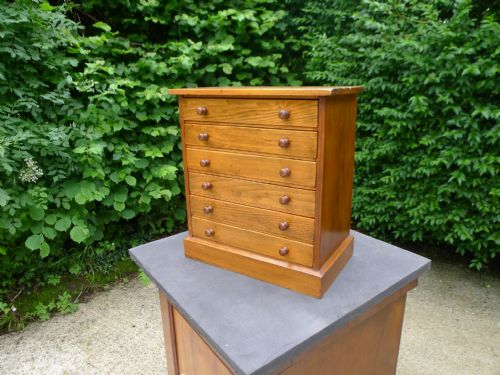
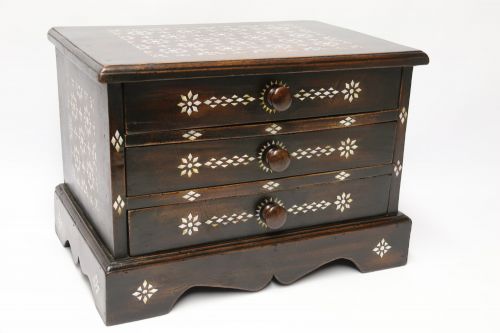
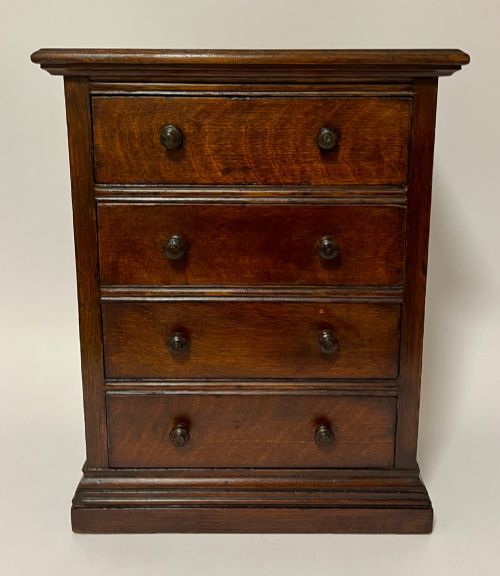
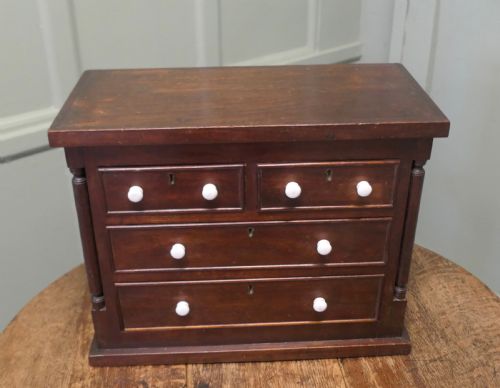
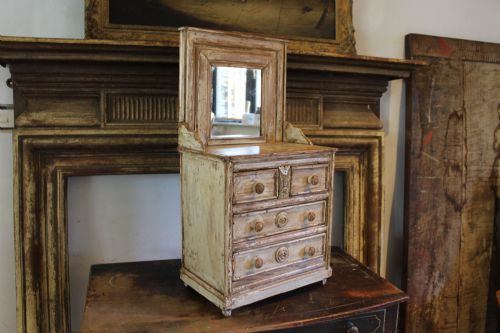
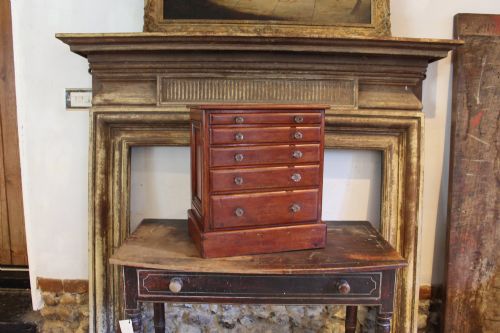
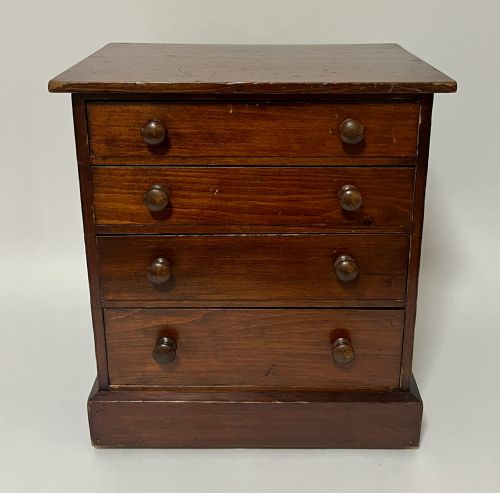
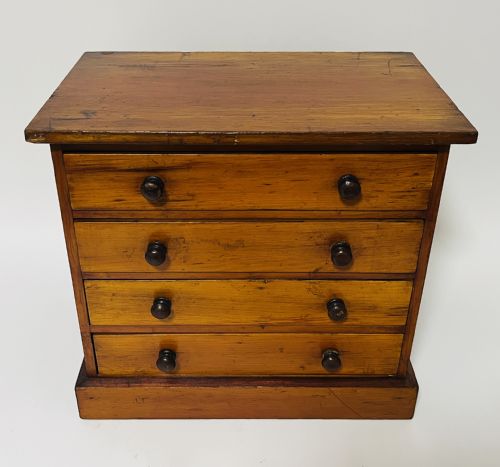
Miniature cabinet drawers encompass a diverse group of small-scale storage forms, including miniature chests of drawers, apprentice pieces, spice drawers, specimen cabinets, and collectors' cabinets. These pieces mirror the architecture of larger domestic furniture, scaling down full-size forms into portable formats intended for tabletops or desks.
The most common examples encountered on this page belong to the Victorian and Georgian periods, alongside pieces from around 1900. Mahogany, oak, and pine appear frequently, shaped into conventional chest configurations or specialised multi-drawer units for small objects.
Makers adapted major historical styles such as Regency, Edwardian, and Queen Anne into miniature dimensions. These varied forms served practical domestic roles, functioning as trinket holders, apothecary storage, and specialised display cases for natural specimens.
Materials and Construction
Cabinetmakers constructed miniature cabinet drawers using timber veneers and solid woods like mahogany, walnut, oak, satinwood, fruitwood, and pine. Hardwoods provided structural stability and smooth surfaces for fine finishes, while secondary softwoods often reinforced internal dividers and drawer linings.
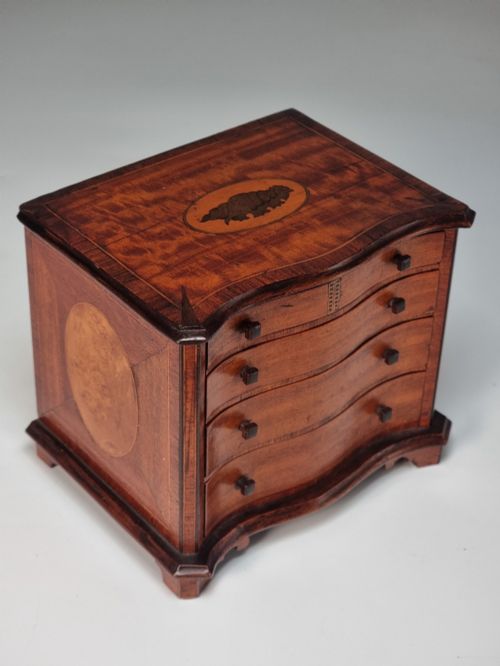
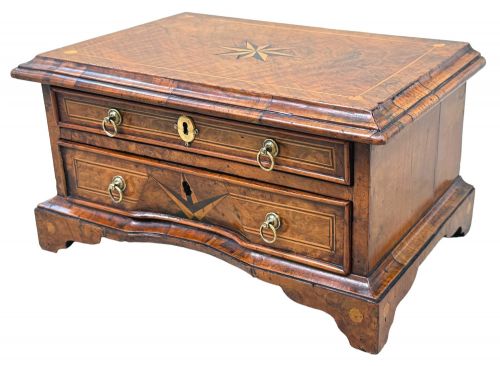
Decorative detailing relied on natural materials and traditional joinery techniques. Brass handles, key escutcheons, and bone accents punctuate wooden surfaces, alongside inlaid banding, parquetry patterns, and dark lacquered finishes.
Construction mirrored standard furniture making, utilising dovetailed drawer boxes, fitted backboards, and miniature lock mechanisms. Carved elements, serpentine curves, and bowed drawer fronts required precise woodworking skill at a small scale.
Listings feature woods including mahogany, oak, walnut, pine, fruitwood, and satinwood across Victorian, Georgian, and 20th-century periods.
Quality Variations
Quality rests upon the fidelity of proportion and the precision of miniature joinery. Superior examples maintain the architectural integrity of full-scale furniture without appearing clumsy or over-thickened at the edges.
The choice of timber and secondary materials dictates the grade of the piece, with figured veneers, solid mahogany, walnut, and refined brass hardware distinguishing high-end collectors' cabinets from utility spice drawers or simple pine boxes.
A. F. Lloyd, Bideford
The Miniature Cabinet Drawers Glossary
- Collector cabinet
- A specialised multi-drawer case designed to house natural history specimens, coins, or small artefacts. They frequently feature numerous shallow drawers for organised storage.
- Wellington chest
- A tall, narrow chest of drawers secured by a hinged locking side stile that fastens over the drawer edges. This form appears scaled down in miniature formats.
- Serpentine
- A furniture front characterised by a concave central section flanked by two convex curves. This contour requires precise woodworking skill in miniature scale.
- Parquetry
- A geometric mosaic of wood pieces used for decorative surface inlay. This technique adorns the exterior surfaces of certain miniature chests.
Miniature Cabinet Drawers: Frequently Asked Questions
What were miniature cabinet drawers originally used for?
These small furnishings served varied domestic and professional functions, acting as personal trinket repositories, apothecary stores, or desktop storage for household documents and sewing gear.
Specialised variants like specimen and collectors' cabinets provided secure, organised housing for natural history items, botanical samples, and geological specimens.
How do you distinguish an apprentice piece from a standard miniature?
Apprentice pieces represent test items created by trainees to prove their proficiency in advanced woodworking techniques to guild masters. They typically mirror full-size furniture designs with precise joinery and realistic proportions.
Standard miniatures were often manufactured as commercial novelty items, child-sized furnishings, or specialised desktop storage units without the formal testing context.
How should I clean wooden miniature drawers?
Maintain wooden surfaces by dusting gently with a dry, soft cloth to prevent abrasive particles from accumulating on the finish. Avoid modern chemical sprays or excessive moisture, which can damage aged veneer and polished wood.
Occasional application of appropriate microcrystalline wax helps nourish older timber surfaces without leaving heavy residues or sealing moisture into the grain.
What periods do most miniature chests come from?
The majority of surviving examples date from the Georgian and Victorian eras, spanning the eighteenth and nineteenth centuries. These periods produced high volumes of domestic scale models and specialty storage chests.
Later pieces from around 1900 and the early twentieth century also appear, reflecting continued demand for compact tabletop organizational furniture.